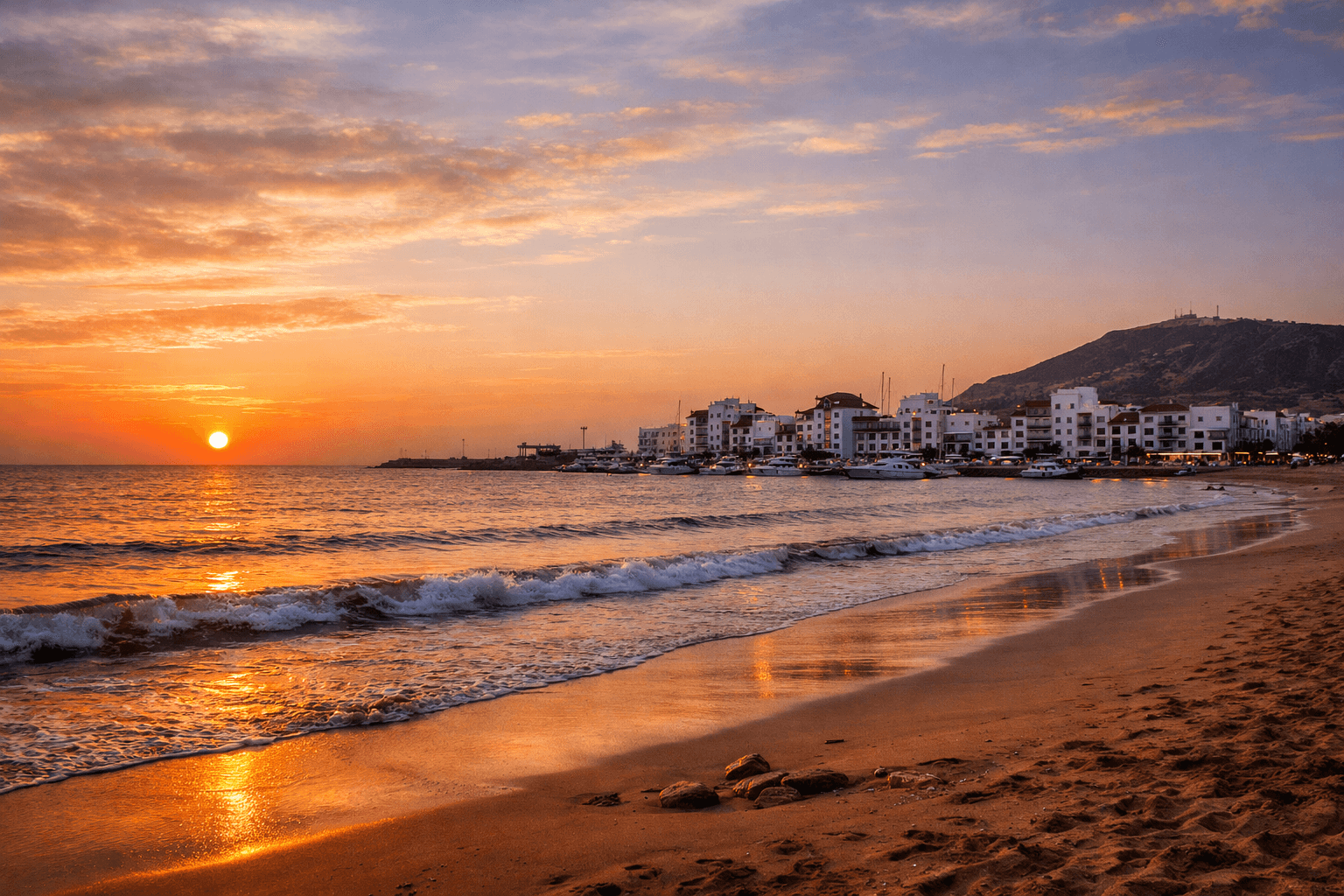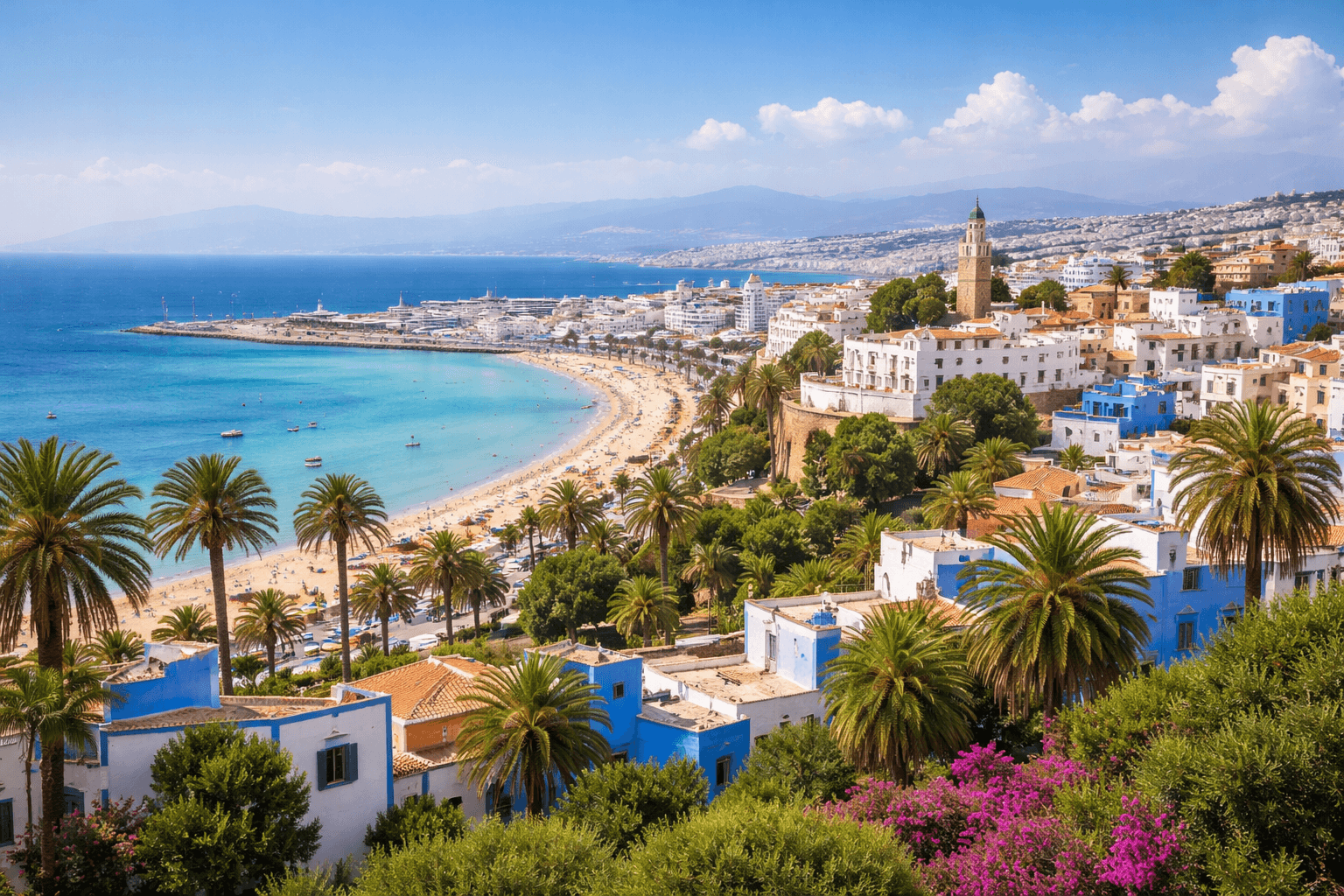



Morocco has cities that hit you with noise, movement, and instant intensity. Rabat is not that kind of place. The capital feels more composed. It is coastal but political, historic but orderly, refined without being cold. For many travelers, that balance is exactly the surprise. Rabat offers major monuments, ocean views, palm-lined avenues, a UNESCO-listed urban landscape, and a medina that still feels local rather than performative. UNESCO recognizes Rabat as a “modern capital and historic city,” which captures the city’s character well: Almohad walls, the Kasbah des Oudaias, Chellah, Hassan Tower, and the Mohammed V Mausoleum sit alongside broad boulevards, tram lines, green spaces, and elegant neighborhoods.
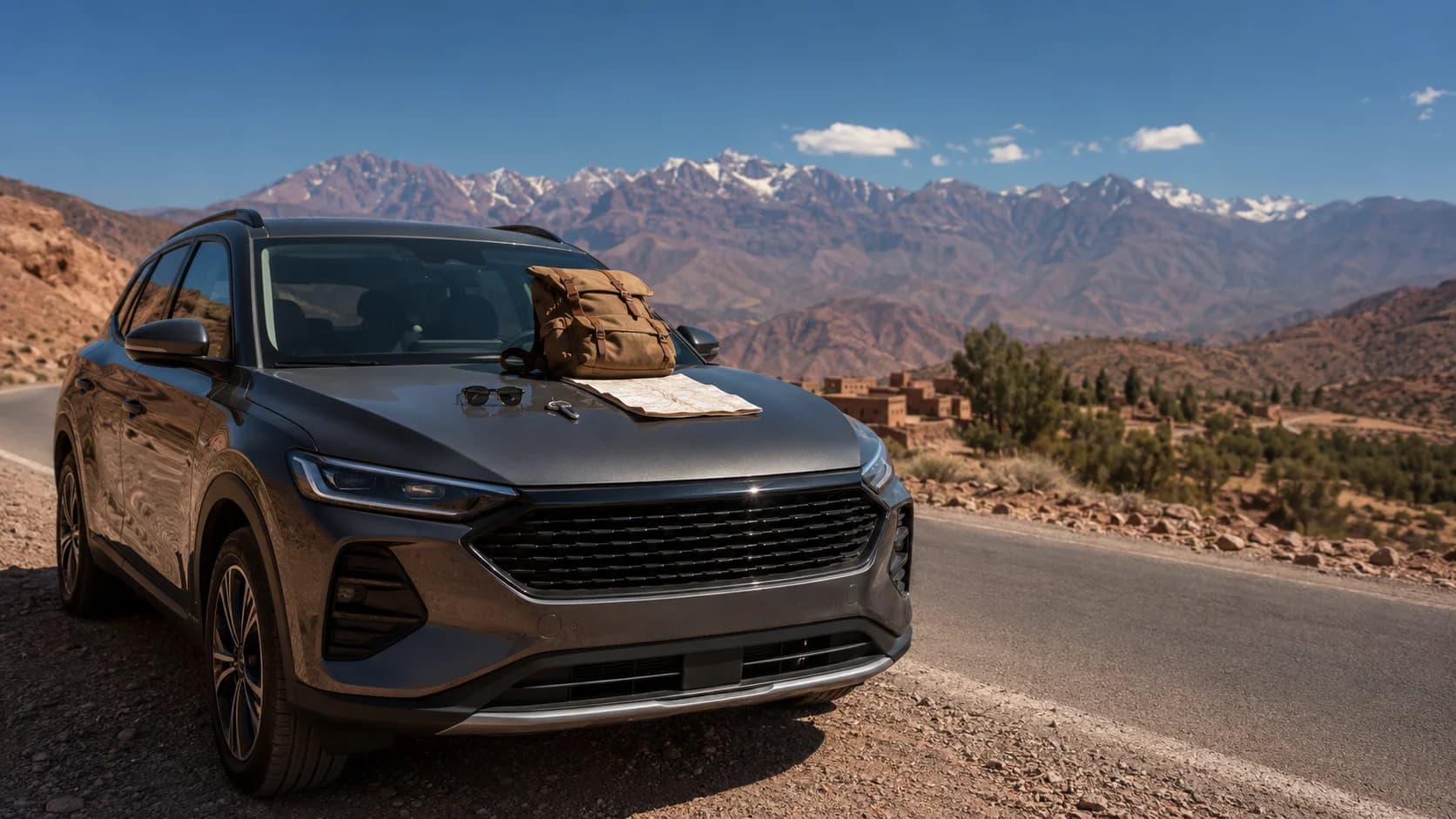
This is what makes a Rabat travel guide useful. The city is not overwhelming, but it rewards good planning. You can spend a slow morning in the Kasbah, take mint tea above the Bouregreg, visit one of Morocco’s most symbolic monuments, and still have time for a proper lunch and a seaside sunset. Rabat is also practical. It has modern infrastructure, a strong road network, and easy connections north to Tangier and south to Casablanca and beyond. For visitors who want flexibility beyond the center, booking Car Rental Rabat makes sense, while travelers who prefer a more relaxed experience can choose Private Driver Rabat for airport transfers, city touring, or day trips.
In this guide, you will find the best things to do in Rabat, the top Rabat attractions, a practical Rabat itinerary, hotel and restaurant ideas, and realistic driving advice for visitors who want to explore the capital at their own pace.
Why Visit Rabat?
Rabat works especially well for travelers who want culture without chaos. Marrakech is more intense. Casablanca is more business-driven. Fes is deeper and denser. Rabat sits in a different lane. It feels cleaner, more spacious, and easier to navigate, but still distinctly Moroccan. The city combines royal symbolism, ocean air, walkable heritage zones, and a polished modern side that many first-time visitors do not expect. Morocco’s national tourism office highlights Rabat for its monuments, medina, gardens, coastline, and modern infrastructure, while the regional tourism platform presents the Hassan Tower, Kasbah of the Oudaias, medina, Chellah, and Mohammed VI Museum among its iconic sites.
It is also one of the easiest Moroccan capitals to visit over two or three days. The main heritage cluster around Hassan Tower and the Mausoleum of Mohammed V is straightforward. The Oudaias and medina area can be combined in the same half day. The Bouregreg riverfront gives the city a pleasant transition between history and leisure. Even when you drive, Rabat generally feels more manageable than larger, more congested Moroccan urban centers, although rush hours still matter.
For travelers comparing cities, Rabat is often the one that grows on them. It may not shout the loudest before arrival, but once you are there, the atmosphere does much of the work.
Best Time to Visit Rabat
Rabat can be visited year-round, but spring and autumn are the most comfortable periods for many travelers. The city benefits from an Atlantic setting, which softens temperatures compared with inland destinations. That means Rabat is usually easier in summer than cities such as Marrakech or Fes, especially if your plans include walking between monuments and waterfront areas. Morocco’s official tourism material also emphasizes Rabat’s coastline, green spaces, and outdoor appeal.
March to May is a strong window if you want mild weather, greener gardens, and longer sightseeing days. September to November is equally attractive, especially for city breaks and road trips that combine Rabat with Casablanca, Tangier, or Chefchaouen. Summer works well for travelers who enjoy ocean air and later evenings, though central sightseeing is more pleasant in the morning and near sunset. Winter is quieter and often good for culture-focused trips, but you will want a light jacket near the coast and on breezier evenings.
If your priority is smooth sightseeing and outdoor meals, aim for spring or early autumn. If your priority is lower pressure and more flexible hotel rates, winter can be a smart choice.
Top 7 Attractions in Rabat
1. Hassan Tower
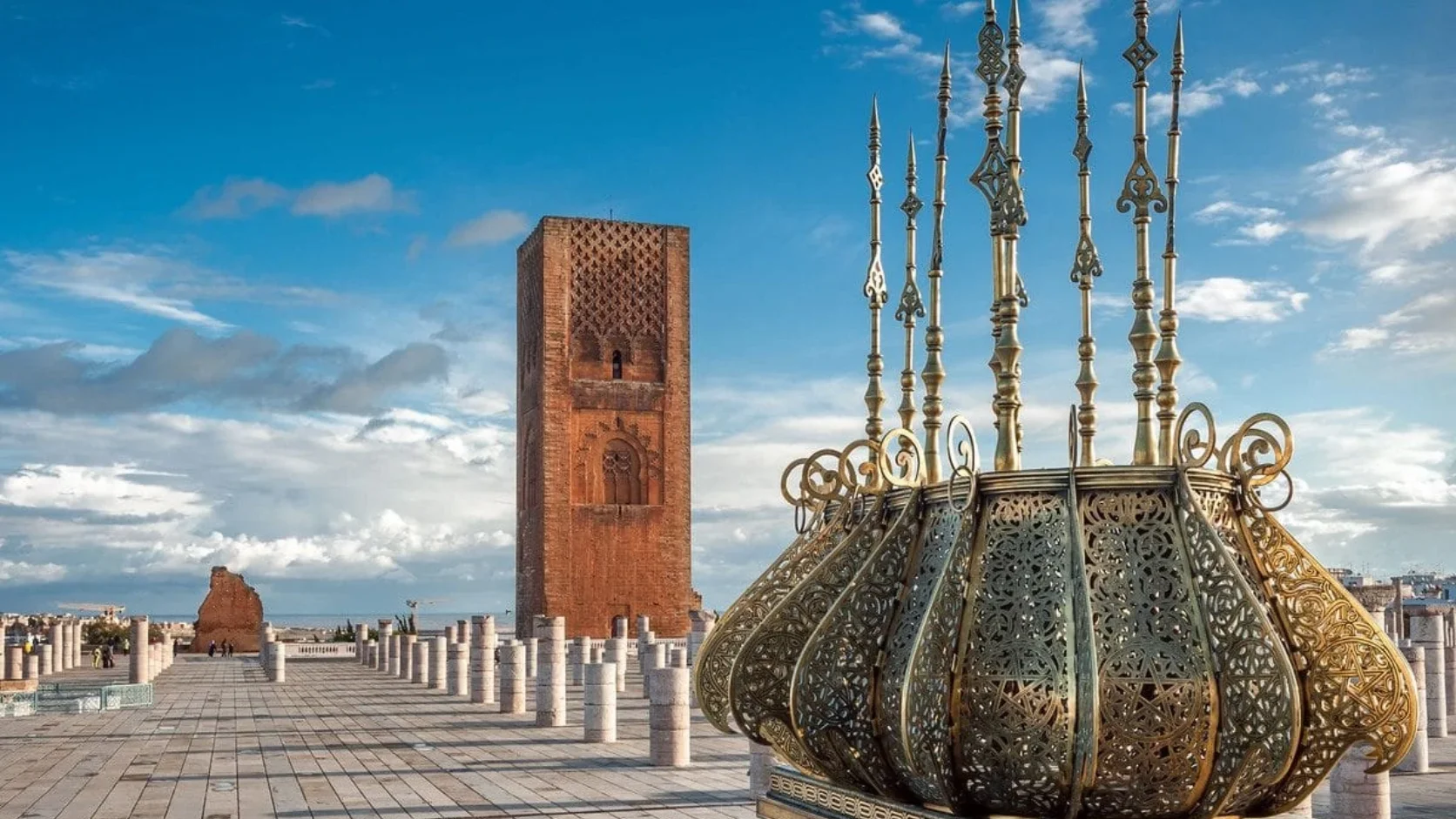
No Rabat travel guide is complete without Hassan Tower. This unfinished 12th-century minaret is one of the city’s defining landmarks and remains visually powerful because of its open esplanade and the rows of stone columns around it. Official tourism sources describe it as one of the city’s most iconic monuments and part of Rabat’s heritage identity.
2. Mausoleum of Mohammed V
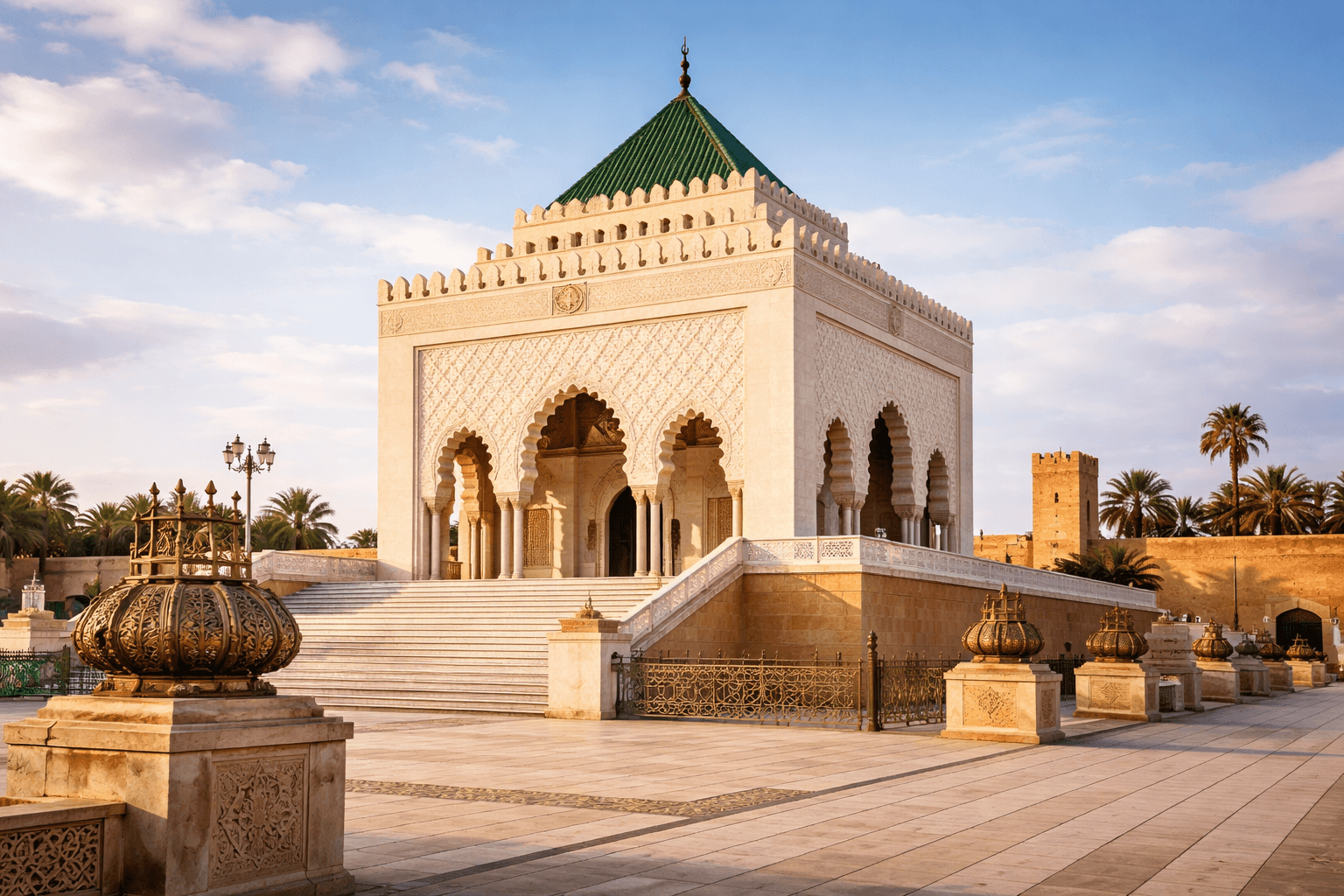
Across from the tower, the Mausoleum of Mohammed V is one of the most important national monuments in Morocco. It houses the tombs of King Mohammed V, King Hassan II, and Prince Moulay Abdallah. The architecture is part of the experience: white stone, carved wood, zellij, and ceremonial formality. The regional tourism authority notes that the mausoleum was built between 1962 and 1971 and stands as a major symbol of Moroccan craftsmanship and memory.
3. Kasbah des Oudaias
The Kasbah des Oudaias is the Rabat image many travelers remember most clearly: white and blue walls, calm lanes, old gates, and views over the Bouregreg estuary. Morocco’s official tourism portal highlights the Kasbah as one of the city’s majestic and emblematic sites. It is compact enough for a relaxed visit and photogenic at almost every turn.
4. Rabat Medina
The Rabat medina is smaller and easier to read than the medinas of Fes or Marrakech. That is part of its appeal. You can browse local shops, pause for coffee, and connect it naturally with the Kasbah or the waterfront. Official tourism material presents the medina as part of Rabat’s UNESCO-recognized historic fabric and stresses its continuity with the city’s long commercial and cultural life.
5. Chellah
Chellah offers a different mood from the city center. This fortified archaeological and garden site layers Roman and Islamic history in a setting known for its walls, ruins, greenery, and storks. Morocco’s tourism office describes it as a necropolis from the Merinid period, while regional tourism lists it among Rabat’s iconic sites.
6. Bouregreg Riverfront and Marina
The Bouregreg gives Rabat breathing space. Walking here helps you understand the city’s rhythm: joggers, families, cafés, river views, and the visual link to Salé. It is one of the best places for a late afternoon pause. Current city references and local hospitality listings continue to position the Bouregreg waterfront as one of the capital’s liveliest leisure zones.
7. Mohammed VI Museum of Modern and Contemporary Art
For travelers who want more than monuments, the Mohammed VI Museum adds a contemporary cultural layer to Rabat. The regional tourism authority includes it among the city’s key iconic sites, which makes sense in a capital that balances heritage with a modern civic identity.
A good way to organize these Rabat attractions is to combine Hassan Tower and the mausoleum in one block, then pair the Kasbah with the medina and Bouregreg in another. Chellah works especially well when you have a car or want a slower half day beyond the old core.
Recommended Car Types in Rabat
If you plan to stay only around the historic center, a car is optional. But if your Rabat itinerary includes Salé, Bouknadel, Skhirat, Casablanca, or airport transfers at different times, a rental becomes useful.
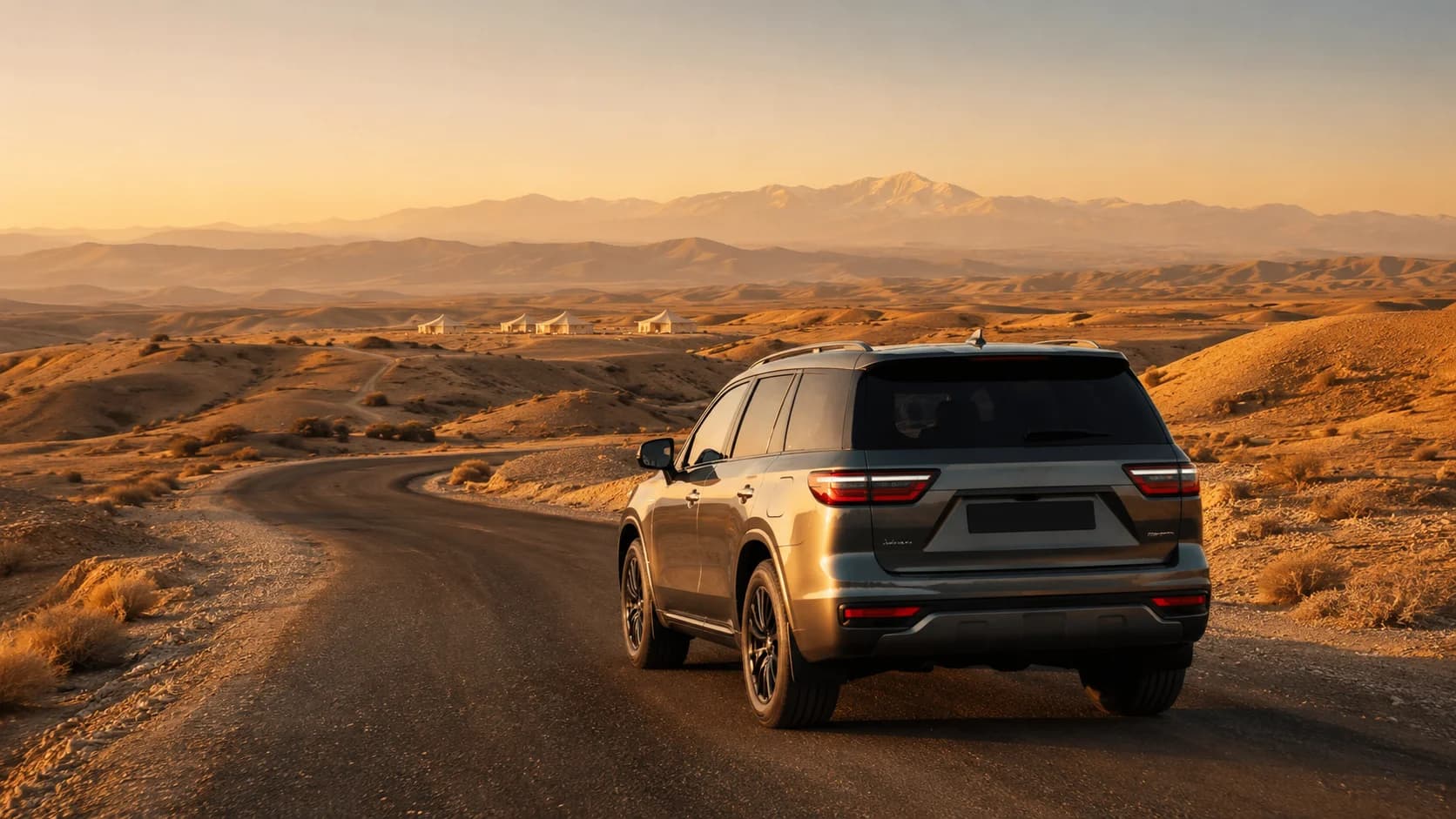
For couples or solo travelers, a compact car is usually enough. It is easier to park, simpler in tighter urban streets, and fully suited to Rabat’s main roads. If you are traveling as a family or carrying luggage for a multi-city route, a compact SUV or comfortable sedan gives you more space without making city parking unnecessarily difficult. For business travelers or families using the capital as a base, an automatic model is often worth the extra cost, especially in traffic.
A larger SUV is not necessary for Rabat itself, but it can make sense if you are combining the capital with longer highway days or coastal stops. The real goal in Rabat is not off-road capability. It is comfort, easy maneuvering, and stress-free parking.
Driving Tips and Safety in Rabat
Driving in Rabat is usually manageable by Moroccan city standards, but timing matters. The main challenge is not road quality. It is urban rhythm. Commute periods can slow central areas, roundabouts require attention, and parking can be easier if you arrive earlier in the day.
Morocco drives on the right. General speed guidance commonly used across the country is around 60 km/h in urban areas, 100 km/h on express roads, and up to 120 km/h on motorways, while Morocco’s motorway network is operated by Autoroutes du Maroc and official toll tables confirm the tolled network structure around Rabat and Casablanca.
For visitors, the most useful Rabat-specific advice is practical. Use secure parking when possible near major sites. Do not expect to stop casually in every heritage area. Some visits are easier if you park once and continue on foot. Keep rental papers, your driving license, and passport copy accessible in the car. For motorway trips, carry small cash or a bank card for tolls, although many toll points are increasingly straightforward to pass through. The official ADM tariff grid shows, for example, listed toll pricing on key segments such as Casablanca–Rabat and Rabat–Kenitra.
Night driving inside Rabat is not usually a problem on major roads, but unfamiliar visitors should still avoid unnecessary late-night detours through less familiar outskirts. The easiest formula is simple: plan city sightseeing early, use daylight for first-time routing, and let navigation handle the rest.
3-Day Rabat Itinerary
Day 1: The Monument Core
Start with Hassan Tower and the Mausoleum of Mohammed V, the most symbolic heritage pair in the capital. Go in the morning, when the light is better and the site feels calmer. From there, move toward the city center for lunch, then spend the afternoon with a slower walk through Rabat’s modern avenues and one museum stop if that suits your style. This first day gives you the national and architectural face of Rabat Morocco.
Day 2: Kasbah, Medina, and Riverfront
Dedicate your second day to the Kasbah des Oudaias, the medina, and the Bouregreg waterfront. Begin inside the Kasbah before the lanes get busier. Then drift into the medina for shopping, tea, or a low-pressure lunch. End the day on or near the river, where Rabat’s elegant pace feels most visible. This is also a good day to use a private transfer rather than drive constantly, especially if you prefer parking once and walking.
Day 3: Chellah and a Wider Capital Experience
Use the third day to visit Chellah, then explore a more residential or contemporary side of the city. Depending on your interests, that could mean the museum circuit, a hotel lunch, a longer waterfront coffee, or a short drive into Salé for another perspective on the estuary. If you have a car, this is the easiest day to stretch beyond the usual postcard circuit.
This three-day structure works because Rabat is not about rushing. It is about layering. Monumentality, coastal calm, and lived-in elegance come through better when the pace stays measured.
Best Restaurants and Hotels in Rabat
For a classic Moroccan meal in a heritage setting, Dinarjat remains one of the city’s most recognizable names. Its own site positions it in the Oudayas area and links it clearly to refined Moroccan cuisine. For a more atmospheric riverside option, Le Dhow offers dining on the Bouregreg, with its official site placing it directly on the quay.
If you want a higher-end stay, La Tour Hassan Palace is one of Rabat’s landmark hotels, with a long-standing reputation and a very central identity tied to the city’s classic grand-hotel style. Sofitel Rabat Jardin des Roses is a strong luxury option for travelers who want garden space, resort-like comfort, and a more relaxed base. Both properties present themselves as flagship addresses in the capital.
Travelers who prefer a modern waterfront setting can also look toward the Bouregreg side, where venues such as The Deck at Fairmont La Marina Rabat-Salé reflect the city’s more polished contemporary hospitality scene.
For most visitors, the best hotel choice comes down to style. If you want heritage atmosphere and central symbolism, choose a classic address. If you want space, facilities, and slower evenings, choose a garden or marina setting.
Day Trips from Rabat
One of Rabat’s advantages is how easy it is to build outward. Salé is the closest and easiest extension, effectively part of the same wider urban life across the Bouregreg. It gives a useful contrast and can be combined with the riverfront in the same day.
Another easy option is the Exotic Gardens of Bouknadel, which Morocco’s official tourism office highlights as only a few kilometers from the capital. That makes it a good soft day trip when you want a quieter half day outside the core monument circuit.
If you have a car and want something more urban, Casablanca is an obvious extension via the motorway network. The official ADM toll grid and motorway references confirm Rabat’s strong connection into the national autoroute system, which is one reason self-drive travelers often use Rabat as part of a larger north-south itinerary.
For a coastal change of rhythm, Skhirat and Temara can work well for a meal or seafront pause without turning the day into a long transfer. The point is not to overreach. Rabat is strong enough to be a destination, but flexible enough to serve as a smart base.
FAQ: Rabat Travel Guide
1. Is Rabat worth visiting compared with Marrakech or Fes?
Yes. Rabat offers a calmer, cleaner, and more spacious city experience while still delivering strong heritage sites, a medina, riverfront walks, and major monuments. It suits travelers who want culture without constant intensity.
2. How many days do you need in Rabat?
Two days is enough for the main highlights, but three days is better if you want time for Chellah, the Bouregreg waterfront, and a more relaxed pace.
3. What are the best things to do in Rabat?
The most rewarding basics are Hassan Tower, the Mausoleum of Mohammed V, the Kasbah des Oudaias, Rabat medina, Chellah, and a walk along the Bouregreg.
4. Is the Mausoleum of Mohammed V one of the top Rabat attractions?
Absolutely. It is both a major architectural site and a monument of national importance, which is why it appears in nearly every official overview of the city.
5. Do I need a car in Rabat?
Not necessarily for the historic center alone. But if you want flexibility for hotels, airport transfers, day trips, or a wider Morocco route, renting a car is practical.
6. Is driving in Rabat difficult for tourists?
It is manageable. Traffic can be busy at peak times, but roads are generally straightforward. A compact or automatic car usually makes the experience easier, especially for first-time visitors.
7. What is the best area to stay in Rabat?
It depends on your style. Central and heritage-adjacent areas work best for sightseeing, while garden and marina settings suit travelers who want more comfort and quieter evenings.
8. Can Rabat be used as a base for day trips?
Yes. Salé, Bouknadel, Temara, Skhirat, and Casablanca are all realistic options depending on how much time you have.
9. Is Rabat good for families?
Yes. The city’s pace, open spaces, waterfront areas, and relatively orderly layout make it easier for families than some denser historic cities.
10. What makes Rabat different from other Moroccan cities?
Its balance. Rabat combines royal symbolism, UNESCO-listed heritage, Atlantic calm, modern infrastructure, and a polished urban feel that is distinct within Morocco.
Book with MarHire
Rabat is the kind of capital that rewards travelers who move well. You can keep it simple with a central stay and short city days, or turn it into the opening chapter of a wider Moroccan route. If you want the freedom to connect monuments, waterfront stops, nearby gardens, and easy day trips on your own schedule, MarHire makes that planning easier with local support, flexible transport options, and city-based service you can actually use on the ground. Book your Rabat transport with MarHire and discover the capital with more comfort, less guesswork, and a pace that suits the city.