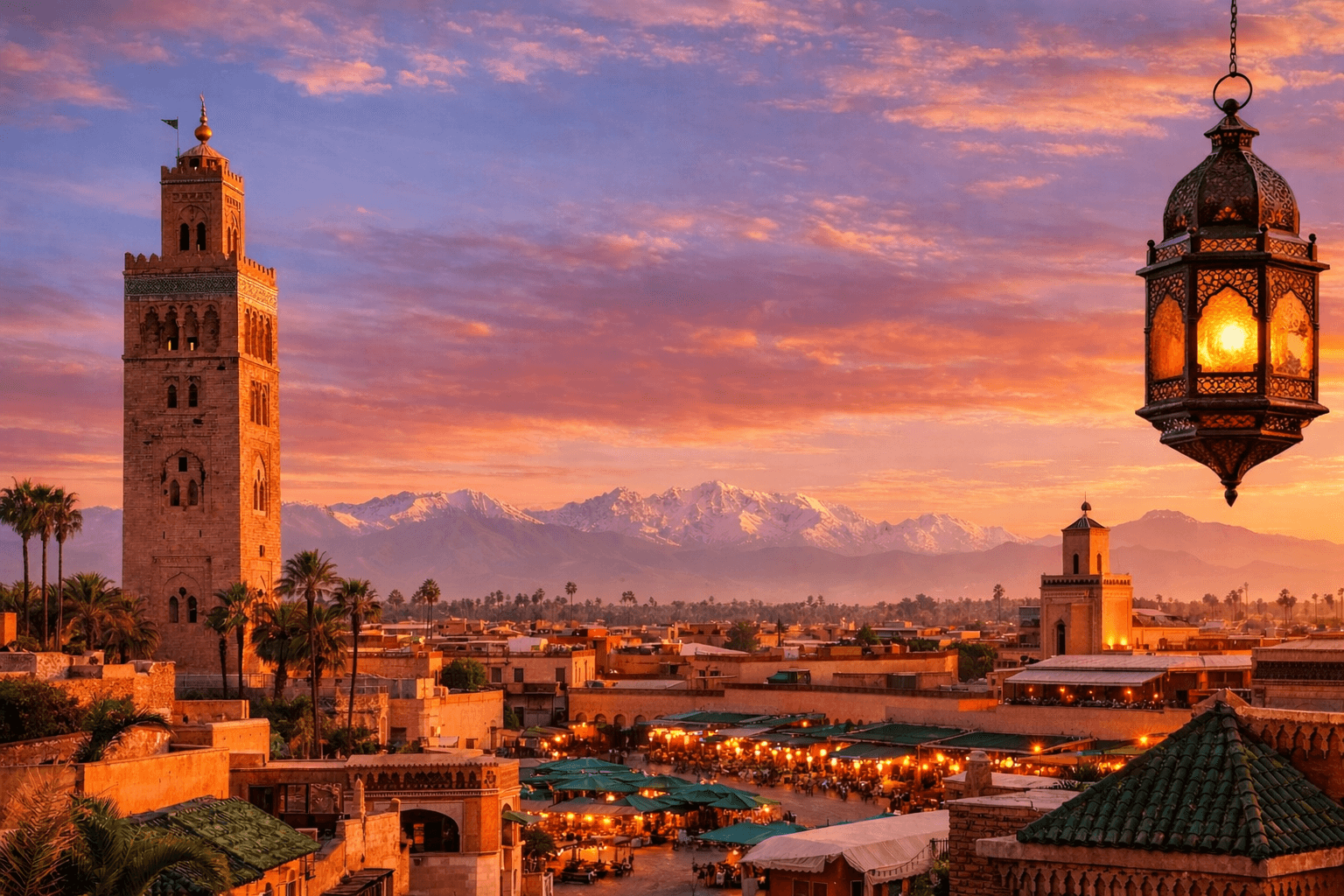







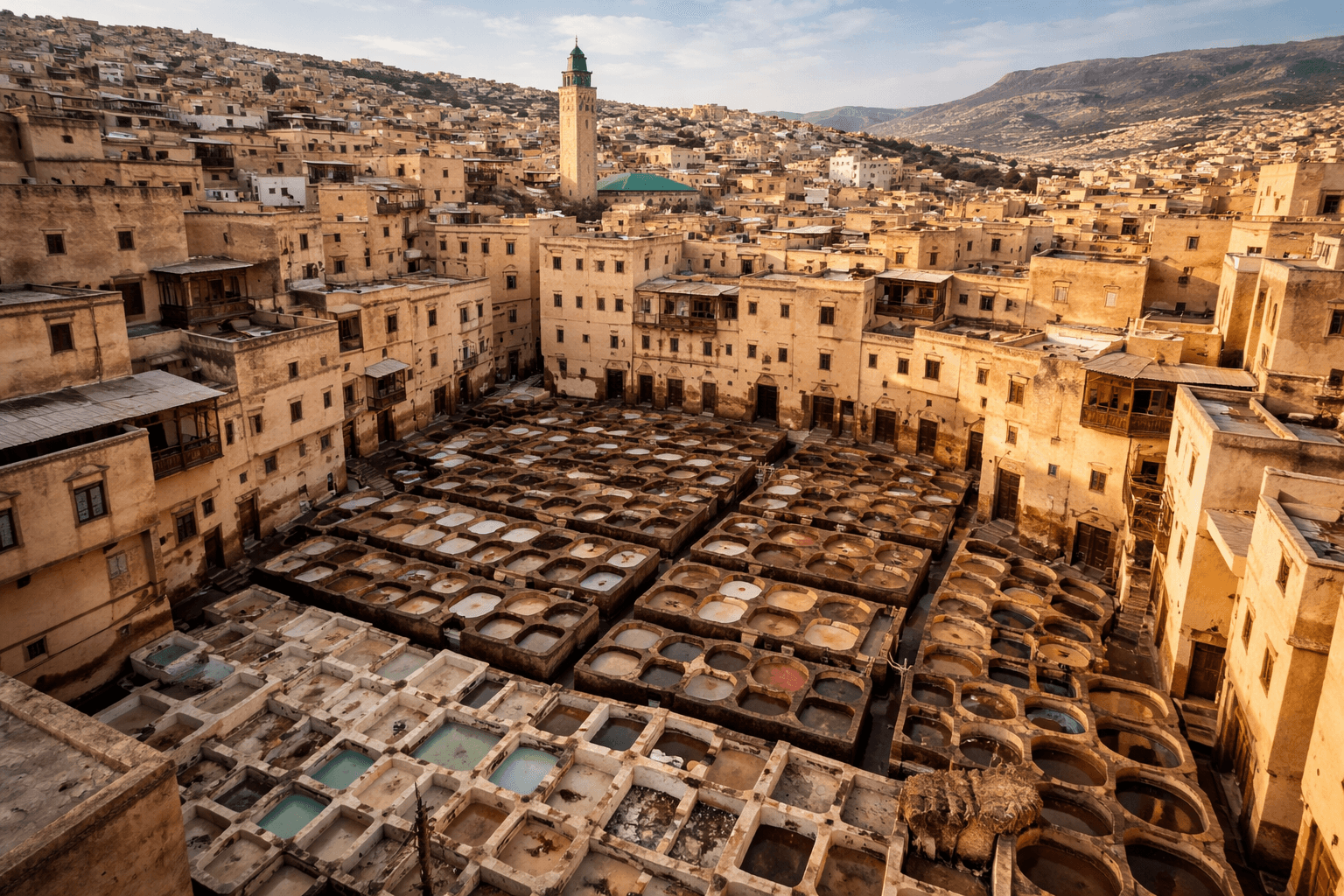
Fes is not the kind of city you “do” quickly. It is a place you enter, listen to, and gradually understand. The old heart of the city, Fes el-Bali, is part of a UNESCO World Heritage site and is widely recognized as one of the most extensive and best-preserved historic cities in the Arab-Muslim world. UNESCO describes it as a medina that has kept most of its original urban functions and character, which is exactly why walking through it feels less like visiting a monument and more like stepping into a living system.
This Fes travel guide is built for travelers who want more than a basic checklist. It covers what to see, where to focus your time, whether you need a car, how to plan 3 or 5 days, and how to balance the medina with the wider region. If Marrakech feels theatrical, Fes feels layered. It is quieter in some ways, denser in others, and far more rooted in scholarship, craftsmanship, and continuity. Morocco’s official tourism materials describe Fes as an imperial city with thirteen centuries of history, famous for medinas, madrasas, tanneries, riads, and traditional crafts.
For travelers who want to move beyond the medina, Car Rental Fes is useful for airport arrivals, regional drives, and day trips. For those who want easier city logistics, especially on a first visit, Private Driver Fes can remove a lot of friction. And if you want to build activities around your stay, Things to Do Fes helps shape the trip before you land.
Overview: Why visit Fes?
Fes is one of Morocco’s essential cities because it offers something many destinations have lost: continuity. The medina is not a staged historic quarter or a polished shopping district pretending to be old. It is an active urban world of workshops, food stalls, religious buildings, traditional houses, neighborhood gates, and trade routes that still shape the city’s rhythm. Morocco’s tourism office describes the medina as the oldest and largest in the country, with craftspeople gathered throughout its streets and squares.
That is what makes Fes compelling. You do not visit only for monuments. You visit for process. Leather is still worked here. Metal is still hammered here. Cedar is still carved here. Streets still fold into one another in ways that make maps feel secondary. This is why so many travelers remember Fes more vividly than they expected: it is immersive in a way that more modern cities are not. UNESCO specifically highlights the medina’s long-developed construction techniques, decoration, and deep mix of local and outside influences.
Fes also rewards different kinds of travelers. History lovers come for Al-Qarawiyyin, madrasas, and dynastic architecture. Food-focused travelers come for pastilla, classic Fassi cooking, and slower riad dining. Photographers come for rooftops, artisan quarters, and viewpoints like the Merenid Tombs. Travelers doing a wider Morocco route often use Fes as a base for Meknes, Volubilis, Ifrane, Azrou, and the Middle Atlas. Official tourism materials also point to nearby destinations such as Ifrane and Meknes as easy regional extensions from Fes.
Another reason to visit is contrast. Fes el-Bali is dense, ancient, and pedestrian. Fes el-Jdid adds the royal and Jewish-quarter dimension. Ville Nouvelle offers a more modern side with broader streets, easier parking, and a different pace. That means you can build a trip that is deeply cultural without making every hour intense. A good Fes itinerary gives the medina pride of place, but also leaves room for gardens, viewpoints, and one or two road-based outings.
Best time to visit Fes
For most travelers, the best time to visit Fes is spring or autumn. Morocco’s official tourism guidance on climate and seasons generally favors these shoulder periods for more comfortable travel conditions, and the same logic applies well to Fes: easier walking, better rooftop evenings, and more pleasant day trips.
Spring is especially appealing because temperatures are usually better suited to long medina days and regional drives. Autumn gives similar comfort with a slightly calmer feel after summer. Summer is still possible, but Fes can feel very hot in the middle of the day, especially in the tighter lanes of the medina. Winter can be excellent for culture-first trips, though mornings and nights are much cooler than many visitors expect, and nearby mountain areas such as Ifrane may be significantly colder. Official tourism content highlights Ifrane as a nearby escape from Fes, which also hints at the regional climate contrast.
If your trip includes heavy walking, shopping, or guided exploring in Fes el-Bali, prioritize comfort over calendar. Fes is not the best city to rush through in extreme midday heat. It is better when you can linger.
Top 8 attractions in Fes
1. Fes el-Bali
The medina is the main reason most people come. It is the city’s core experience, not just a district to pass through. Morocco’s tourism office presents it as an “open-air museum,” while UNESCO emphasizes its scale and preservation.
2. Chouara Tannery
Among all the classic things to do in Fes, Chouara Tannery remains one of the most iconic. Morocco’s official tourism page lists the leather tanneries among the city’s most popular highlights. It is best seen as part of the broader craft story of Fes rather than just a photo stop.
3. Al-Qarawiyyin
Al-Qarawiyyin is one of the city’s defining landmarks and a major part of Fes’s scholarly identity. Official tourism materials present Quaraouiyin Mosque as one of the city’s top highlights, and the medina overview describes it as part of the intellectual heart of Fes.
4. Bou Inania Madrasa
Bou Inania is one of the most rewarding heritage visits in the city because it combines craftsmanship, religious architecture, and atmosphere. It is consistently included in official Fes heritage routes and remains one of the strongest monument visits inside the medina.
5. Nejjarine Fountain and museum area
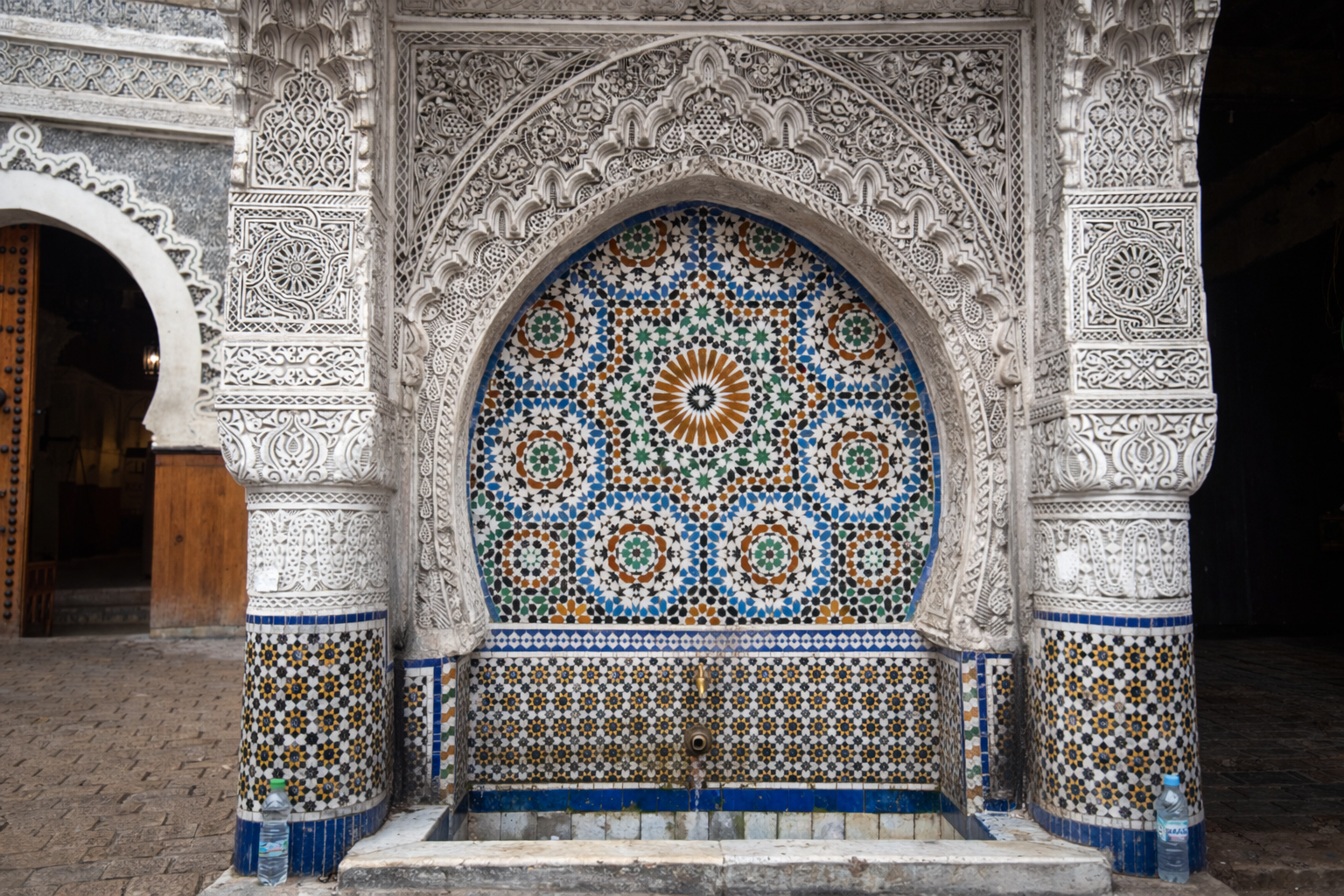
The Nejjarine zone is one of the most photogenic and satisfying corners of Fes, especially if you are interested in woodcraft and the city’s old funduq architecture. Morocco’s tourism office lists Nejjarine Museum among the popular attractions in Fes.
6. Merenid Tombs viewpoint
If you want to understand the scale of Fes, go up to the Merenid Tombs. Morocco’s official tourism materials list the Tombs of the Merinids among the city’s major sights, and the viewpoint is especially good late in the day.
7. Mellah and Royal Palace gates area
The Mellah adds an important historical layer to the city and works well when paired with the exterior of the Royal Palace gates in Fes el-Jdid. It gives context to the city beyond the medina maze and helps you see Fes as a layered imperial capital rather than a single district.
8. Jnan Sbil Garden
Jnan Sbil is one of the best breaks from the medina’s intensity. The Fes tourism site describes it as the oldest and most prestigious public garden in the city, with rare plant species, themed garden areas, and water features.
Recommended car types
A lot of visitors ask about car rental Fes Morocco as if the answer is simple. It is not. Whether you need a car depends on your hotel location, whether you are staying only in the medina, and how many regional drives you plan to do.
If you are based inside or right beside Fes el-Bali, a small automatic economy car is usually enough. You do not need a large vehicle for the city itself, and smaller cars are easier around Ville Nouvelle, train stations, airport pickup, and hotel access points outside pedestrian zones.
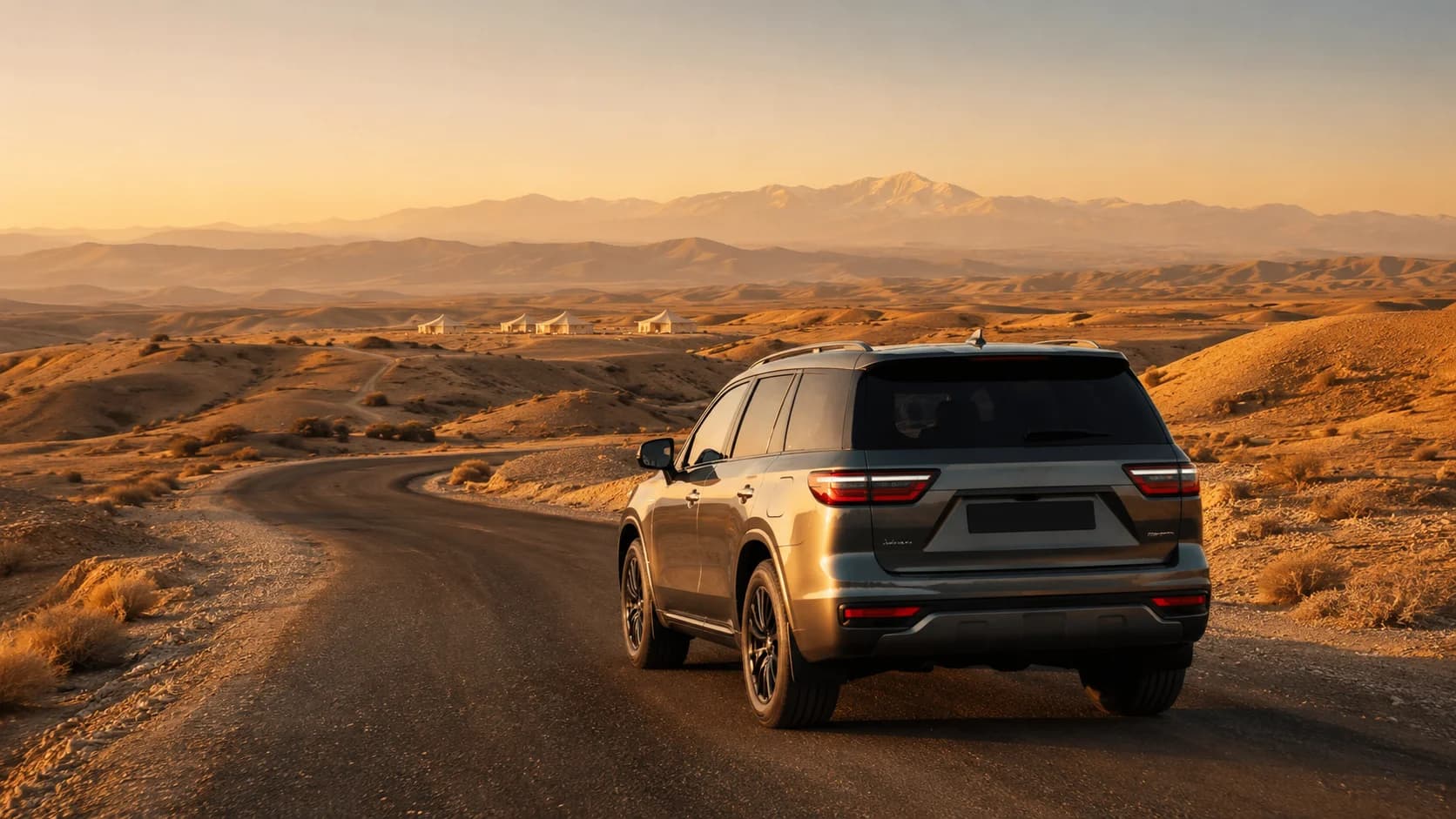
If your trip includes Ifrane, Azrou, Volubilis, Meknes, or a more flexible northern route, a compact SUV is a better fit. It offers better luggage space, a more relaxed seating position, and more comfort for longer drives. Families usually benefit from a crossover or SUV rather than a compact city car.
If your plan is medina-heavy and you only want a regional excursion or airport transfer, Private Driver Fes often makes more sense than keeping a car parked. If you want total flexibility for your itinerary, Car Rental Fes is the better tool.
Driving tips and safety in Fes
Driving in Fes is less about speed and more about strategy. The main challenge is not road quality on the wider regional routes. It is the transition between modern traffic areas and the edge of the old city. Fes el-Bali itself is pedestrian, so drivers need to think in terms of drop-off points, parking, and walking access rather than direct door-to-door navigation. UNESCO’s emphasis on the medina’s preserved urban structure is exactly why modern vehicle access inside it is so limited.
The easiest approach is to divide the city mentally into three parts: medina, Fes el-Jdid, and Ville Nouvelle. The medina is for walking. Fes el-Jdid is for historic context and access points. Ville Nouvelle is the easiest zone for modern hotel access, wider roads, and day-to-day driving comfort.
A few practical rules help a lot. Avoid arriving at a riad without confirming the nearest car access point first. Do not assume your map pin equals a drivable front door. Keep valuables out of sight in parked vehicles. Use daylight for your first approach to unfamiliar areas. And if your plan includes heavy medina sightseeing on the first day, do not force yourself to drive immediately after a flight unless you are already comfortable with Moroccan city traffic.
For pure city convenience, a driver is often smoother. For flexible regional travel, especially across several days, a rental car is worth it.
3-day Fes itinerary
Day 1: Fes el-Bali and the core medina
Enter through Bab Boujloud and spend the first day letting the medina define the trip. Walk without trying to “complete” it. Focus on atmosphere, artisan lanes, food smells, carved doors, and the rhythm of neighborhood life. Build in Bou Inania Madrasa, the Nejjarine area, and a tannery viewpoint. This gives you the strongest first impression of Fes and aligns with official tourism routes that move through the medina’s architectural and cultural highlights.
Day 2: Scholarship, history, and viewpoints
Use the second day for Al-Qarawiyyin’s surrounding quarter, more of the craft-focused medina, and a late-day climb or drive to the Merenid Tombs viewpoint. If you want to slow the pace, add Jnan Sbil as your afternoon reset. This combination works well because it balances dense walking with open views.
Day 3: Fes el-Jdid and the city beyond the medina
Visit the Mellah, see the Royal Palace gates from the outside, then move into Ville Nouvelle for a more modern side of the city. This is also the day to decide whether you want your next step to be a road trip, thermal bath visit, or another culture-focused day. Morocco’s tourism office highlights Moulay Yacoub Thermal Baths among Fes’s popular nearby experiences, which can work for travelers who want a softer final afternoon.
5-day northern Morocco itinerary
Day 1: Fes medina immersion
Keep it simple and focus on Fes el-Bali. Let the city disorient you a little. That is part of the experience.
Day 2: Heritage depth
Do Bou Inania, Al-Qarawiyyin surroundings, Nejjarine, and a slower lunch in a riad or traditional setting.
Day 3: Fes beyond the medina
Visit the Mellah, Royal Palace exterior, Jnan Sbil, and the Merenid Tombs viewpoint. This gives the city a wider frame.
Day 4: Meknes and Volubilis
This is one of the strongest day trips from Fes. Morocco’s tourism site points to Meknes as a nearby destination from Fes, and the route works well because it combines imperial and Roman history in one outing.
Day 5: Ifrane and Azrou
For a complete contrast to Fes, head into the Middle Atlas direction. Official tourism materials point to Ifrane as a nearby destination from Fes, and it is one of the easiest ways to add mountain air, forests, and a very different urban feel to your trip.
This is the kind of trip where Car Rental Fes becomes very useful. If you do not want to self-drive across several day trips, Private Driver Fes is a strong alternative.
Best restaurants and hotels
Fes works best when you match food and accommodation to the part of the city you want to experience.
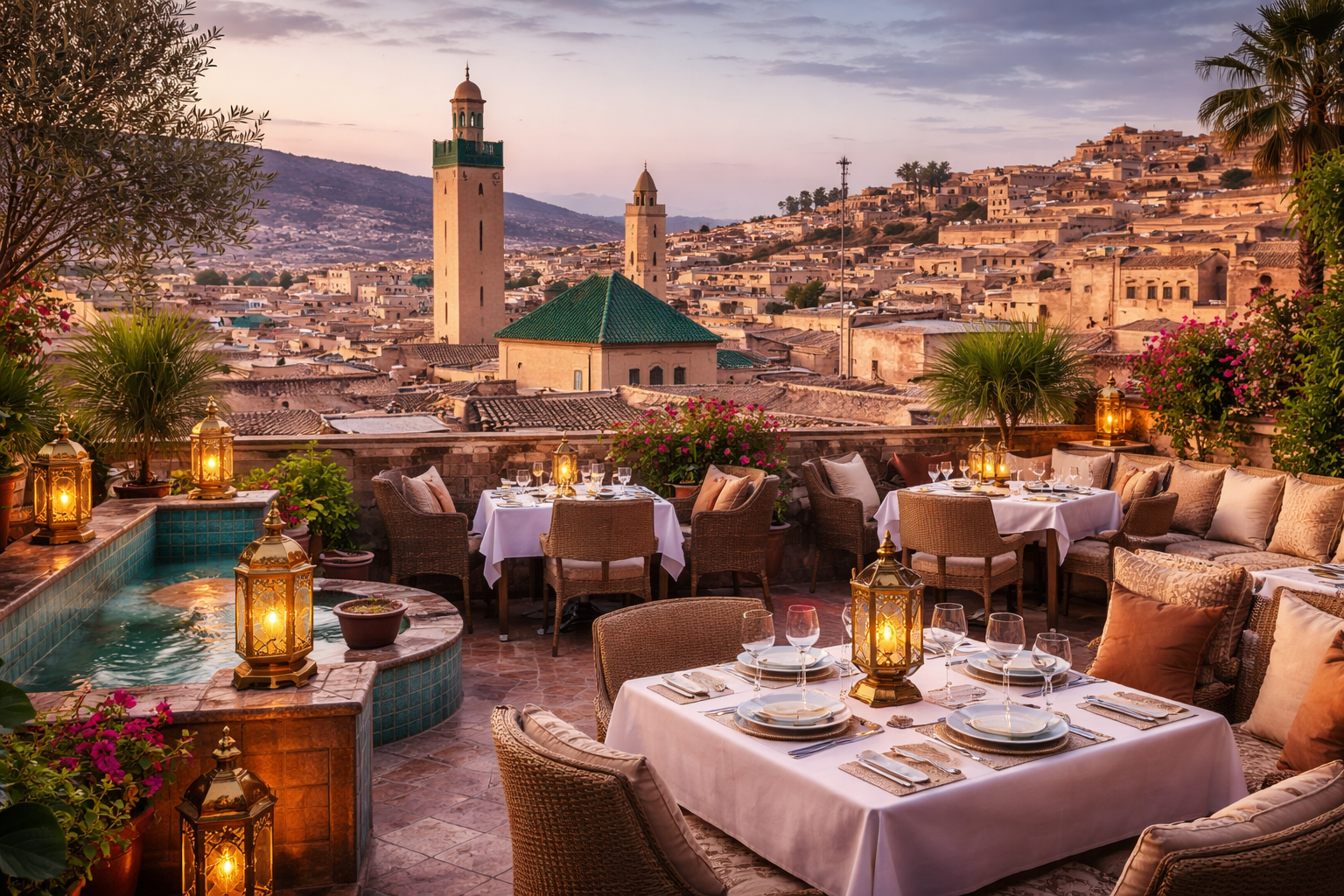
For food, the safest strategy is not chasing hype but chasing setting. In the medina, a traditional riad meal often suits the city better than a rushed restaurant hop. Morocco’s tourism office specifically highlights Fassi gastronomy and names dishes such as chicken pastilla among the essentials of Fes.
For hotels, your location changes the whole trip. If you want immersion, stay in the medina. If you want easier access and smoother arrival logistics, choose Ville Nouvelle or a property just outside the densest pedestrian zone.
Some tourism-listed riad options include Riad Fès, described by the Fes tourism portal as a luxury property known for fine dining and service; Palais Amani, presented as a restored palace just inside the old medina with suites, rooftop dining, and spa experiences; and Riad Letchina, which the tourism site describes as a quieter medina stay within walking distance of major sights.
A useful rule is this:
-
Stay in the medina for atmosphere, architecture, and walking access.
-
Stay near the medina edge for a balance of charm and easier transport.
-
Stay in Ville Nouvelle for convenience, wider roads, and simpler parking.
For most first-time visitors, a riad for two or three nights is the most memorable option. For families, late arrivals, or travelers mixing Fes with multiple road trips, easier-access hotels can reduce stress.
Day trips from Fes
The classic day trips from Fes are popular for a reason.
Meknes and Volubilis work well together for travelers who want history without a mountain road day. Meknes is an imperial-city complement to Fes, while Volubilis adds the Roman layer.
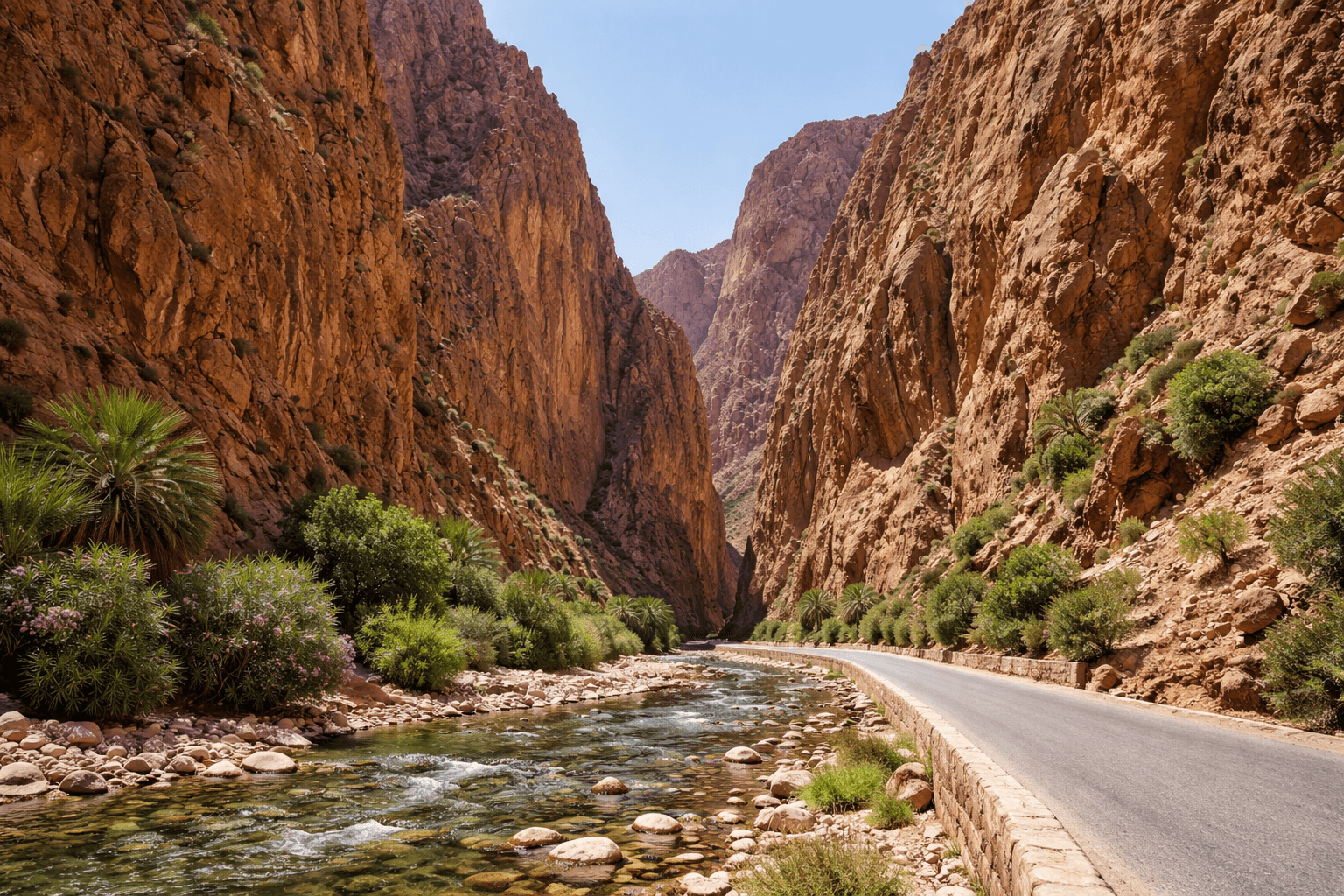
Ifrane and Azrou are ideal if you want cool air, cedar forests, and a clear visual break from the medina. Official tourism materials identify Ifrane as a nearby destination from Fes.
Moulay Yacoub is a lighter option if you want a short wellness-focused escape rather than a full sightseeing loop. Morocco’s tourism office includes its thermal baths among notable attractions linked to Fes.
For travelers staying longer, regional routes can also be extended into a broader north-Morocco circuit. That is where a rental car creates real flexibility.
FAQ
1. Is Fes worth visiting?
Yes. Fes is one of Morocco’s richest cultural destinations, especially for travelers interested in living history, traditional crafts, and medina life.
2. How many days do you need in Fes?
Three days covers the essentials well. Five days is better if you want day trips to places like Meknes, Volubilis, or Ifrane.
3. What is Fes most famous for?
Fes is best known for Fes el-Bali, traditional crafts, Chouara Tannery, Al-Qarawiyyin, and its preserved historic medina.
4. Is Fes el-Bali really car-free?
It is a pedestrian medina rather than a normal drivable city grid, which is a major part of its historic character and one reason it feels so immersive.
5. Do you need a car in Fes?
Not for the medina itself. A car is most useful for airport logistics, hotels outside the old city, and regional day trips.
6. What are the best things to do in Fes?
Walk the medina, see Chouara Tannery, visit Bou Inania, explore Al-Qarawiyyin’s surroundings, stop at Nejjarine, and go up to the Merenid Tombs viewpoint.
7. Is Fes good for first-time visitors to Morocco?
Yes, especially if you want a more historic and immersive city experience than a resort-style stay. It can feel intense, but it is deeply rewarding.
8. Where should you stay in Fes?
Choose the medina for atmosphere, medina-edge riads for easier access, and Ville Nouvelle for convenience and simpler driving.
9. What is the best time to visit Fes?
Spring and autumn are generally the most comfortable periods for walking and day trips.
10. Is Fes better with a driver or rental car?
A driver is usually easier for city logistics. A rental car is better if your trip includes several regional drives.
Book with MarHire CTA
A strong Fes trip depends on matching transport to your style of travel. If you want total flexibility for airport pickup, regional excursions, and northern Morocco routes, Car Rental Fes is the practical choice. If you prefer smoother city arrivals, easier medina access planning, and less stress around parking or drop-off points, Private Driver Fes is often the smarter option. And if you want to round out the trip with guided experiences and local ideas, start with Things to Do Fes.