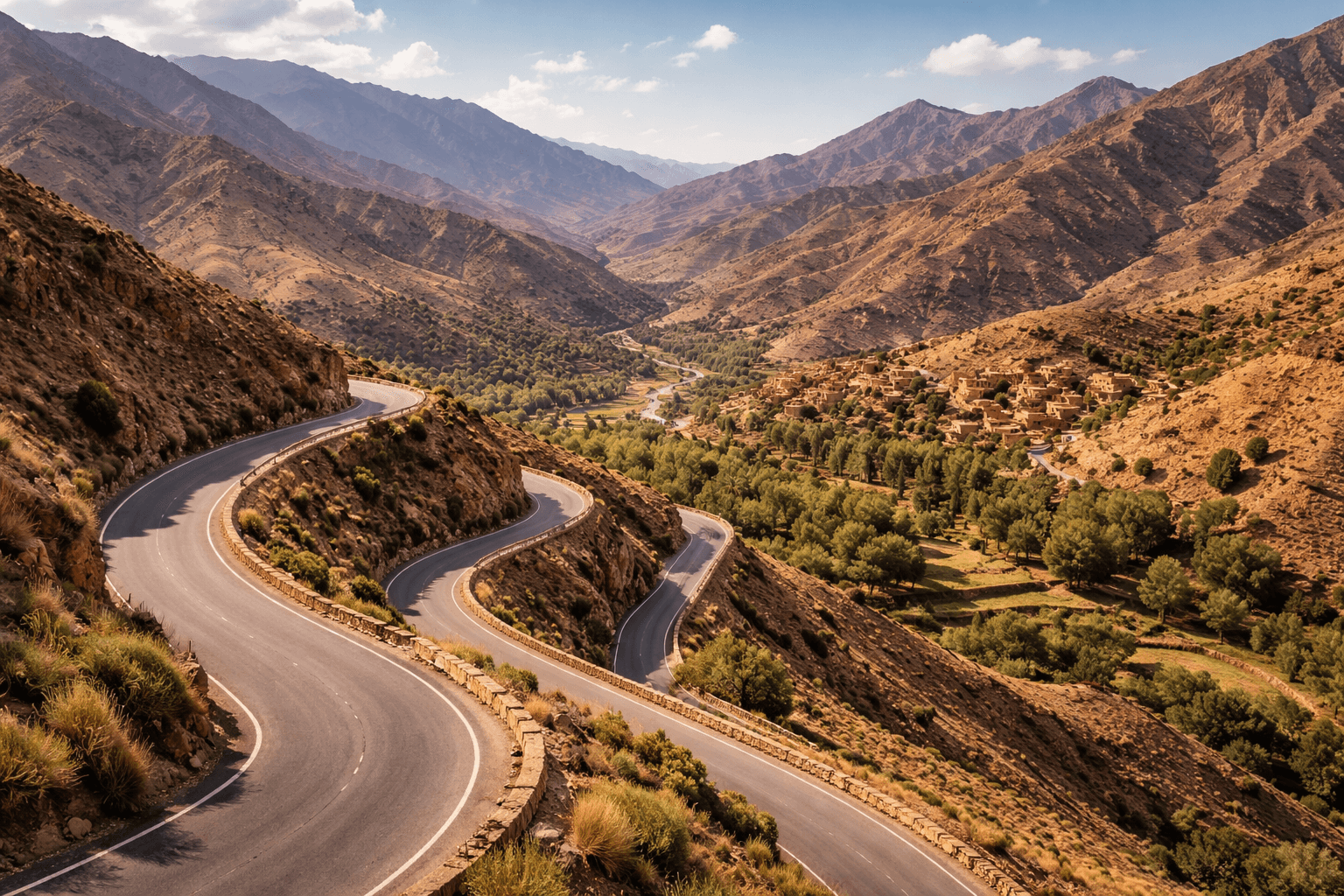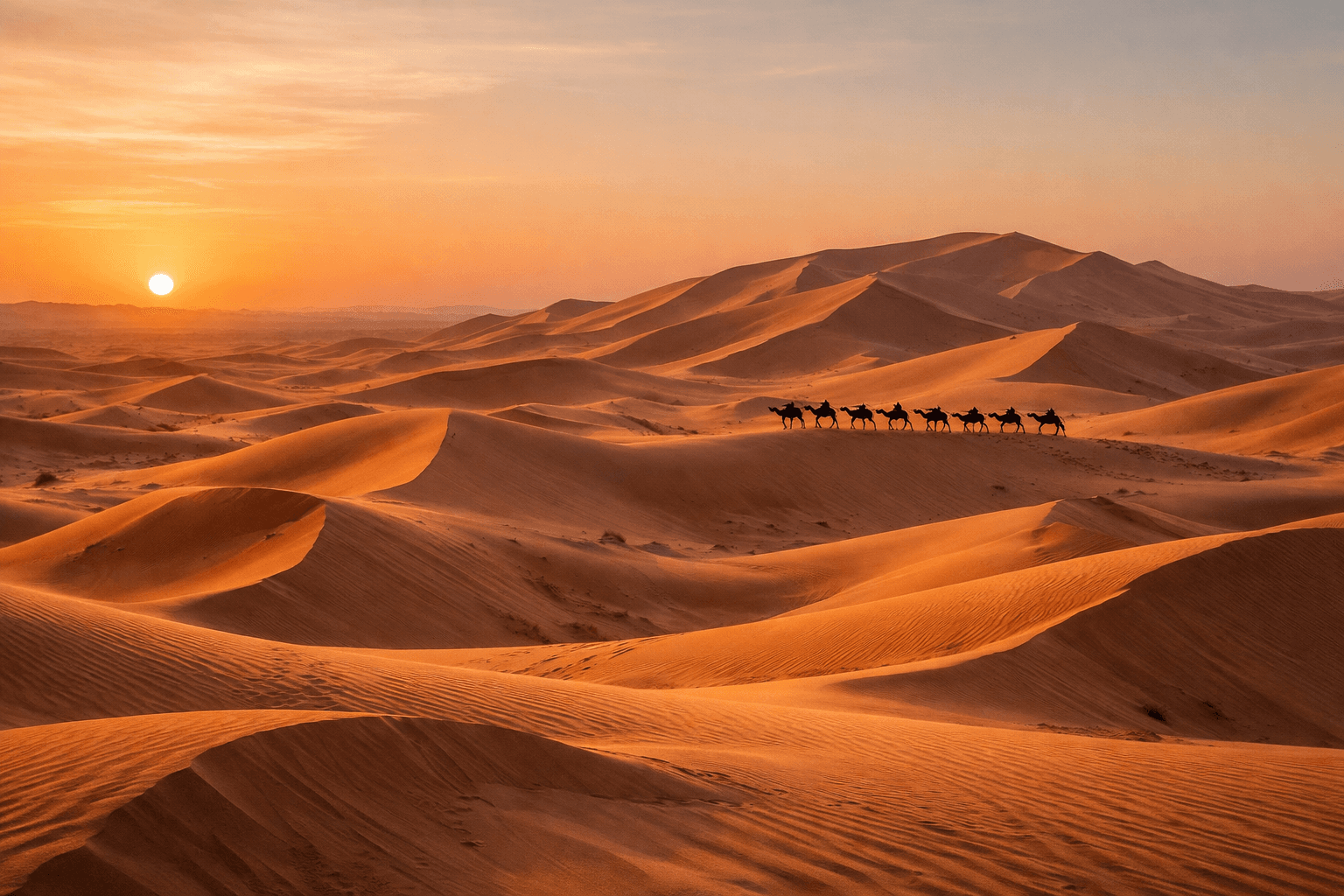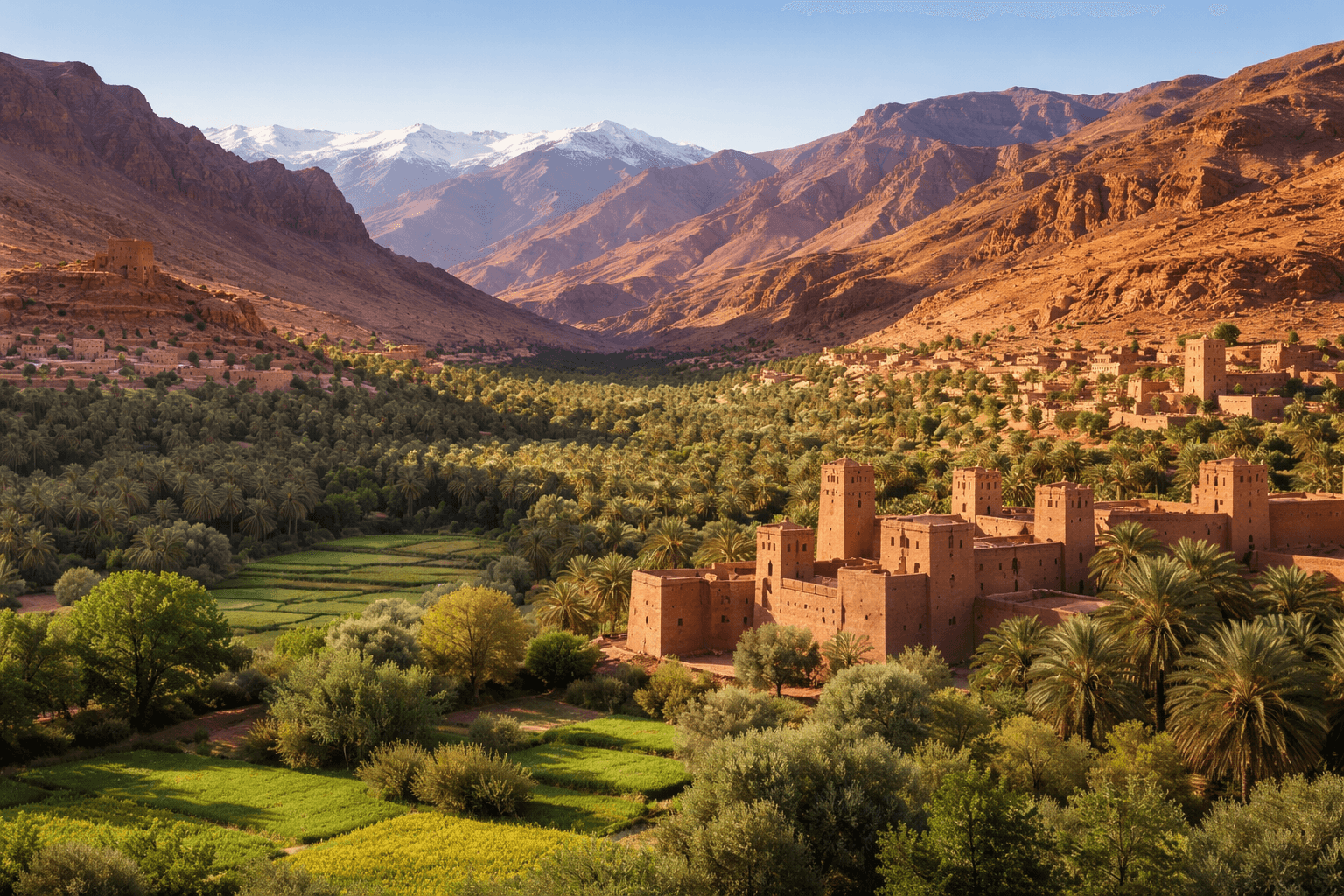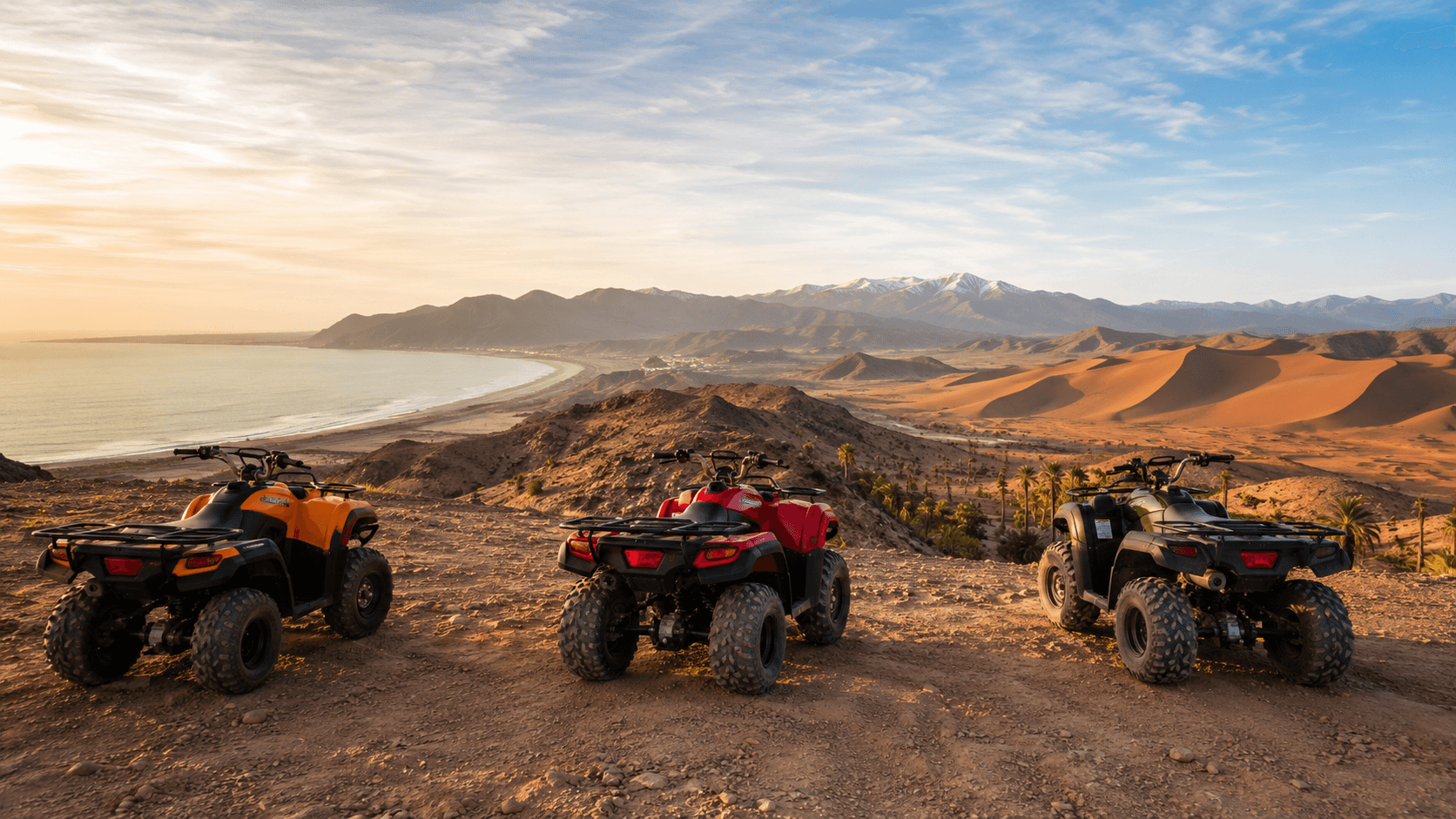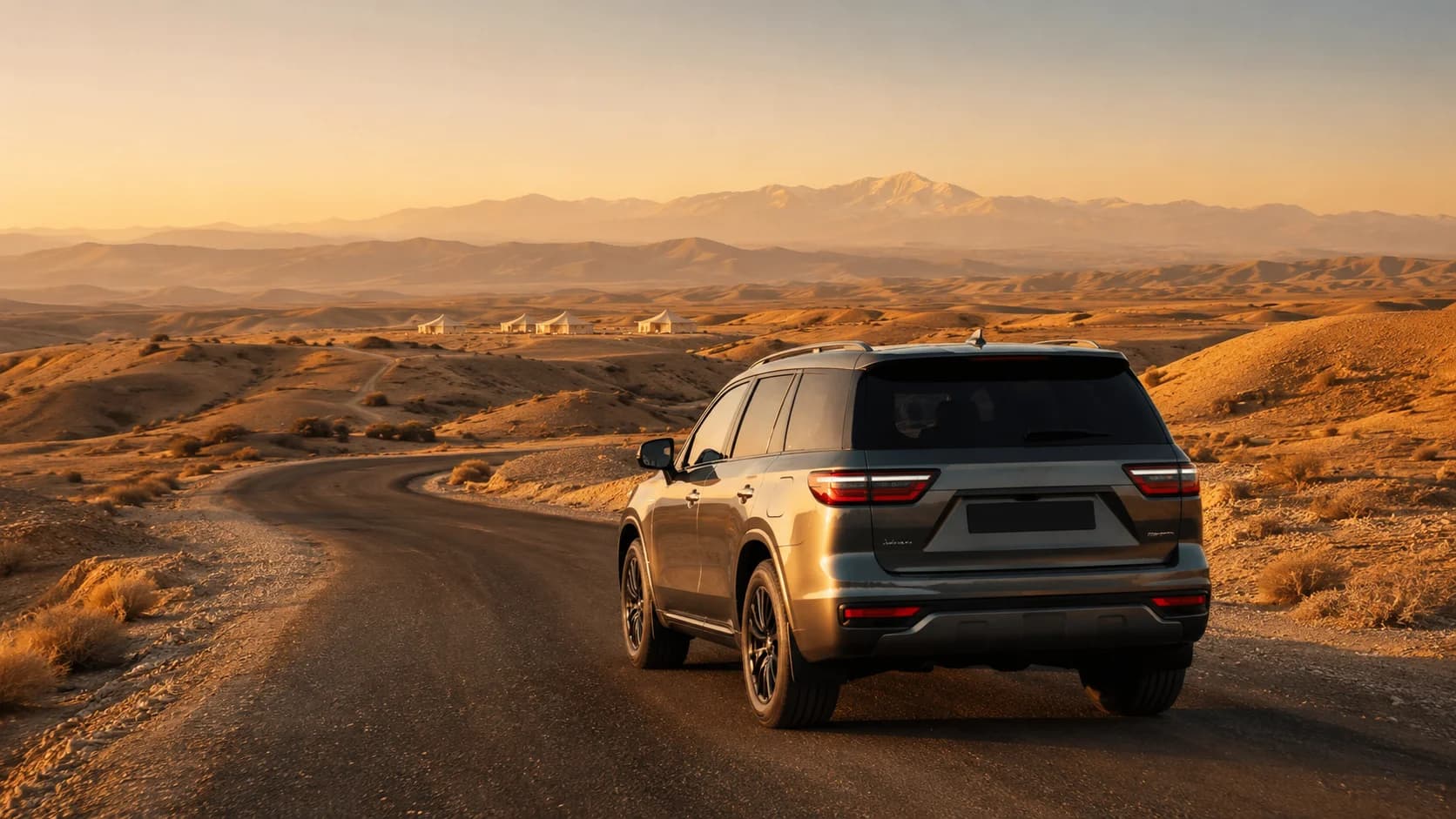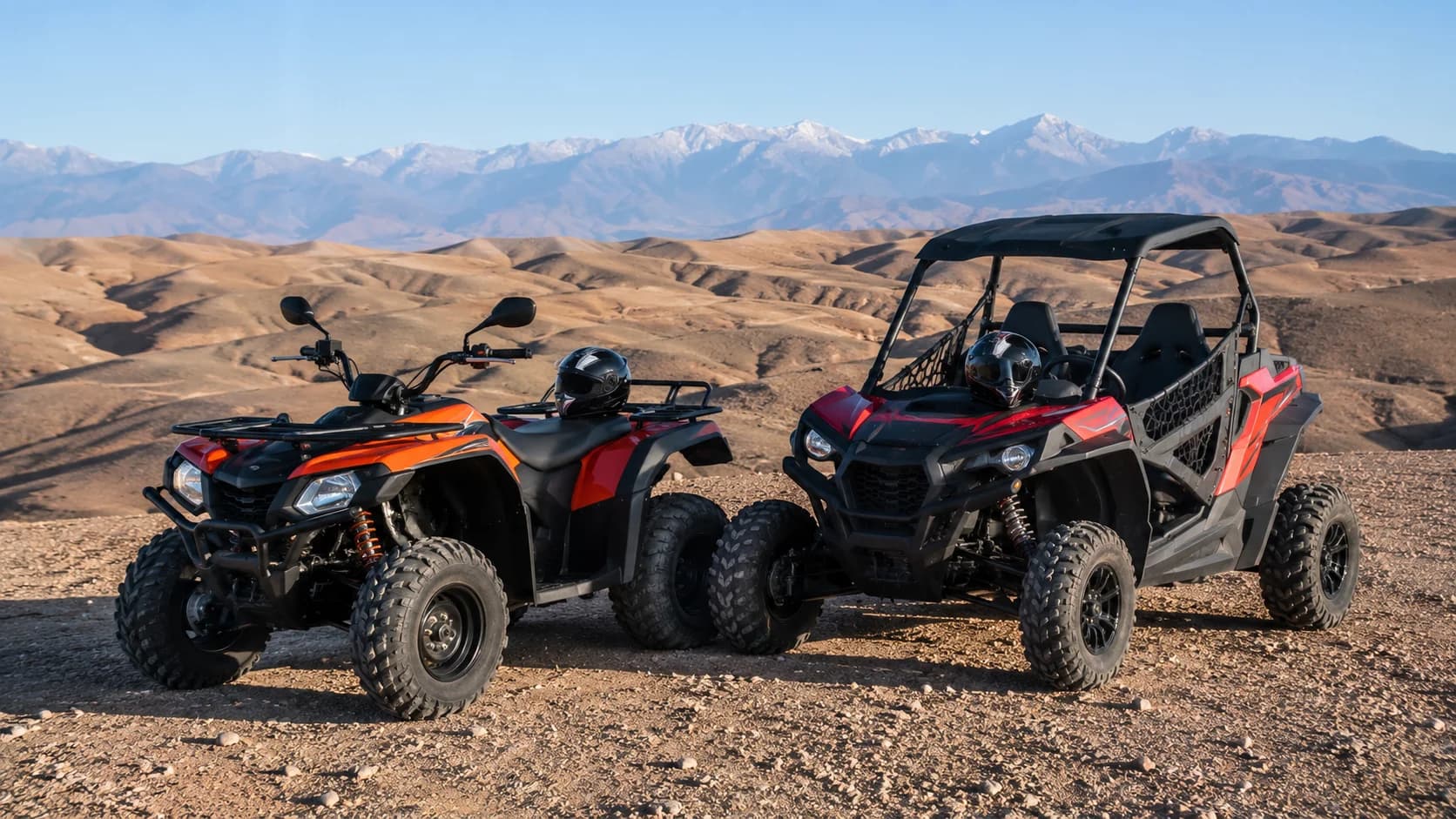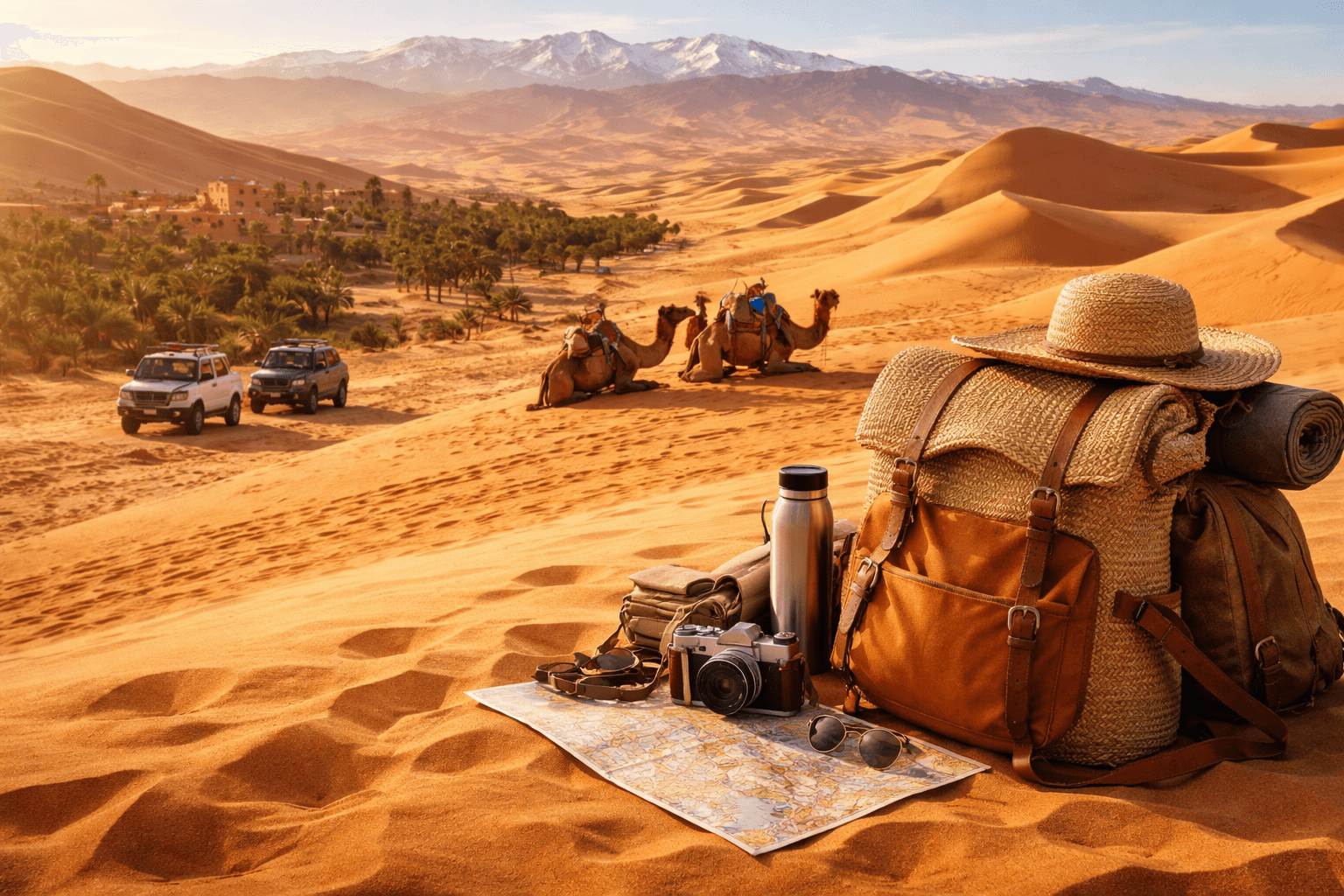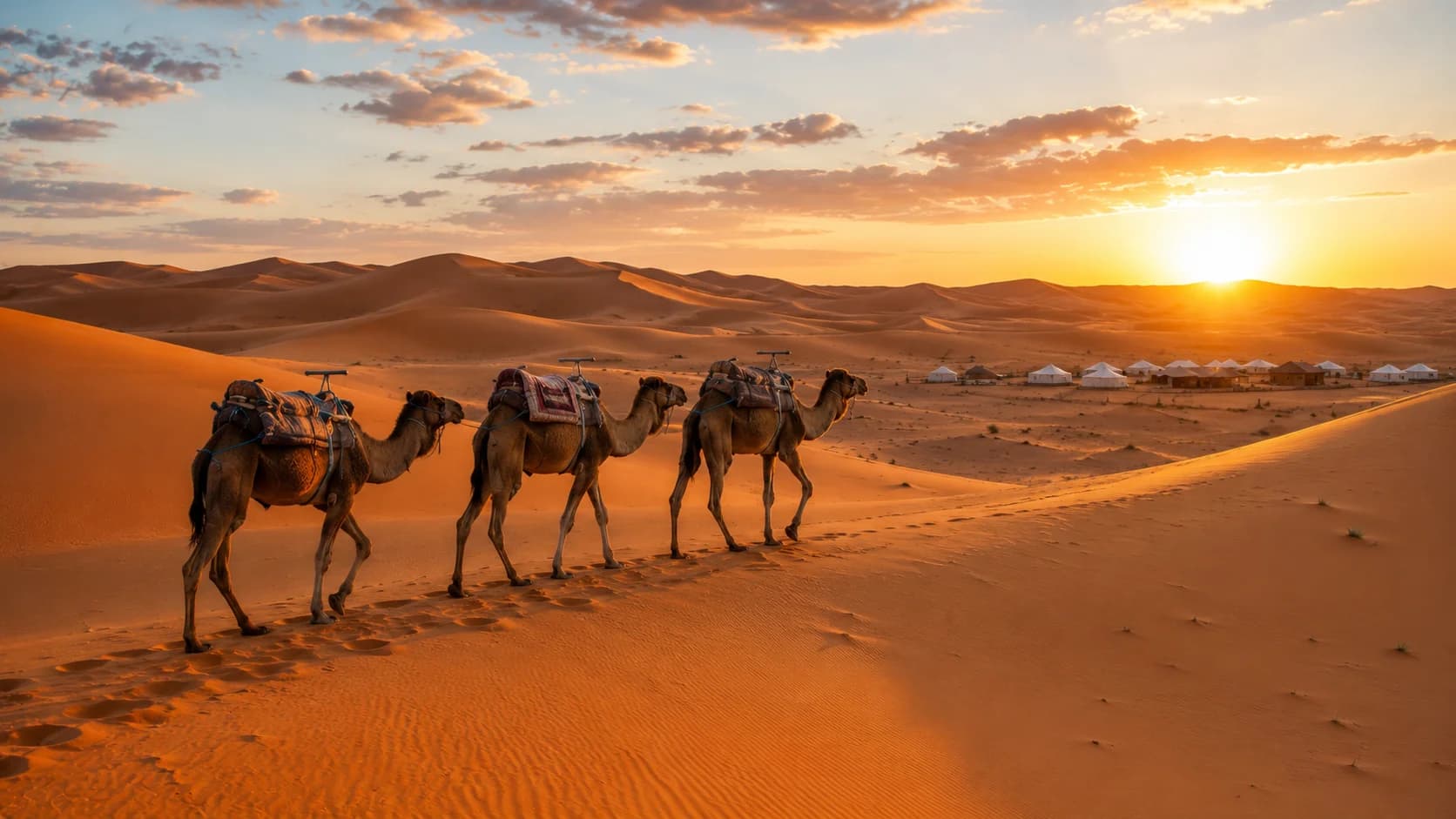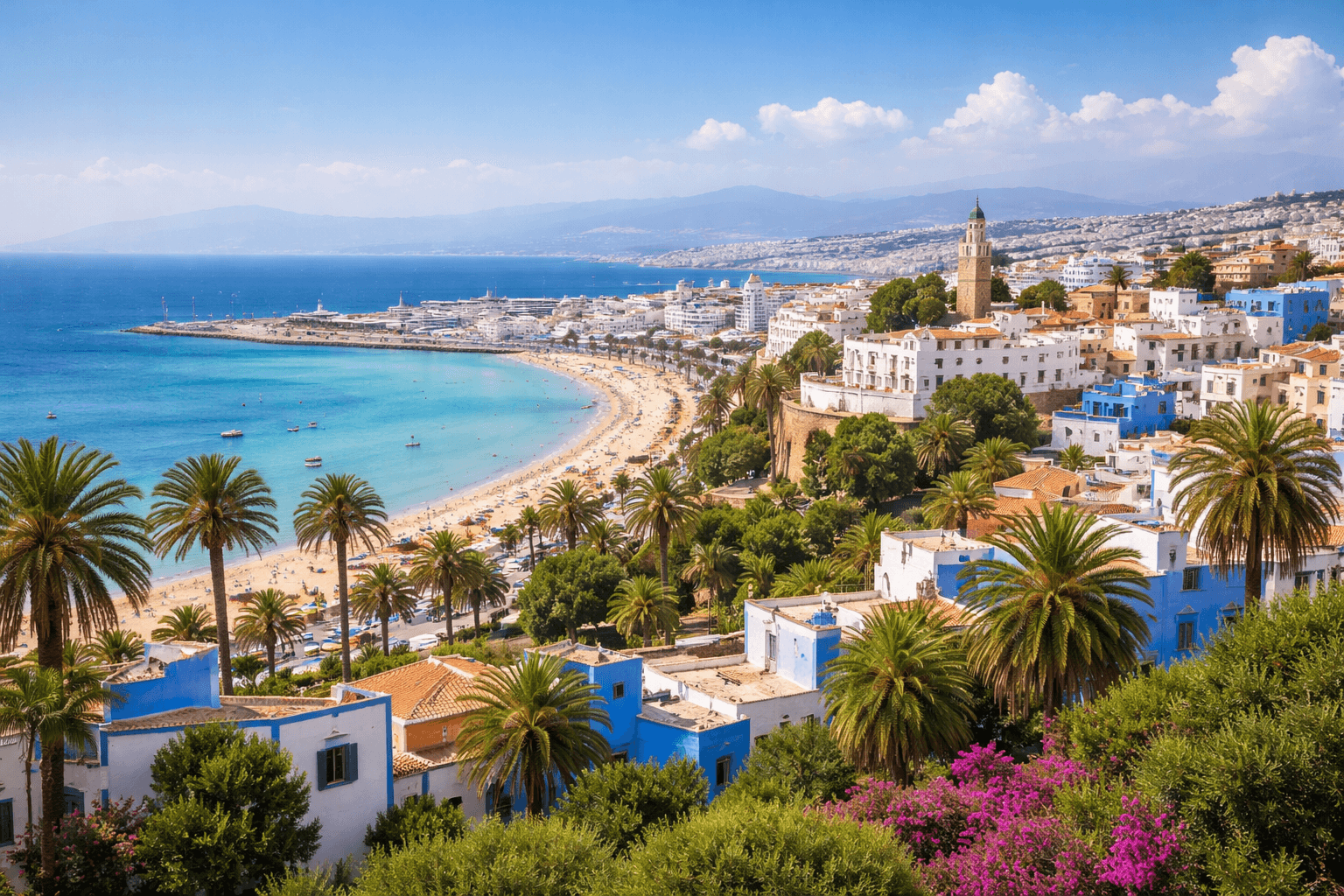








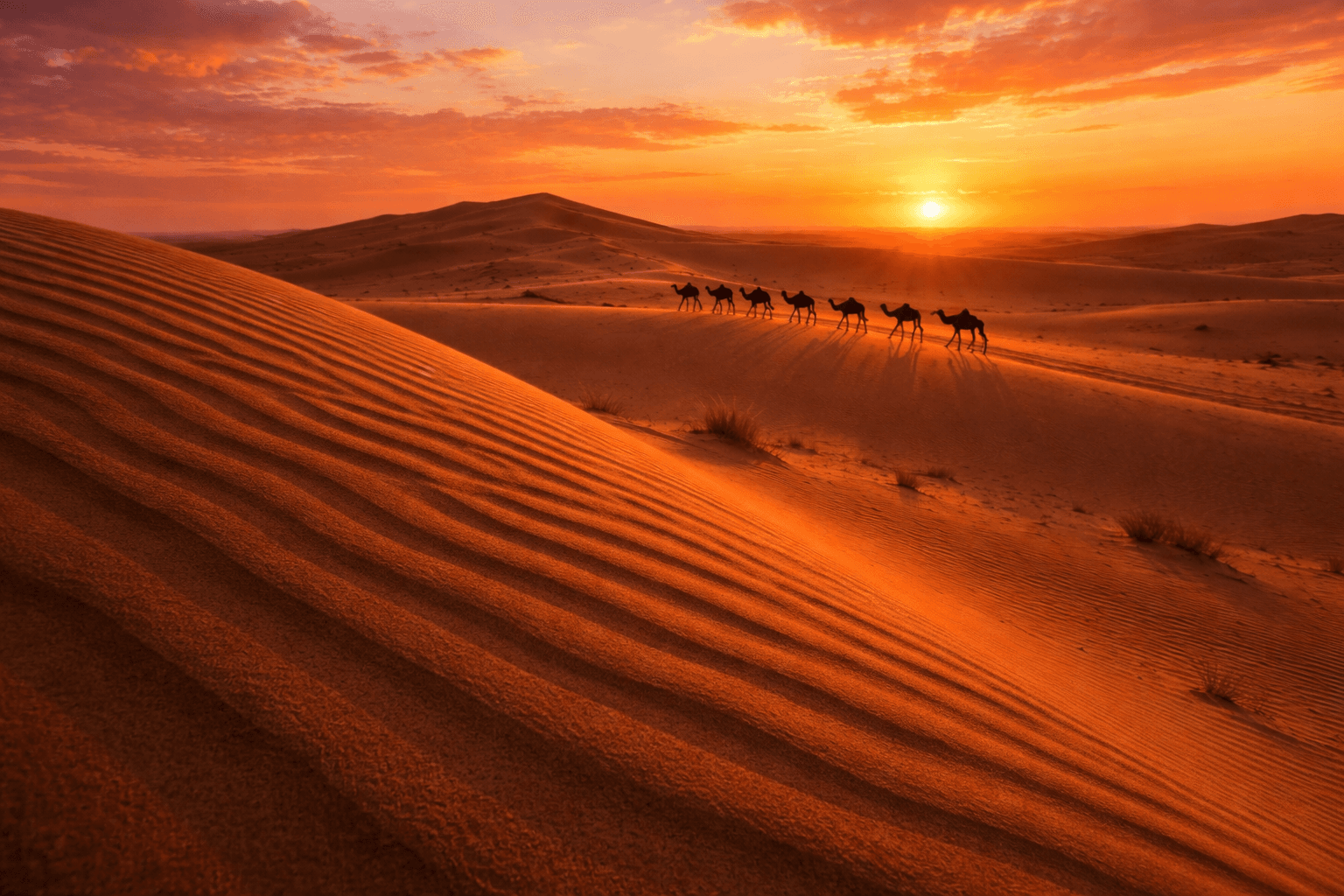
The Sahara Desert Morocco experience is one of those trips that stays with people long after they leave. It is not just about seeing sand dunes once and taking a few sunset photos. It is about crossing changing landscapes, watching the mountains open into dry valleys, hearing silence that feels almost unreal, and ending the day under a sky so clear that it changes your sense of scale. In Morocco, the best-known gateway to this world is Merzouga, where the golden dunes of Erg Chebbi rise beside a small desert village and nearby oases. Morocco’s official tourism site presents Merzouga as one of the country’s desert gateways and highlights Erg Chebbi, palm groves, tracks, hikes, and the seasonal lake of Dayet Srij.
For many travelers, the biggest surprise is that the journey itself is part of the reward. A Sahara route from Marrakech is not a straight line into empty sand. It passes through mountain roads, kasbah country, date palm valleys, gorges, stone deserts, and old caravan landscapes. That is why the best Morocco desert trip is usually planned as a multi-day route, not a rushed day excursion. A classic approach includes the High Atlas, Aït Ben Haddou, Ouarzazate, Tinghir or Todra Gorge, Erfoud or Rissani, and then Merzouga. The result is a trip that combines scenery, culture, food, road adventure, and one unforgettable night in the dunes.
The desert also works well for different travel styles. Some people want a comfortable camp with a private tent, proper beds, hot showers, and a 4x4 transfer. Others want a more traditional rhythm with a longer camel ride Morocco experience and a simpler camp atmosphere. Families usually want shorter transfers, gentler dune activities, and reliable vehicle comfort. Couples often focus on sunrise, starry skies, and premium camps. Road trippers care more about driving conditions, fuel planning, and choosing the right vehicle before they leave Marrakech or Fes.
If you want flexibility, this is where Car Rental Morocco becomes important, especially for travelers who want to stop at viewpoints, villages, kasbahs, and valleys on the way south. If you prefer not to handle mountain roads and long driving days yourself, Private Driver Morocco is often the more relaxing option. And for travelers planning a rougher route mix, desert-edge tracks, or a Grand Tour that goes beyond the classic paved circuit, 4x4 Rental Morocco gives more confidence and ground clearance for the right parts of the journey. MarHire’s Morocco category pages currently include dedicated pages for car rental, private drivers, and Jeep rentals, which makes those three internal routes suitable for this topic.
Table of Contents
- Overview & Why Visit
- Best Time to Visit
- Top 8 Desert Experiences
- How to Get to the Sahara & Car Types
- Driving Tips for Desert Roads
- 3-Day Sahara Itinerary from Marrakech
- 5-Day Sahara Grand Tour Itinerary
- Best Desert Camps & Accommodation
- Day Trips & Nearby Attractions
- FAQs
- Book with MarHire
Overview & Why Visit
The reason the Sahara Desert Morocco route is so popular is simple: nowhere else in the country gives the same combination of scale, silence, and cinematic movement. You do not arrive all at once. Morocco slowly transforms around you. Red city walls turn into mountain switchbacks. Mountain villages give way to wide valleys. Valleys become rocky plains. Then, suddenly, the dunes appear like a wall of light on the horizon.
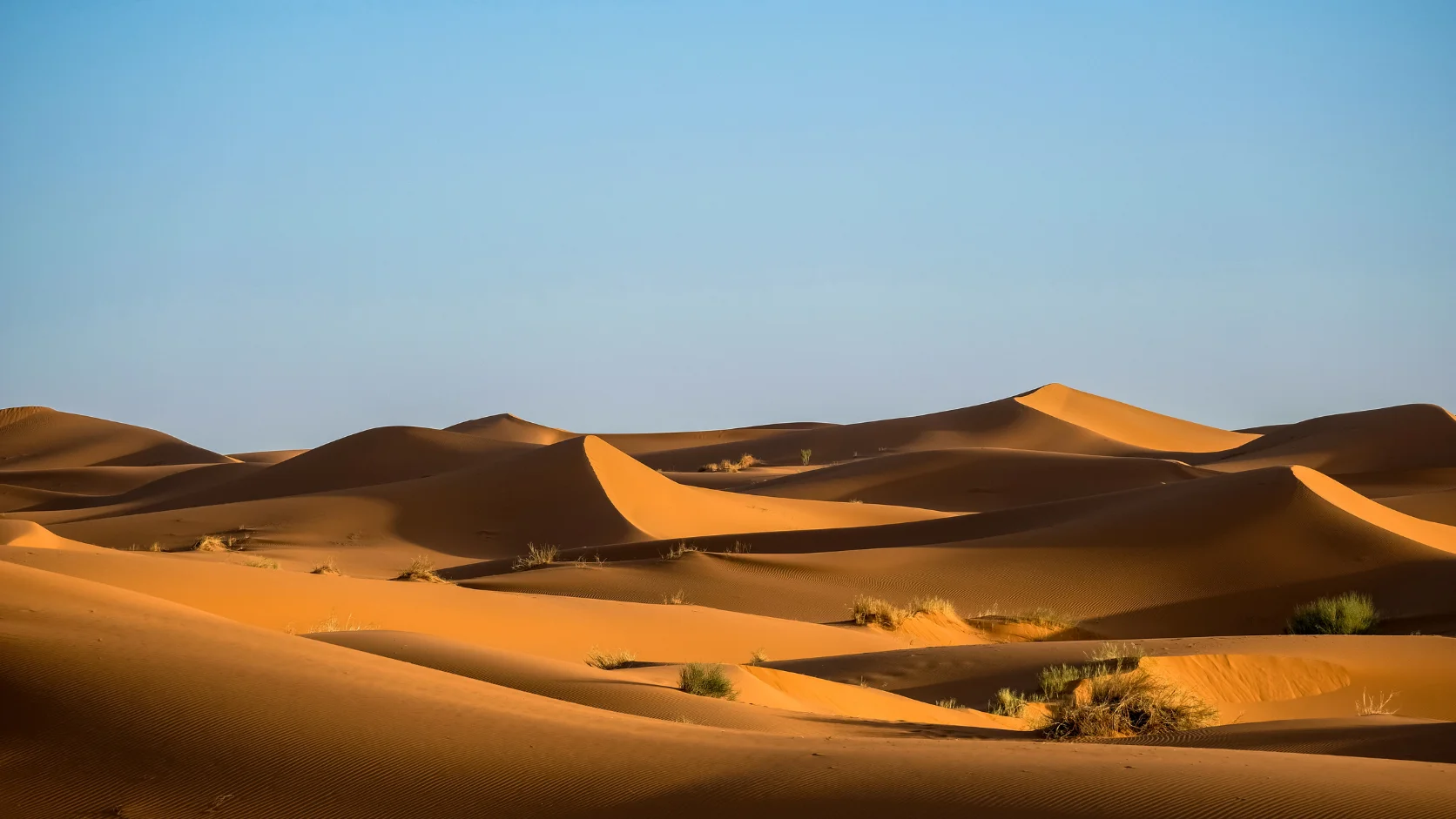
The most famous dune field in Morocco is Erg Chebbi, near Merzouga. This is the landscape that many travelers picture when they imagine a Morocco desert tour: long clean ridges of orange-gold sand, camel caravans at sunset, camps between the dunes, and deep quiet after dark. Morocco’s official tourism site specifically highlights Merzouga as the territory of Erg Chebbi and describes it as a landscape of dunes, tracks, hikes, and desert atmosphere.
But the destination is not only visual. The desert offers contrast. Days feel open and bright, while evenings become intimate and quiet. You can spend the afternoon sandboarding or exploring by 4x4, then sit by the fire after dinner listening to local music under a sky full of stars. That balance is what makes the desert work for so many travelers. It feels adventurous without requiring extreme trekking or technical skills.
Another reason to visit is cultural depth. The desert edge has long been linked to caravan trade, oasis life, and pre-Saharan architecture. Even before you reach Merzouga, the wider route introduces kasbah landscapes and settlements tied to southern Morocco’s trading history. One of the most famous stops on the route, Ksar of Aït Ben Haddou, is recognized by UNESCO as an outstanding example of southern Moroccan pre-Saharan architecture.
There is also a practical reason the Sahara works so well as a Morocco highlight. It fits into several kinds of itineraries. You can do a focused three-day trip from Marrakech, a longer five-day loop, or connect it with Fes, Ouarzazate, the Draa Valley, or even a broader southern road trip. That flexibility makes the desert one of the most rewarding additions to a first or second Morocco itinerary.
For travelers still deciding whether it is worth the long road journey, the answer is usually yes, as long as you plan it correctly. The mistake is not choosing the desert. The mistake is rushing it.
Best Time to Visit
The best seasons for a Sahara Morocco itinerary are generally spring and autumn. Morocco’s official tourism guidance says spring and fall are the best times to venture into the desert, when conditions are more pleasant for exploration.
In practical terms, that usually means March to May and late September to November are the most comfortable windows for many travelers. Days are warm enough for camel rides, walking, and photos without the brutal intensity of peak summer afternoons. Nights can still be cool, especially in late autumn and early spring, so layers matter.
Summer is possible, but it is not ideal for everyone. The dunes are beautiful year-round, yet the heat can turn a romantic desert dream into an exhausting experience if you choose the wrong timing. Midday outdoor activity becomes much less enjoyable, and the best camps shift their rhythm toward very early mornings and later evenings.
Winter is often underrated. It can be a strong option for travelers who like crisp sunshine, fewer crowds, and dramatic sunrise light. The trade-off is cold nights. Desert camps can feel surprisingly chilly after sunset, especially for guests who expect only warm weather in Morocco. If you travel in winter, a warm layer for evenings and sunrise is essential.
The best advice is simple. If your priority is comfort, choose spring or autumn. If your priority is lower crowd pressure and dramatic light, winter can be excellent. If your only possible time is summer, plan carefully, reduce exposure in the middle of the day, and pick a camp with good logistics and realistic timing.
Top 8 Desert Experiences
A great desert camp Morocco trip is not just one activity. The best journeys combine movement, stillness, culture, and timing. These are the eight experiences that define a strong Sahara trip.
1. Sunset on the Erg Chebbi dunes
This is the classic moment for a reason. When the sun drops, the dunes shift from gold to orange, then amber, then soft rose. Shadows sharpen the ridgelines, and even a short walk to a higher crest feels rewarding. Sunset is often the moment when travelers realize the desert is bigger and quieter than photos suggested.
2. Sunrise over the sand
Sunrise is different from sunset. It feels cleaner, cooler, and more spacious. The wind often leaves fresh patterns overnight, so the dunes look untouched. If you only walk the dunes once, sunrise is arguably the better time because temperatures are gentler and the light is softer.
3. Camel ride Morocco experience
A camel ride Morocco moment is still one of the most iconic ways to enter camp, especially for first-time visitors. It is less about speed or distance and more about rhythm. The approach works best when expectations are realistic. It is symbolic, scenic, and memorable, but not always the most comfortable option for long transfers. Many good camps now offer a choice between camel access and 4x4 transfer, which is ideal for families, older travelers, or anyone with back discomfort.
4. Overnight desert camp stay
Sleeping in the dunes changes the whole trip. The best camps balance atmosphere and practicality. You want comfort, good food, reliable staff, and enough organization that the experience feels smooth rather than staged. A proper overnight stay gives you sunset, dinner, music, silence, stars, and sunrise in one flow.
5. Stargazing
One of the strongest reasons to spend the night is the sky. With limited light pollution, the desert can offer exceptionally clear stargazing conditions. Even travelers who are not interested in astronomy usually remember this part. The silence makes it feel bigger.
6. 4x4 dune-edge exploration
Not every desert landscape is pure sand. One of the best ways to understand the region is to go beyond the postcard view and explore the wider area by 4x4. This can include black desert sections, fossil areas, oasis edges, seasonal lakes, or local settlements. Morocco’s tourism site also points to outdoor activities in the Merzouga area, including camel experiences, sand skiing, and 4x4 exploration around Erg landscapes.
7. Khamlia and local music culture
A strong Merzouga itinerary often includes Khamlia, a village known for musical traditions and desert hospitality. This stop gives more texture to the trip. It reminds travelers that the desert is a lived region, not only a scenic backdrop.
8. Desert edge photography and slow travel
Many travelers arrive expecting action, then end up loving the simplest things: tea at camp, walking between dunes without a deadline, photographing wind patterns, or watching dawn move across the sand. The desert works best when you leave some room for quiet.
The biggest mistake is overbooking the experience. Two or three well-chosen activities often feel richer than trying to turn the Sahara into a checklist.
How to Get to the Sahara & Car Types
For most travelers, the main gateway is Merzouga, reached by road from Marrakech, Fes, Ouarzazate, or Errachidia. The most popular self-drive or private-driver route from Marrakech usually passes through the High Atlas, Aït Ben Haddou, Ouarzazate, Dades or Tinghir, then Erfoud or Rissani before Merzouga. Recent travel sources consistently place the road journey from Marrakech to Merzouga at roughly nine hours of pure driving, which is exactly why it should be broken into multiple stages rather than treated like a simple transfer.
There is also an airport option for travelers who want to reduce road time. Ouarzazate Airport is operated within Morocco’s ONDA airport network, and ONDA lists Ouarzazate among Morocco’s airport facilities and services. That makes Ouarzazate a useful staging point if you want to begin your desert road segment farther south.
Choosing the right vehicle matters more than people think. For the classic paved tourist route in normal weather, you usually do not need a hardcore off-road vehicle. A solid modern compact car, sedan, or crossover is enough for Marrakech–Aït Ben Haddou–Ouarzazate–Dades–Merzouga if you drive carefully and avoid leaving paved roads. What matters more is comfort, luggage space, air conditioning, and how many hours you can realistically spend behind the wheel.
A compact SUV or crossover is often the best balance for couples and small families. It gives slightly higher seating, better comfort on varied road surfaces, and confidence on rough edges near viewpoints or camp access roads. A larger SUV or Jeep-style model makes more sense if you plan extra detours, want stronger clearance, or are traveling with more luggage.
Manual cars are common in Morocco, but many visitors are more relaxed in an automatic for long mountain-descending sections and town traffic. If you are not used to narrow roads, overtakes, and mountain bends, paying more for an automatic can be worth it.
For travelers who do not want to self-drive, the best alternative is usually a private transfer or multi-day chauffeur route. That gives you the same scenery without the fatigue of handling every stop, turn, fuel break, and timing calculation yourself.
Driving Tips for Desert Roads
The road to the Sahara is generally about endurance and attention, not technical off-roading. Most problems come from fatigue, overconfidence, late departures, or poor pace control.
Start early. A desert transfer day is always longer than the map suggests. Mountain curves, villages, roadworks, photos, food stops, and fuel breaks all add time. If you leave Marrakech too late, you risk finishing the day tired, rushed, and less alert.
Respect the High Atlas. The road is scenic, but it demands focus. Overtakes should be patient, not emotional. Use pull-ins and viewpoints to rest instead of trying to “push through” too many hours in one stretch.
Keep fuel above the comfort line. Do not wait until the tank is close to empty before looking for a station, especially once you move deeper into southern routes where distances between stops can feel much longer.
Watch for village slowdowns, speed control, and changing surfaces. Even good roads can shift rhythm quickly. The desert approach is not only empty space. It includes towns, local traffic, buses, motorbikes, and occasional surprise movement near the roadside.
Avoid night driving into the desert if possible. The route is more enjoyable and less stressful in daylight. You see the landscapes better, judge road conditions more easily, and arrive in camp with energy rather than exhaustion.
Finally, do not drive onto sand unless it is specifically permitted, suitable for your vehicle, and you know exactly what you are doing. Most travelers do not need to do this at all. Reach the desert by paved roads, park where instructed, and let the camp or local operator handle the final access.
3-Day Sahara Itinerary from Marrakech
A 3-day Sahara Morocco itinerary is the classic first-time choice. It is fast, but if paced well, it still feels rewarding.
Day 1: Marrakech to Aït Ben Haddou to Dades Valley
Leave Marrakech early and cross the High Atlas. This is one of the most scenic driving mornings in Morocco, so do not rush it. Stop at viewpoints when the road opens over the mountains. By late morning or early afternoon, continue toward Aït Ben Haddou, one of the most famous ksars in Morocco and a UNESCO World Heritage Site recognized for its pre-Saharan earthen architecture.
After lunch and a walk around the ksar, continue through Ouarzazate and toward the valley region for your overnight stop, often in Dades or near Tinghir depending on your pace. This first day is long, but it sets up a much more enjoyable desert arrival on Day 2.
Day 2: Dades or Tinghir to Todra Gorge to Merzouga
The second day is where the landscape starts to feel more desert-like. A stop at Todra Gorge breaks up the drive and adds another very different landscape to the trip. Continue south-east through Erfoud or Rissani and finally approach Merzouga.
Plan your arrival so you are not racing sunset. Once you reach the desert edge, switch into camp mode. Depending on the camp, this means a camel transfer or a 4x4 ride into the dunes. Sunset on arrival day often becomes the emotional high point of the trip. After dinner, stay outside as long as possible. The best part of the evening is often after the music ends, when the camp grows quiet and the sky takes over.
Day 3: Sunrise in the dunes, then return
Wake early for sunrise. Even travelers who are not “morning people” usually agree it is worth it. After breakfast, return to the village side, then begin the long drive back toward Marrakech, or continue onward if your itinerary does not loop immediately.
This three-day version is efficient, but it works best for travelers who accept that there will be substantial road time. If you want a deeper desert experience, a five-day route is far better.
5-Day Sahara Grand Tour Itinerary
A five-day route is the smarter choice for travelers who want the desert without turning the whole trip into a race.
Day 1: Marrakech to Aït Ben Haddou to Ouarzazate
Leave Marrakech and cross the Atlas with time to enjoy the drive. Visit Aït Ben Haddou, then continue to Ouarzazate for the night. This shorter first day keeps the trip comfortable and avoids the exhaustion that often comes from trying to do too much too early.
Day 2: Ouarzazate to Dades Valley or Tinghir
Spend the day moving through southern landscapes at a more natural pace. Stop for kasbah views, valley photos, and lunch without worrying about making Merzouga before dark. Overnight in Dades or Tinghir.
Day 3: Tinghir to Merzouga
Visit Todra Gorge if you did not do it the day before, then continue via Erfoud or Rissani toward Merzouga. Arrive in time for your camp transfer. This is the ideal day to enjoy the dunes because you reach them with energy instead of road fatigue.
Day 4: Full desert and local exploration
Keep this day for depth. Explore the desert perimeter by 4x4, visit Khamlia, take your time with tea breaks and local stops, and enjoy another sunset without feeling that you have to leave immediately after breakfast the next morning. This extra day is what transforms a good desert trip into a memorable one.
Day 5: Return via a chosen route
You can return toward Marrakech, continue toward Fes, or shape the journey around your broader Morocco plan. This is where a flexible vehicle strategy matters. Some travelers self-drive one way and continue elsewhere. Others use a private driver for the full loop.
The five-day version is better for photographers, couples, families, and anyone who wants to actually experience the desert rather than simply reach it.
Best Desert Camps & Accommodation
The phrase desert camp Morocco covers a wide range of realities, so choose carefully.
Budget camps can still be enjoyable, but expectations should stay realistic. The setting may be beautiful while the logistics are simpler. Mid-range camps usually offer the best value for many travelers: good food, proper beds, private or semi-private bathrooms, organized transfers, and enough comfort to feel special without becoming overly polished.
Luxury camps focus on space, design, service, and comfort. These are ideal for couples, special occasions, or travelers who want the atmosphere of the dunes without sacrificing sleep quality and privacy.
When comparing camps, do not only look at the tent photos. Check the transfer method, dinner timing, bathroom setup, power access, wind exposure, and whether the camp sits truly in the dunes or closer to the edge. Also ask how luggage is handled, what time sunrise wake-up usually happens, and whether sandboarding or local excursions are included.
For many travelers, the best camp is not the most expensive one. It is the one with honest logistics, warm hospitality, and a setting that feels calm rather than crowded.
Day Trips & Nearby Attractions
Merzouga is the headline, but the surrounding route deserves attention.
Aït Ben Haddou is one of the strongest cultural stops anywhere on the journey, and its UNESCO status makes it more than a scenic detour. You can naturally mention it in your article while linking readers to the official UNESCO page for Aït Ben Haddou if you want an authoritative external reference for the site’s heritage importance.
The broader Merzouga region also includes seasonal and landscape contrasts that surprise first-time visitors. Morocco’s official tourism material points to the nearby Dayet Srij area, palm groves, and a wider mix of tracks and hikes around Erg Chebbi, showing that the experience is more varied than dunes alone.
Other worthwhile nearby stops depend on your direction of travel. Rissani adds market-town atmosphere and historical desert-edge character. Erfoud is practical for fuel, hotels, and staging. Todra Gorge gives dramatic contrast if you are heading west. Ouarzazate works well as a rest stop before or after the dunes, especially for travelers using its airport access within the ONDA network.
The key is not to overload the route. The desert is strongest when the trip still leaves room for silence.
FAQ
1. Where is the Sahara Desert in Morocco?
The best-known visitor gateway is Merzouga in south-eastern Morocco, beside the dunes of Erg Chebbi. Morocco’s official tourism site presents Merzouga as one of the country’s desert gateways and describes Erg Chebbi as a landscape of dunes, tracks, hikes, and palm groves.
2. Is Merzouga the best place to experience the Sahara in Morocco?
For most first-time travelers, yes. Merzouga is the easiest and most iconic choice because Erg Chebbi delivers the classic dune scenery people expect.
3. How many days do you need for a Sahara trip from Marrakech?
Three days is the minimum for a classic round trip, but five days is much more comfortable and rewarding.
4. Do you need a 4x4 to reach Merzouga?
Not for the standard paved approach in normal conditions. A regular car or crossover is usually enough for the classic road route. A 4x4 is more useful for added flexibility, rougher edges, or extended southern touring.
5. Is a camel ride necessary?
No. It is iconic, but not essential. Many camps offer both camel and 4x4 transfers, and some travelers prefer the comfort of the latter.
6. What is the best month to visit the Sahara in Morocco?
Spring and autumn are usually the safest overall choices for comfort. Morocco’s official tourism guidance says spring and fall are the best times to venture into the desert.
7. Is the desert too hot in summer?
It can be very intense, especially in the middle of the day. Summer travel is possible, but it requires careful pacing and realistic expectations.
8. Is the Sahara cold at night?
Yes, it can be, especially in winter and shoulder-season mornings. Travelers often underestimate desert night temperatures.
9. Can families do a Sahara desert trip?
Yes, but the itinerary matters. Families usually do better with slower pacing, a comfortable vehicle, and a camp that offers easy logistics.
10. Is self-driving to the Sahara difficult?
It is manageable for confident drivers, but it is long. The challenge is more about concentration, mountain roads, and fatigue than off-road difficulty.
11. Is Aït Ben Haddou worth adding to the route?
Absolutely. It is one of the most rewarding cultural stops on the way and is recognized by UNESCO for its pre-Saharan earthen architecture.
12. Should I book a desert camp in advance?
Yes, especially in the most popular seasons. Good camps with reliable service and better dune settings can fill up quickly.
Book with MarHire
The best Sahara Desert Morocco trip is the one that matches your pace. Some travelers want the freedom to stop wherever the landscape pulls them. Others want the comfort of a driver who already knows the route, the fuel logic, the good lunch stops, and the realistic timing between mountain roads and desert arrival. That is exactly where MarHire fits.
If you want a flexible road trip with scenic stops, book Car Rental Morocco and build your own desert route. If you want to enjoy the journey without the fatigue of self-driving, choose Private Driver Morocco. And if your plan includes rougher terrain, stronger clearance, or a broader southern itinerary, 4x4 Rental Morocco is the practical upgrade.
A Sahara journey should feel expansive, not stressful. With the right transport, the right pacing, and the right camp, it becomes one of the most memorable experiences in Morocco.