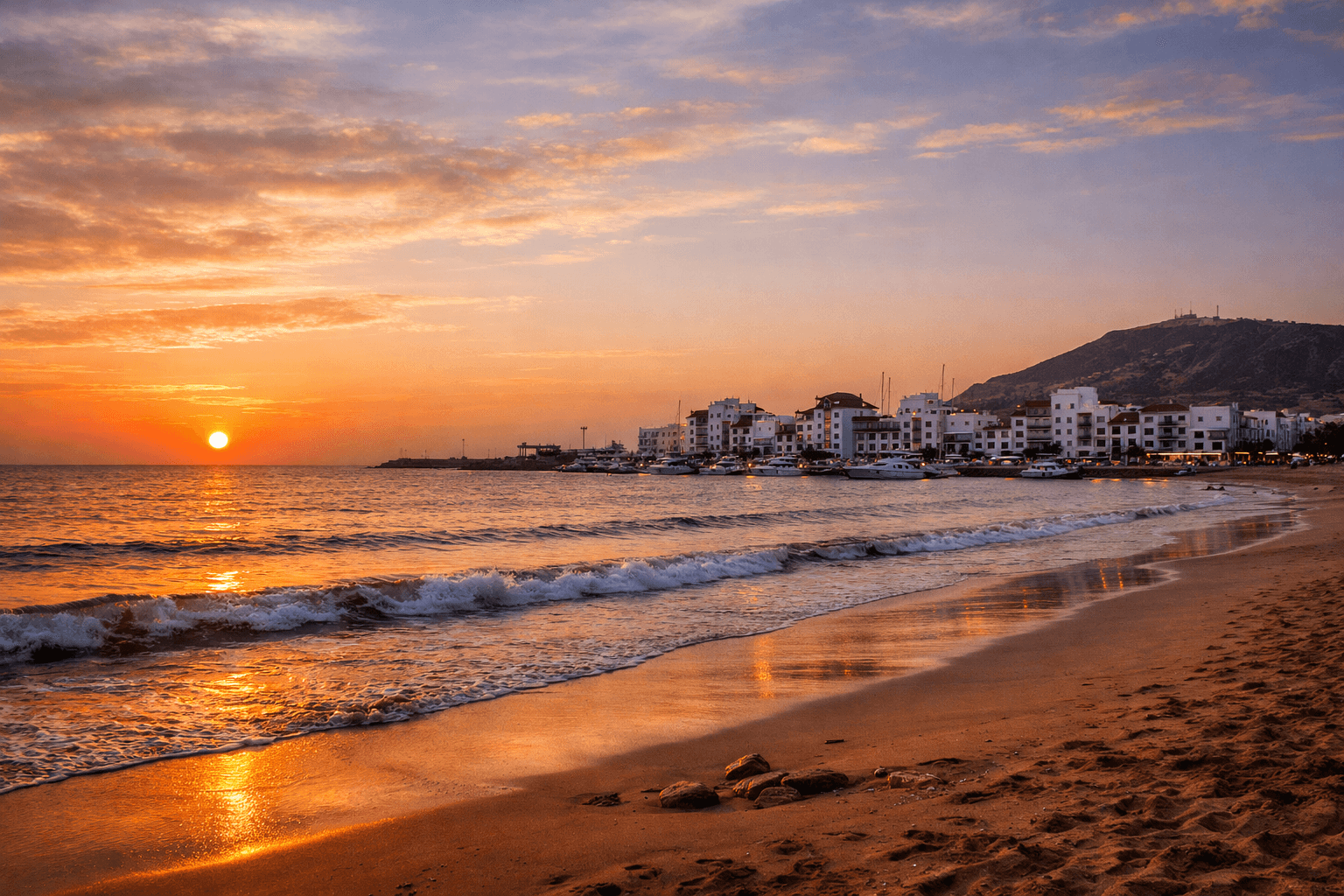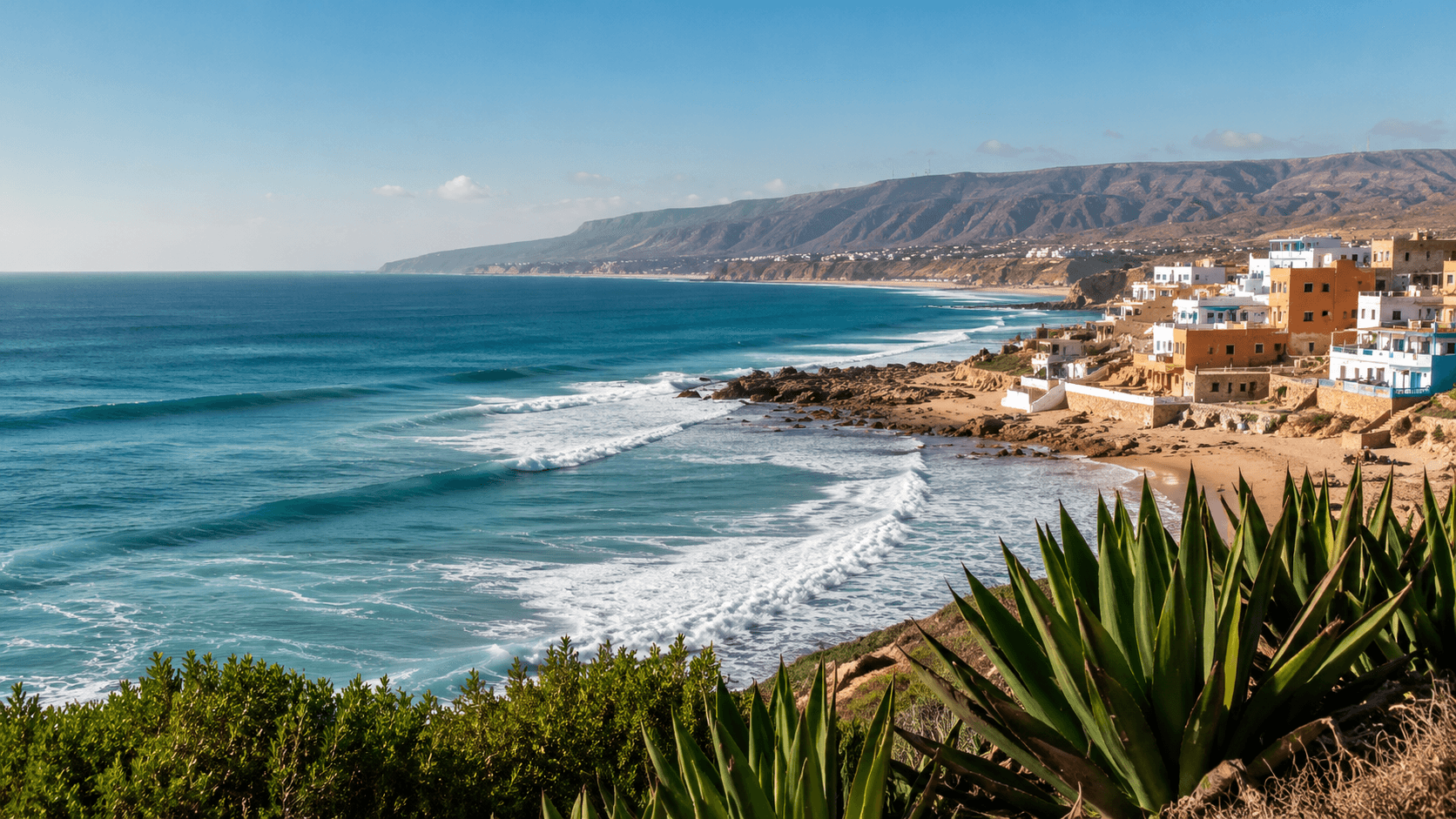



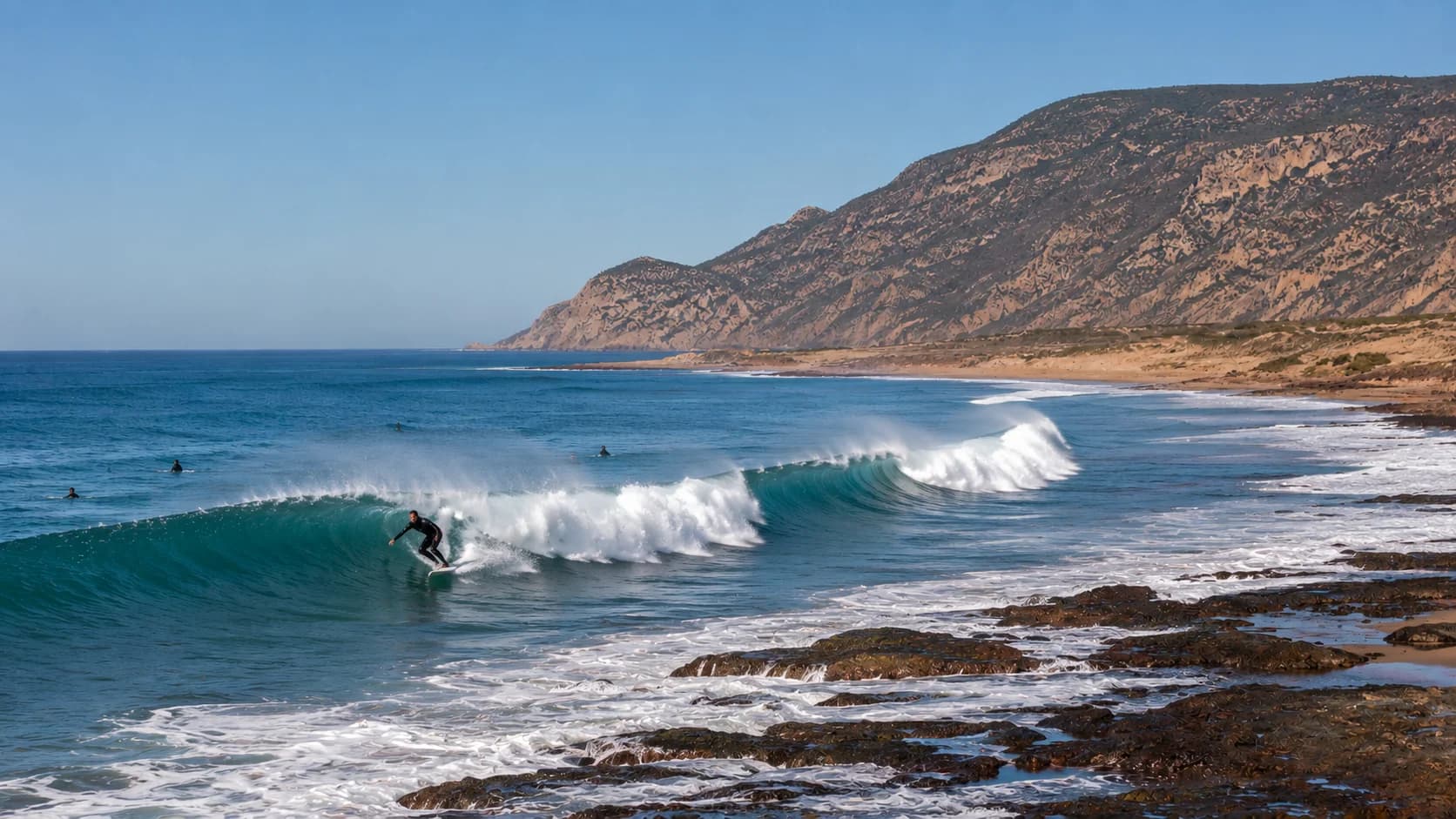
Morocco has become one of the most talked-about surf destinations within easy reach of Europe, and the reason is simple: it combines long Atlantic swell lines, famous right-hand point breaks, beginner-friendly bays, warm light, strong surf culture, and a travel cost that often feels far more accessible than many other surf regions. Along the coast north and south of Agadir, travelers can move between mellow learner waves, iconic points, windy beach breaks, and laid-back surf towns in a relatively short distance. The official Morocco tourism board actively promotes Taghazout and Imsouane as flagship surf destinations, highlighting Anchor Point, Killer Point, Panorama Beach, and Imsouane’s long beginner-friendly wave.
For most travelers, the main question is not whether Morocco is worth surfing. It is where to base yourself and what kind of surf trip you want. Taghazout is the best-known name and the strongest all-round base. Imsouane is the classic choice for long, forgiving rides and a slower rhythm. Essaouira offers a broader travel experience with waves, wind, and kitesurfing energy, while Safi and Tamraght add more options for surfers who want to explore beyond the obvious. Winter is widely considered peak surf season for Morocco’s point breaks, while shoulder months still work well for many travelers depending on skill level and swell goals.
This guide compares the best surf regions, explains when to go, and helps you choose how to build a smart Morocco surf trip.
Why Morocco Is a World-Class Surf Destination
Morocco’s surf reputation comes from consistency, variety, and geography. The Atlantic sends in swell for much of the cooler season, and the coastline around Taghazout and Imsouane turns that swell into long right-hand points that are famous well beyond North Africa. Morocco’s own tourism materials position Taghazout as home to “legendary waves” and describe Anchor Point as world-famous, while also presenting Imsouane as ideal for beginners thanks to its long, straight, easy-to-read wave.
Another reason Morocco stands out is range. You can spend one day at a mellow bay, another at a more technical point, and the next on a windy beach break or a cultural stop in a historic city. That flexibility matters. It means complete beginners, improvers, longboarders, intermediate surfers, and travelers who want surf plus road trip can all make the coast work.
Morocco also benefits from a practical travel structure. Agadir is the key gateway for most surf travelers heading to Taghazout, Tamraght, and Imsouane, while Essaouira works well as a separate stop or a longer coastal extension. For planning your broader trip, the official Morocco tourism portal is useful for destination context and regional travel ideas.
Taghazout: Anchor Point, Killers, La Source
Taghazout is the name most travelers know first, and for good reason. It is the country’s most established surf base, with easy access to multiple famous breaks, surf camps, board rental options, guiding, cafes, and road connections. It works well for both first surf trips and repeat visits because you can stay in one zone and still access very different waves within a short drive. Surfline describes Taghazout as one of Morocco’s strongest surf zones, with Anchor Point standing out as the legendary wave of the area.
Anchor Point is the headline break. It is a long right point that can offer powerful, high-quality rides when conditions line up. Official tourism materials describe it as a world-famous wave with rides of roughly 300 to 500 meters on swell days. That makes it one of the defining experiences of a Morocco surf trip, but it is not the place for nervous beginners. It is better for confident intermediates and above when the swell has size and shape.
Killers is another major break in the zone and is well known among experienced surfers. Surfline tracks it as a distinct break, and it usually enters the conversation for surfers wanting something more serious than a learner wave.
La Source is commonly treated as a more approachable option within the Taghazout area, especially when travelers want a balance between quality and manageability. Together with Panorama and nearby peaks, it helps Taghazout work for mixed-ability groups.
Taghazout is best for:
- Surfers wanting a classic Morocco base
- Travelers who want access to several breaks without changing hotels
- Mixed groups with different surf levels
- People combining surfing with cafes, camps, and easy logistics
For regional mobility, airport pickup, and easy day-to-day movement between surf villages, Car Rental Agadir is one of the most practical ways to build a Taghazout-based surf trip.
Imsouane: The Longest Right in Africa
Imsouane has a different personality from Taghazout. It feels slower, more open, and more focused on the wave itself. The Bay at Imsouane is famous because it offers one of Morocco’s longest and most forgiving rides, making it especially attractive for beginners, improvers, longboarders, and anyone who enjoys smooth, drawn-out surfing over fast, critical sections. Surfline describes Imsouane’s Bay as a consistent, mellow right-hand point and a classic beginner and surf-school setup. Morocco’s official tourism materials say the same in simpler terms: it is ideal for first glides and easier takeoffs.
That does not mean Imsouane is only for beginners. Better surfers still enjoy it, especially when they want a relaxed day, a longboard session, or a cleaner line than they may find at more crowded, competitive points. But its main strength is accessibility. People learning to read waves, stand up, trim, and link turns often progress more comfortably here than at punchier breaks.
Imsouane is best for:
- First-time surfers
- Intermediate surfers wanting long, forgiving rides
- Longboard-focused trips
- Travelers who want a slower village rhythm
It also works beautifully as part of a road trip rather than a full-week base for every traveler. Many people split time between Taghazout and Imsouane because the two experiences complement each other so well.
Essaouira: Wind, Waves & Kitesurfing
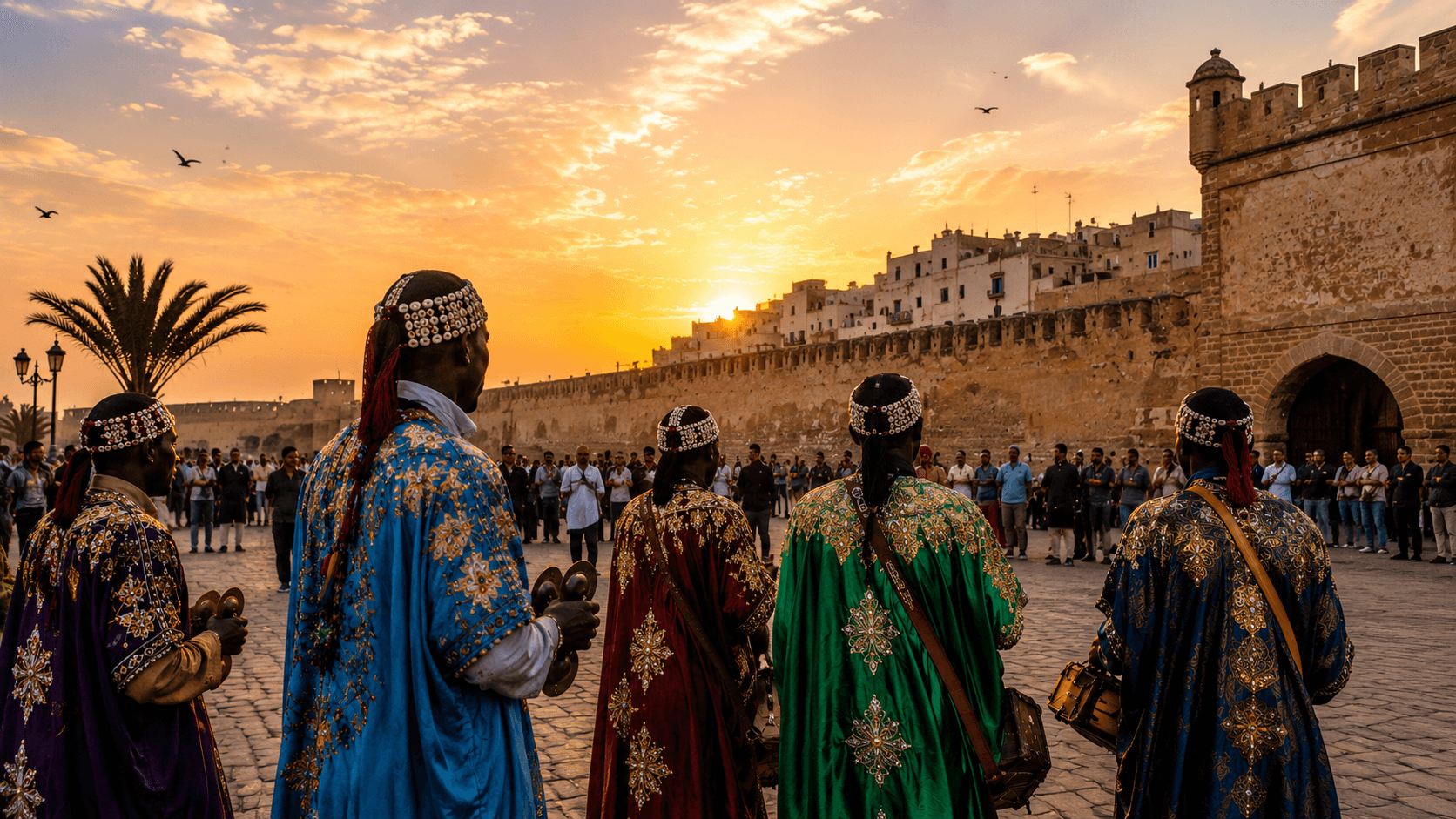
Essaouira is different from Taghazout and Imsouane because it is not just a surf town. It is also a historic coastal city with a medina, port atmosphere, broad beach, and a strong wind culture that shapes the whole destination. For some travelers, that makes it more interesting. For others, it makes it less surf-focused.
The main thing to understand about Essaouira is that wind is part of the identity. That is why the city is just as famous for kitesurfing and windsurfing as for regular surfing. On the right day, you can still find fun sessions, especially for learners or travelers mixing surf with a broader holiday, but it does not usually replace Taghazout as the first-choice base for a pure surf trip. Morocco’s tourism materials present Essaouira as a major Atlantic destination, and the city’s beach setup naturally supports wind sports alongside surfing.
Essaouira is best for:
- Travelers who want surf plus city character
- People interested in both surfing and kitesurfing
- Couples or groups wanting culture and coast together
- Beginners looking for a wider trip, not just a surf mission
If your Morocco route includes the Atlantic north of Agadir, Car Rental Essaouira makes it easier to connect Essaouira with beach stops, city hotels, and longer coastal drives.
Safi & Tamraght: Hidden Gems
Tamraght is often mentioned together with Taghazout because it sits in the same surf orbit, but it has a slightly quieter and more residential feel. For travelers who want the surf access of the Taghazout zone without staying in the best-known village itself, Tamraght is often a smart alternative. It works well for surf camps, longer stays, and travelers who value a calmer base while still being close to major breaks.
Safi is a more specialist mention. It is not the standard beginner recommendation, but it matters to experienced surfers because it has a strong surf reputation and sits farther north in a different travel rhythm. It is more of an add-on for people building a broader Morocco mission rather than the first stop for casual surf holidays.
Together, Tamraght and Safi show why Morocco works so well: there is always another option just beyond the headline names.
Best Season: September to April Explained
For most surf travelers, the most reliable answer is that Morocco’s surf season is strongest from autumn through spring, with winter as the peak period for classic point-break conditions. Recent surf-season reporting and spot guides consistently describe winter, especially roughly December to March, as the best time for the bigger, more organized Atlantic swells that make places like Anchor Point shine.
That said, September to April is a very practical planning window:
- September to November: warmer feel, good shoulder-season balance, often great for intermediates
- December to March: strongest swell window, best for advanced surfers and classic point-break days
- April: still workable for many travelers, often with a softer overall feel than deep winter
Water temperatures around the Agadir region stay relatively moderate by Atlantic standards, roughly around the high teens to low 20s Celsius across the year, which is one reason Morocco remains such a popular surf escape.
A 3/2 or 4/3 wetsuit is commonly the safe planning choice depending on season and personal comfort. For day-to-day checks, a live wave forecast on Surfline is one of the most practical tools before moving between spots.
Surf Schools, Lessons & Rentals
Morocco is one of the easier places to book lessons and rentals without overcomplicating the trip. Taghazout and Tamraght have the deepest concentration of surf camps and schools, while Imsouane is excellent for beginner progression and Essaouira works well for travelers wanting a surf lesson as part of a wider coastal stay.
For beginners, the most important thing is not choosing the “most famous” school. It is choosing a setup that matches your level, group size, and beach access. A quality beginner lesson should include land instruction, safe board choice, realistic wave selection, and a break suited to your confidence.
For improvers, guiding matters more than just lessons. Morocco’s coastline gives you options, but knowing when to shift from one break to another can make a big difference. That is why many travelers choose a camp for their first few days, then use a car to become more flexible once they understand the coastline.
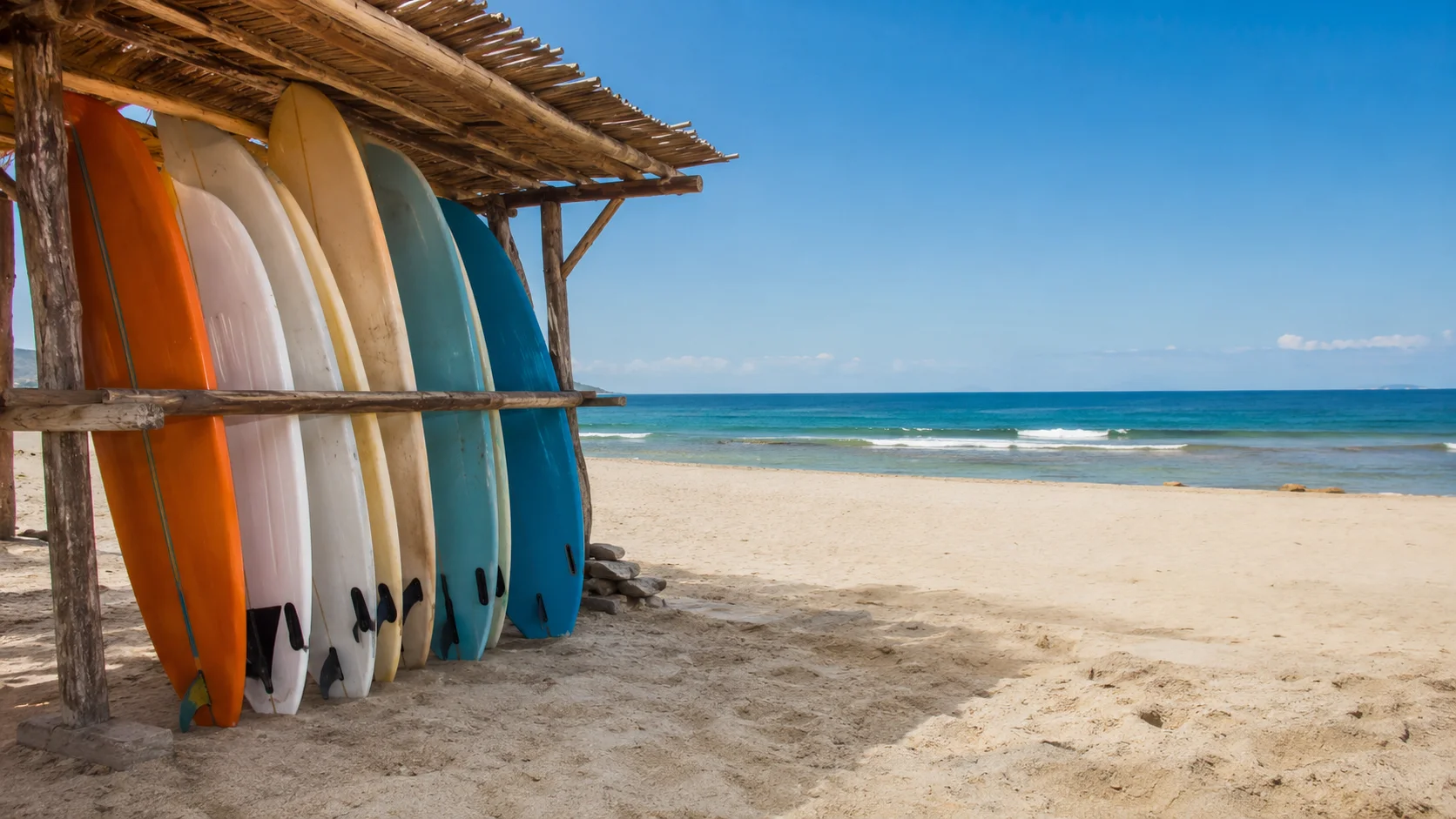
Board rental is widely available in the main surf zones, especially around Taghazout and Tamraght. Beginners can usually find soft tops easily, while more experienced surfers often prefer to bring their own board or confirm rental quality before arrival.
Getting Between Surf Spots: Why You Need a Car
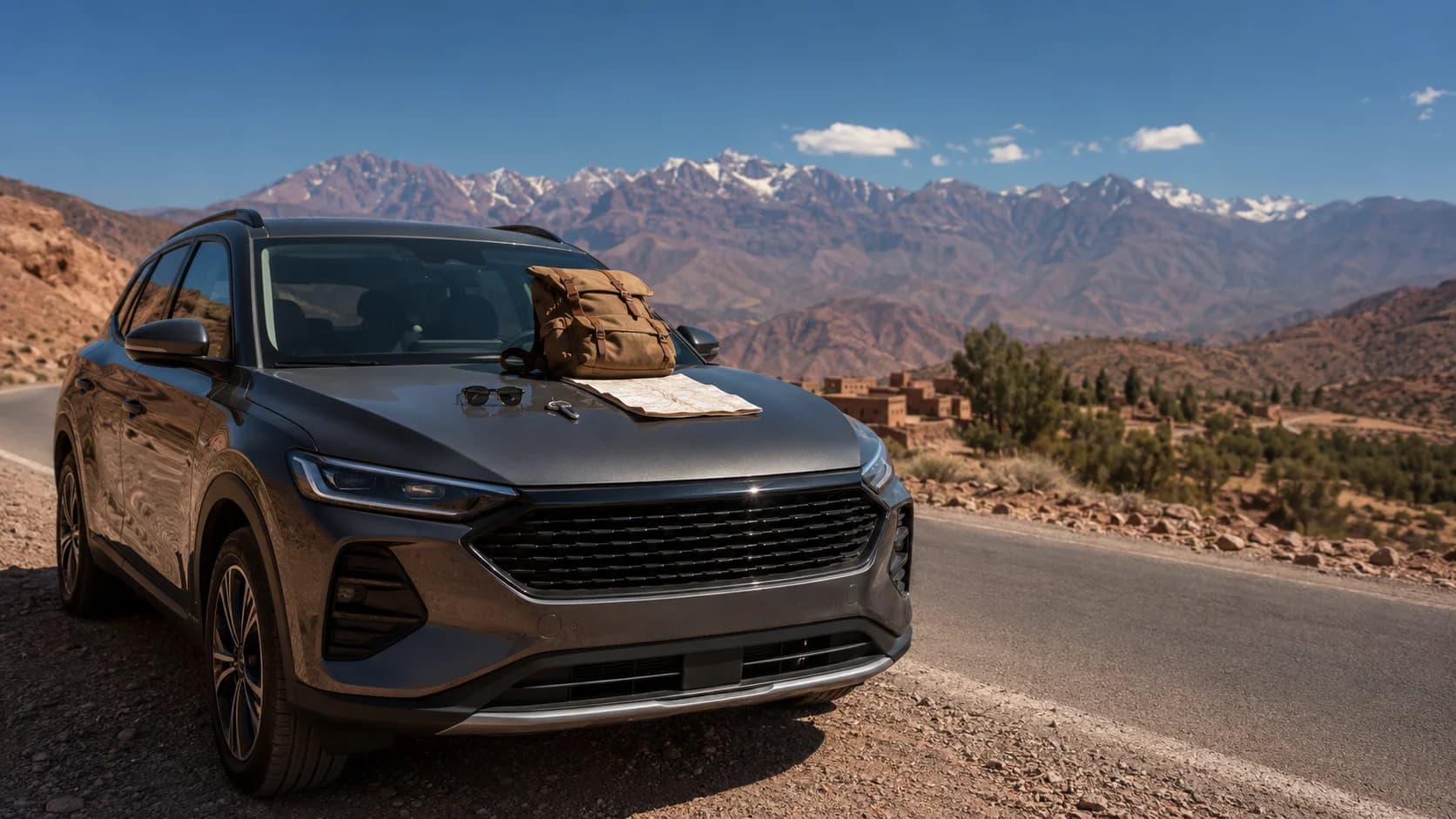
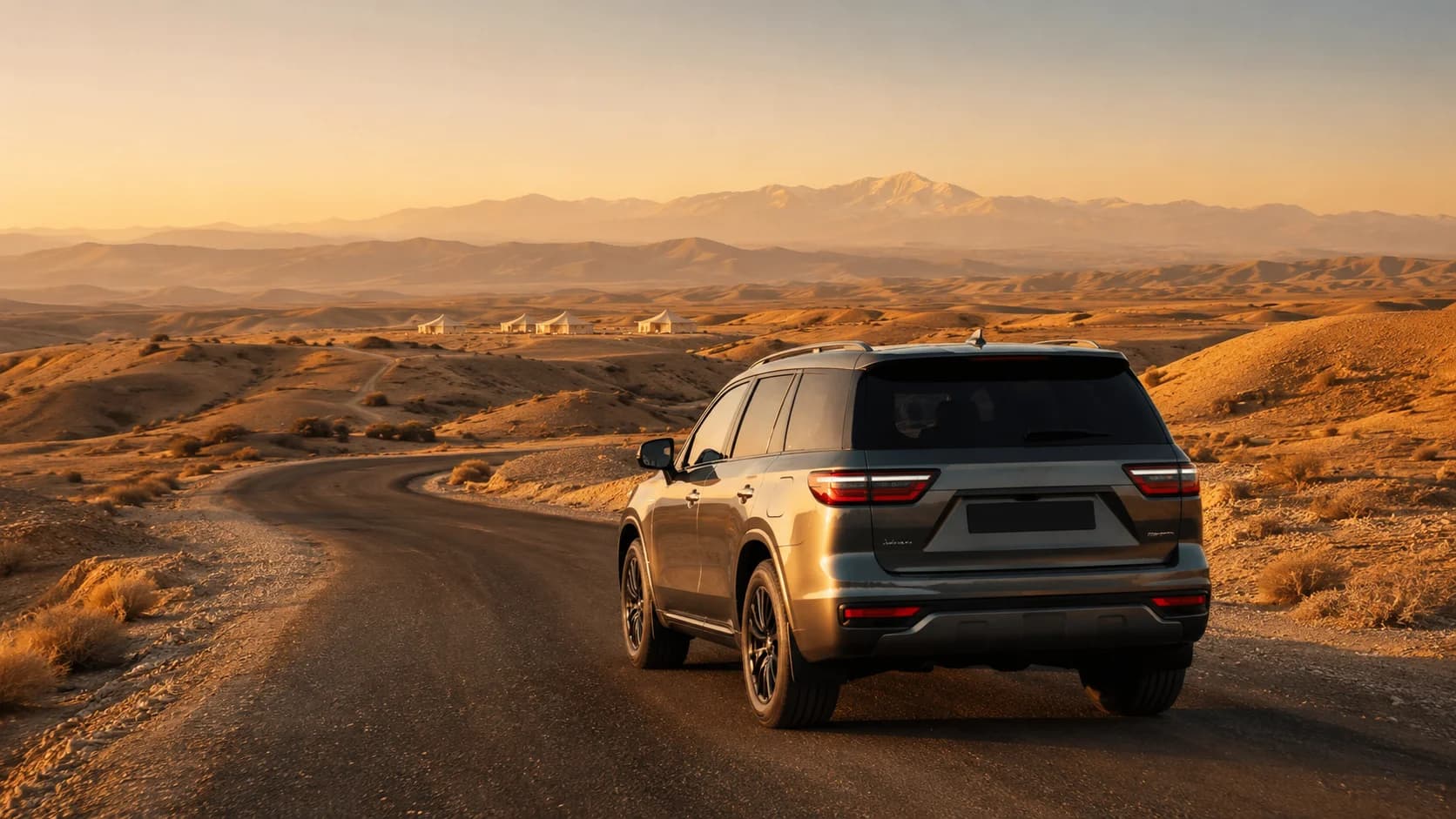
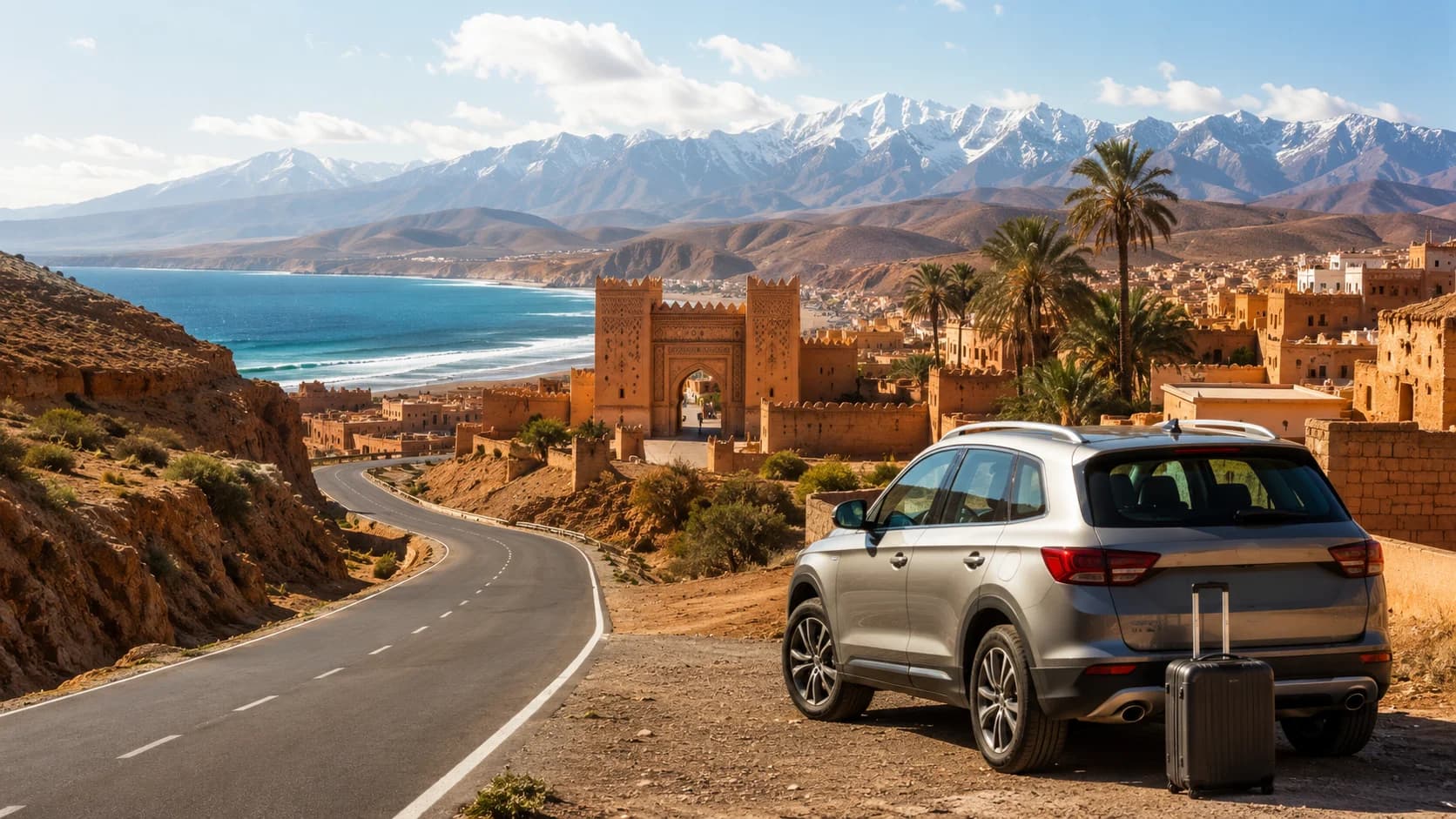
Morocco’s surf coast is one of the strongest cases for self-drive travel. The breaks are not spread across the whole country, but they are spread enough that relying only on fixed transfers limits your options. Swell direction, crowd levels, wind, and your own energy can change your plan fast. A car gives you the freedom to adapt.
That matters most in the Agadir-Taghazout-Tamraght-Imsouane corridor. You may sleep in one place and surf somewhere else. You may want an early session at one break and a backup option later. You may also want to combine surfing with cafes, airport arrivals, scenic stops, or a shift north toward Essaouira.
For most surf travelers, a car is not only about convenience. It improves the whole trip by turning Morocco into a flexible coast rather than a single fixed point. That is especially useful for mixed groups where not everyone surfs every session.
For broader planning beyond the breaks, our Agadir Travel Guide helps connect the surf coast with beaches, hotels, airport logistics, and nearby day-trip ideas.
Where to Stay: Surf Camps vs Hotels
Surf camps are the easiest choice for first-timers, solo travelers, and anyone who wants a simple package with lessons, transport, and a built-in social atmosphere. They reduce planning and make progression easier because the daily structure is already there.
Hotels, apartments, and guesthouses work better for couples, families, repeat surfers, and travelers who want more independence. If you already know how to surf and plan to move between spots by car, staying outside a camp can give you more freedom and often better rest.
Taghazout and Tamraght have the widest mix of both. Imsouane tends to feel more limited but more focused. Essaouira offers the broadest non-surf accommodation choice because it functions as a full city destination as well as a surf stop.
What to Pack for a Morocco Surf Trip
Keep it practical:
- wetsuit suited to season
- reef-safe sunscreen
- surf booties only if you know you prefer them
- light layers for mornings and evenings
- flip-flops or easy beach shoes
- dry bag for the car
- reusable water bottle
- wax and small repair basics if bringing your own board
- offline maps for moving between towns
The smartest pack strategy is simple: travel light enough to move easily, but do not assume every specific surf item will be exactly how you like it once you arrive.
FAQ
1. Is Morocco good for beginner surfers?
Yes. Morocco is very good for beginners, especially around Imsouane and the more approachable breaks near Taghazout, because there are mellow waves, plenty of surf schools, and a long season.
2. What is the best surf town in Morocco?
For most travelers, Taghazout is the best all-round surf town because it gives access to several famous breaks, lots of lessons and rentals, and easy logistics.
3. Is Imsouane better than Taghazout?
It depends on your trip. Imsouane is better for long, mellow rides and beginner progression, while Taghazout is better as a varied surf base with more breaks and more infrastructure.
4. When is the best time to surf in Morocco?
The strongest surf season is generally autumn through spring, with winter as the peak period for classic point-break swell.
5. Can you surf in Morocco in summer?
Yes, but summer is usually less reliable for the headline point-break experience. It can still work for learners, smaller days, and broader beach holidays.
6. Do I need a wetsuit for surfing in Morocco?
Usually yes. Water temperatures around the Agadir region stay moderate, not tropical, so most surfers are more comfortable in a wetsuit for much of the year.
7. Is Essaouira good for surfing?
Yes, but it is better seen as a mixed coast-and-city destination with wind sports appeal rather than the single best pure surf base in Morocco.
8. Is Morocco expensive for a surf trip?
Compared with many major surf destinations, Morocco is often seen as good value, especially if you balance surf camps, guesthouses, and self-drive travel. This is an inference based on its established surf-camp market and relatively compact surf corridor.
9. Should I stay in a surf camp or rent my own place?
Surf camps are best for beginners and solo travelers. Independent stays are often better for couples, families, and repeat surfers who want more freedom.
10. Do I need a car to surf in Morocco?
You can surf without one, but a car makes the trip much better because it lets you move between breaks, adjust to conditions, and explore beyond a single village.
11. Is Taghazout crowded?
It can be, especially at famous breaks and during peak season, because it is Morocco’s best-known surf base. That is one reason some travelers choose Tamraght as a quieter base.
12. Can I combine surfing with a normal Morocco holiday?
Yes. Morocco is one of the easier places to combine surf time with city stays, beach time, and road-trip travel because the main surf coast is close to Agadir and reasonably easy to extend toward Essaouira.
Book with MarHire
A Morocco surf trip works best when you keep it flexible. Swell changes, wind shifts, and one town may suit your level better than another. With the right car, you can move easily between Agadir, Taghazout, Tamraght, Imsouane, and longer coastal stops without building the whole trip around fixed transfers.
Start with Car Rental Agadir for the main surf corridor, add Car Rental Essaouira if your route stretches north, and use our Agadir Travel Guide to shape the rest of your stay.