







A Marrakech to Merzouga road trip is one of Morocco’s most unforgettable journeys: a long but spectacular route from the red city, over the High Atlas Mountains, past Ait Ben Haddou and Ouarzazate, through the Dades and Todra gorges, and finally to the golden dunes of Erg Chebbi. This 3-day itinerary explains the best route, where to stop, how long each section takes, whether to self-drive or hire a private driver, and which car makes the most sense for the trip.
Table of Contents
- The Marrakech to Merzouga route at a glance
- Day 1: Marrakech to Ait Ben Haddou, Ouarzazate and Dades
- Day 2: Dades to Todra Gorge and Merzouga
- Day 3: Sunrise camel trek and return options
- Self-drive vs private driver for this route
- Which car you need for Marrakech to Merzouga
- Best time to do the Merzouga desert trip
- FAQ
The Marrakech to Merzouga Route at a Glance
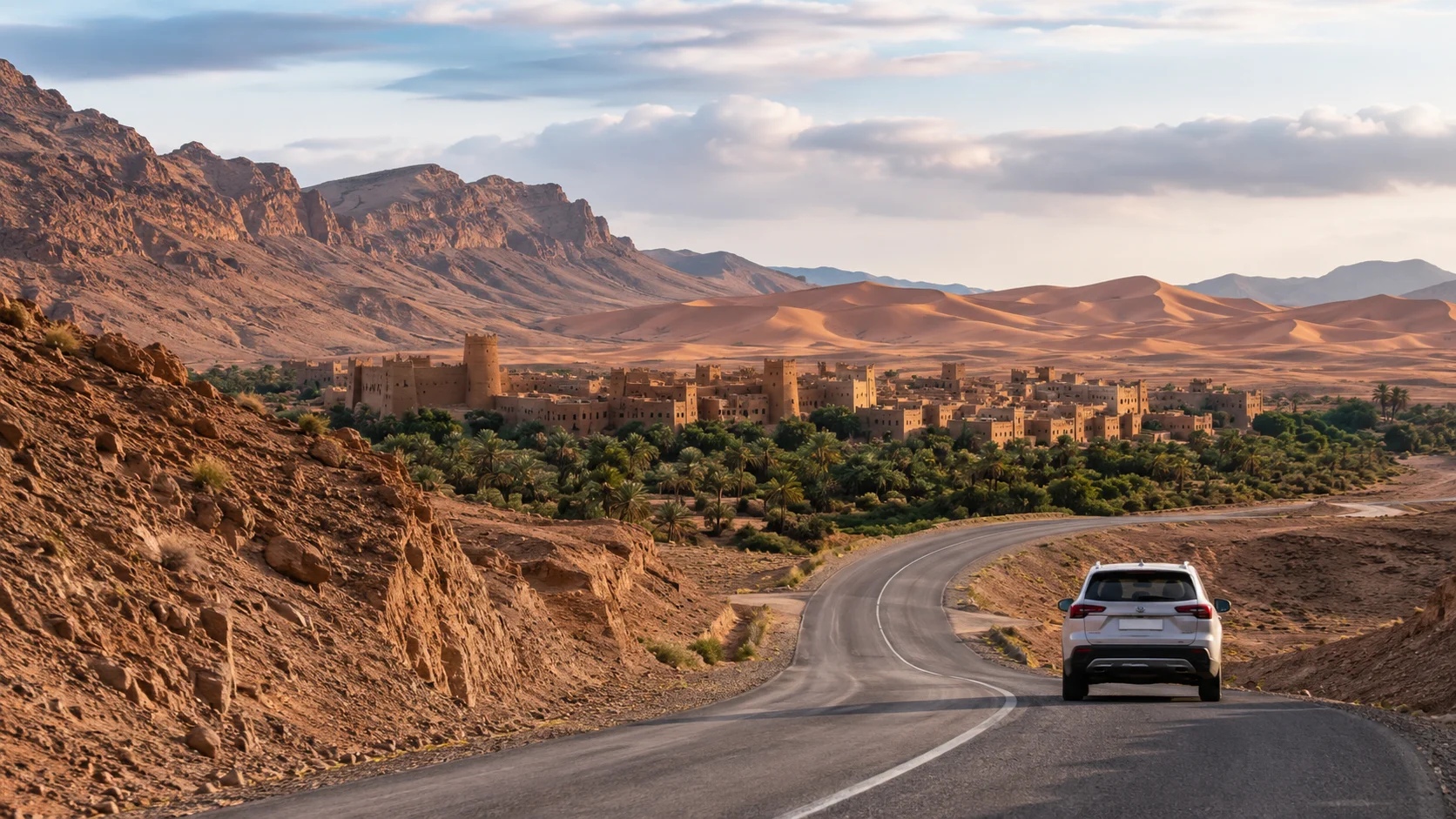
The drive from Marrakech to Merzouga is not a short transfer. It is a full road trip across mountains, kasbah country, oasis valleys, gorges and desert towns. The classic 3-day route follows Marrakech to Tizi n’Tichka, Ait Ben Haddou, Ouarzazate, Skoura or Dades on day one, then Dades, Todra Gorge, Erfoud, Rissani and Merzouga on day two, before either returning to Marrakech or continuing to Fes on day three.
Most travelers should think of the Marrakech to Merzouga route as a scenic expedition rather than a quick desert transfer. The direct driving distance is usually around 560 to 600 km depending on the exact hotel and route, but the mountain roads, photo stops and desert timing make it feel much longer. Trying to rush it in one day removes the best part of the journey.
Merzouga is one of Morocco’s main gateways to the Sahara, and the area is known for Erg Chebbi, a landscape of dunes, palm groves, tracks and desert walks. The Moroccan National Tourist Office describes Merzouga as a small village in the middle of the sands and as the territory of Erg Chebbi.
Quick Route Summary
Best duration: 3 days minimum
Best overnight stops: Dades Valley on night one, Merzouga desert camp on night two
Best vehicle: SUV, comfortable sedan or 4x4 depending on season and hotel/camp access
Best for: Couples, families, photographers, road-trip travelers, desert first-timers
Not ideal for: Travelers who dislike long driving days or tight schedules
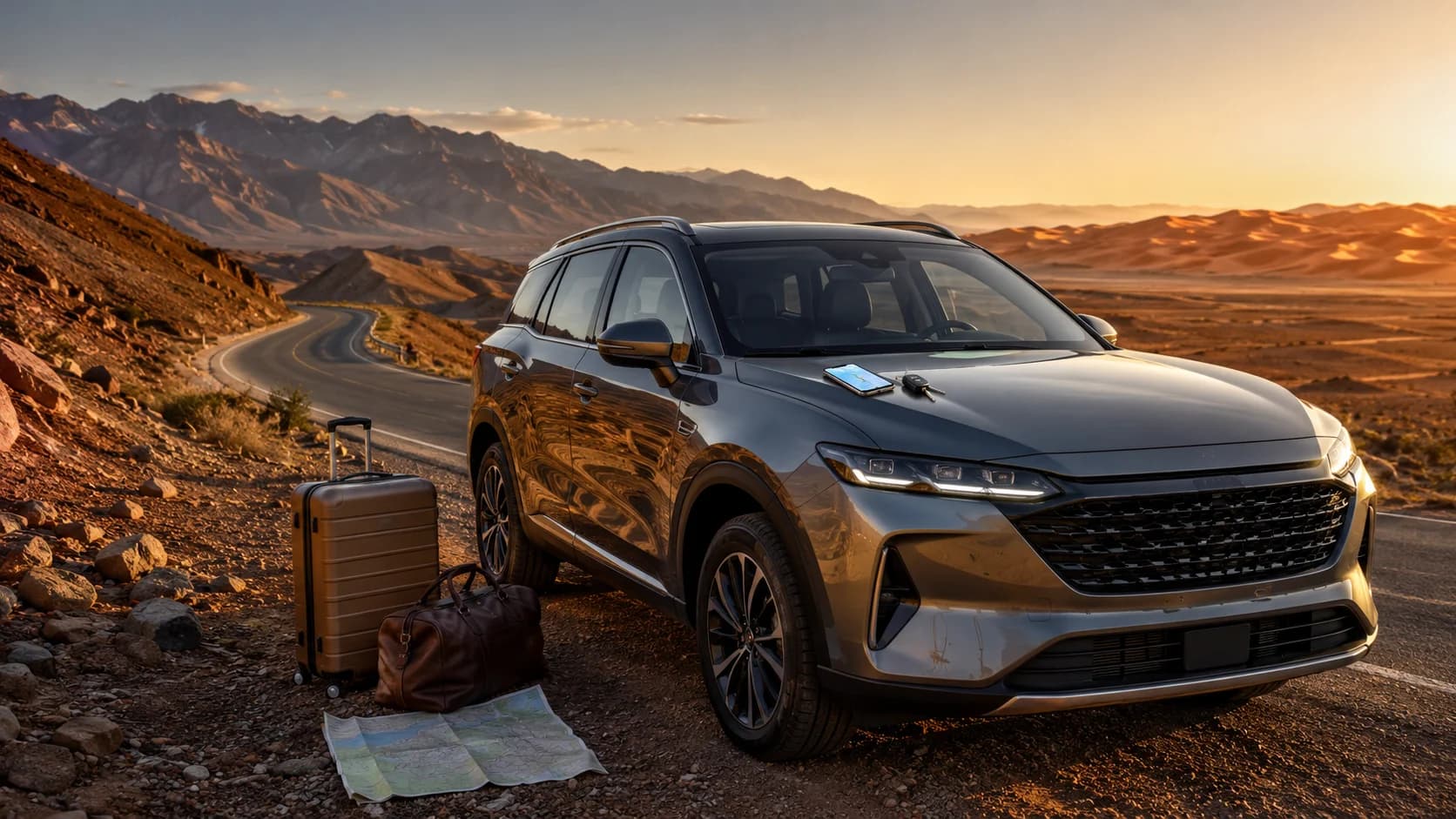
For travelers planning to self-drive, booking the right vehicle matters. A comfortable SUV or 4x4 rental in Morocco gives more confidence on long mountain roads, rougher access tracks and luggage-heavy trips.
Day 1: Marrakech to Ait Ben Haddou, Ouarzazate and Dades
Day one is the mountain and kasbah day. You leave Marrakech early, climb into the High Atlas, cross the Tizi n’Tichka pass, visit Ait Ben Haddou, pass Ouarzazate, then continue toward Skoura, Kelaat M’Gouna or Dades Valley for the night.
Marrakech to Tizi n’Tichka
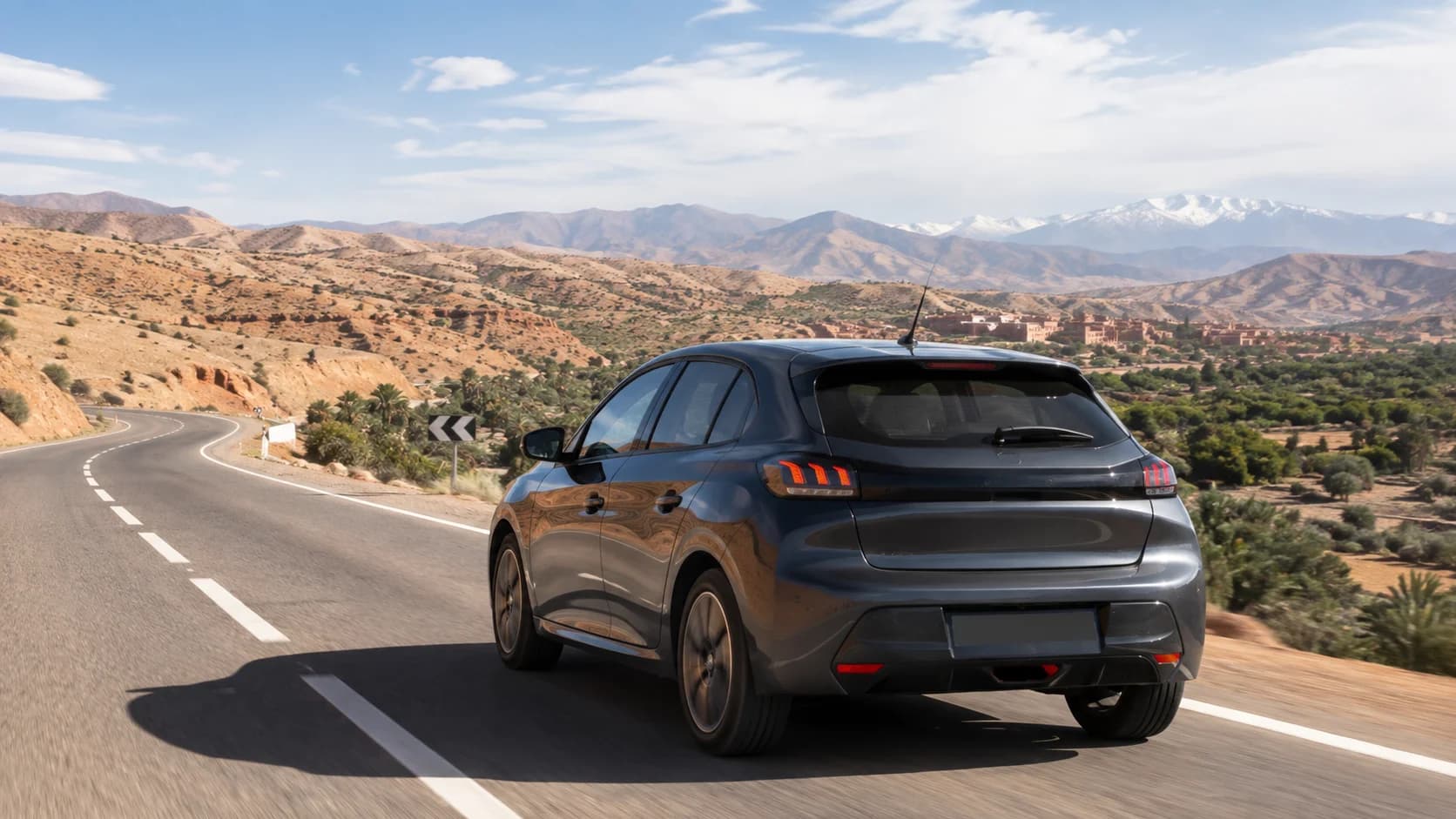
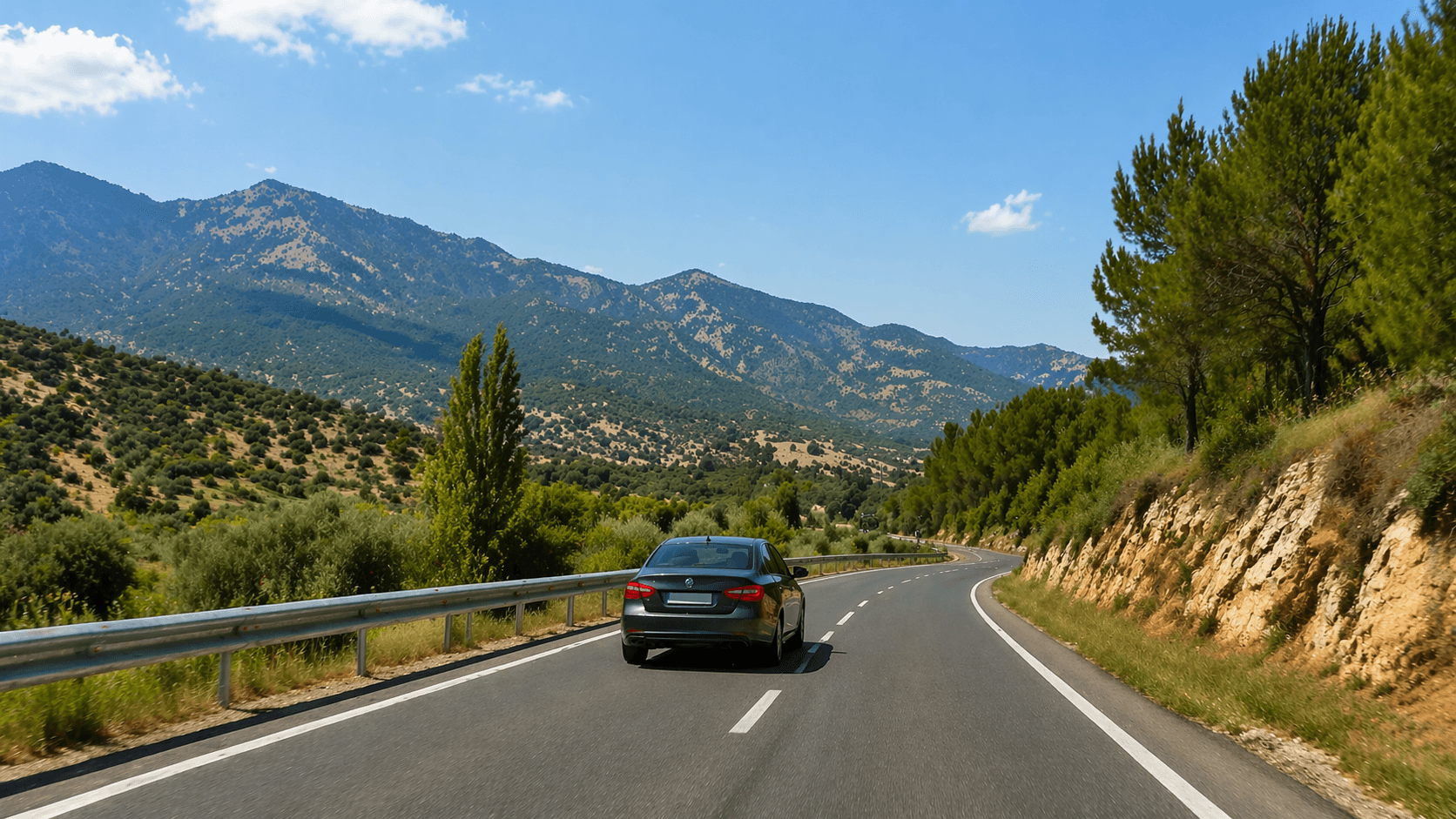
Leave Marrakech as early as possible, ideally around 7:00 to 8:00 in the morning. The first section climbs from the plain into the High Atlas Mountains, with winding roads, viewpoints, small villages and changing landscapes. The Tizi n’Tichka pass is the most famous mountain crossing on this route and one of the main reasons the Marrakech to Sahara desert road trip feels so dramatic.
This part of the drive requires patience. Roads are paved, but curves, trucks, roadworks, weather and slow sections can add time. Avoid driving aggressively, and do not plan too many fixed stops before Ait Ben Haddou. The scenery is beautiful, but the real goal is to reach the kasbah area with enough daylight.
Ait Ben Haddou
Ait Ben Haddou is one of the most important stops between Marrakech and Merzouga. It is a historic fortified village, or ksar, built with earthen architecture and set near the old caravan routes of southern Morocco. UNESCO lists the Ksar of Ait-Ben-Haddou as a World Heritage property and describes it as an outstanding example of southern Moroccan earthen construction and traditional pre-Saharan habitat.
Plan at least 1 to 2 hours here. Park outside the village, walk across the river area or bridge depending on access, then climb slowly through the narrow lanes toward the upper viewpoint. The best photos are usually from across the river and from the higher terraces.
Ait Ben Haddou is worth the stop even if you are not deeply interested in history. It gives the road trip a strong cultural break before the long desert drive continues. It is also a good place for lunch if you want a slower first day.
Ouarzazate
After Ait Ben Haddou, continue toward Ouarzazate. Many travelers stop briefly for fuel, snacks or a quick look at the kasbah area. Ouarzazate works as a practical pause rather than a long visit on a 3-day itinerary. If you spend too much time here, you may reach Dades late.
For a smoother schedule, use Ouarzazate as a reset point: refuel, check navigation, buy water, and confirm your accommodation in Dades. The next section is easier than the High Atlas but still takes time.
Ouarzazate to Dades Valley
From Ouarzazate, the road continues through Skoura, the Valley of Roses area and Kelaat M’Gouna before reaching Dades Valley. This is where the landscape becomes softer, with palm groves, kasbahs, dry hills and oasis-style villages.
Dades is a smart first-night stop because it breaks the journey naturally. You avoid arriving in Merzouga exhausted, and you wake up close enough to Todra Gorge and the desert for a realistic second day.
Where to Sleep on Day 1
For most travelers, Dades Valley is the best overnight choice. Skoura is calmer and works if you want a shorter first day, but it leaves more driving for day two. Kelaat M’Gouna is practical, especially in rose season, but Dades gives you the stronger scenery and a better position for the next morning.
Choose accommodation with easy parking, especially if you are self-driving. In rural valley areas, some guesthouses have steep or narrow access roads, so check arrival instructions before dark.
Day 2: Dades to Todra Gorge and Merzouga
Day two is the gorge and desert arrival day. It is the emotional center of the trip because the landscapes become more dramatic and the final approach to Erg Chebbi feels completely different from Marrakech.
Dades Morning
Start early again. If you stayed in Dades Valley, take a short morning drive toward the famous winding road viewpoint if it fits your schedule. Do not spend the whole morning here unless you are turning the trip into 4 days. Day two still has a lot of ground to cover.
Have breakfast, check fuel, and leave enough time for Todra Gorge before continuing to Merzouga.
Todra Gorge
Todra Gorge is one of the most impressive natural stops on the route. The road narrows between tall rock walls, and the short walk through the gorge is easy for most travelers. This is a good place to stretch, take photos and enjoy a break from driving.
A practical visit can be 45 minutes to 1.5 hours. Longer hikes are possible, but not ideal on a 3-day Marrakech to Merzouga itinerary unless you adjust the schedule.
Todra Gorge to Merzouga
After Todra, the road continues through Tinghir, Tinjdad, Erfoud and Rissani before reaching Merzouga. The landscape becomes drier, flatter and more open as you move toward the Sahara. Rissani is a useful final stop for supplies, fuel or a short market visit depending on timing.
When you approach Merzouga, the dunes of Erg Chebbi begin to appear in the distance. This is the moment most travelers are waiting for. Visit Morocco highlights Erg Chebbi as a place for camel rides, sand activities and 4x4 experiences around Merzouga.
Arriving at the Desert Camp
Most desert camps are not directly on the paved road. Some camps offer a pickup from a meeting point near Merzouga village or from a hotel parking area. Others require a short 4x4 transfer over sand tracks. Do not assume that you can drive your rental car directly to the tent area.
Before leaving Dades, confirm the exact meeting point with your camp. Ask whether you should park in Merzouga, Hassilabied or another pickup point. This avoids confusion at sunset, when many travelers arrive at the same time.
Sunset, Camel Trek and Camp Night
The classic Merzouga experience is sunset in the dunes, a camel trek, dinner at camp and a night under the desert sky. You can also choose a 4x4 transfer instead of a camel ride if you prefer comfort or have limited mobility.
For a smoother booking, compare desert experiences in advance rather than arranging everything at the last minute. For travelers who want more detail about the activity itself, MarHire’s guide to camel trekking in Morocco can help you understand timing, comfort and what to bring.
Day 3: Sunrise Camel Trek and Return Options
Day three starts early. Most camps wake guests before sunrise for a short walk or camel ride into the dunes. Sunrise over Erg Chebbi is one of the main reasons to sleep in the desert rather than only visit for a few hours.
After breakfast, you return to the village or parking area, collect your luggage and choose your onward route.
Option 1: Return to Marrakech
Returning to Marrakech on day three is possible but long. It means a full day in the car, usually from morning until evening. This option works if your flights or hotel plans require Marrakech, but it is not the most relaxed choice.
If you return to Marrakech, keep stops short. Plan fuel, lunch and rest breaks, but do not add major sightseeing unless you are prepared to arrive late.
Option 2: Continue to Fes
For many travelers, Merzouga to Fes is a better third-day plan. It turns the trip into a Marrakech to Sahara to Fes route instead of a full backtrack. The drive is still long, but it gives you new scenery through the Ziz Valley, Midelt and the Middle Atlas.
This option is especially useful if your Morocco itinerary continues north. It also reduces the feeling of repeating the same road.
Option 3: Add a Fourth Day
The best version of this trip is often 4 days, not 3. With an extra day, you can slow down in Dades, spend more time in Todra, visit Rissani properly, or add a more comfortable return.
A 4-day plan is better for families, photographers and travelers who do not want two very long driving days. If you are unsure, choose 4 days.
Self-Drive vs Private Driver for Marrakech to Merzouga
The big question is simple: should you drive yourself or book a driver?
Both options can work. The right answer depends on your confidence, travel style, budget and how much energy you want to save.
Self-Drive: Best for Freedom
Self-driving from Marrakech to Merzouga gives you full control. You can stop for photos, choose your lunch break, leave early, sleep where you want and avoid group-tour timing. It is the best choice for travelers who enjoy road trips and feel comfortable with mountain roads.
Self-drive is also useful if you want to continue to Fes, explore side routes or add extra days. The route is mostly paved, and many travelers complete it in regular rental cars. The challenge is not extreme off-roading. The challenge is distance, curves, concentration and timing.
Before booking, compare your options with MarHire’s guide to the best rental car for Morocco, especially if this is your first time driving outside big cities.
Private Driver: Best for Comfort
A private driver is the easiest and least stressful way to do the route. You can enjoy the scenery, rest between stops, avoid navigation worries and let a local driver manage timing, mountain roads, police checkpoints, fuel stops and desert arrival logistics.
A private driver for the desert is especially useful for families, couples who want a relaxed experience, travelers arriving after a long flight, and anyone nervous about driving through the Atlas Mountains.
The private driver option costs more than basic self-drive car rental, but it can feel better value when you consider the long hours, road knowledge and door-to-door convenience.
Verdict
Choose self-drive if you enjoy long road trips, want flexibility and are comfortable driving on winding roads.
Choose a private driver if you want comfort, less stress and a smoother desert experience.
For most first-time Morocco travelers doing only 3 days, a private driver is the safer and more relaxing choice. For confident drivers with extra time, self-drive can be one of the best road trips in Morocco.
Which Car You Need for Marrakech to Merzouga
You do not always need a 4x4 to reach Merzouga village. The main roads from Marrakech to Ouarzazate, Dades, Todra, Erfoud, Rissani and Merzouga are paved. A normal car can handle the main route in good conditions.
But that does not mean every car is equally comfortable.
Economy Car
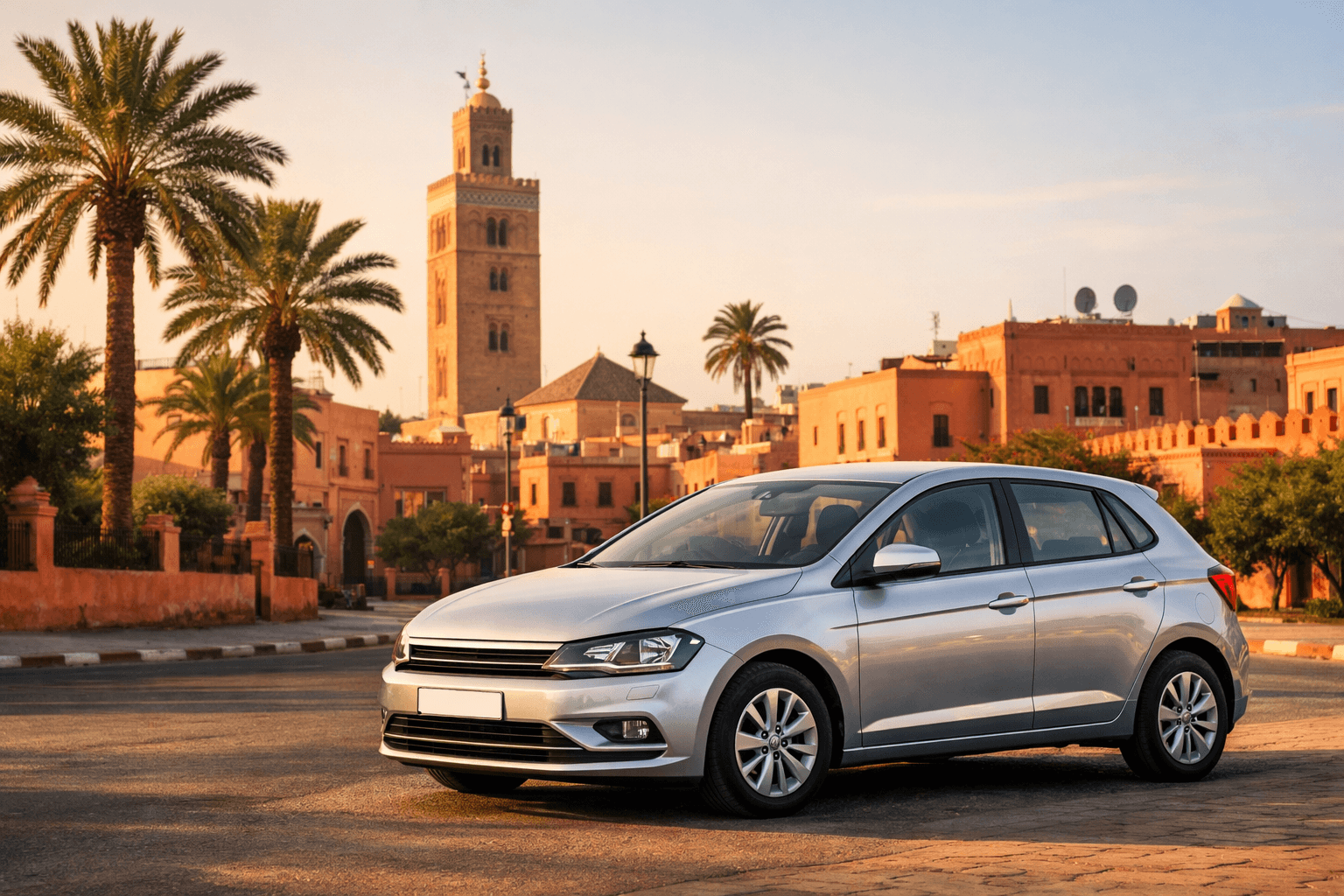
An economy car can work for budget travelers with light luggage and a simple route. It is cheaper and fuel-efficient, but less comfortable for long driving days. It also gives less ground clearance on rough hotel access roads or desert-side tracks.
Choose economy only if you are keeping the plan simple and your camp provides pickup from a paved-road meeting point.
Sedan
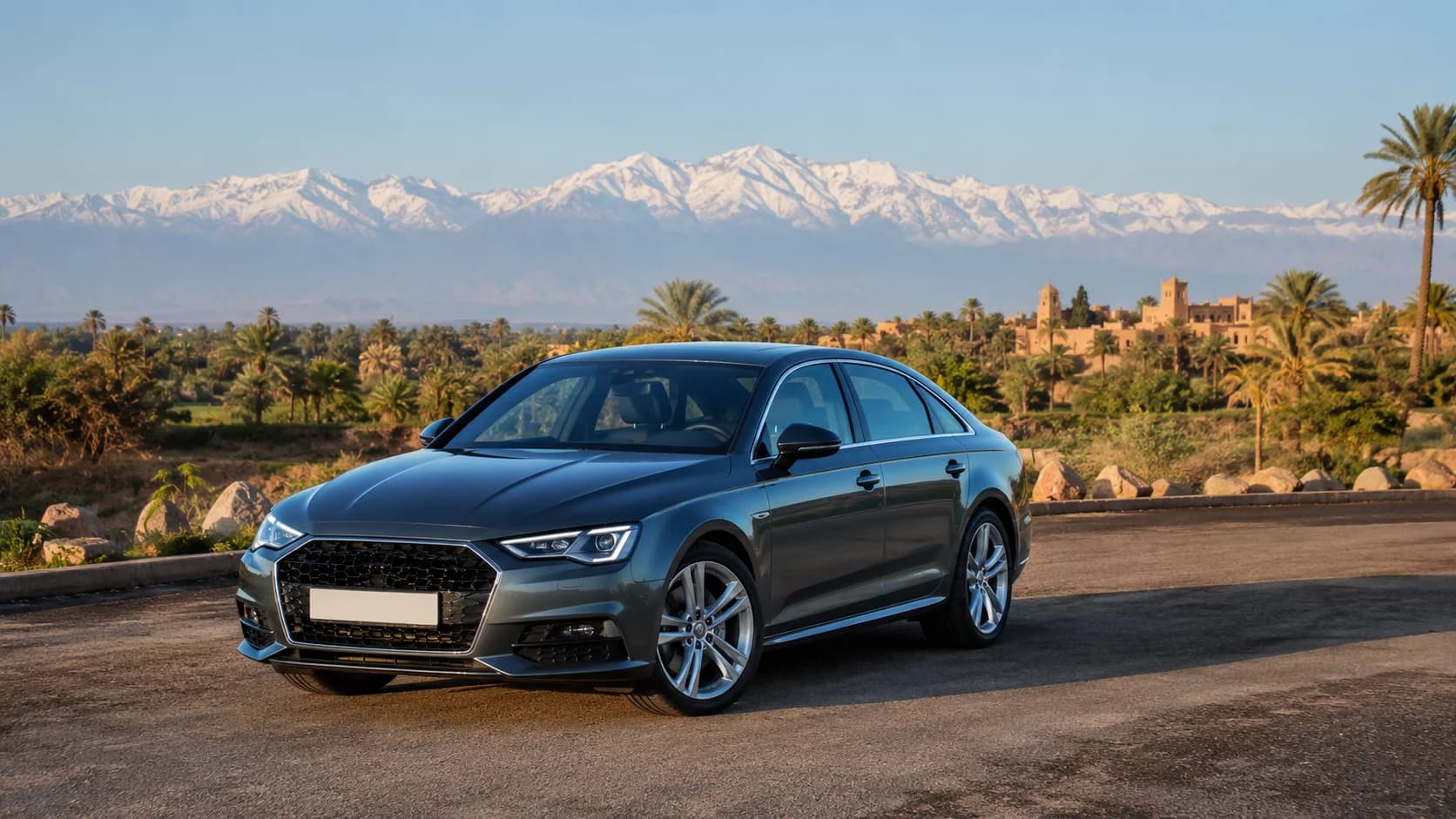
A sedan is better for comfort. It gives more stability, more luggage space and a smoother ride on long roads. For two or three travelers, a sedan can be enough if you are not planning rough access.
SUV
An SUV is the best all-round choice for Marrakech to Merzouga. It gives comfort, luggage space, better visibility and better ground clearance. You do not need it because the whole route is off-road. You choose it because the journey is long and mixed.
For families or travelers with suitcases, an SUV makes the trip easier.
4x4
A 4x4 is useful if your accommodation has rough access, if you plan desert tracks, if you are traveling in winter, or if you want maximum confidence. It is also a strong choice for photographers or travelers planning a wider southern Morocco route beyond the classic paved itinerary.
If you only drive from Marrakech to Merzouga village and park for a camp pickup, a 4x4 is not always required. If you want flexibility around dunes, tracks and remote stays, it becomes more valuable.
Best Time of Year for Marrakech to Merzouga
The best months for the Marrakech to Merzouga desert drive are usually spring and autumn. March, April, May, September, October and November offer a better balance of daylight, road comfort and desert temperatures.
Summer can be very hot in the desert. You can still travel, but you need to plan carefully, carry water, avoid unnecessary midday activity and choose air-conditioned accommodation or a camp with good comfort standards.
Winter can be beautiful, especially in the desert, but the High Atlas can bring cold weather and possible mountain disruption. If you plan to cross Tizi n’Tichka in winter, check road and weather conditions before departure and avoid driving late in the day.
Practical Tips Before You Go
Start early every day. This single rule improves the whole trip. Early starts reduce stress, give you more daylight and leave space for delays.
Do not overpack the itinerary. Ait Ben Haddou, Dades, Todra and Merzouga are enough for 3 days. Adding too many stops turns the trip into a checklist.
Book the desert camp before you arrive. Confirm the meeting point, pickup time, luggage plan and whether camel trekking is included.
Carry water and snacks. Long sections between towns can feel remote, especially after Ouarzazate and toward Merzouga.
Avoid night driving outside cities. The route is better, safer and more enjoyable in daylight.
For self-drive, take photos of the rental car at pickup, keep your documents ready, and make sure your rental includes the right insurance and roadside support.
FAQ
How long does it take to drive from Marrakech to Merzouga?
The direct drive usually takes a full day, but the realistic travel experience is best split over at least 2 days. For sightseeing and comfort, 3 days is the minimum recommended itinerary.
Is it worth driving to Merzouga or should I hire a driver?
It is worth driving if you enjoy road trips and want flexibility. Hire a private driver if you want a calmer, easier and more comfortable journey, especially on a short 3-day plan.
Do I need a 4x4 to get to Merzouga?
You do not usually need a 4x4 to reach Merzouga village by the main paved roads. A 4x4 becomes useful for desert tracks, rough camp access, winter confidence or a wider southern Morocco route.
Can you do Marrakech to Merzouga in 2 days?
You can, but it is rushed. A 2-day trip means very long driving and little time to enjoy Ait Ben Haddou, the gorges and the dunes. Three days is much better, and four days is more relaxed.
What is there to see between Marrakech and Merzouga?
Key stops include Tizi n’Tichka, Ait Ben Haddou, Ouarzazate, Skoura, Dades Valley, Todra Gorge, Erfoud, Rissani and Erg Chebbi.
Is the road from Marrakech to the Sahara safe?
The main route is paved and commonly used by travelers, but it includes mountain curves, long distances and rural sections. Drive in daylight, avoid rushing and check weather in winter.
How much does a Marrakech to Merzouga desert trip cost?
Costs depend on vehicle type, season, driver option, camp level and activities. Self-drive can be cheaper, while a private driver and luxury desert camp cost more but reduce stress.
Where do you stay in the Sahara near Merzouga?
Most travelers stay in a desert camp near Erg Chebbi or in a hotel or riad around Merzouga or Hassilabied. Camps usually arrange pickup from a meeting point near the dunes.
What is the best time of year for the Merzouga desert?
Spring and autumn are the best seasons for comfort. Summer can be very hot, and winter can be cold at night with possible mountain weather on the way from Marrakech.
Can I drive over the Atlas Mountains in winter?
Yes, but winter requires caution. Check conditions before departure, start early, avoid night driving and consider a private driver or SUV/4x4 if mountain weather looks uncertain.
Final Verdict
The Marrakech to Merzouga road trip is not just a transfer to the Sahara. It is a complete Morocco journey through the Atlas Mountains, Ait Ben Haddou, Ouarzazate, Dades, Todra and the dunes of Erg Chebbi. Three days is enough for the classic route, but four days is better if you want comfort.
For confident travelers, self-drive gives freedom and adventure. For most first-time visitors, a private driver gives the best balance of comfort, timing and local experience. Either way, choose the right vehicle, start early, keep the itinerary realistic and make the desert camp the reward at the end of the road.