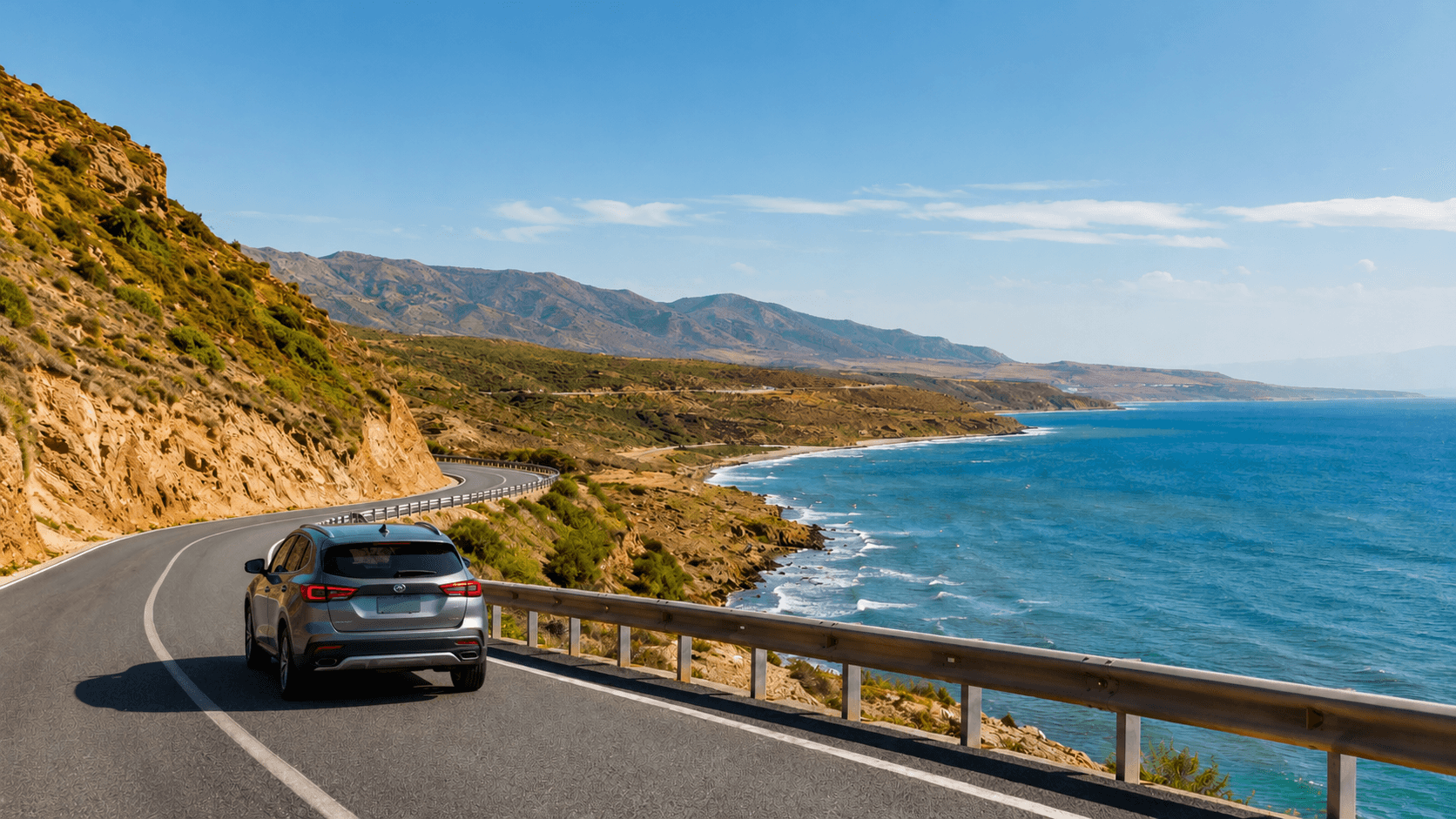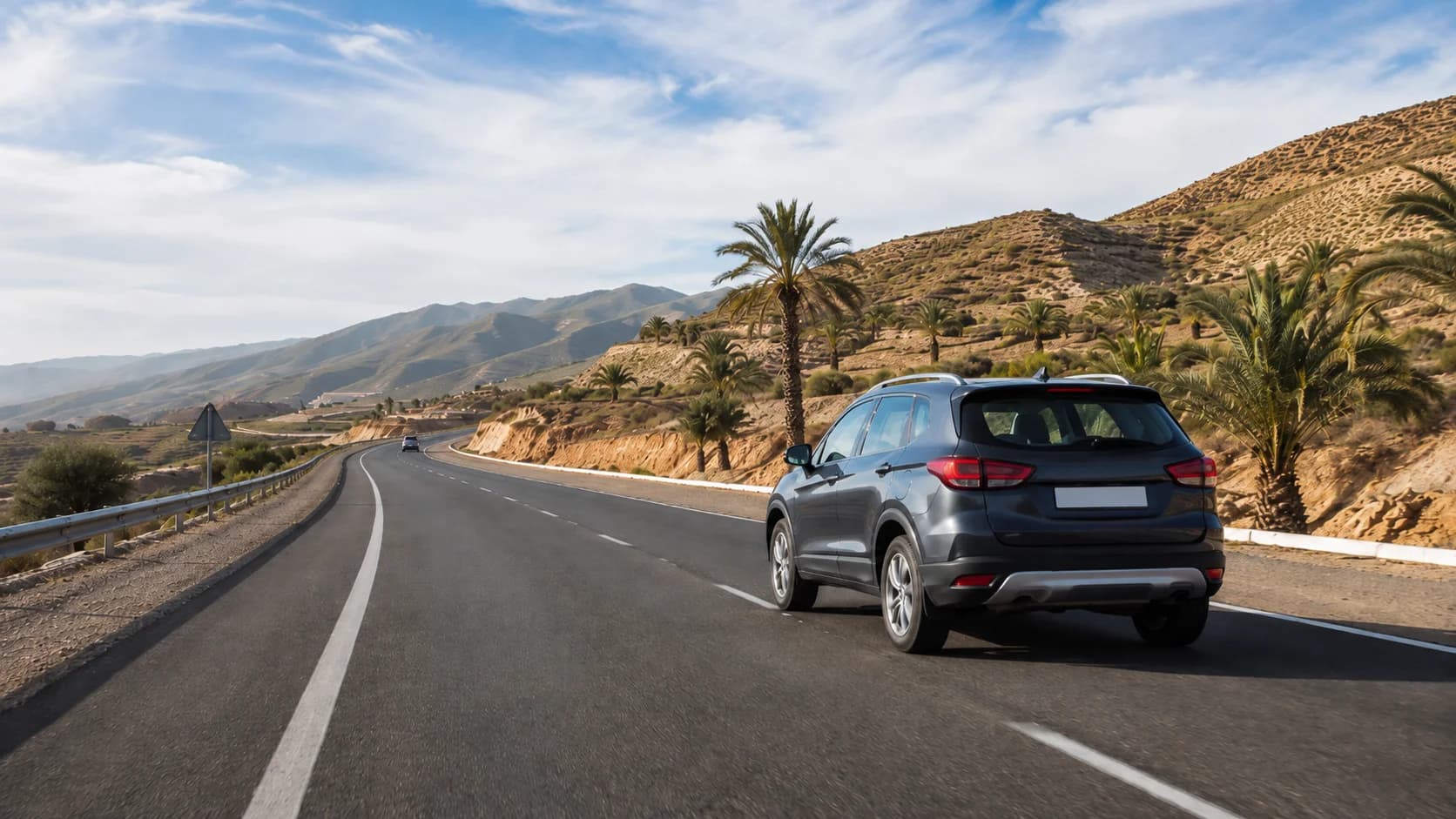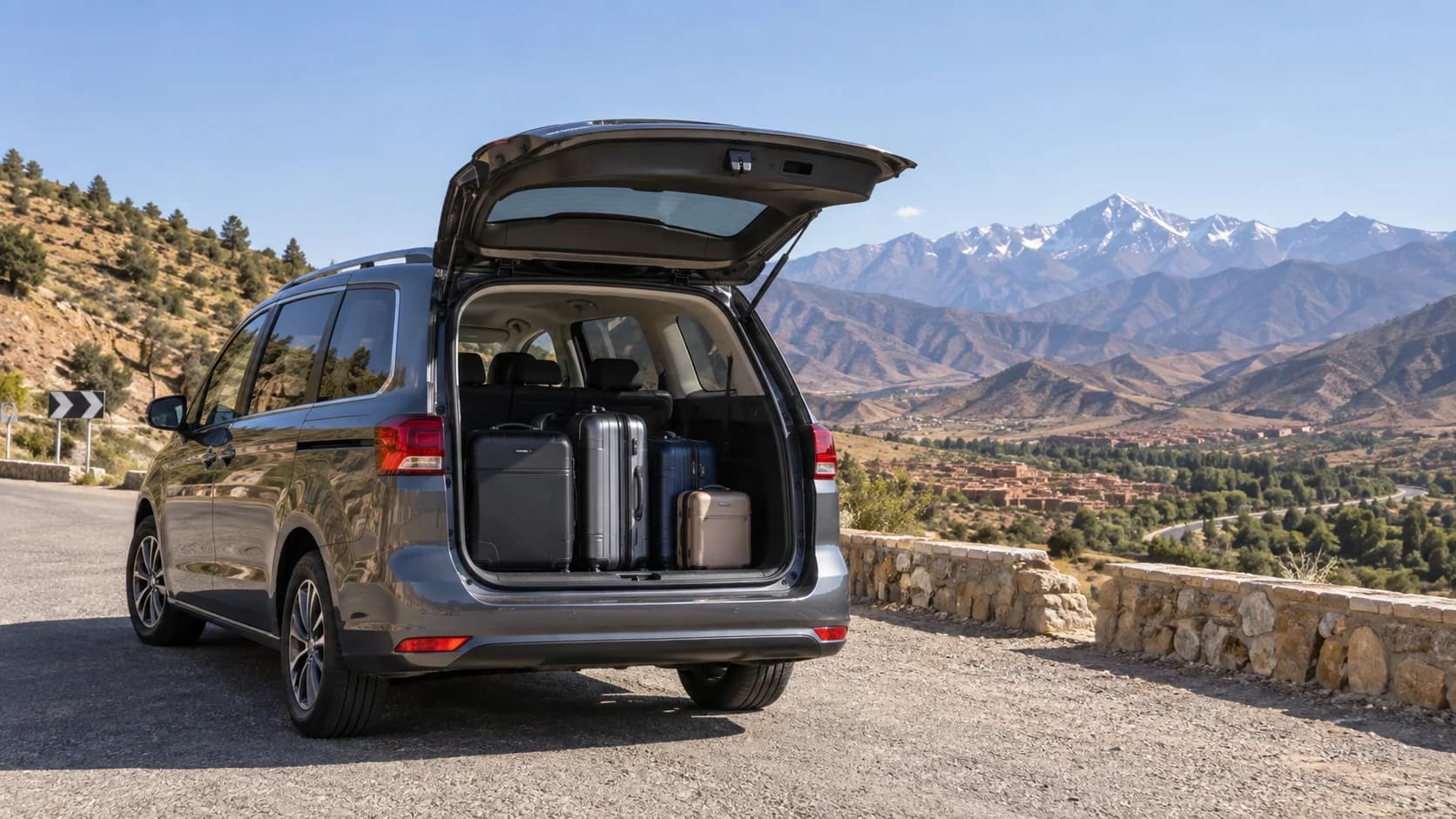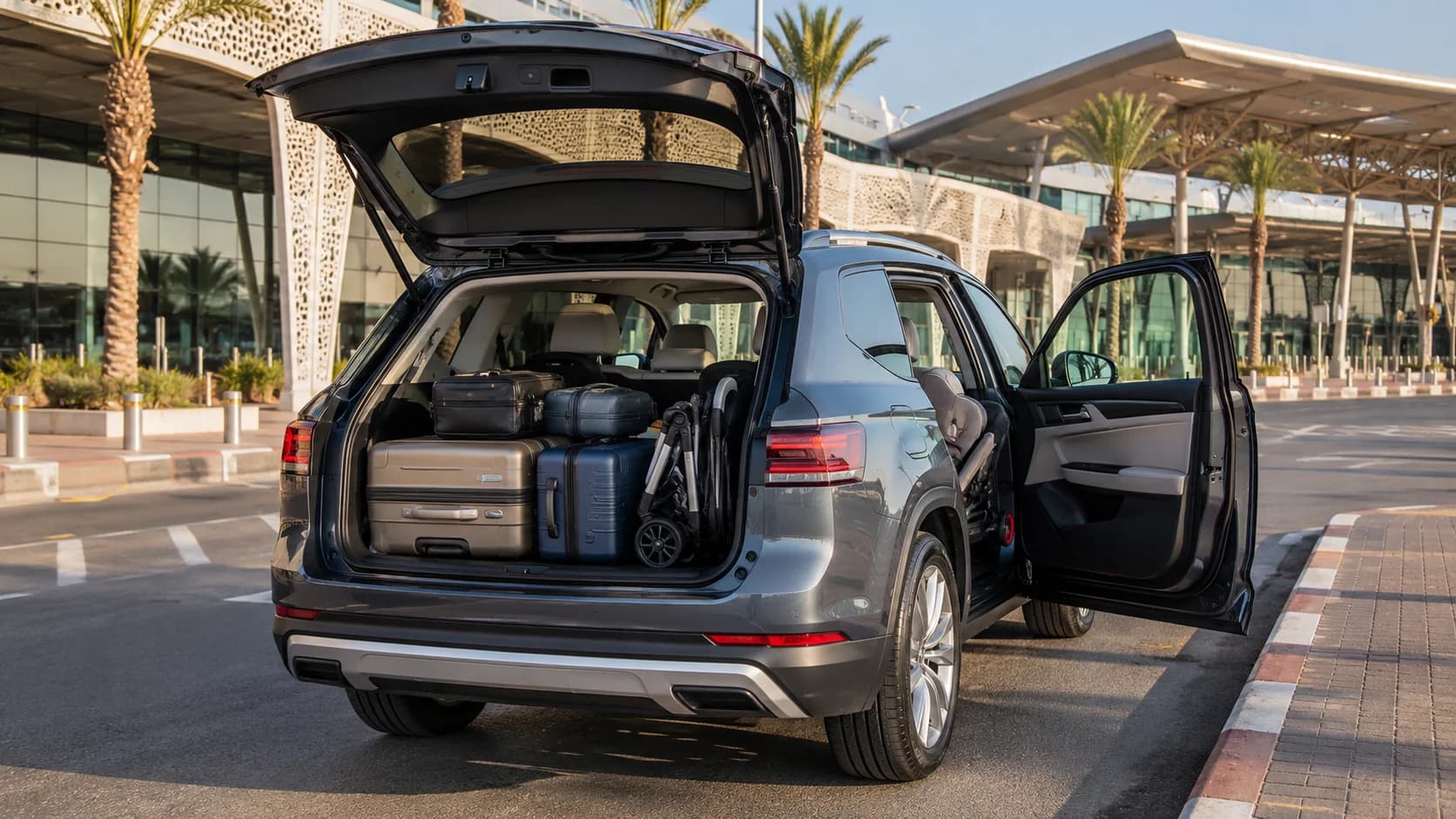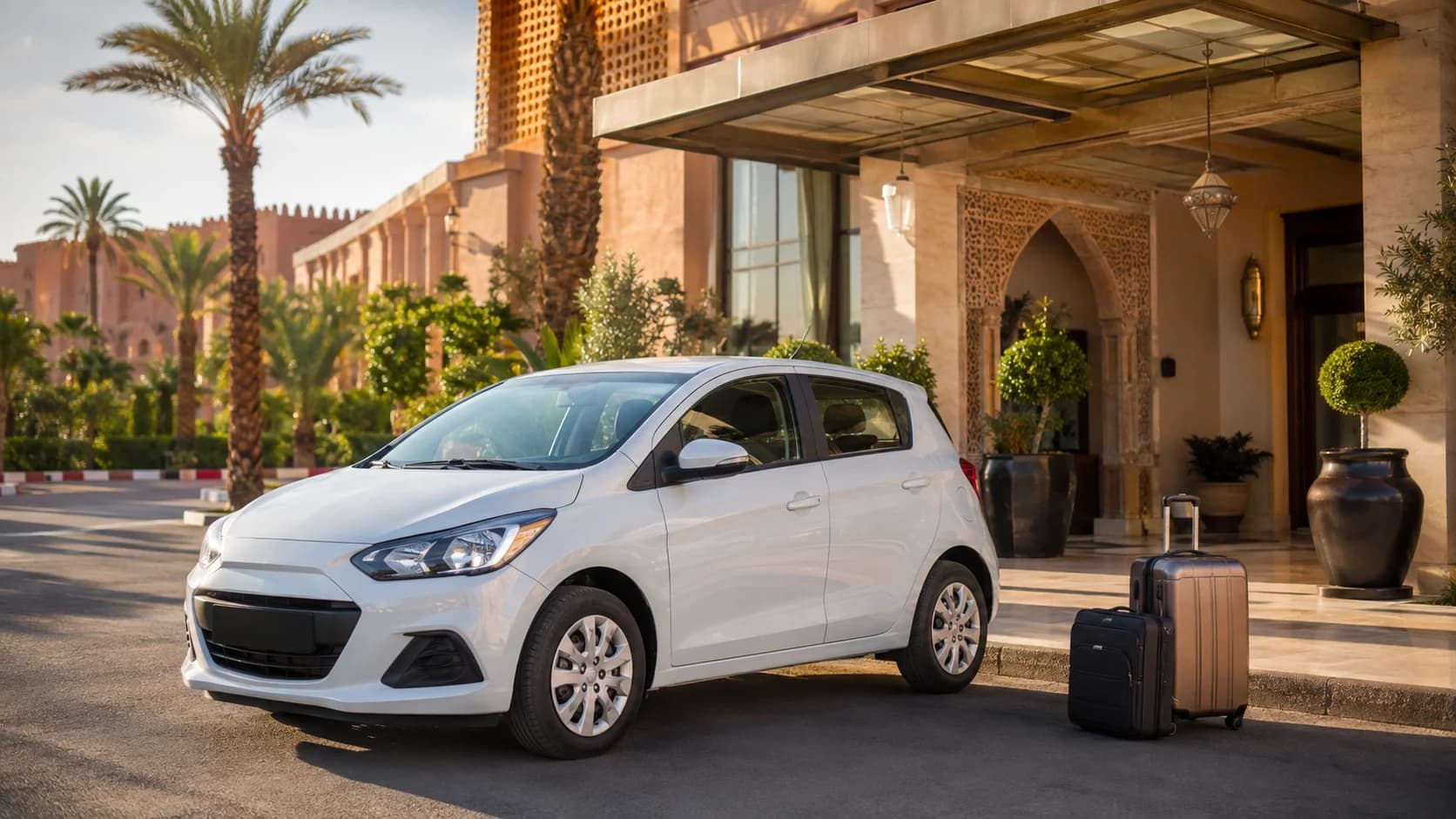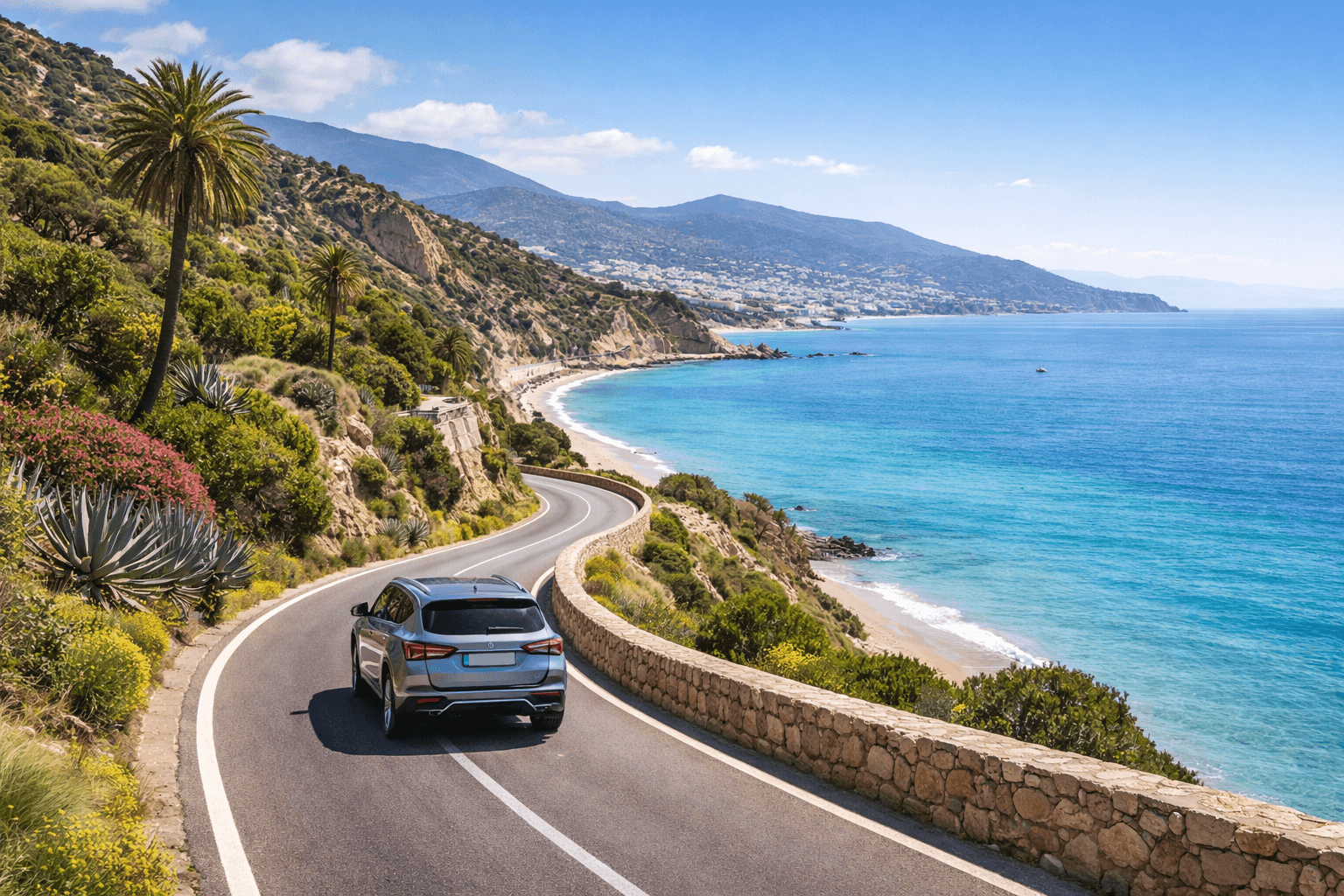






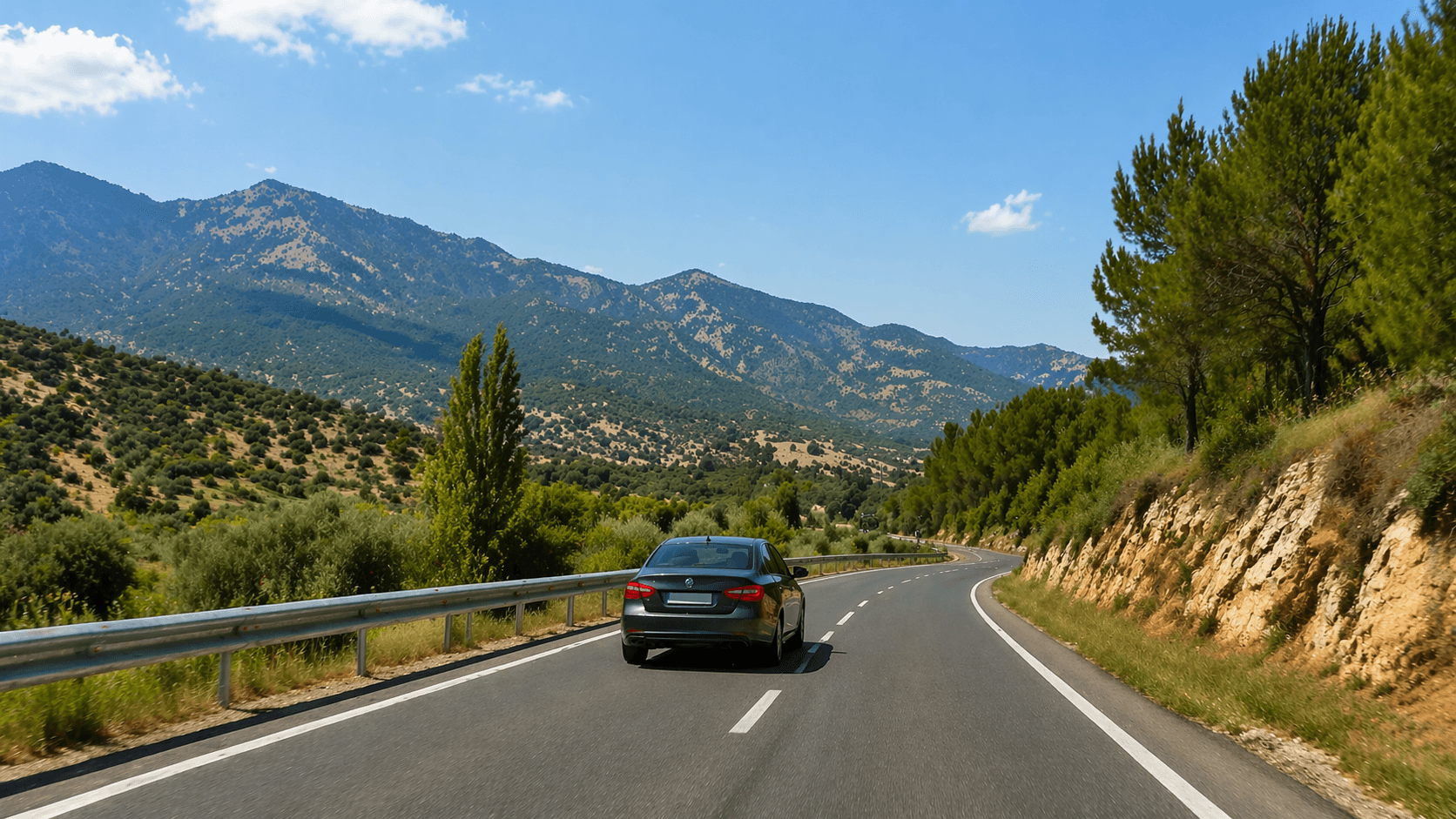
Driving in Morocco can be a very good way to travel. It gives you flexibility, makes airport arrivals easier, and helps you reach beaches, mountain villages, surf towns, desert gateways, and smaller stops that are harder to cover on fixed transport schedules. Morocco’s official tourism site presents car rental as one of the practical ways to move around the country, especially when you want more freedom between destinations.
So, is it safe to drive in Morocco? Yes, for most tourists, it can be safe and manageable if you prepare properly, follow the rules, and drive defensively. The main issue is usually not the quality of every road, but the variation in traffic rhythm, roundabouts, overtaking habits, mixed road users, weather changes, and night visibility. Government travel advisories note that road conditions and road safety can vary significantly by location and weather, especially in mountain areas or during poor conditions, and they specifically advise extra caution at night.
This means Morocco is not a destination where tourists should panic about driving, but it is also not one where you should drive casually without adapting. In cities, you need patience and concentration. In rural areas, you need to watch for sudden changes in surface quality, weather, animals, and lighting. On highways, you still need to respect speed, spacing, and fatigue limits. Morocco’s National Road Safety Agency, NARSA, repeatedly highlights speed, distraction, fatigue, dangerous overtaking, and poor safety habits as major risk factors on Moroccan roads.
If you understand those realities, choose the right vehicle, and stay alert, self-driving in Morocco can be one of the best parts of the trip.
For travelers who want their own flexibility, Car Rental Morocco is often the easiest way to explore multiple cities and routes. For travelers who prefer not to drive themselves, Private Driver Morocco can be the simpler choice for long-distance travel or more demanding itineraries.
Morocco Driving Laws You Must Know
The first rule is simple: in Morocco, you drive on the right-hand side of the road. That part feels familiar for many international travelers, but the local rhythm can still take adjustment. Official and quasi-official guidance also consistently emphasizes that speed controls are common, including automated enforcement and roadside controls. NARSA states that Morocco operates automated enforcement for infractions including speed, following distance, and seat-belt use.
Seat belts are not optional. NARSA says seat-belt use is legally required, and it notes that a person not wearing one can face a first-class fine; it also states the driver can lose a point on the licence in the relevant cases. NARSA also stresses that the obligation applies to drivers and passengers, including rear-seat passengers.
Phone use while driving is another major point. NARSA warns that using a phone at the wheel is punishable by fines and point penalties, and it presents driver distraction as one of the notable road-risk factors. In practical terms, tourists should assume that handheld phone use is a bad and avoidable risk. Use navigation with the phone mounted before departure, and do not try to read messages or adjust routes in moving traffic.
Alcohol and driving should be treated with zero tolerance. NARSA states that driving in a confirmed state of intoxication is an offence punishable by severe sanctions, including licence suspension and fines that can reach 10,000 dirhams. A legal threshold is also published in cited Moroccan materials, but for tourists the safer and simpler rule is not to drink at all before driving.
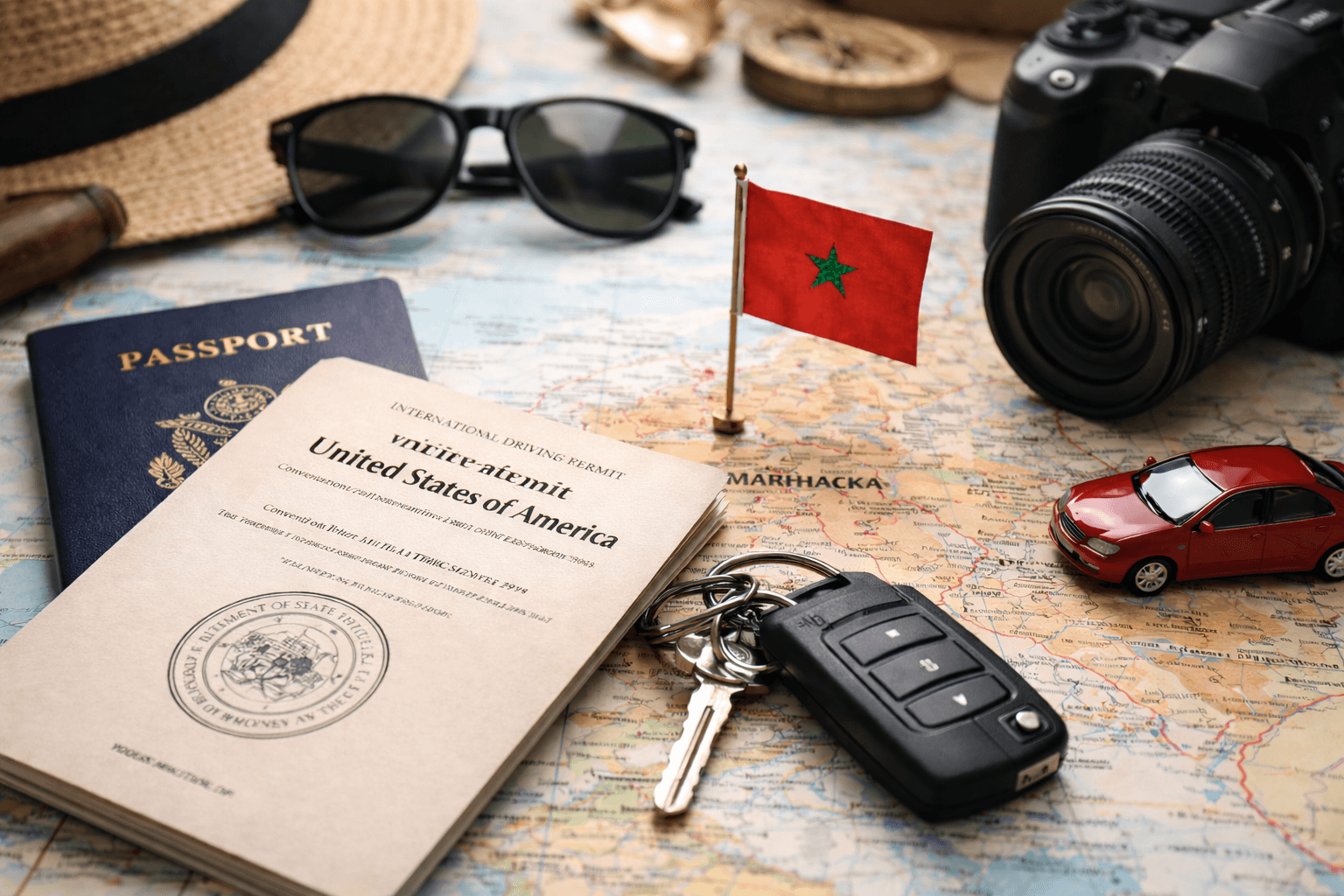
Tourists should also carry the right documents and basic vehicle papers. NARSA’s checklist on driving in Morocco emphasizes the need to have the required papers and safety equipment in the vehicle. If you are renting, make sure the rental agreement, insurance documents, and vehicle registration-related paperwork are in the car before leaving the agency.
As for speed, Morocco enforces posted limits closely, and travelers should follow the signs rather than guessing. Widely cited guidance consistently describes common maximums of roughly 60 km/h in urban areas, 80 to 100 km/h on many non-urban roads depending on the road type, and 120 km/h on motorways, but the posted sign is the rule that matters in the moment.
Understanding Moroccan Road Signs
Moroccan road signs broadly follow international conventions, which is good news for most tourists. The Ministry of Equipment publishes the national road-sign instruction documents and sign nomenclature, covering prescription signs, priority signs, road markings, temporary signs, and light signals. That means the system is structured and standardized rather than improvised.
In practice, the most important signs for tourists are the same ones that matter almost everywhere: speed-limit signs, stop signs, give-way signs, no-entry signs, lane markings, and roundabout or priority signage. What matters most is not memorizing every sign family before arrival, but staying calm and reading signs early, especially when entering urban areas, roundabouts, or roads under temporary works. Morocco’s road-marking and temporary-sign guidance shows that reduced lanes, prescribed movement, and works zones are part of the formal system, so tourists should slow down when signage changes suddenly.
Roundabouts deserve special attention. NARSA explains that drivers often misunderstand the difference between certain circular intersections and emphasizes that priority and observation rules matter both on approach and inside the junction. It also published a 2025 piece stressing respect for priorities at entry and within the roundabout to reduce collisions.
The safest tourist habit is simple: approach every roundabout slowly, watch the signs, look carefully at who already has priority, and do not assume that every other driver will behave predictably.
Navigating Moroccan Cities
Driving in Moroccan cities is usually the part that feels hardest for tourists. The roads themselves are not always the issue. The challenge is the traffic rhythm. In larger cities, you may deal with tight lanes, frequent roundabouts, taxis stopping unexpectedly, scooters filtering through gaps, pedestrians moving into the road, buses, and dense junctions that require quick but controlled decisions.
That does not mean city driving is unsafe by default. It means tourists need a different mindset. Drive more slowly than you think you need to. Leave extra space. Expect movement from every side. Do not become aggressive just because local drivers may seem more assertive than what you are used to. NARSA’s safety material repeatedly points to distraction, poor distance management, and priority mistakes as common road-safety problems, all of which matter even more in cities.
Automatic cars are often the better option in Moroccan cities because they reduce stress in stop-start traffic. Tourists who are tired after a flight or not used to dense roundabout traffic usually find automatic transmission easier to manage. If your route is airport to hotel to city sightseeing, easier driving often matters more than saving a little on the rental.
Parking also requires patience. Choose well-lit, obvious places, avoid blocking flow, and do not rush maneuvers. In city centers, it is often better to park once and walk rather than keep moving the car.
Driving in Rural Morocco
Rural Morocco is where driving can become more scenic and, in many cases, more enjoyable. It is also where tourists need more anticipation. Government travel advice says road conditions vary greatly by location and weather, and that matters especially outside major cities and on mountain approaches.
On rural roads, you may meet slower traffic, sharp bends, reduced shoulders, road-surface variation, weather changes, and vulnerable road users. NARSA also reminds drivers to be careful during overtaking and to respect spacing and visibility. It specifically warns against overtaking when visibility or conditions are poor.
Another factor is mixed road use. NARSA’s guidance on vulnerable road users calls on drivers to slow down, behave carefully, and give proper passing distance around cyclists and others on the road.
In plain terms, rural driving in Morocco is best enjoyed when you stop treating the road like a timetable. Build margin into the day. Avoid trying to “make up time.” Slow down before bends, villages, and crests. On mountain or weather-affected roads, caution matters much more than average speed.
Night Driving in Morocco
Night driving is where tourists should be most cautious. Canada’s travel advisory for Morocco explicitly says to avoid driving at night, and points out that road safety varies with location and weather. The UK’s travel guidance also points travelers toward road-travel caution.
The reason is practical, not dramatic. At night, visibility drops, road lighting can be inconsistent outside major urban areas, fatigue becomes more likely, and unexpected hazards become harder to read early. NARSA has also highlighted night vigilance and fatigue-related risk, and it recommends resting every two hours on longer journeys.
For tourists, the best rule is this: plan to arrive before dark whenever possible. If you must drive at night, reduce speed, increase following distance, avoid unnecessary overtaking, and keep the route simple.
Common Hazards on Moroccan Roads
The most common hazards are not unique to Morocco, but they can appear in combinations that catch tourists off guard. NARSA’s safety content repeatedly identifies speed, distraction, dangerous overtaking, poor following distance, fatigue, and phone use as major contributors to crashes.
Weather is another factor. NARSA’s advice for rain and fog stresses slowing down, using lights appropriately, and adjusting braking and spacing because visibility and grip are affected.
In towns and cities, the hazard is usually movement density: scooters, taxis, buses, pedestrians, and sudden stops. In rural areas, the hazard is usually visibility, passing judgment, surface changes, and the fact that conditions can shift quickly. On motorways, the danger often becomes speed and fatigue rather than complexity. NARSA’s motorway safety guidance, referencing ADM recommendations, says drivers should keep significant distance from the vehicle ahead; it cites a minimum 73 meters at motorway speeds.
Police checkpoints are also part of the driving landscape in Morocco. They are not automatically a problem. For tourists, the right response is calm cooperation: slow down, keep documents accessible, and answer simply if asked. Routine checks are normal in many countries, and treating them as routine helps the interaction stay easy.
Emergency Procedures
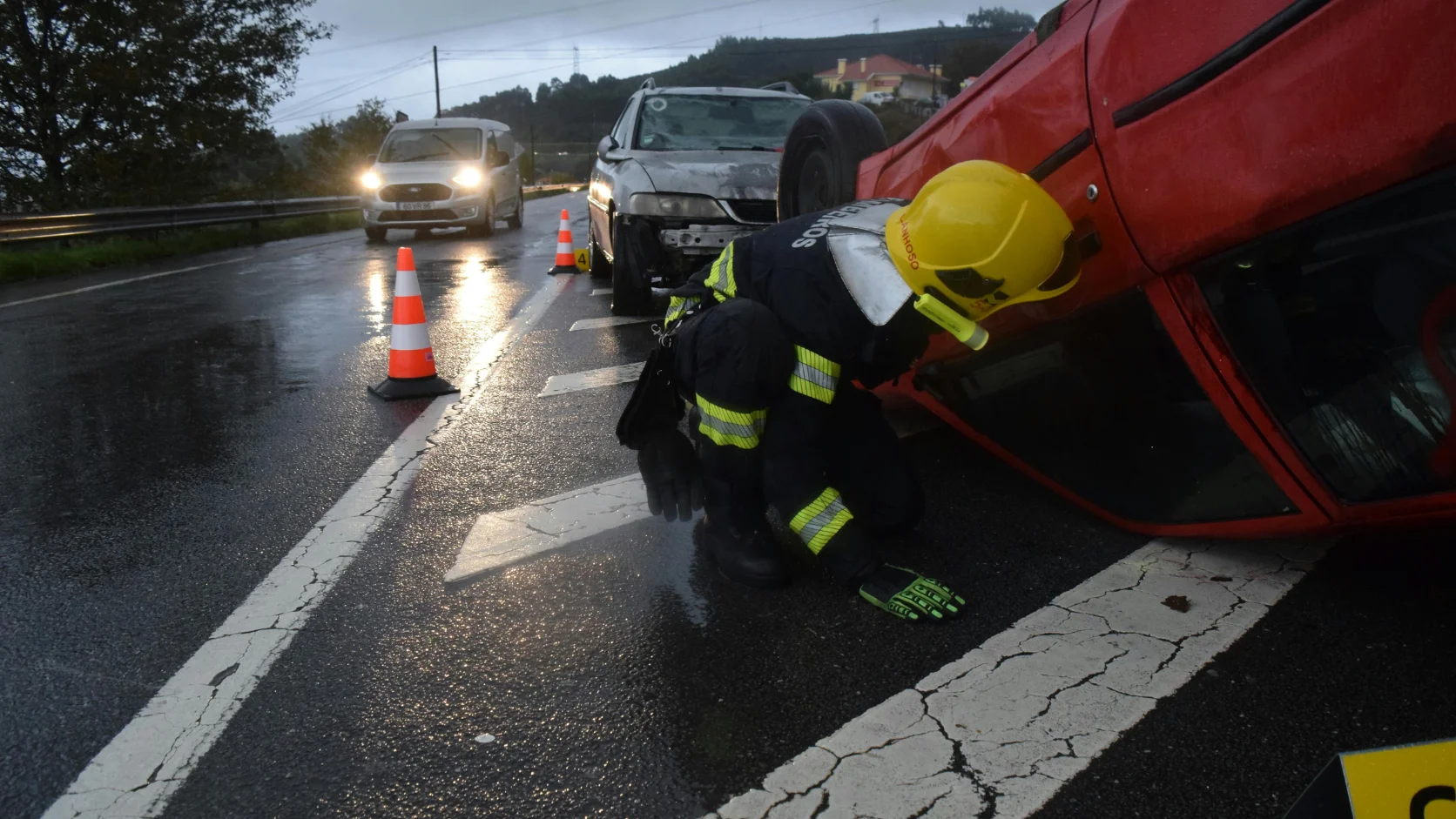
If something goes wrong, stay calm and make the scene safe first. Move only if it is safe to do so and if moving the vehicle will not create another risk. Canada’s travel advisory specifically recommends carrying a constat à l’amiable, the standard accident-report form often used after road incidents in Morocco.
For emergency help, the UK government’s Morocco travel advice lists these numbers: ambulance 150, fire 150, police 190, and gendarmerie 177. Use the gendarmerie especially in rural areas outside city-police zones.
If you are driving a rental, contact the rental company immediately after ensuring safety. Keep photos, location details, and all paperwork. If there are injuries, do not treat it as a simple inconvenience. Call emergency services and follow the instructions of local authorities.
Top 10 Safety Tips
The best way to stay safe in Morocco is to keep your driving simple and disciplined.
First, choose a car you are comfortable with, especially an automatic if you are not used to manual in traffic. Second, always wear seat belts and make sure every passenger does the same. Third, keep your phone out of your hand and set navigation before moving. Fourth, follow posted speed limits closely because enforcement is real. Fifth, slow down early for roundabouts and city junctions. Sixth, avoid risky overtaking, especially on rural roads. Seventh, do not drive after drinking at all. Eighth, take regular breaks; NARSA recommends resting roughly every two hours on longer drives. Ninth, avoid night driving when possible. Tenth, leave buffer time in your day so you never feel pushed into unsafe decisions.
These habits matter more than trying to “drive like locals.” Tourists are safest when they stay calm, predictable, and patient.
Common Mistakes to Avoid
One common mistake is assuming Morocco is either too dangerous to drive or so easy that no adaptation is needed. Both ideas are wrong. The better approach is respect, not fear.
Another mistake is planning long arrivals after dark. A third is choosing a manual car just because it is cheaper even though you usually drive automatic. Another is trying to navigate city centers too quickly instead of parking once and simplifying the day. And one more is underestimating fatigue on long scenic drives. NARSA’s fatigue guidance is clear that sleepiness and missed breaks are real safety risks.
FAQ
1. Is it safe to drive in Morocco as a tourist?
Yes, it can be safe for tourists who prepare properly, respect the rules, and drive defensively. Official travel advice mainly warns that road conditions and safety vary by area and that extra caution is needed at night or in changing weather.
2. Which side of the road do people drive on in Morocco?
Drivers in Morocco use the right-hand side of the road.
3. Are seat belts mandatory in Morocco?
Yes. NARSA says seat-belt use is legally required and applies to drivers and passengers, including those in the rear.
4. Can I use my phone while driving in Morocco?
You should not use a handheld phone while driving. NARSA says phone use at the wheel is punishable and identifies distraction as a major road risk.
5. Is night driving in Morocco a good idea?
Usually no, especially for tourists unfamiliar with the roads. Canada’s travel advice explicitly says to avoid driving at night.
6. Are Moroccan road signs hard to understand?
Usually not. Morocco’s sign system is formalized through national road-sign instruction documents and follows standard categories such as prescription, priority, road markings, temporary signs, and lights.
7. What should I do after a minor car accident in Morocco?
Stay calm, secure the scene, document what happened, and use a constat à l’amiable if appropriate. Canada’s travel advice specifically recommends having one in the vehicle.
8. What emergency numbers should I know in Morocco?
The UK government lists ambulance 150, fire 150, police 190, and gendarmerie 177.
9. Is speeding enforced in Morocco?
Yes. NARSA states that Morocco uses automated enforcement for offences including speed.
10. Should I rent a car or book a private driver in Morocco?
Rent a car if you want flexibility and are comfortable driving defensively. Choose a private driver if you prefer not to handle city traffic, longer night transfers, or more demanding rural routes yourself. Morocco’s tourism site presents both organized transport and car-rental options as practical ways to get around.
Book with MarHire
Driving in Morocco safely is mostly about preparation, patience, and choosing the right travel style. If you want full freedom for airports, city-to-city routes, coastal roads, and day trips, book a reliable vehicle through Car Rental Morocco. If you would rather enjoy the journey without handling traffic, parking, or long-distance concentration yourself, choose Private Driver Morocco for a more relaxed trip.