








“No deposit” sounds like the perfect Marrakech rental: you land, grab the keys, and you’re off, no big amount blocked on your card, no awkward cash deposit, no stress. And yes… sometimes it genuinely works like that.
But in Marrakech (and Morocco in general), “no deposit” is a label, not a universal definition. One company means no cash deposit. Another means no card hold. A third means no deposit only if you buy an upgrade. And a few deals advertise “no deposit” while the real financial risk is quietly moved into insurance excess, strict exclusions, or extra fees at pickup.
This guide explains what no-deposit car rental in Marrakech really means in 2026, how to spot a good offer fast, and the simple checks that keep your “no deposit” deal from turning into a surprise bill later.
Table of Contents
-
Why “No Deposit” Exists in Marrakech
-
The 3 Types of “No-Deposit” Deals
-
The Real Number to Check: Insurance Excess
-
No Hold vs No Deposit (the key difference)
-
Hidden Fees That Can Replace the Deposit
-
What to Check Before You Pay (Step-by-Step)
-
Marrakech-Specific Tips (parking + pickup reality)
-
Where to Start With MarHire
-
FAQs
-
Conclusion
1) Why “No Deposit” Exists in Marrakech
Marrakech is one of Morocco’s busiest rental markets, airport arrivals, tight city streets, lots of short stays, and constant day trips (Atlas, Ourika, Agafay area, Essaouira direction). To speed up pickups and reduce friction, agencies sometimes remove the traditional deposit step. It can be a legit customer-friendly policy.
But deposits exist for one reason: risk. When a company removes the deposit, they still have to manage risk through other levers, usually:
-
a higher insurance excess (what you could still pay if damage happens),
-
narrower coverage exclusions,
-
stricter return inspections,
-
or requiring a specific protection package.
So the goal isn’t “always choose no deposit.” The goal is: choose no deposit only when the rules and your maximum liability are crystal clear.
2) The 3 Types of “No-Deposit” Deals in Marrakech
When you see “no deposit,” it typically means one of these three setups:
Type A: No cash deposit, but there is a card hold
You don’t hand over cash, but your card may still have a pre-authorization (a temporary block). Some agencies call that “no deposit” because nothing is charged, but your available balance drops until the hold is released.
What to ask:
-
“Is there a card hold? If yes, how much and when is it released?”
Type B: Truly no deposit and no hold
This is the cleanest version: no cash, no blocked amount. These deals usually rely on strict documentation and clearly defined liability rules (excess + exclusions).
What to ask:
-
“Confirm: no cash deposit and no card pre-authorization, yes or no?”
Type C: No deposit only if you buy an upgrade
Some offers remove the deposit if you add a coverage package (often reducing excess too). This can be fair, if the total is shown upfront and the coverage details are real, not vague.
What to ask:
-
“Is no-deposit available on the base price, or only with an upgrade? What’s the final total either way?”
3) The Real Number to Check: Insurance Excess
Here’s the big truth: deposit is not the same as excess.
-
Deposit = money blocked/held upfront as security.
-
Insurance excess = the maximum you can still owe if the car is damaged (even if you have insurance).
A “no deposit” deal can still have a high excess. That means you didn’t remove the risk, you removed the upfront hold, while the liability remains.
Ask these questions exactly (and get answers in writing)
-
“What is the excess amount in MAD for damage?”
-
“Is the excess different for theft?”
-
“Are glass, tires, and undercarriage included or excluded?”
-
“Is there any admin/processing fee for claims?”
If the answer is “don’t worry, it’s covered,” push for numbers. Clear rentals sound boring because they’re specific.
4) No Hold vs No Deposit (the key difference)
This is where most travelers get trapped by wording.
-
No deposit might only mean “no cash deposit.”
-
No hold means “no card pre-authorization.”
So if your main goal is avoiding a blocked amount on your bank card, you must confirm no hold, not just “no deposit.”
If you want a formal breakdown of how authorization holds and reversals are processed (and why release timing can vary), you can reference Visa’s document Authorization and Reversal Processing Best Practices for Merchants.
5) Hidden Fees That Can Replace the Deposit
Even when there’s no deposit, the final cost can climb if the “small stuff” isn’t transparent. In Marrakech, these are the usual add-ons that surprise people:
Extra driver fees
Often only one driver is included.
Check: “How many drivers are included? What’s the daily fee for one more?”
After-hours pickup/return
Late flights or early returns can trigger fees.
Check: “Any after-hours fee? If my flight is delayed, do you charge extra?”
Fuel policy traps
The cleanest policy is full-to-full. Anything else can include fuel premiums + service fees.
Check: “Is it full-to-full? If not, what are the fuel and service fees?”
Cleaning fees (most common dispute)
Marrakech roads can be dusty. Normal dust is not the same as an interior stain.
Check: “What triggers a cleaning fee? Is normal dust acceptable?”
Mileage limits
Some “cheap” deals have limited kilometers.
Check: “Unlimited mileage? If limited, what’s the cost per extra km?”
Admin/processing fees on claims
Even when insurance applies, some contracts add a processing fee.
Check: “Is there an admin fee for any claim (yes or no)and how much?”
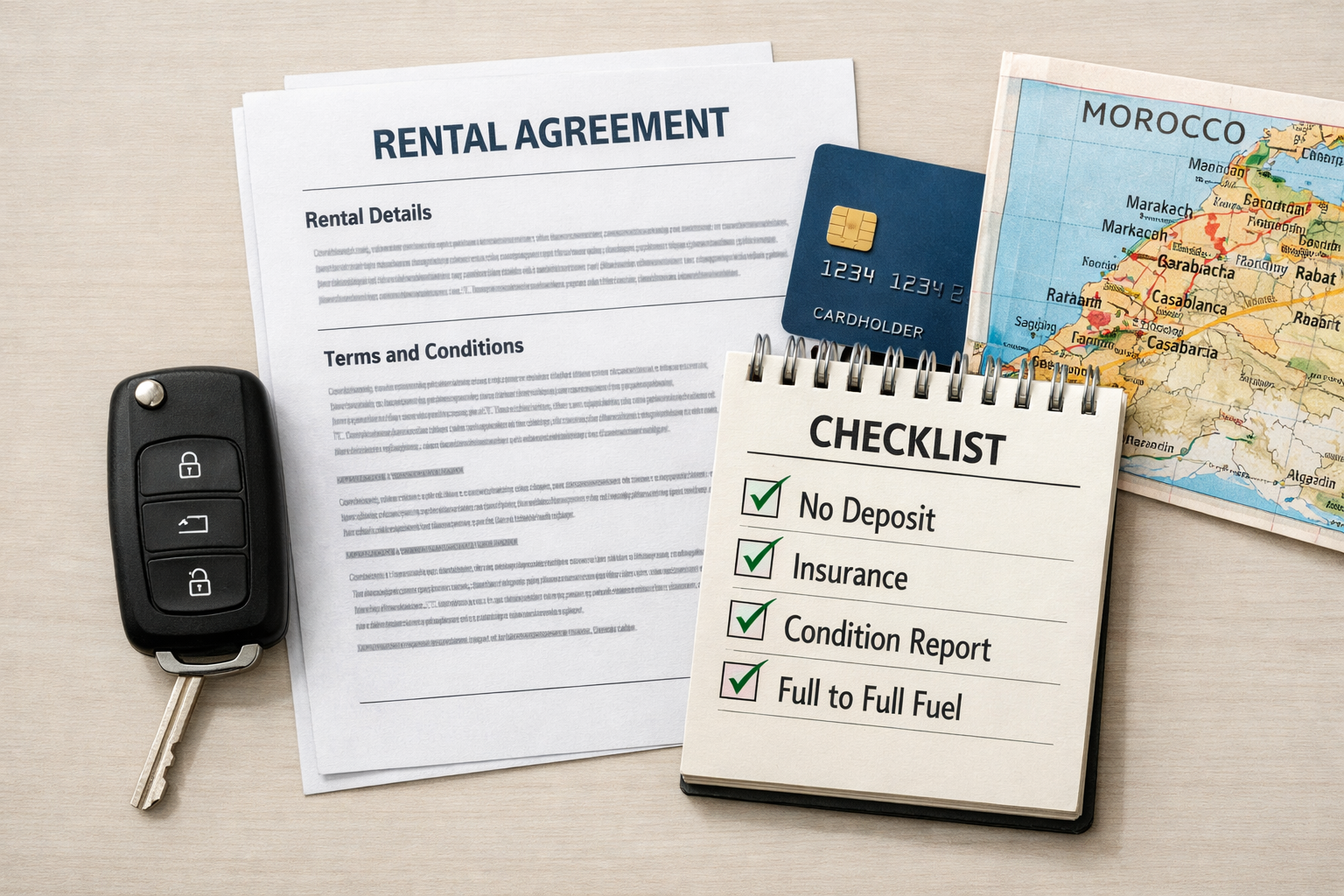
6) What to Check Before You Pay (Step-by-Step)
Use this as your quick pre-payment checklist:
Step 1: Confirm what “no deposit” means
Ask for a one-line confirmation:
-
“Please confirm: no cash deposit and no card hold (or specify hold amount).”
Step 2: Confirm your maximum liability (excess)
Ask:
-
excess in MAD for damage
-
excess in MAD for theft
-
exclusions: glass/tires/undercarriage
-
claim admin fee
Step 3: Confirm the real total price
Ask for the final price including:
-
taxes
-
extra driver (if needed)
-
delivery/pickup (if applicable)
-
after-hours (if your timing is late/early)
If it’s not written, assume it can change.
Step 4: Document the car properly (pickup + return)
At pickup:
-
photos of all sides, bumpers, wheels, windshield
-
close-ups of any marks
-
a 30–60 second walkaround video
-
photo of fuel gauge + mileage
At return:
-
repeat the same angles
-
ask for written confirmation: “returned OK”
This single habit prevents most “mystery damage” arguments.
7) Marrakech-Specific Tips (parking + pickup reality)
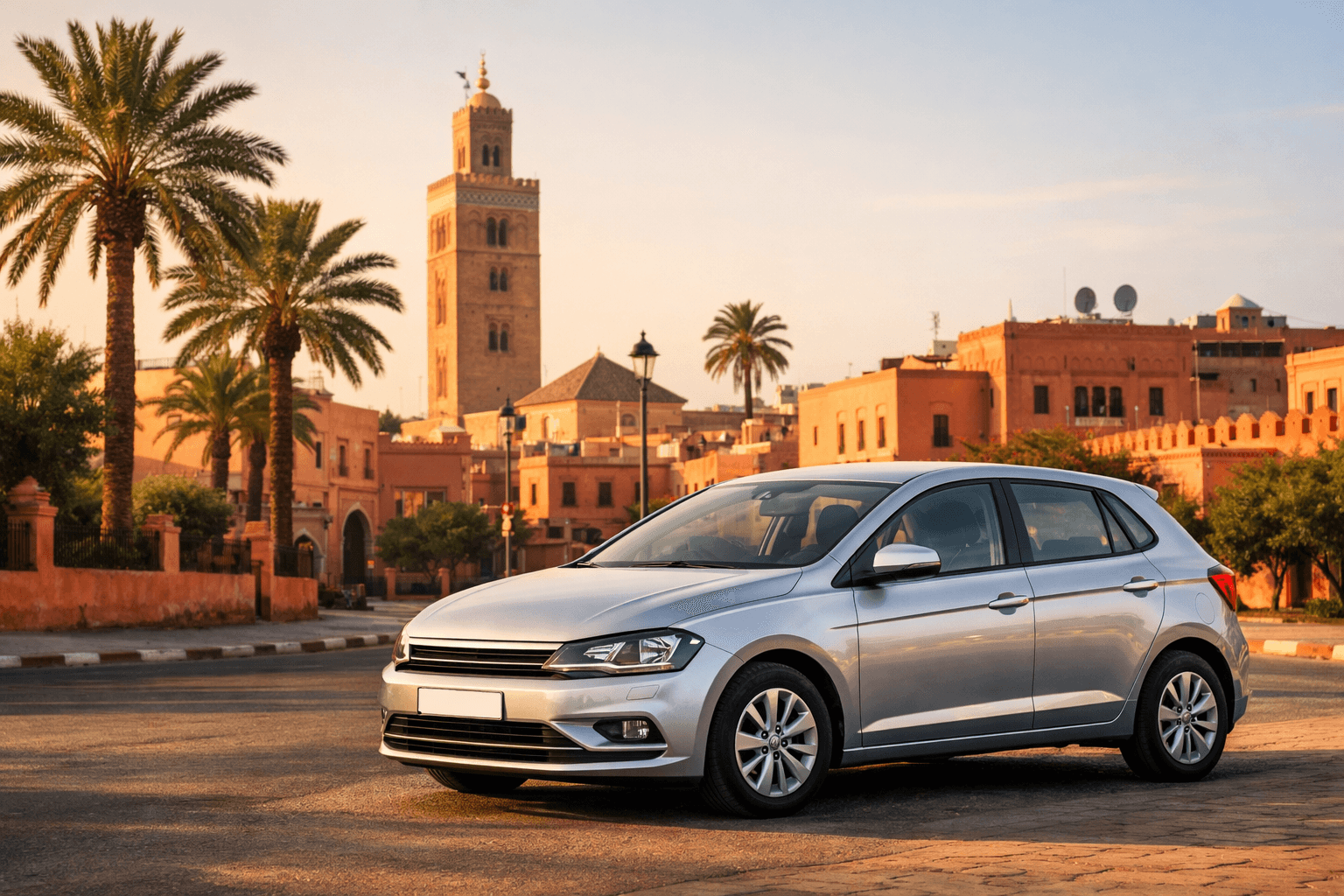
Choose the right car size for where you’ll stay
If you’re staying close to the medina or busy streets, a smaller car can reduce parking stress and minor scratches.
Airport pickup is fast, city pickup can be calmer
Airport desks can be rushed. City pickup sometimes gives you more time to review the contract and inspect the car carefully.
Prioritize clarity over “cheapest”
A slightly higher daily rate with clear rules is often cheaper than a low headline price plus surprises.
8) Where to Start With MarHire
If you want Marrakech-specific options first, start here: car rental marrakech.
And if you want Morocco-wide booking support and to compare policies across cities, use MarHire.
9) FAQs
Is “no deposit” the same as “no hold” in Marrakech?
Not always. No deposit can still include a card hold. If you want zero blocked amount, ask specifically for “no hold.”
Can I get a no-deposit rental without buying extra insurance?
Sometimes yes, sometimes no. If it requires an upgrade, compare the final total and confirm whether it reduces excess.
What’s the biggest risk with no-deposit deals?
A high excess or unclear exclusions (glass/tires/undercarriage). Always confirm your maximum liability in MAD.
What fuel policy is safest?
Full-to-full. It’s the easiest to prove and usually avoids extra service fees.
How do I avoid damage disputes?
Photo/video at pickup and return, make sure marks are noted on the contract, and get written return confirmation.
Is no-deposit good for first-time driving in Marrakech?
It can be, if rules are clear and excess is reasonable. If you’re nervous about tight streets, prioritize transparency and coverage clarity.
10) Conclusion
No-deposit car rental in Marrakech can be genuinely convenient, as long as you verify what the label means. Before you pay, confirm three things: (1) no hold (or the exact hold amount), (2) excess and exclusions, (3) the true all-in total price. Then document the car properly. Do that, and you’ll get the freedom of Marrakech driving without deposit stress or nasty surprises.