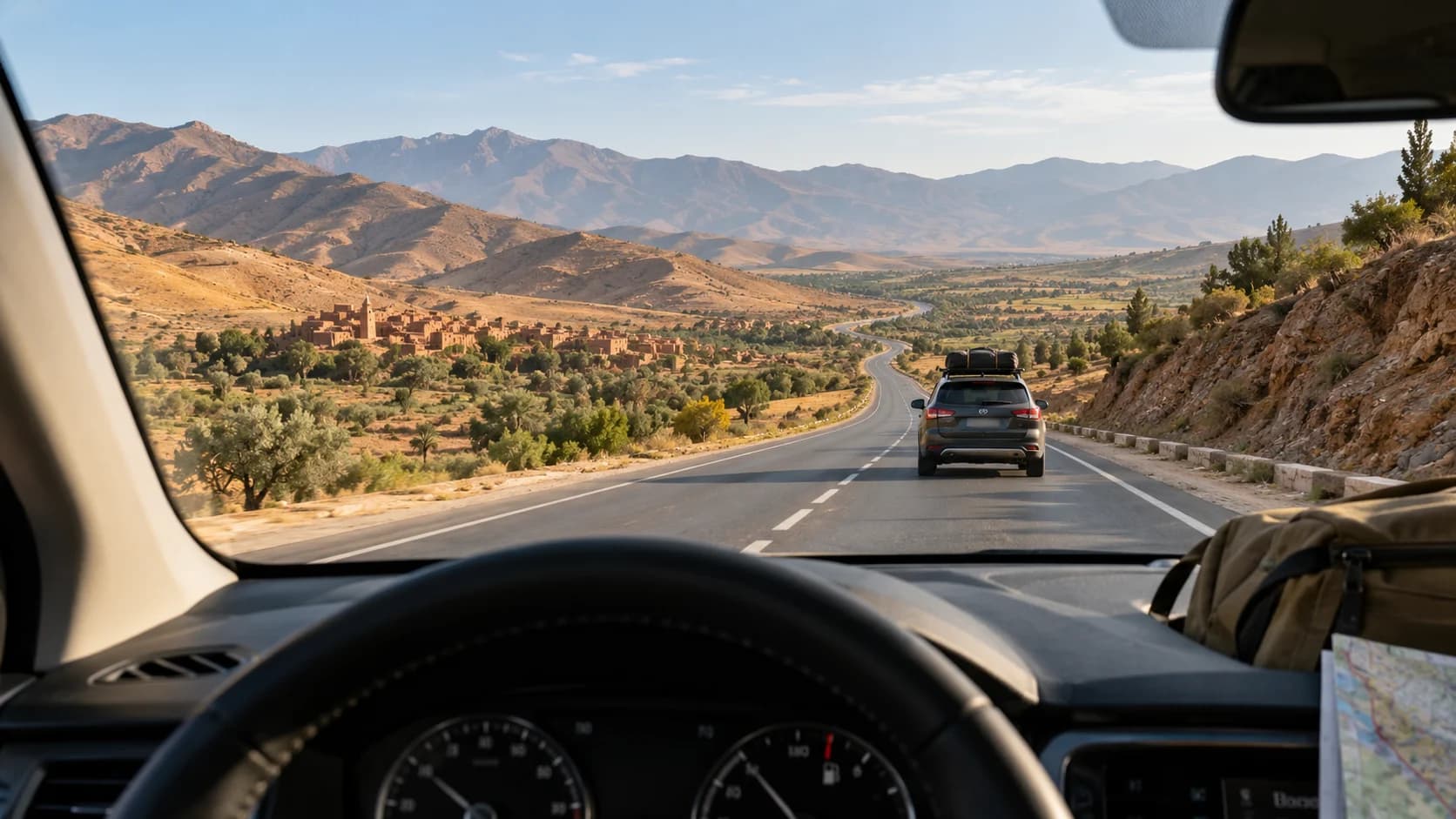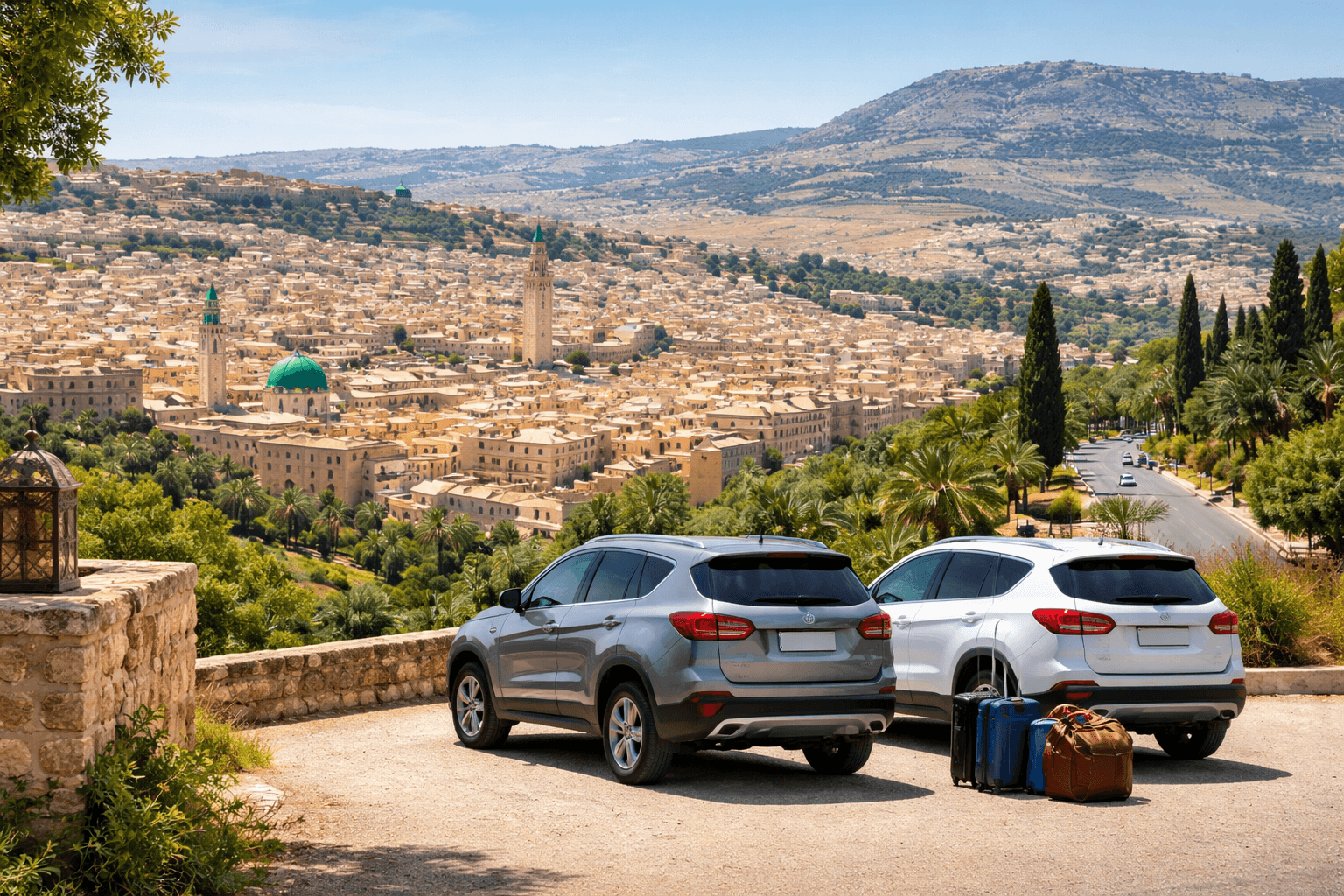








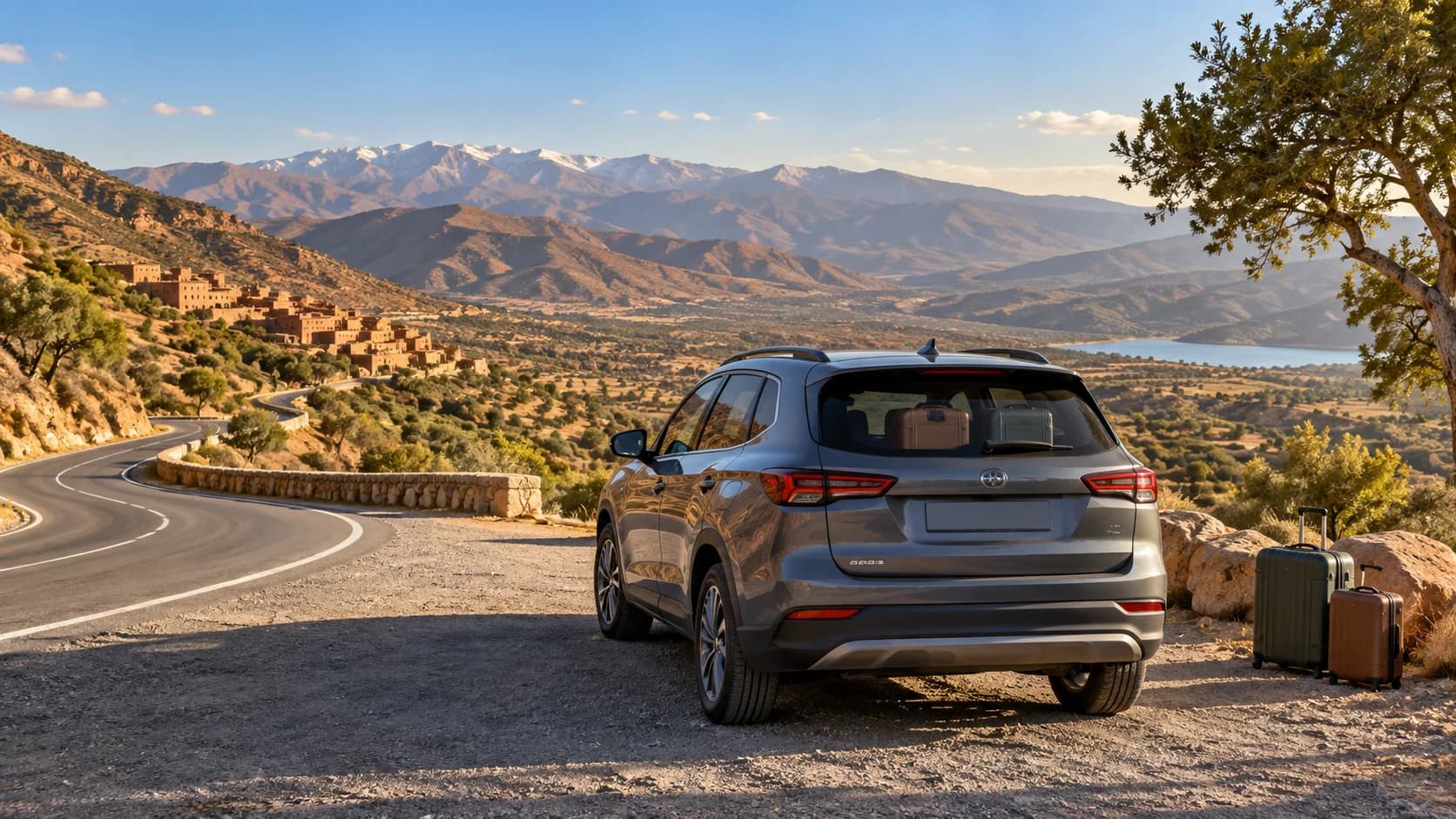
A 14-day Morocco road trip itinerary gives you enough time to experience several completely different sides of the country without turning every day into a long-distance drive. In two weeks, you can combine Morocco's Atlantic cities, the blue streets of Chefchaouen, the historic medina of Fes, the Middle Atlas, the Sahara near Merzouga, the dramatic Dades Valley, Marrakech, Essaouira and the southern coast.
For travelers comfortable driving abroad, renting a car is one of the most flexible ways to make this journey. You can leave early, stop in smaller towns, change your plans, carry luggage easily and explore places that are less convenient to reach by public transport.
This guide provides a practical day-by-day route, realistic driving stages, recommended overnight stops, vehicle advice and essential information for planning an unforgettable self-drive adventure across Morocco.
What Is the Best 14-Day Morocco Road Trip?
A strong 14-day Morocco road trip starts in Casablanca or Rabat, heads north toward Chefchaouen, continues through Fes and the Middle Atlas to Merzouga, then crosses the Dades Valley and Ouarzazate before reaching Marrakech. From Marrakech, finish with the Atlantic coast at Essaouira and Agadir.
A practical route is:
Casablanca → Rabat → Chefchaouen → Fes → Ifrane/Midelt → Merzouga → Todra Gorge → Dades Valley → Ouarzazate/Aït Ben Haddou → Marrakech → Essaouira → Agadir
Plan for roughly 2,000–2,500 km of driving, depending on your accommodation, detours and sightseeing stops.
For the most efficient trip, consider arriving through Casablanca and departing from Agadir rather than driving all the way back north on the final day.
14-Day Morocco Road Trip at a Glance
| Day | Route / Base | Main Experience | Driving Level |
|---|---|---|---|
| 1 | Casablanca | Arrival and vehicle pickup | Easy |
| 2 | Casablanca → Rabat | Atlantic coast and capital | Easy |
| 3 | Rabat → Chefchaouen | Rif Mountains | Moderate |
| 4 | Chefchaouen → Fes | Northern Morocco | Moderate |
| 5 | Fes | Full city day | Minimal |
| 6 | Fes → Midelt / Merzouga route | Middle Atlas | Long |
| 7 | Merzouga | Sahara experience | Minimal |
| 8 | Merzouga → Todra → Dades | Desert valleys and gorges | Moderate |
| 9 | Dades → Ouarzazate | Kasbah route | Moderate |
| 10 | Ouarzazate → Marrakech | High Atlas crossing | Moderate |
| 11 | Marrakech | Full city day | Minimal |
| 12 | Marrakech → Essaouira | Atlantic coast | Easy |
| 13 | Essaouira → Agadir | Coastal road trip | Easy–Moderate |
| 14 | Agadir | Beach, departure or onward travel | Minimal |
Best trip style: One-way/open-jaw road trip
Recommended minimum: 14 days
Best vehicle for most travelers: Compact car or sedan
SUV useful for: Extra luggage, larger families or travelers wanting higher ground clearance
4x4 necessary: Not for this standard paved-road itinerary
Driving side: Right
Road signs: Primarily Arabic and French
Main landscapes: Atlantic coast, Rif Mountains, imperial cities, Middle Atlas, Sahara, gorges, High Atlas
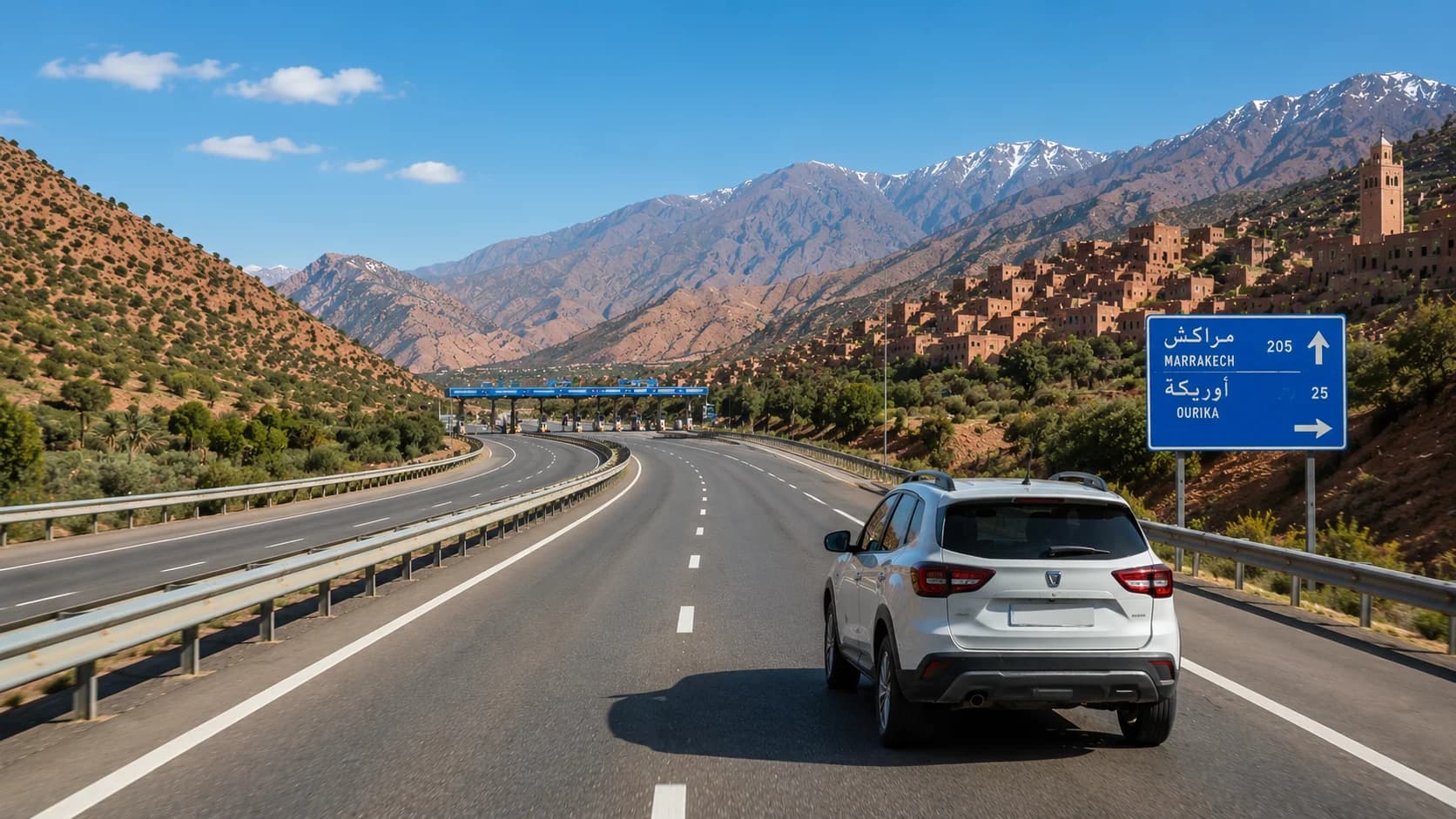
The Moroccan National Tourist Office confirms that vehicles drive on the right-hand side and that major road signs are generally displayed in Arabic and French.
In This Guide
- Why two weeks works well for Morocco
- Best starting and finishing points
- Complete 14-day driving itinerary
- Casablanca, Rabat and Chefchaouen
- Fes and the Middle Atlas
- Merzouga and the Sahara
- Todra Gorge and Dades Valley
- Ouarzazate and Aït Ben Haddou
- Marrakech
- Essaouira and Agadir
- Best rental car for the trip
- Motorways, tolls and fuel
- Driving and parking advice
- What to pack
- Alternative routes
- Frequently asked questions
Is 14 Days Enough for a Morocco Road Trip?
Yes. Fourteen days is an excellent length for a first Morocco self-drive trip because it allows you to experience the country's major landscapes while still including several nights with little or no driving.
A seven-day itinerary normally requires choosing between northern Morocco, the Sahara or the Atlantic coast. With two weeks, those regions can be connected into one logical journey.
Morocco's official tourism board itself promotes a two-week "Great Tour of Morocco," highlighting the diversity of the country from imperial cities and mountains to northern destinations and southern landscapes.
The important point is not to visit every possible destination.
For a comfortable road trip, prioritize:
fewer bases + meaningful stops + manageable driving days.
Day 1: Arrive in Casablanca and Pick Up Your Rental Car
Casablanca is one of the easiest starting points for an international Morocco road trip because Mohammed V International Airport connects well with the country's primary road network.
After collecting your luggage and completing your vehicle handover, avoid scheduling a major sightseeing drive immediately if you have arrived after a long flight.
Use the first day to:
-
collect and inspect the rental vehicle
-
become familiar with the controls
-
check fuel level
-
set up navigation
-
buy water and road-trip supplies
-
recover from the flight
If you are renting through MarHire, you can compare options on the car rental in Morocco page before choosing your vehicle.
What Should You Check Before Leaving?
Photograph or video the vehicle before departure, including:
-
front and rear bumpers
-
wheels
-
doors
-
windshield
-
mirrors
-
fuel level
-
dashboard mileage
Also confirm your insurance conditions, mileage allowance, fuel policy and emergency contact details.
MarHire practical note: rentals of seven days or longer can include unlimited kilometers, making a two-week itinerary especially suitable for long-distance exploration. Vehicle availability and final confirmation should always be checked at booking.
Day 2: Casablanca to Rabat
Approximate drive: 90 km
Typical driving time: Around 1–1.5 hours without major delays
Your first proper driving day is intentionally short.
Casablanca and Rabat are connected by motorway, making this a comfortable introduction to Moroccan intercity driving.
Autoroutes du Maroc identifies the Rabat–Casablanca corridor as part of the A1 motorway network.
Spend the remainder of the day exploring Rabat rather than continuing farther north.
Popular areas include:
-
Kasbah of the Udayas
-
Hassan Tower
-
Mohammed V Mausoleum
-
Bouregreg waterfront
-
Rabat medina
-
Chellah
Rabat is also a good place to become comfortable with city parking and Moroccan urban traffic before the longer sections of the trip.
Day 3: Rabat to Chefchaouen
Approximate drive: 250 km
Allow: Around 3.5–4.5 hours depending on route, traffic and stops
Leave Rabat after breakfast and travel north toward the Rif Mountains.
The landscape changes noticeably as you move away from the Atlantic urban corridor and approach Chefchaouen.
Chefchaouen itself is best explored on foot, so the rental car becomes useful primarily for reaching the city rather than moving around the medina.
Where Should You Park in Chefchaouen?
Do not expect to drive directly to every riad inside the old town.
If your accommodation is within the medina, ask the property for its recommended parking location or meeting point before arriving.
This is a good example of why road-trip travelers should distinguish between:
driving to a destination and driving inside the destination.
Spend the afternoon and evening exploring Chefchaouen on foot.
Day 4: Chefchaouen to Fes
Approximate drive: 200 km
Allow: Around 3.5–4.5 hours
Leave Chefchaouen in the morning and head southeast toward Fes.
This section takes you through changing northern landscapes and smaller communities before reaching one of Morocco's most historically important cities.
Once in Fes, park at your hotel or at an arranged parking area and leave the car there.
Driving is not useful inside Fes el-Bali, the historic medina.
Plan two nights in Fes.
Day 5: Full Day in Fes
Driving required: None for most travelers
This is deliberately a car-free day.
After several travel days, keeping the vehicle parked gives you time to explore Fes properly.
A typical day can include:
-
Fes el-Bali
-
traditional souks
-
historic madrasas
-
Nejjarine area
-
Bab Bou Jeloud
-
viewpoints over the medina
-
artisan workshops
A successful self-drive itinerary should include days like this.
Having a rental vehicle does not mean you should drive every day.
The advantage is having transport available when the next long-distance stage begins.
Day 6: Fes Through the Middle Atlas Toward Merzouga
This is one of the longest but most rewarding driving stages of the itinerary.
The route toward southeastern Morocco passes through or near:
Fes → Ifrane → Azrou → Midelt → Errachidia → Erfoud → Merzouga
Depending on your departure time and preferred pace, you have two sensible options.
Option 1: Drive to Merzouga in One Day
Best for confident drivers who leave Fes early.
Expect a long day with scenic stops.
Option 2: Overnight Around Midelt
Best for travelers who prefer shorter driving stages.
This changes the exact daily schedule slightly but produces a more relaxed journey.
What Changes Along This Route?
This drive demonstrates why Morocco is particularly suited to road trips.
Within one day, the scenery can transition from:
-
Fes countryside
-
Middle Atlas terrain
-
mountain towns
-
open plateaus
-
palm-filled valleys
-
dry desert landscapes
Keep your fuel level comfortable rather than waiting until the tank is nearly empty.
Day 7: Merzouga and the Sahara
Driving required: Minimal
After the long journey south, keep Day 7 centered around Merzouga and the Erg Chebbi region.
Your standard rental car should remain on appropriate paved or established-access roads.
Do not treat an ordinary rental car as an off-road desert vehicle.
For excursions onto dunes or remote desert tracks, use an appropriate local excursion, 4x4 service or guided experience.
The official Moroccan tourism site promotes the country's southern desert and kasbah regions for desert experiences and guided 4x4 excursions.
Possible experiences include:
-
Erg Chebbi views
-
desert camp
-
camel excursion
-
sunset
-
local villages
-
sunrise over the dunes
Spend a second night around Merzouga if possible.
Day 8: Merzouga to Todra Gorge and Dades Valley
Approximate driving: 250–300 km depending on stops
Now begin moving west.
A common route takes you through:
Merzouga → Erfoud → Tinghir → Todra Gorge → Dades Valley
This is one of the strongest road-trip days because the journey itself is part of the experience.
Instead of rushing directly to your accommodation, leave enough daylight for stops.
Todra Gorge
Todra Gorge near Tinghir is one of the most recognizable geological landscapes along this route.
Dades Valley
Continue toward Boumalne Dades and your overnight accommodation.
Road conditions can change with weather and maintenance, particularly away from major motorways, so avoid assuming that a distance shown by navigation will always translate into the same driving time.
Day 9: Dades Valley to Ouarzazate and Aït Ben Haddou
Approximate drive: 140–180 km depending on detours
Compared with Day 6, this is a much easier driving day.
Continue west through the landscapes commonly associated with Morocco's kasbah route.
The Moroccan National Tourist Office specifically promotes the Road of the Kasbahs, including Ouarzazate and the surrounding southern valleys.
Use the additional time for:
-
valley viewpoints
-
small-town stops
-
Ouarzazate
-
Aït Ben Haddou
-
nearby kasbah landscapes
Spend the night in Ouarzazate or close to Aït Ben Haddou.
Day 10: Ouarzazate to Marrakech
Approximate drive: Around 190–200 km
Allow generous time
This stage crosses the High Atlas and should not be planned as an ordinary short-distance journey.
Mountain roads may involve:
-
curves
-
gradients
-
slower vehicles
-
weather changes
-
roadworks
-
longer-than-expected journey times
Check current road conditions before departure, particularly during periods of poor weather.
Drive during daylight when possible and avoid creating a schedule that requires arriving in Marrakech at a precise minute.
When you reach Marrakech, park the vehicle at your hotel or accommodation and leave it there for the following day.
Day 11: Full Day in Marrakech
Driving required: Minimal or none
Spend an entire day in Marrakech without a long drive.
Depending on your interests, explore:
-
Jemaa el-Fnaa
-
the medina
-
souks
-
historic palaces
-
gardens
-
Gueliz
-
local restaurants
For travelers beginning their road trip in Marrakech instead, car rental in Marrakech can be used as an alternative starting point for the southern portion of this itinerary.
Should You Drive Inside Marrakech?
You can, but you do not need a vehicle for most central sightseeing.
A better strategy is often:
park once → explore central Marrakech on foot or locally → use the car again when leaving the city.
Day 12: Marrakech to Essaouira
Approximate drive: 175–190 km
Typical trip: Around 3 hours plus stops
The drive from Marrakech to Essaouira is much easier than the preceding mountain sections.
Leave Marrakech in the morning and head west toward the Atlantic.
As you approach the coast, the environment becomes increasingly influenced by the Atlantic.
Once in Essaouira, keep the car parked while exploring:
-
Essaouira medina
-
Sqala ramparts
-
fishing port
-
beachfront
-
cafés
-
artisan streets
Travelers focusing specifically on the coast can also use car rental in Morocco to build a shorter Marrakech–Essaouira–Agadir itinerary.
Day 13: Essaouira to Agadir
Approximate drive: Around 175 km
Allow: 3–4 hours with stops
Rather than simply treating this as a transfer day, make the Atlantic road part of the trip.
The route south can include coastal scenery, argan landscapes and smaller communities before reaching the wider Agadir area.
Possible stops depend on your route and interests, but travelers often consider areas around:
-
Sidi Kaouki
-
coastal viewpoints
-
Imsouane
-
Taghazout
-
Tamraght
You do not need to include every detour.
Two or three worthwhile stops are better than constantly leaving and rejoining the main road.
Finish the day in Agadir.
If Agadir is your final destination, you can compare vehicle categories through MarHire Car Agadir.
Day 14: Agadir and Departure
Your final day should be intentionally light.
Depending on your flight time, spend the morning around:
-
Agadir beachfront
-
marina area
-
Taghazout
-
nearby viewpoints
-
hotel or resort
Then refuel the vehicle according to your rental agreement and allow sufficient time for the return inspection.
Can You Return the Car in Agadir Instead of Casablanca?
Potentially, yes. One-way vehicle return should be requested and confirmed before the trip.
Do not assume that every vehicle can automatically be collected in Casablanca and returned in Agadir.
If one-way return is unavailable for your booking, modify the itinerary before departure rather than discovering the issue on Day 14.
What Is the Best Car for a 14-Day Morocco Road Trip?
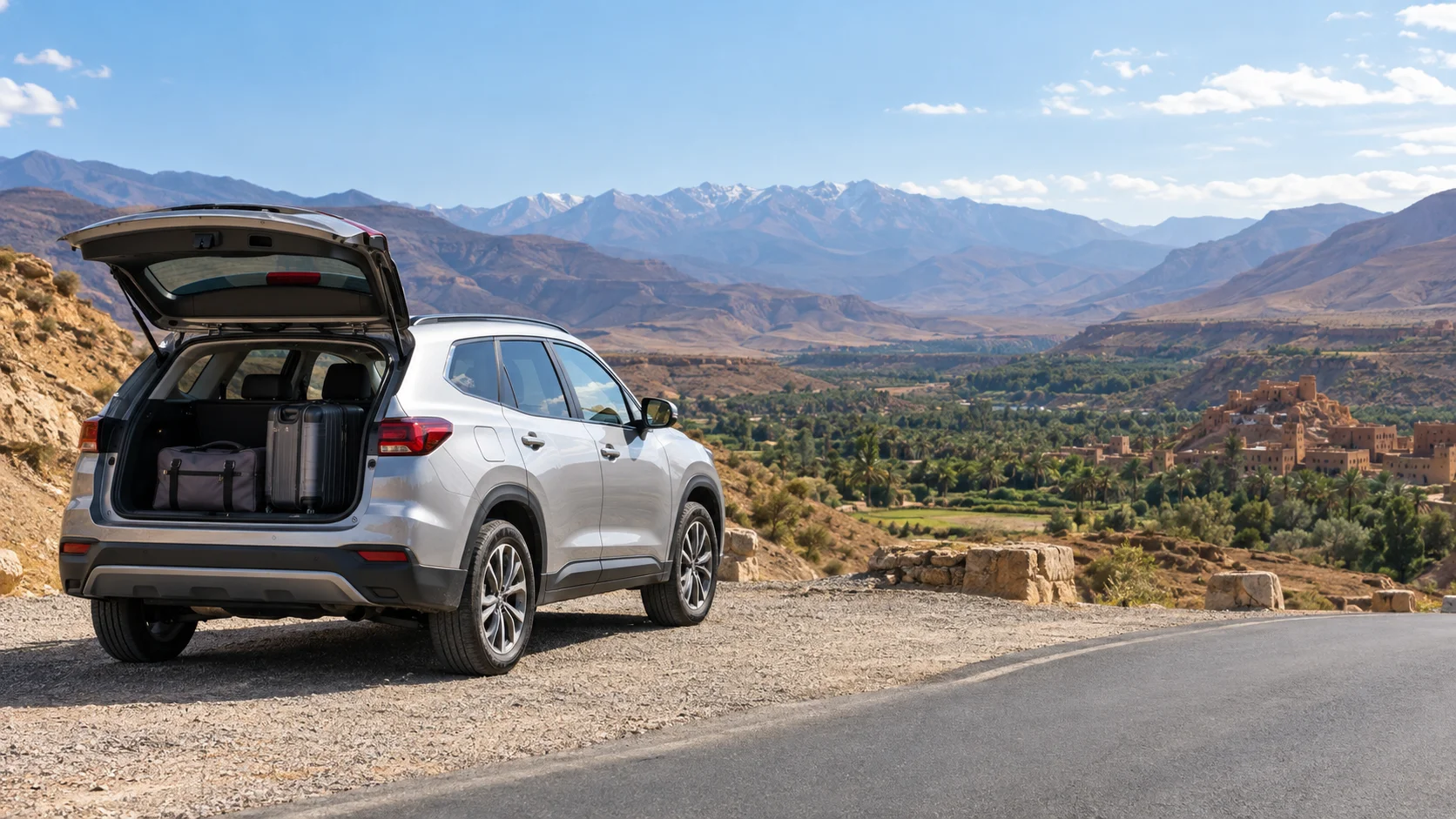
For this particular route, most travelers do not need a 4x4.
Your best choice depends mainly on passengers and luggage.
| Traveler Type | Recommended Vehicle |
|---|---|
| Solo traveler | Compact hatchback |
| Couple with light luggage | Hatchback or sedan |
| Couple with large luggage | Sedan |
| Family of 4 | Sedan or SUV |
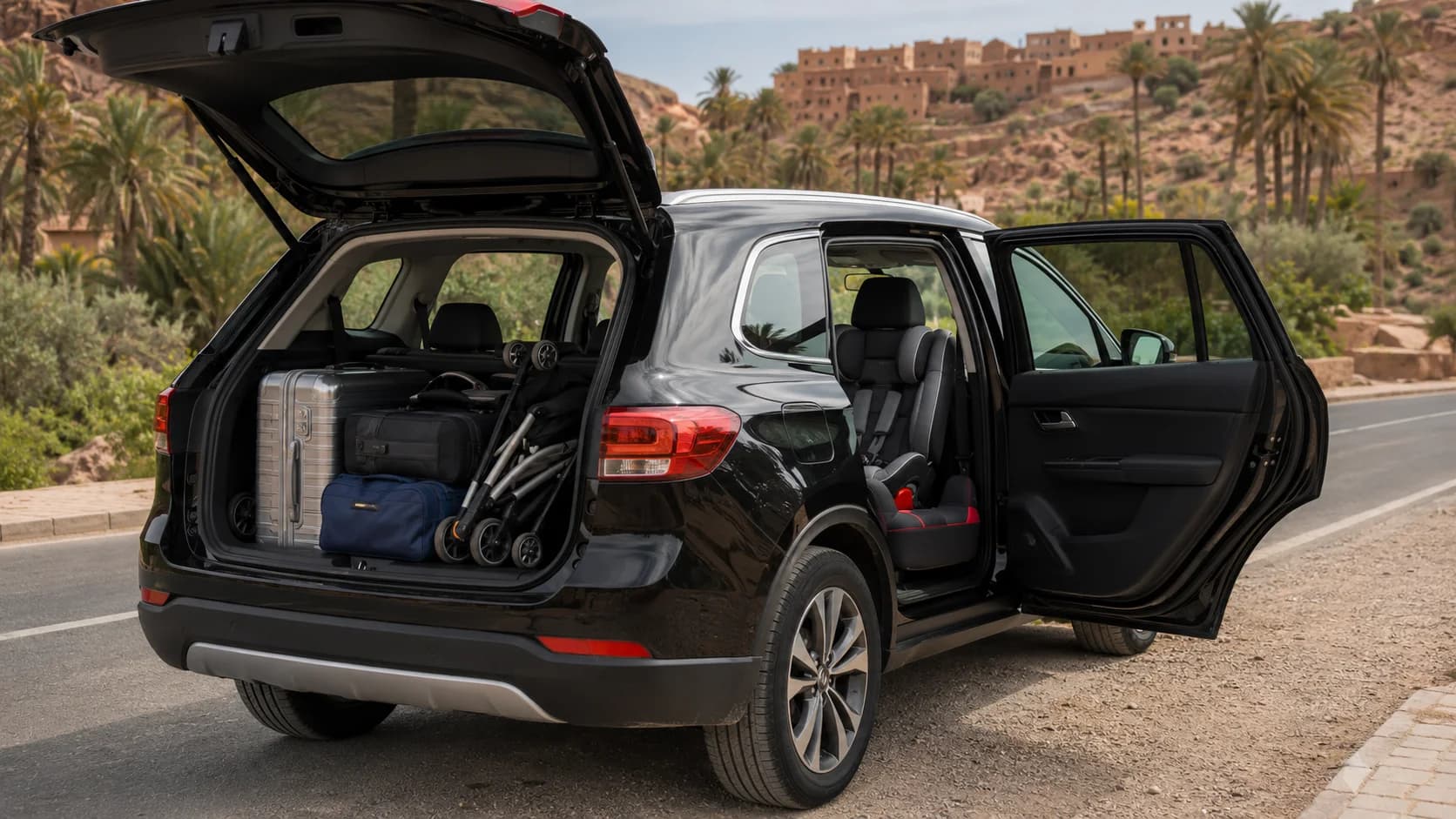
| 4–5 travelers with luggage | SUV |
| 6–7 travelers | 7-seater / MPV |
| Travelers uncomfortable with manual | Automatic |
| Off-road desert plans | Appropriate 4x4 / guided service |
Travelers prioritizing comfort on a two-week journey can explore SUV rental in Morocco, while couples traveling light usually do not need the additional vehicle size.
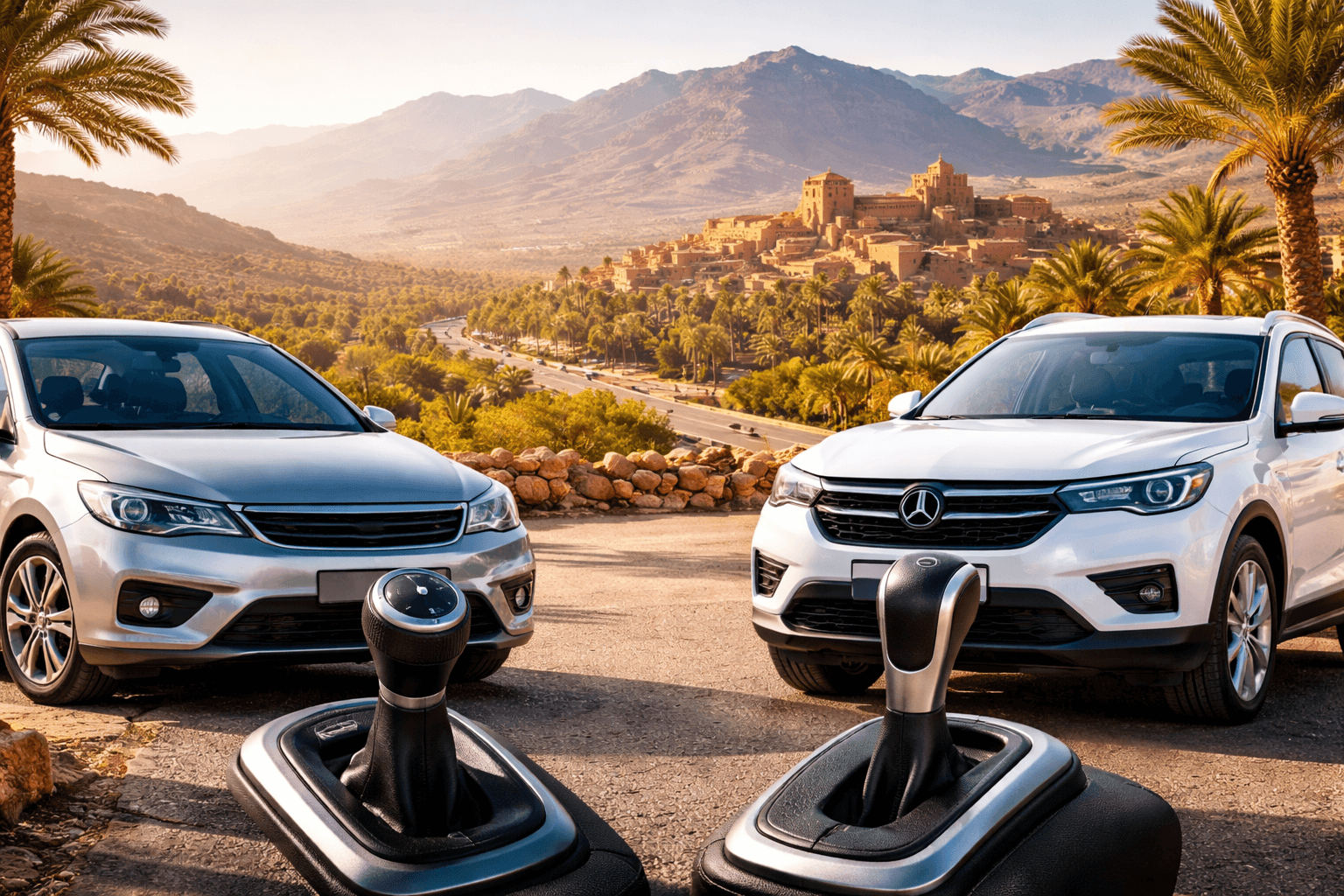
Automatic or Manual?
Manual cars are common in Morocco; the Moroccan National Tourist Office notes that many rental vehicles use manual transmissions.
If you normally drive an automatic, choose an automatic rental.
A two-week international road trip is not the ideal time to learn a different transmission while simultaneously adapting to unfamiliar cities, mountain roads and navigation.
Do You Need a 4x4 for This Morocco Itinerary?
No—not for the itinerary described above.
The main route connects established cities and destinations via paved roads.
A compact car, sedan or normal SUV can handle the standard itinerary under normal road conditions.
A 4x4 becomes relevant when your plans include genuinely off-road routes, remote mountain tracks or desert driving beyond ordinary paved access.
Even with a 4x4, never assume that every unpaved route is appropriate for an unfamiliar driver or permitted under the rental agreement.
Morocco Motorways and Tolls
Morocco has an extensive motorway network connecting major regions.
Autoroutes du Maroc currently lists major corridors including:
-
A1: Rabat–Safi
-
A2: Rabat–Oujda
-
A3: Casablanca–Agadir
-
A4: Berrechid–Beni Mellal
-
A5: Tanger Med–Rabat
-
A7: Tetouan–Fnideq
The A3, for example, connects Casablanca, Settat, Marrakech and Agadir across several motorway sections.
Some motorway sections are tolled.
Autoroutes du Maroc states that motorway toll stations accept methods including cash, bank cards and the Jawaz electronic toll system.
For current motorway information and toll rates, consult Autoroutes du Maroc before your journey.
Fuel Strategy for a Two-Week Morocco Road Trip
You will find fuel stations throughout major cities and along important intercity routes, but the best road-trip habit is simple:
Do not wait for the warning light before refueling.
This becomes more important when traveling through:
-
mountain regions
-
southeastern Morocco
-
desert areas
-
rural routes
-
late in the evening
For long stages such as Fes to Merzouga, fill the tank before leaving the city and top up when convenient along the route.
Also verify whether your rental uses petrol or diesel before the first refuel.
How Much Driving Is Too Much in Morocco?
A useful road-trip rule is to evaluate time rather than kilometers alone.
Two routes covering the same distance may feel completely different.
A motorway journey between major cities can be relatively straightforward, while a shorter mountain drive may involve curves, towns, changing speeds and sightseeing stops.
For this itinerary, try to avoid stacking several 5–7 hour driving days consecutively.
That is why the route includes stationary or light-driving days in:
-
Fes
-
Merzouga
-
Marrakech
-
Agadir
These recovery days make the overall journey substantially more enjoyable.
Should You Book Every Hotel Before the Trip?
During high-demand periods, booking your important overnight stops in advance is sensible, especially:
-
Chefchaouen
-
Fes
-
Merzouga
-
Dades Valley
-
Marrakech
-
Essaouira
Accommodation planning becomes particularly important when staying in medinas.
Many traditional riads are located in pedestrian or restricted-access areas, so ask:
Where should I park or meet you when I arrive by car?
That one question can prevent considerable confusion.
What Should You Pack for a Morocco Self-Drive Trip?
A practical road-trip setup includes:
-
original driving licence
-
passport
-
rental documentation
-
insurance information
-
phone charger
-
car charger
-
offline navigation
-
sunglasses
-
water
-
comfortable walking shoes
-
layers for temperature changes
-
small overnight bag
-
payment card and some cash
Temperatures can differ significantly between the Atlantic coast, mountains and desert—even during the same journey.
Avoid packing exclusively for the climate at your arrival airport.
Should You Use Google Maps Alone?
Navigation apps are extremely useful, but they should not replace common sense.
Before following a shortcut, ask whether it appears suitable for:
-
an ordinary passenger car
-
current weather
-
your rental agreement
-
daylight conditions
For major journeys, check your route before leaving rather than blindly accepting every mid-drive recalculation.
Download offline maps for important regions before the trip in case mobile coverage becomes unreliable.
When Is the Best Time for a 14-Day Morocco Road Trip?
For many travelers, spring and autumn provide the easiest balance of temperatures across Morocco's varied geography.
Summer trips are possible, but inland and desert areas can become extremely hot.
Winter can be attractive in southern Morocco but requires additional awareness in higher-elevation regions, where weather can affect mountain roads.
Because conditions vary by region and year, check the forecast and road status immediately before long mountain stages.
For destination and seasonal planning, the Moroccan National Tourist Office provides official tourism information and regional travel guidance.
Open-Jaw Trip vs Returning to Casablanca
There are two main ways to build this itinerary.
| Route Style | Advantage | Disadvantage |
|---|---|---|
| Casablanca → Agadir | More efficient | Requires one-way rental/flight planning |
| Casablanca → Casablanca | Easier flight planning | Adds a long return journey |
| Marrakech → Marrakech | Strong southern loop | Misses more of northern Morocco |
| Tangier → Agadir | Excellent north-to-south route | Requires suitable international flights |
Best Overall Choice
For a first two-week road trip:
Casablanca arrival + Agadir departure is one of the most efficient versions.
It prevents Day 14 from becoming a long motorway drive simply to return to the original airport.
A More Relaxed Alternative
The itinerary above covers a lot of Morocco.
Travelers who prefer slower travel should remove one region rather than squeeze additional destinations into the same 14 days.
For example:
Skip Chefchaouen
and use the extra nights for Fes, the Sahara and Marrakech.
Or:
Skip Agadir
and spend two nights in Essaouira before returning toward Marrakech or Casablanca.
Neither version is objectively better.
The right itinerary depends on whether your priority is:
seeing more regions or spending more time in each place.
Why Self-Driving Works Well for This Route
Public transport is useful between many major Moroccan cities. The national tourism office highlights rail connections operated by ONCF as well as buses and other transport options.
But this particular itinerary includes destinations where having a vehicle significantly improves flexibility.
The biggest advantages appear during:
-
Middle Atlas stops
-
Merzouga approach
-
Todra Gorge
-
Dades Valley
-
kasbah region
-
Atlantic coastal stops
A car also makes luggage logistics simpler when changing accommodation frequently.
The tradeoff is responsibility for:
-
navigation
-
parking
-
fuel
-
tolls
-
traffic
-
vehicle security
-
long-distance driving
Travelers who dislike those responsibilities may enjoy the same route more with a private driver.
Practical Morocco Car Rental Tips for a 14-Day Trip
Before starting a multi-week drive, confirm the details that actually affect the journey.
Mileage
A road trip of this scale can exceed 2,000 km, so understand your kilometer allowance before booking.
Fuel
Follow the agreed fuel-return policy rather than assuming every company uses the same system.
Insurance
Know what is included, what excess applies and which situations are excluded.
Additional Driver
If two people will share long-distance driving, add the second driver correctly rather than informally switching drivers.
Child Seats
Families should reserve suitable child seating before arrival instead of assuming it will be available at pickup.
Roadside Assistance
Keep the provider's assistance contact stored both in your phone and somewhere accessible offline.
Vehicle Confirmation
A vehicle displayed online should not be treated as physically confirmed until the rental provider verifies availability and the booking.
Frequently Asked Questions
How many kilometers will I drive during a 14-day Morocco road trip?
For the Casablanca–Rabat–Chefchaouen–Fes–Merzouga–Dades–Ouarzazate–Marrakech–Essaouira–Agadir route, expect roughly 2,000–2,500 km, depending on hotel locations, sightseeing detours and optional excursions.
Is two weeks enough to drive around Morocco?
Yes. Two weeks is enough for a substantial Morocco road trip, but not for seeing the entire country. Focus on one logical route instead of trying to include every major city.
Is it difficult for tourists to drive in Morocco?
Most major intercity routes are manageable for experienced drivers, but traffic style, urban congestion, mountain roads and unfamiliar road environments require concentration. Travelers should drive conservatively and avoid unnecessary night driving on unfamiliar rural roads.
Do tourists drive on the left or right in Morocco?
Vehicles drive on the right-hand side of the road in Morocco.
Do I need a 4x4 for Merzouga?
You do not need a 4x4 simply to reach the Merzouga area using the normal paved-road route. A suitable 4x4 or guided excursion is recommended for actual off-road desert travel.
Should I rent an automatic car in Morocco?
If you normally drive an automatic, yes. Manual cars are common in Morocco, but choosing the transmission you already use confidently makes a long international road trip easier.
Can I drop the rental car off in another Moroccan city?
One-way drop-off may be possible between destinations such as Agadir, Casablanca, Essaouira, Fes, Marrakech or other cities, depending on the provider, vehicle and booking. Request the different-city return in advance and obtain confirmation before planning your flights around it.
Can I drive from Fes to Merzouga in one day?
Yes, but it is a long driving day. Leave early, allow time for breaks and avoid planning a late-night arrival. Travelers preferring a slower pace can break the journey around Midelt or another suitable stop.
Is Morocco better by rental car or train?
It depends on the itinerary. Trains are convenient for several major-city connections, while a rental car offers greater flexibility for the Atlas regions, desert approaches, valleys and smaller coastal stops. For this specific two-week itinerary, a car provides substantially more flexibility.
Should I drive at night in Morocco?
For a first self-drive trip, daylight driving is preferable on unfamiliar rural, mountain and desert roads. Plan long stages early enough that unexpected stops or slower sections do not force you to complete the journey late at night.
Final 14-Day Morocco Road Trip Route
For travelers who want one itinerary combining Morocco's strongest self-drive experiences without constantly changing direction, this is the route to remember:
Day 1 — Casablanca
Day 2 — Rabat
Day 3 — Chefchaouen
Days 4–5 — Fes
Days 6–7 — Middle Atlas and Merzouga
Day 8 — Todra Gorge and Dades Valley
Day 9 — Ouarzazate and Aït Ben Haddou
Days 10–11 — Marrakech
Day 12 — Essaouira
Days 13–14 — Agadir
It combines imperial cities, mountain roads, desert scenery, kasbahs and the Atlantic coast while giving you several opportunities to stop driving and explore on foot.
The biggest mistake would be adding more destinations simply because fourteen days sounds long.
For a successful Morocco self-drive adventure, protect your daylight, leave room for spontaneous stops and treat the journey between destinations as part of the experience.
Start Your Morocco Road Trip
A two-week road trip gives you the freedom to experience Morocco beyond the main city centers, from the Rif Mountains and Middle Atlas to the Sahara, High Atlas and Atlantic coast.
Before departure, choose a vehicle based on passengers, luggage, transmission preference and route—not simply price. Compare available options through MarHire car rental in Morocco and confirm your pickup location, insurance, mileage conditions and one-way return arrangements before setting out.
With the right vehicle and a realistic itinerary, fourteen days is enough to turn a simple Morocco holiday into a genuine cross-country self-drive adventure.