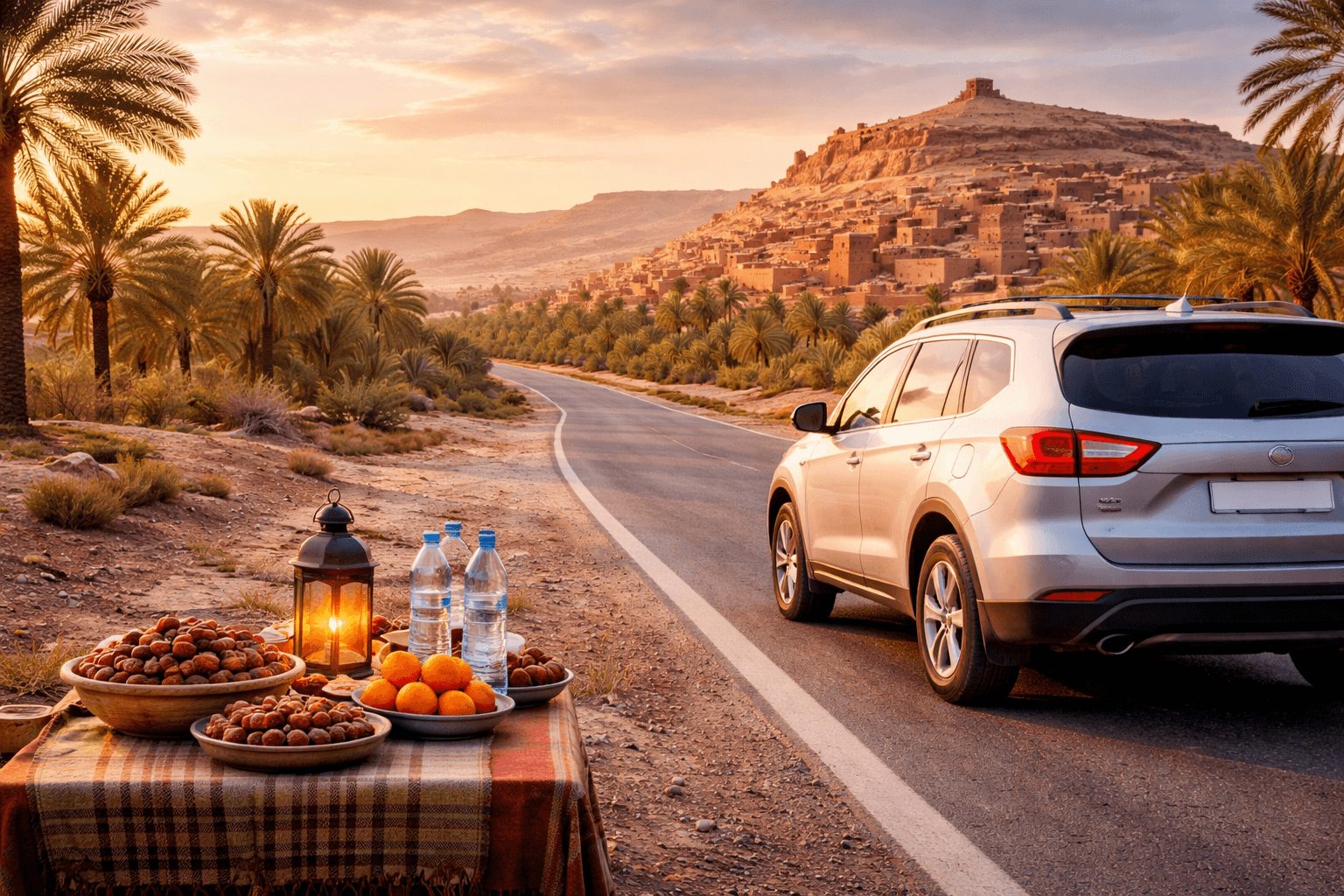


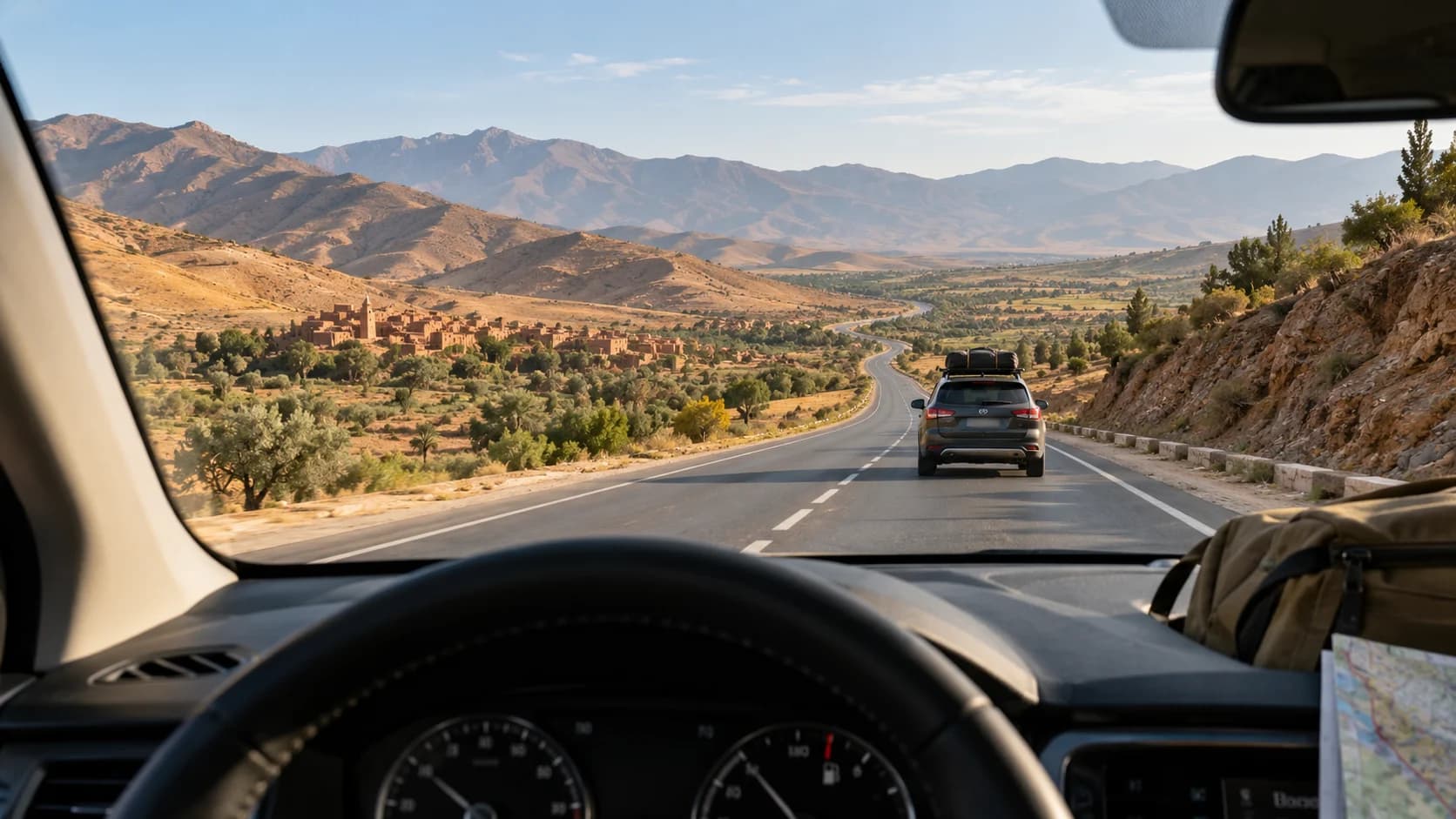
Driving in Morocco as a UK tourist can be one of the easiest ways to explore beyond the major cities, whether you are planning a coastal road trip, crossing the Atlas Mountains or travelling between Marrakech, Casablanca, Fes and Tangier.
However, British drivers need to prepare for a few important differences from driving at home. Morocco drives on the right, speed limits are shown in kilometres per hour, motorways use tolls, and current UK government guidance says British visitors should carry both their UK driving licence and a 1968 International Driving Permit (IDP).
This guide explains the licence requirements, Moroccan road rules, motorway driving, police checks, parking, insurance and practical car rental tips UK tourists should know before getting behind the wheel.
Can UK Tourists Drive in Morocco?
Yes. UK tourists can drive and rent a car in Morocco, provided they meet the applicable licence and rental-company requirements.
Current UK government travel advice says British drivers should carry both their valid UK driving licence and a 1968 International Driving Permit while driving in Morocco. The older 1949 IDP is no longer accepted. GOV.UK also advises drivers to carry the relevant vehicle and insurance documents.
Morocco drives on the right-hand side of the road, and motorway speeds can reach 120 km/h. British visitors should pay particular attention to speed signs, pedestrians, motorbikes and local traffic patterns.
Driving in Morocco for UK Tourists at a Glance
| Question | What UK Drivers Should Know |
|---|---|
| Can UK tourists drive in Morocco? | Yes, subject to licence and rental requirements |
| Which side of the road? | Right |
| UK licence required? | Yes |
| International Driving Permit? | Carry a 1968 IDP with your UK licence |
| Motorway maximum | Up to 120 km/h where signed |
| National roads | Commonly 80 km/h, with some sections allowing 100 km/h |
| Towns and cities | Limits can be 20, 40 or 60 km/h depending on the road |
| Motorway tolls? | Yes, on much of the motorway network |
| Toll payment | Cash, bank card and Jawaz are among accepted methods |
| Alcohol and driving | Avoid alcohol completely before driving |
| Main driving difference from UK | Traffic travels on the right |
Morocco's National Road Safety Agency, NARSA, states that urban limits can be 20, 40 or 60 km/h, national roads are generally limited to 80 km/h with some stretches allowing 100 km/h, and the motorway maximum is 120 km/h. Always follow the limit shown on the actual road rather than assuming a general limit applies.
Table of Contents
- UK driving licence and IDP requirements
- Documents to take when renting a car
- Driving on the right in Morocco
- Moroccan speed limits
- Motorways and toll roads
- City and rural driving
- Police checks and speed enforcement
- Roundabouts and road signs
- Night driving
- Atlas Mountain and rural roads
- Parking
- Fuel and motorway services
- Insurance and rental conditions
- Choosing the right rental car
- What to do after an accident
- Frequently asked questions
Do UK Tourists Need an International Driving Permit in Morocco?
Yes, according to current GOV.UK travel advice, British visitors driving in Morocco should have a 1968 International Driving Permit as well as their UK driving licence.
This is particularly important because some older travel guides still state that a UK photocard licence alone is sufficient.
The UK government's current Morocco guidance specifically says travelers should carry:
-
their UK driving licence; and
-
the 1968 version of the International Driving Permit.
It also states that Morocco no longer accepts the 1949 version.
A 1968 IDP normally remains valid for three years or until the underlying UK licence expires, whichever happens first. GOV.UK currently lists the cost as £5.50 and says it must be obtained in the UK through participating PayPoint locations.
Can You Get an IDP After Arriving in Morocco?
UK government advice says you cannot buy the required UK-issued IDP after arriving in Morocco, so arrange it before travelling.
This makes it one of the most important pre-departure checks for a British tourist planning to hire a car.
Check current GOV.UK Morocco driving advice
What Documents Do UK Tourists Need to Rent a Car in Morocco?
Exact requirements vary between rental companies and vehicle categories, but a UK visitor should normally prepare:
-
valid original UK driving licence
-
1968 International Driving Permit
-
passport
-
booking confirmation
-
accepted payment method
-
any additional documents required by the specific rental company
Do not rely only on photographs or digital copies of your licence unless the rental provider explicitly confirms they are accepted.
Rental companies can also impose their own conditions beyond the legal driving requirements. GOV.UK notes that hire companies may apply minimum-age requirements or require drivers to have held their licence for a certain period.
Before booking, compare the confirmed requirements for your specific vehicle through MarHire's car rental in Morocco listings.
Which Side of the Road Do You Drive on in Morocco?
Morocco drives on the right-hand side of the road, the opposite of the UK.
For British motorists, this is usually the biggest adjustment during the first few kilometres.
The driver sits on the left in most Moroccan rental cars, and overtaking is normally performed on the left.
Tips for UK Drivers Adjusting to Right-Hand Traffic
For your first journey:
-
choose an easy route rather than entering a complicated medina immediately;
-
remind yourself to keep right after every turn;
-
take extra care when leaving petrol stations and car parks;
-
pay particular attention when entering roundabouts;
-
use the lane markings rather than following another vehicle automatically.
An airport-to-hotel journey or an open motorway section often provides an easier introduction than beginning your first drive inside a dense historic city centre.
What Are the Speed Limits in Morocco?
Moroccan speed limits are displayed in kilometres per hour, not miles per hour.
According to Morocco's National Road Safety Agency:
| Road Type | Typical Maximum |
|---|---|
| Built-up areas | 20, 40 or 60 km/h depending on location |
| National roads | Generally 80 km/h |
| Selected national-road sections | Up to 100 km/h |
| Motorways | 120 km/h |
The posted road sign always takes priority.
A road can change from a higher rural limit to 60 or 40 km/h when approaching a town, junction, school or built-up area. That is why watching the signs is more important than memorising one national speed limit.
Do Not Convert Speeds Mentally While Driving
A useful reference for UK visitors is:
-
60 km/h ≈ 37 mph
-
80 km/h ≈ 50 mph
-
100 km/h ≈ 62 mph
-
120 km/h ≈ 75 mph
Most rental cars display km/h prominently, so follow the vehicle speedometer and posted signs directly.
Are There Speed Cameras and Police Checks in Morocco?
UK tourists should assume speed limits are actively enforced.
Morocco uses road policing and speed enforcement on urban roads, national routes and motorways. Police and gendarmerie checks are also a normal part of driving in the country.
The simplest approach is to reduce speed as soon as you see a lower posted limit rather than waiting until you have entered the town or checkpoint area.
Keep your driving documents accessible in the vehicle, including your:
-
driving licence
-
IDP
-
rental agreement
-
vehicle documents supplied by the rental provider
If an officer stops you, remain calm and follow their instructions.
What Is Driving on Moroccan Motorways Like?
For many British visitors, Morocco's main motorways are the easiest part of the driving experience.
The motorway network connects major destinations including Casablanca, Rabat, Tangier, Marrakech and other important cities.
Autoroutes du Maroc states that the motorway maximum is 120 km/h, although lower signed limits can apply.
The network also includes motorway service areas where drivers can stop for fuel, food and rest.
Are Moroccan Motorways Toll Roads?
Many major Moroccan motorways are tolled.
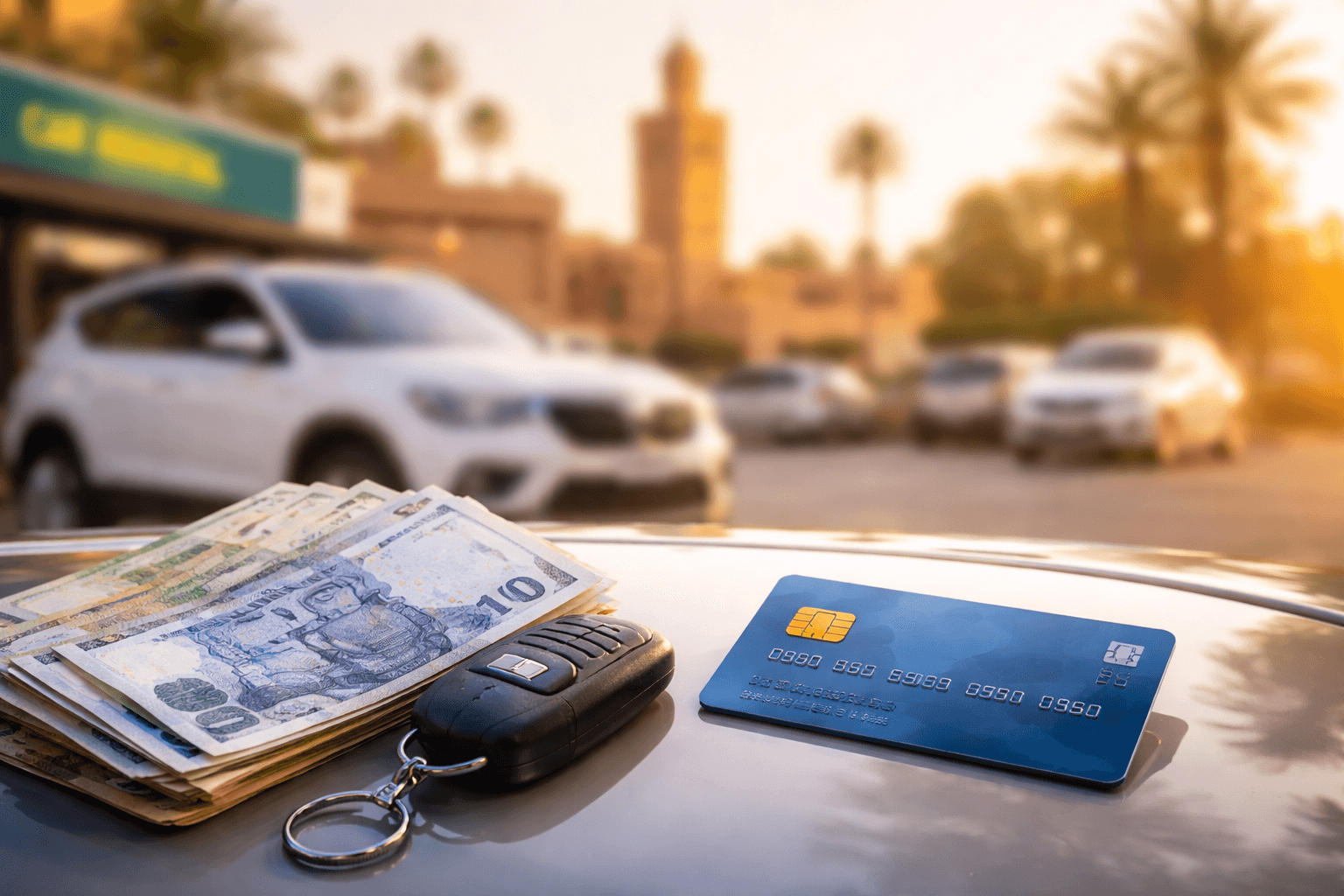
At toll stations, Autoroutes du Maroc currently lists several accepted payment methods, including:
-
cash
-
bank cards
-
network cards
-
Jawaz electronic toll payment
For tourists in a normal rental car, carrying some Moroccan dirhams remains useful even if you intend to pay by card.
Check official Moroccan motorway toll information
What Are National Roads Like in Morocco?
National roads can be very different from the motorway network.
Some are wide, smooth and easy to drive. Others pass through villages, agricultural areas, mountains or stretches with slower local traffic.
You may encounter:
-
tractors
-
cyclists
-
scooters and motorbikes
-
pedestrians
-
animals
-
slow lorries
-
roadside stalls
-
vehicles entering from side roads
This is one reason why a legal speed limit should never be treated as a target.
A road may technically permit a higher speed while visibility, traffic, rain or livestock makes a slower speed much safer.
Is Driving in Moroccan Cities Difficult for UK Tourists?
It depends strongly on the city and neighbourhood.
Driving through newer parts of Rabat, Casablanca, Agadir or Tangier can feel relatively conventional. Historic centres and busy commercial districts require more concentration.
Expect to share the road with:
-
taxis
-
scooters
-
buses
-
pedestrians
-
delivery vehicles
-
bicycles
-
horse-drawn vehicles in some areas
The safest strategy is to remain predictable.
Avoid sudden lane changes, leave additional braking distance and do not assume another road user has seen you simply because you technically have priority.
Should You Drive Inside a Medina?
Usually, not unless your accommodation confirms vehicle access.
Historic medinas in cities such as Marrakech and Fes contain narrow streets, pedestrian zones and access restrictions. Even when a route appears on navigation software, it may not be suitable for a normal rental car.
Ask your hotel or riad for the nearest practical parking or vehicle-access point before arriving.
How Do Roundabouts Work in Morocco?
Roundabouts deserve additional attention because road markings, signs and traffic flow can differ from what a British driver expects.
The safest rule is:
follow the signs and road markings at the specific roundabout rather than relying on a single assumed priority rule.
Slow down early, identify your exit, observe traffic already moving through the junction and avoid changing lanes suddenly.
For UK tourists who are still adjusting to right-hand traffic, remember that vehicles circulate counter-clockwise around Moroccan roundabouts.
What Road Signs Will UK Drivers See?
Many Moroccan road signs will look familiar to British and European visitors because they use internationally recognisable symbols.
Directions commonly display destinations in Arabic alongside Latin-script place names, frequently using French-influenced spellings.
You may therefore see different spellings for the same city, for example:
-
Tangier / Tanger
-
Fes / Fez
-
Marrakech / Marrakesh
Pay attention to the road number and destination rather than relying only on one spelling.
Is It Safe to Drive in Morocco at Night?
Driving after dark requires more caution.
GOV.UK specifically warns that poor lighting can make pedestrians, animals and other vehicles harder to see at night. It also advises extra care on secondary roads and mountain routes, particularly when weather conditions are poor.
Whenever possible, a first-time visitor should complete unfamiliar rural or mountain routes during daylight.
Night driving can become more demanding because of:
-
poorly lit pedestrians
-
animals near the carriageway
-
limited lighting outside towns
-
unexpected road edges
-
slower vehicles
-
glare from oncoming headlights
For long road trips, an earlier departure is often preferable to arriving after dark.
Driving in the Atlas Mountains
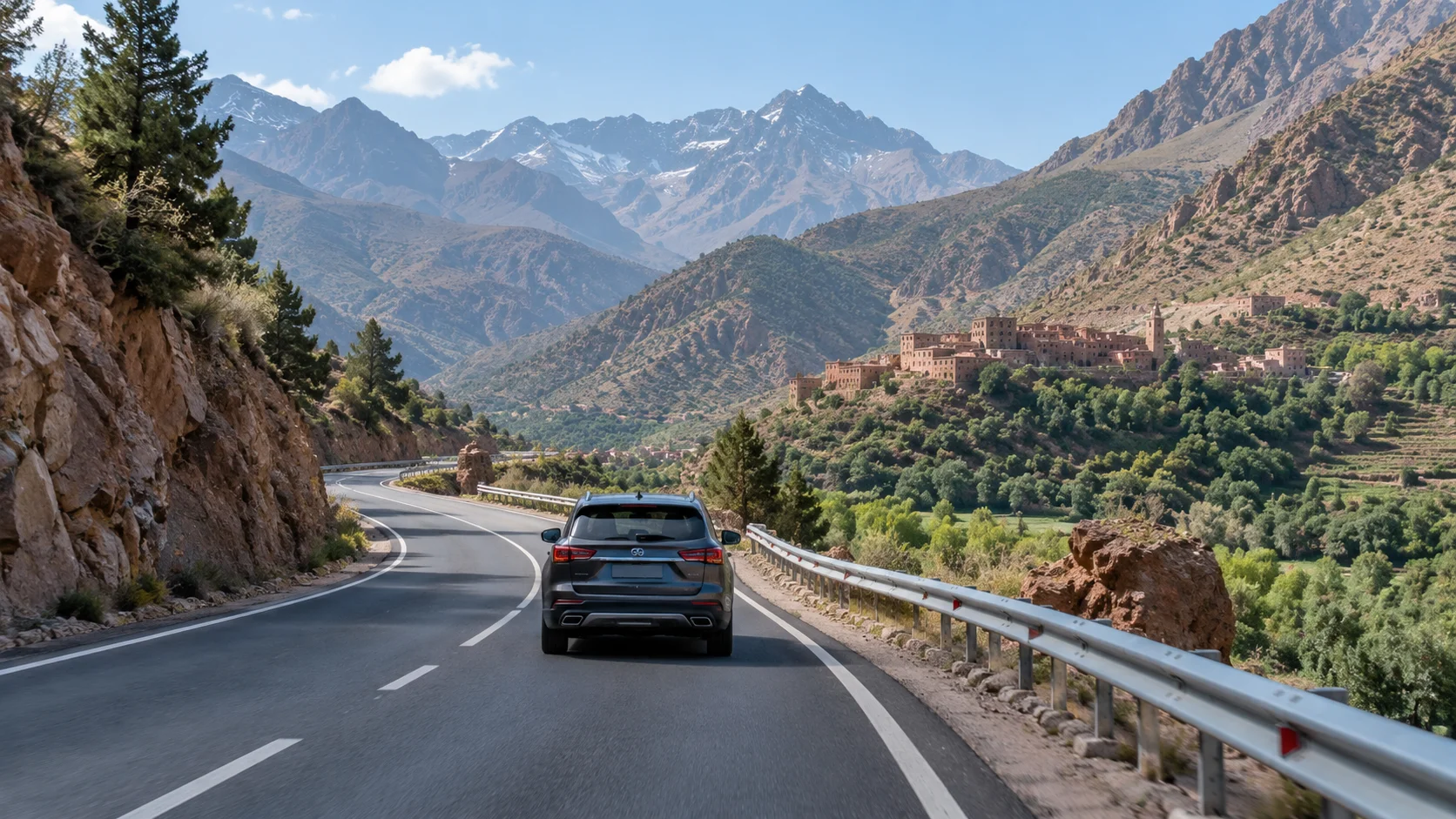
Morocco's mountain landscapes are one of the main reasons tourists choose self-drive travel.
Routes through the High Atlas and Middle Atlas can include:
-
steep gradients
-
sharp bends
-
changing weather
-
rockfall
-
narrow sections
-
slower local traffic
A standard car is suitable for many major paved mountain routes, but the best vehicle depends on your actual itinerary.
For predominantly motorways, cities and paved highways, an economy car or sedan may be sufficient.
For mixed mountain routes, more passengers, extra luggage or greater ground clearance, compare a SUV rental in Morocco.
An SUV should not, however, be treated as permission to drive onto prohibited or unsuitable off-road tracks. Always follow the rental agreement.
Do UK Tourists Need a 4x4 in Morocco?
Usually not.
Most popular tourist routes between major Moroccan cities and established destinations are accessible by normal cars.
A 4x4 becomes more relevant when the itinerary genuinely includes rough tracks or specialised off-road terrain.
For example:
Standard car or sedan:
Casablanca → Rabat → Tangier
Standard car or sedan:
Marrakech → Essaouira
Standard car or sedan:
Fes → Ifrane
SUV may offer extra comfort:
longer mountain itineraries, larger groups or luggage-heavy trips
Proper 4x4 may be appropriate:
authorised rough-road or off-road routes where the rental conditions permit them
Choosing the correct vehicle is more useful than automatically choosing the largest one.
What Is the Drink-Driving Rule in Morocco?
UK visitors should use a simple rule:
Do not drink alcohol before driving in Morocco.
GOV.UK describes drink-driving as a serious offence and advises that drivers found with alcohol in their system can face fines and possible imprisonment.
Do not apply familiar UK drinking-and-driving assumptions to Morocco.
If you intend to drink, arrange another form of transport.
Parking in Morocco
Parking conditions vary considerably.
Modern hotels, shopping centres and newer neighbourhoods may offer formal parking. Busy city centres and medina surroundings can involve:
-
public car parks
-
marked street spaces
-
attended parking areas
-
informal parking attendants
Before leaving the vehicle:
-
check signs;
-
confirm that the space is legal;
-
do not block entrances;
-
remove passports, cash and visible valuables;
-
lock the vehicle.
For overnight parking, accommodation with private or supervised parking can make a road trip considerably easier.
Fuel Stations and Long-Distance Driving
Fuel stations are common around Moroccan cities and major highways, but distances between convenient stops can become greater on some rural routes.
Before a long drive:
-
begin with enough fuel;
-
check the planned route;
-
identify likely fuel stops;
-
avoid waiting until the warning light appears;
-
keep drinking water in the vehicle.
Motorway service areas also make longer drives between major cities easier.
Which Rental Car Is Best for a UK Tourist in Morocco?
The best car depends on where you are going, not simply your budget.
| Trip Type | Practical Vehicle |
|---|---|
| Marrakech or Casablanca city break | Compact / hatchback |
| Couple travelling between cities | Economy / sedan |
| Long motorway trip | Sedan |
| Family with luggage | SUV / larger vehicle |
| Mountain itinerary | Sedan or SUV depending on route |
| 6–7 travelers | MPV / 7-seater |
| Genuine rough-road itinerary | Suitable 4x4 if permitted |
British travelers keeping their trip mainly to cities and established paved routes can often save money with a smaller vehicle.
Compare current cheap car rental in Morocco rather than automatically booking an SUV.
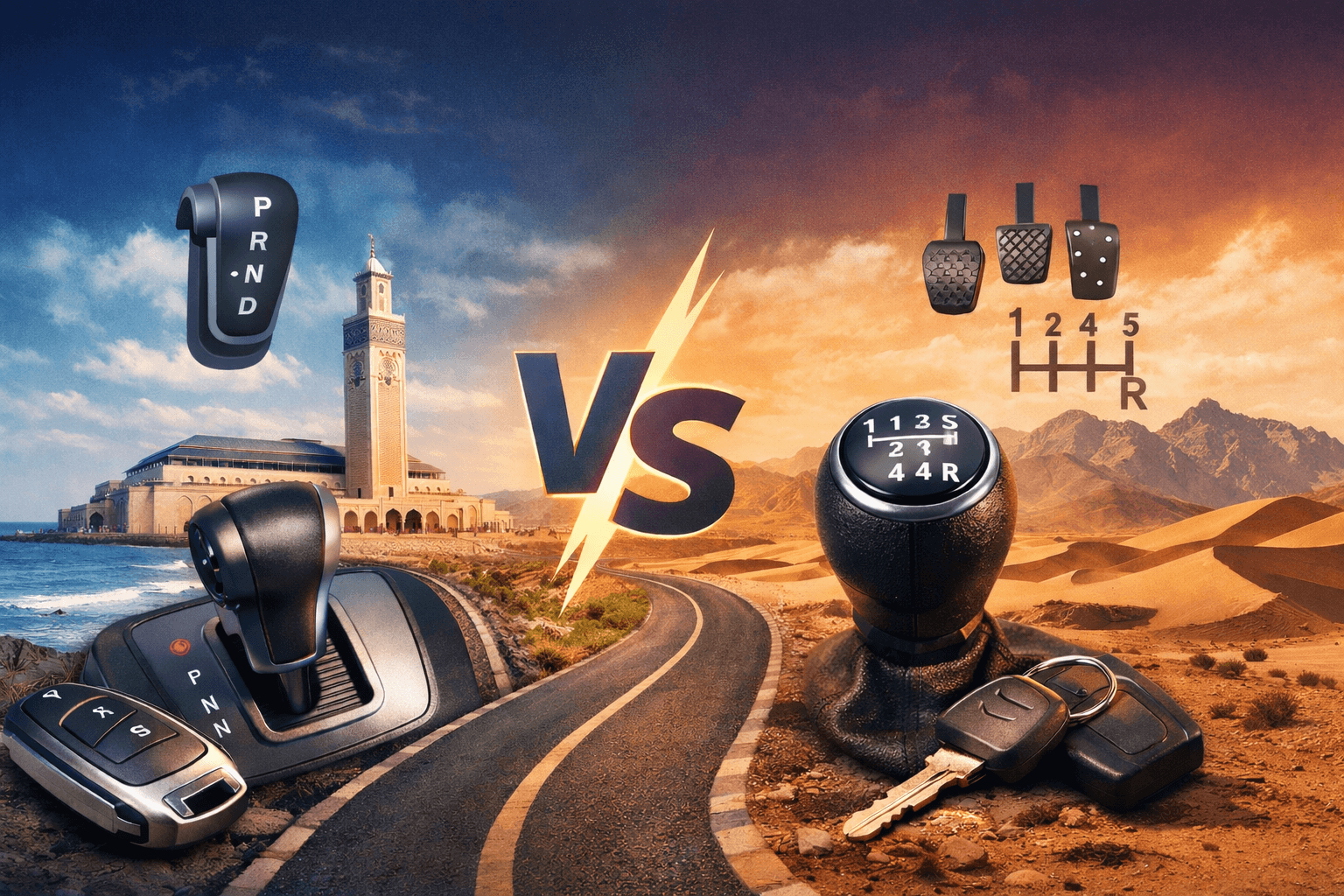
Manual or Automatic Car?
This is particularly important for UK visitors because you are already adapting to:
-
driving on the opposite side;
-
sitting on the opposite side of the car;
-
unfamiliar roads;
-
different traffic patterns.
If you normally drive an automatic in Britain, booking an automatic in Morocco can reduce the number of things you need to think about.
If you are comfortable driving a manual, manual cars remain common and can provide more rental options.
Check the transmission on the specific vehicle before confirming the booking.
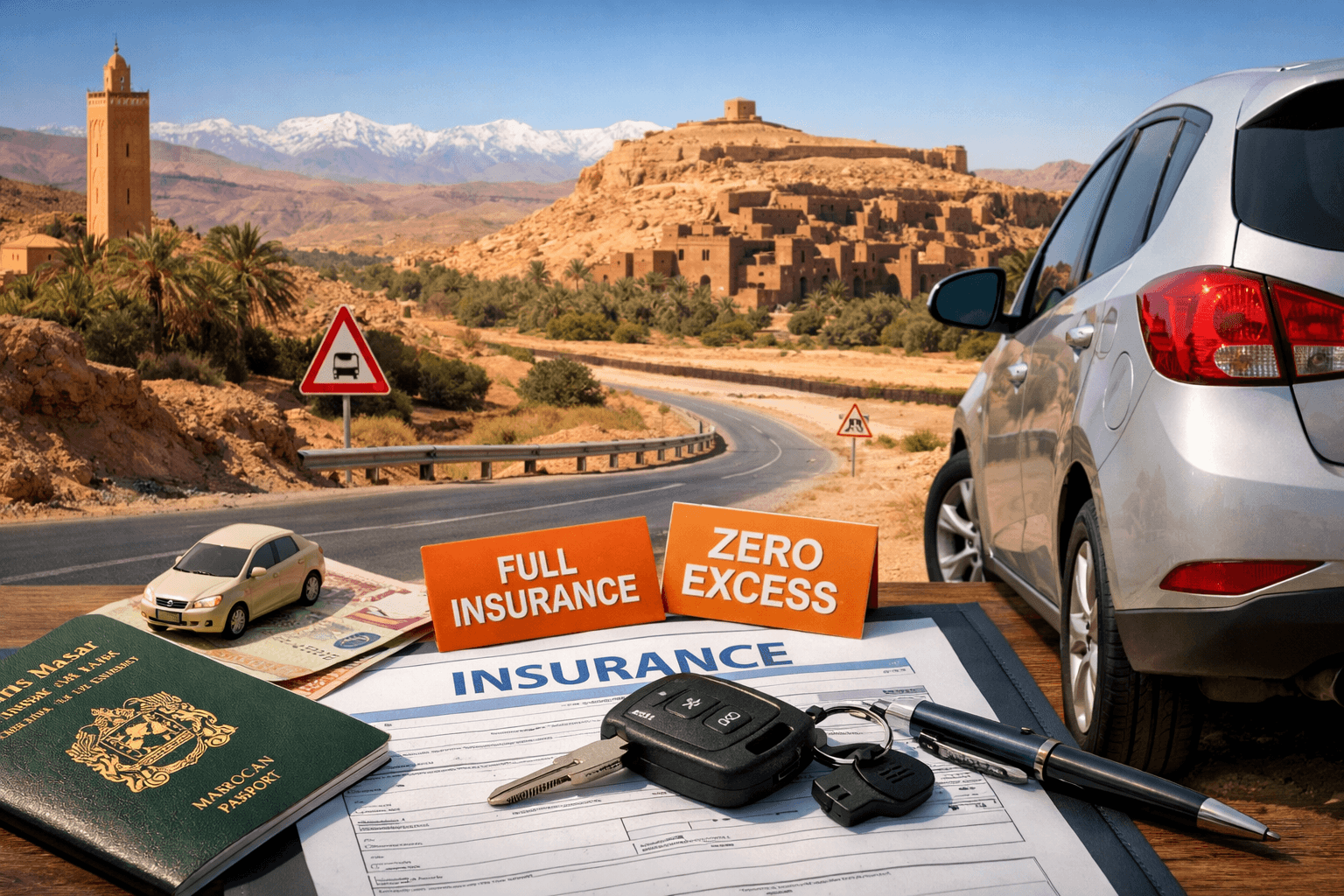
Insurance: What Should UK Renters Check?
Do not assume every reference to "insurance" means the same level of protection.
Before paying, confirm:
-
what cover is included;
-
the insurance excess;
-
security-deposit amount;
-
exclusions;
-
tyre and glass conditions;
-
damage procedure;
-
roadside-assistance procedure;
-
authorised drivers;
-
permitted roads;
-
theft conditions.
GOV.UK also advises travelers hiring a car abroad to check exactly what their rental insurance covers.
Selected MarHire listings also provide no-deposit car rental in Morocco options, but the protection level, deposit status and confirmed conditions of the individual booking should always be checked.
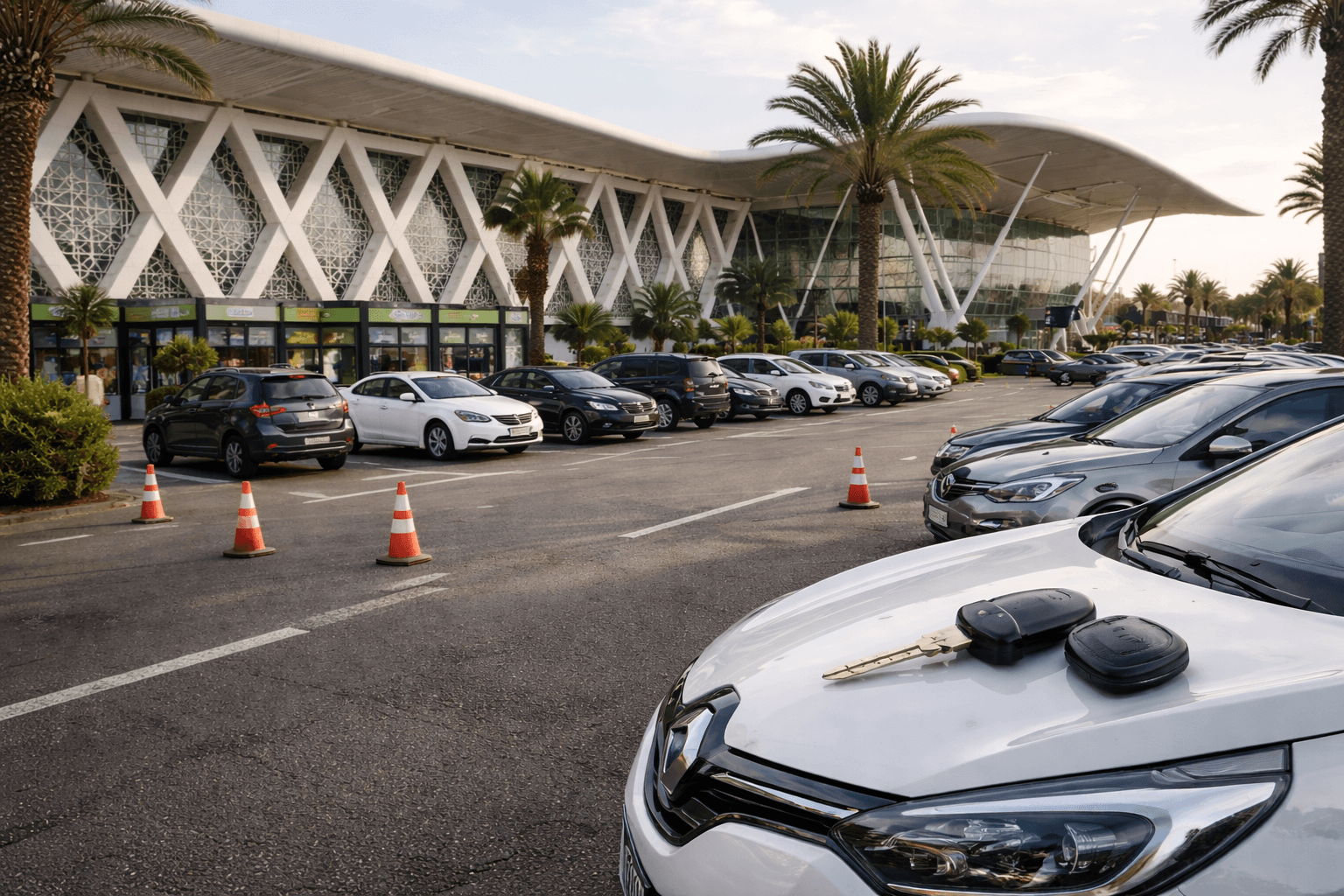
Inspect the Rental Car Before Leaving
Before you begin your Morocco road trip, spend a few minutes checking the car.
Record existing:
-
scratches
-
dents
-
wheel damage
-
windscreen marks
-
bumper damage
Then check:
-
headlights
-
indicators
-
tyres
-
mirrors
-
fuel level
-
air conditioning
-
spare wheel or repair equipment where supplied
Take clear photographs or a short video at pickup and again when returning the car.
Also make sure you understand the fuel-return condition and the emergency-contact procedure.
Mileage Matters on a Morocco Road Trip
Morocco is larger than many visitors expect.
A holiday involving Marrakech, the Atlas Mountains, Merzouga, Fes and Chefchaouen can accumulate substantial mileage.
Check the mileage policy before booking rather than discovering a daily allowance after collecting the vehicle.
For MarHire bookings, the applicable mileage conditions are shown or confirmed for the selected rental and should be reviewed together with the vehicle, insurance and deposit terms.
What Should You Do After a Road Accident in Morocco?
If you are involved in an accident:
-
stop safely;
-
check whether anyone requires emergency assistance;
-
contact the rental company;
-
follow police or insurer instructions;
-
document the scene where it is safe to do so;
-
do not make assumptions about liability.
GOV.UK states that drivers involved in an accident may need to complete a constat amiable, an accident report signed by both parties.
For an emergency in Morocco, current GOV.UK guidance lists:
-
Police: 190
-
Gendarmerie: 177
-
Ambulance/fire: 150
UK Driver Checklist Before Collecting a Rental Car
Before leaving the UK:
-
Check that your UK driving licence is valid.
-
Obtain the required 1968 IDP.
-
Check your passport.
-
Confirm your rental.
-
Review driver-age requirements.
-
Check the insurance and excess.
-
Confirm the deposit.
-
Confirm the payment method.
-
Check mileage limits.
-
Confirm whether your route is permitted.
At pickup:
-
Inspect the vehicle.
-
Photograph existing damage.
-
Confirm the fuel level.
-
Ask about emergency assistance.
-
Keep the rental documents in the car.
-
Set navigation before starting to drive.
On the road:
-
Drive on the right.
-
Follow posted speed limits.
-
Slow down near towns and villages.
-
Expect pedestrians and motorbikes.
-
Avoid alcohol completely before driving.
-
Take regular breaks.
-
Avoid unfamiliar mountain roads after dark when possible.
Is Renting a Car in Morocco Worth It for UK Tourists?
For many itineraries, yes.
A rental car makes the most sense when you want to combine destinations rather than remain in one city.
For example:
Good self-drive itinerary
Marrakech → Atlas Mountains → Ouarzazate
Good self-drive itinerary
Tangier → Chefchaouen → Fes
Good self-drive itinerary
Casablanca → Rabat → Atlantic coast
A car is less necessary when your entire holiday is concentrated inside the Marrakech Medina or another walkable historic centre.
The real advantage is flexibility: you control departure times, luggage, stops and the route between destinations.
Frequently Asked Questions
Can I drive in Morocco with a UK driving licence?
Yes, but current GOV.UK Morocco travel advice says UK drivers should carry their UK driving licence together with a 1968 International Driving Permit.
Do UK tourists need an IDP to rent a car in Morocco?
Current UK government advice says British drivers should have the 1968 IDP as well as their UK licence. Individual rental providers can also impose their own document requirements, so confirm them before pickup.
Does Morocco accept the 1949 International Driving Permit?
No. Current GOV.UK guidance says Morocco no longer accepts the 1949 version and advises British travelers to obtain the 1968 IDP.
Is driving in Morocco difficult for British tourists?
Most UK drivers can adapt quickly, particularly on motorways and open intercity roads. The biggest changes are driving on the right, interpreting speeds in kilometres per hour and dealing with busier mixed traffic in some cities.
What side of the road does Morocco drive on?
Morocco drives on the right-hand side.
What is the motorway speed limit in Morocco?
The motorway maximum is generally 120 km/h, but lower posted limits must be followed wherever they apply. Morocco's NARSA and Autoroutes du Maroc both reference the 120 km/h motorway limit.
Are there toll roads in Morocco?
Yes. Much of Morocco's motorway network uses tolls. Autoroutes du Maroc currently lists cash, bank cards, network cards and Jawaz among the accepted payment methods.
Can I drive from Marrakech to the Sahara in a normal rental car?
Many established destinations such as Ouarzazate and Merzouga can be reached using paved routes, so a 4x4 is not automatically necessary. Do not take a rental vehicle onto unapproved off-road tracks, and check the rental conditions for your exact itinerary.
Is an automatic car better for a British tourist?
It can be. An automatic allows you to concentrate on right-hand traffic, navigation and unfamiliar roads rather than gear changes. It is particularly useful for drivers who normally use automatic cars in the UK.
Can I rent a car in Morocco without a credit card?
Some rental providers and selected MarHire vehicles offer alternative payment or no-credit-card arrangements, but conditions vary by car and provider. Check the confirmed payment requirements before booking rather than assuming every rental follows the same policy.
Should I drive in Morocco at night?
It is better to complete unfamiliar rural or mountain journeys during daylight where possible. GOV.UK specifically advises additional caution at night because poor lighting can make pedestrians, animals and other hazards harder to see.
Final Advice for UK Tourists Driving in Morocco
Driving in Morocco as a UK tourist is manageable once you prepare for the differences.
Before travelling, make sure you have your valid UK driving licence and the currently required 1968 IDP. Once on the road, remember to drive on the right, follow posted speed limits rather than assumptions, allow additional space in busy cities and treat unfamiliar rural routes more cautiously after dark.
For a road trip, vehicle choice should follow the itinerary. A compact car can be ideal for cities and paved intercity travel, while families, luggage-heavy groups and some mountain itineraries may benefit from an SUV.
Most importantly, check the rental agreement rather than relying on general advice. Insurance, deposits, mileage, driver age and permitted routes can differ from one vehicle to another.
Travelers planning a self-drive itinerary can compare MarHire car rental in Morocco options by vehicle type and confirmed rental conditions before choosing the car that fits their route.