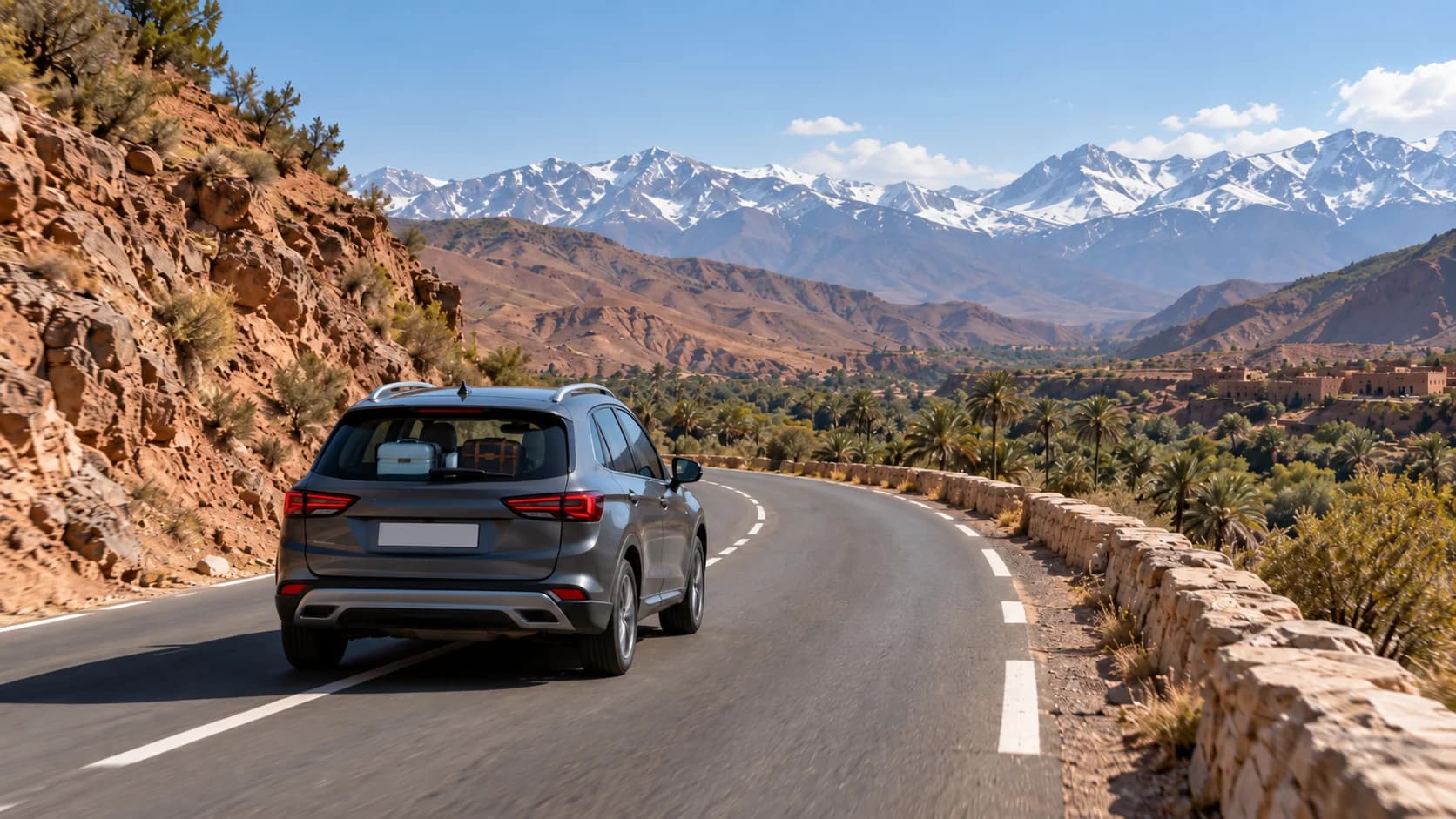









Renting a car in Morocco is one of the fastest ways to see more than the “usual” route, coastal drives, mountain towns, desert gateways, and last-minute detours that tours don’t cover. But the part that catches many travelers off guard isn’t the driving; it’s the paperwork and pricing: deposits that feel random, “insurance” that doesn’t fully protect you, and small add-ons that balloon the total at pickup.
This guide breaks down what’s normal in 2026, what’s negotiable, what’s a red flag, and the exact questions to ask before you hand over your card or cash, so you can focus on the trip, not the fine print.
1) Deposits in Morocco: what “normal” looks like (2026)
A deposit is a security guarantee, not a payment for the rental itself. In Morocco, you’ll typically see one of these:
A) Card pre-authorization (security hold)
Your card is “blocked” for a set amount. It’s not charged, but your available balance is reduced until the hold is released.
B) Cash deposit
You hand over cash (MAD/EUR sometimes), and the agency returns it after the vehicle check, usually at return time or shortly after.
C) Smaller deposit with stronger coverage
Some packages reduce the deposit because the financial risk is lower (but always verify the excess too).
What’s important in 2026: deposit rules vary more by agency type (local vs international, airport vs city) than by city. There isn’t one “official” deposit amount.
What to ask before booking
-
“Is the deposit a hold or a charge?”
-
“How much is the deposit in MAD, and when is it released?”
-
“What conditions could delay or reduce the refund?”
2) Card hold vs cash deposit: which is safer?
Most travelers prefer a card hold because it creates a clear bank record. But there are tradeoffs.
Card hold: pros/cons
Pros
-
Traceable through your bank
-
You don’t carry a lot of cash
-
Often faster at return
Cons
-
Holds can take days to release depending on the bank
-
Some debit cards don’t work the same way as credit cards
-
Low available balance can cause issues during the trip
If you want a simple explanation of how card authorizations work (and why holds can “linger”), Stripe’s overview is one of the clearest non-travel references: card authorization.
Cash deposit: pros/cons
Pros
-
No banking delays on release (in ideal cases)
-
Works for travelers without a credit card
Cons
-
You’re carrying more cash
-
Refund timing can depend on staff availability and return checks
-
Disputes can be harder to resolve if the documentation is weak
Best practice
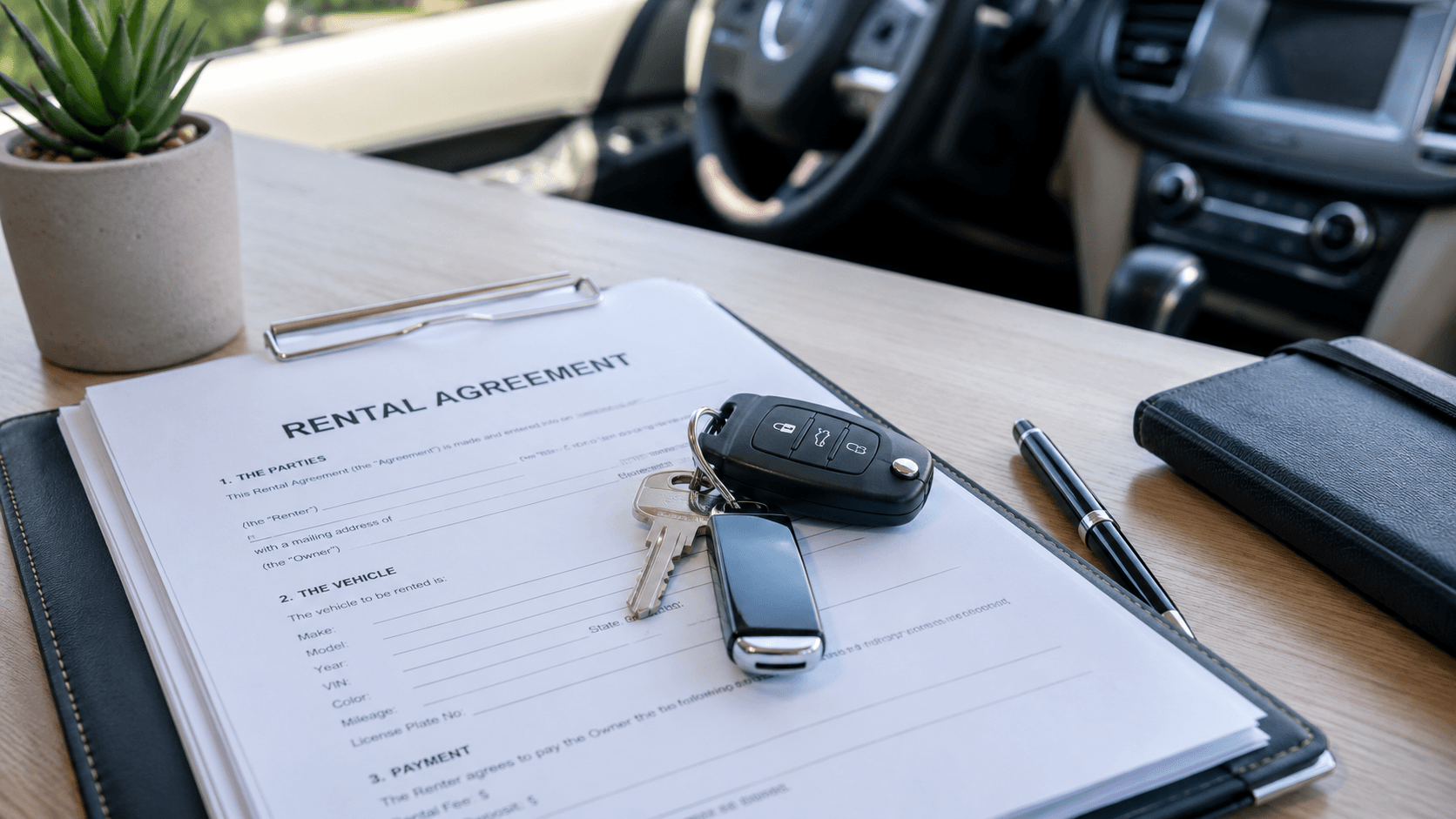
Whichever method you use, get the deposit amount + conditions in writing before pickup.
3) Insurance excess: the number you must understand
The “insurance excess” (sometimes called deductible) is the maximum you can be responsible for if the car is damaged, even if you paid for insurance.
This is the single most misunderstood number in Moroccan rentals.
Why excess matters more than “insurance included”
You might see “insurance included” on the booking page and assume you’re fully protected. In reality:
-
Basic coverage often still leaves you with a large excess.
-
Some parts (glass, tires, undercarriage) may be excluded or handled differently.
-
Admin fees can still apply even when insurance pays.
What to ask (say it exactly like this)
-
“What is the excess amount in MAD for damage?”
-
“Is the excess different for theft?”
-
“Are glass, tires, and undercarriage included or excluded?”
-
“Is there an admin fee for claims, even small ones?”
If you only ask one question, ask this: “What is the maximum I could pay if something happens?”
That forces the staff to combine excess + exclusions + fees into one real-world answer.
4) “Full insurance” misunderstandings (and what to ask)
In Morocco, “full insurance” can mean very different things depending on who’s selling it. Sometimes it means reduced excess; sometimes it means broader coverage; sometimes it’s mostly marketing language.
The 3 common versions of “full insurance”
-
Reduced excess (you pay less if there’s damage)
-
Excess waiver (excess is zero or near-zero with conditions)
-
Extended coverage (includes more categories like glass/tires)
The key misunderstanding
“Full insurance” does not always mean “you pay nothing.” It may still require:
-
A police report for certain incidents
-
Proof the damage wasn’t caused by prohibited driving (off-road, beach sand, etc.)
-
Proper keys/documentation if there’s theft
What to request
-
“Please send me the coverage list and the exclusions (photos or PDF is fine).”
-
“Confirm in writing: excess amount and what’s excluded.”
If the answer is vague (“don’t worry, it’s full”), treat that as a warning, not reassurance.
5) The most common hidden fees in Morocco rentals (2026)
Hidden fees aren’t always “scams.” Often, they are real fees that weren’t clearly explained. The problem is the surprise.
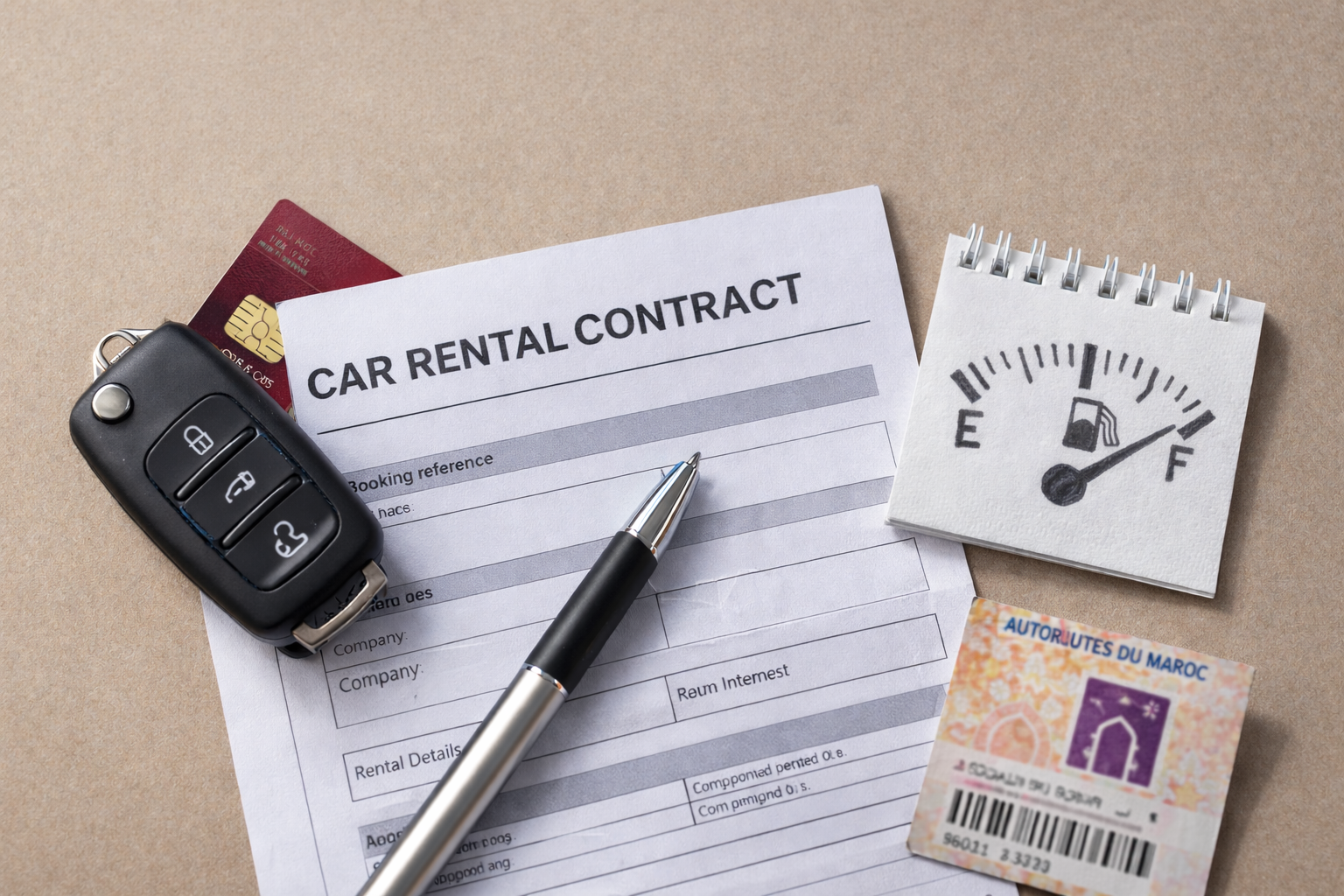
A) Fuel policy traps
-
Full-to-full is usually the cleanest: receive full, return full.
-
Watch for “full-to-empty” or “service fee + fuel fee” policies.
-
Some agencies charge a premium per liter plus a refueling service fee.
Ask: “Is it full-to-full? If not, what is the fuel charge per liter and the service fee?”
B) Extra driver fees
Many rentals include only one driver. Extra drivers can be charged per day.
Ask: “How many drivers are included? What’s the price for one more?”
C) After-hours pickup/return
Late flights or early returns can trigger a fee, especially at airports or for hotel delivery.
Ask: “Is there an after-hours fee if my flight is delayed or I return early morning?”
D) Mileage limits
Some offers include limited kilometers per day. Exceeding it can add unexpected costs.
Ask: “Is mileage unlimited? If limited, what’s the cost per extra km?”
E) Cleaning fees (the common dispute)
“Cleaning” becomes a problem when it’s subjective. A normal dusty car after Moroccan roads is not the same as a stained interior.
Ask: “What conditions trigger a cleaning fee? Is normal dust included?”
F) Damage admin fees
Even when insurance applies, some companies add “processing” fees.
Ask: “Is there an admin fee for any claim, and how much?”
G) Tolls and toll tags
Morocco has toll highways. Some agencies offer tags; others expect you to pay cash/card at toll booths.
Ask: “Do you provide a toll tag? Is there a fee for it?”
6) Pickup/return checklist to avoid disputes
This is the part that saves money and stress.
At pickup (10 minutes that matter)
-
Photograph the car in good light: all sides, bumpers, wheels, windshield
-
Record a 30–60 second walkaround video
-
Photograph: fuel gauge, mileage, and any existing scratches on the agreement
-
Confirm: spare tire kit (if applicable) and what to do for roadside help
-
Make sure you have: contract copy + phone number for support
During the trip
-
Keep fuel receipts if you’re returning full
-
Avoid parking too close in tight streets, minor door dings are common
-
If something happens: document it immediately (photos + short note of location/time)
At return
-
Do the check together if possible
-
Photograph the car again (same angles as pickup)
-
Ask for written confirmation: “car returned in good condition”
-
Keep the final receipt
If you want an easy way to compare vehicle types, rules, and what’s typically included, start with MarHire’s car rental page and then book directly through MarHire when you want local support with clear terms.
7) A quick cost example (realistic scenarios)
Let’s say you book a small automatic for 5 days.
Scenario 1: Price looks cheap online
-
Daily rate: low
-
Deposit: high (blocked on card)
-
Excess: high
-
Extra driver: paid
-
Fuel policy: not full-to-full
Result: total cost jumps at pickup.
Scenario 2: Price looks slightly higher but clearer
-
Daily rate: moderate
-
Deposit: reasonable
-
Excess: reduced or clearly explained
-
Fuel policy: full-to-full
-
Extra driver: included or priced upfront
Result: you pay what you expected.
The lesson: the best deal is the one where deposit + excess + fees are defined clearly before you arrive.
FAQs
1) What’s a normal deposit for renting a car in Morocco?
There’s no single standard. It depends on the car category, agency policy, and coverage level. Always confirm if it’s a hold or cash and when it’s released.
2) Can I rent in Morocco with a debit card?
Sometimes, but not always. Many agencies prefer credit cards for security holds. Ask in advance and get confirmation in writing.
3) Is “insurance included” enough?
Not by itself. You must check the excess and exclusions (glass/tires/undercarriage). “Included” can still leave a big financial risk.
4) What are the most common hidden fees?
Fuel policy charges, extra driver fees, after-hours fees, mileage limits, cleaning fees, and claim admin fees.
5) How do I avoid disputes about damage?
Do a full photo/video walkaround at pickup and return, ensure damages are marked on the contract, and get return confirmation in writing.
6) What should I ask before paying anything?
Ask for the total cost, deposit method/amount, excess amount, fuel policy, and any extra fees (drivers, after-hours, mileage).
Conclusion
Renting a car in Morocco in 2026 is straightforward once you focus on three numbers and three rules: deposit, excess, and the real total, plus written confirmation, clear fuel policy, and photos at pickup/return. Most bad experiences come from assumptions, not the driving itself. Ask the right questions, document the car, and you’ll keep the trip flexible, affordable, and stress-free.