






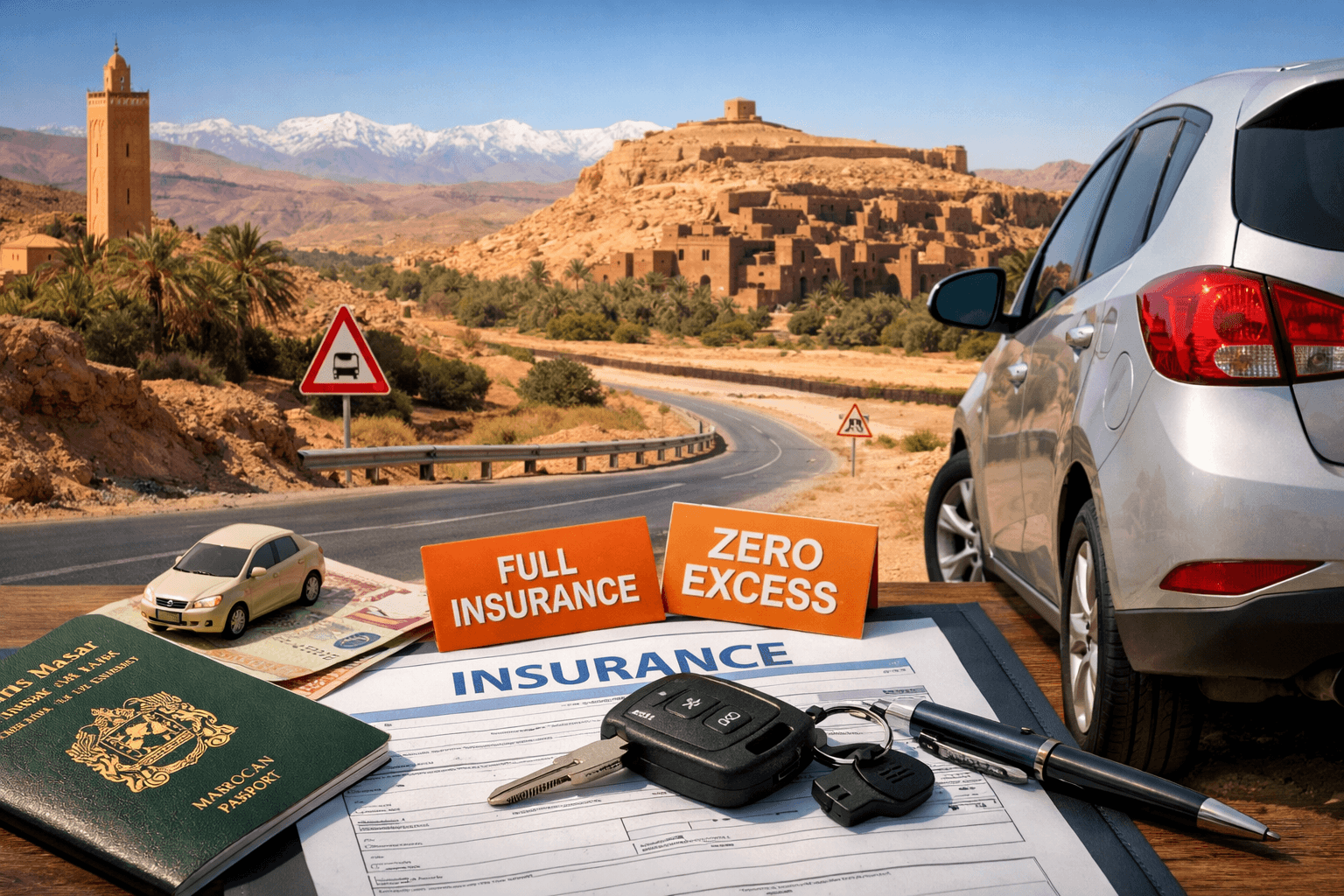
“Full insurance” and “zero excess” sound like the perfect combo when you rent a car in Morocco. You imagine driving without worry: no surprise bills, no stressful deposit holds, no “what if” thoughts when you park near a busy street.
But here’s the truth: “zero excess” can mean different things depending on who sells it and how the claim process works. Sometimes it’s genuinely good. Sometimes it’s good but with strict conditions. And sometimes it’s mostly marketing language that doesn’t protect you from the most common real-world problems, like tires, glass, undercarriage damage, or paperwork mistakes after an incident.
This guide explains what full insurance usually means in Morocco, how to evaluate a “zero excess” offer, what to check in the contract, and how to avoid paying extra for protection that doesn’t actually protect you.
If you’re comparing options across providers, start by browsing car rental and then check budget listings carefully, cheap deals can be fine, but the coverage wording matters a lot on cheap car rental.
Quick Answer
-
Excess (deductible) is what you can still pay even when insurance exists.
-
“Zero excess” may mean: true zero, zero only for specific damage types, or “refunded later” after paperwork.
-
Most disputes come from exclusions: tires, rims, glass, undercarriage, interior, lost keys, or unclear incident reporting.
-
A deposit/hold can still be required even with “full insurance.”
-
The safest approach is: confirm excess amount, exclusions, claim steps, and deposit rules in writing.
Table of Contents
-
What “excess” means (and why it matters more than price)
-
What “full insurance” usually includes in Morocco
-
The 3 types of “zero excess” offers (big difference!)
-
The exclusions that still cost travelers money
-
Deposits and card holds: why they still happen
-
How claims really work (what you must do in an incident)
-
A 10-question checklist before you pay
-
When “cheap + full insurance” is safe, and when it isn’t
-
FAQs
-
Conclusion
1) What “Excess” Means (and Why It Matters More Than Price)
Excess (also called deductible) is the amount you can still be responsible for if the car is damaged, even when you have insurance. This is the number that makes people say, “I had insurance but I still paid.”
Think of it like a safety buffer for the rental company. If damage happens, insurance may cover most of it, but excess is the part that can still come from you.
If you take nothing else from this article, remember:
A rental can be cheap, but a high excess makes it financially risky.
For a simple definition of the term and how it’s used in insurance, this explanation is clear.
2) What “Full Insurance” Usually Includes in Morocco
“Full insurance” is not a legal standard phrase. Companies use it differently. In practice, it often means you’re getting a package that can include:
Basic coverage (commonly included in many rentals)
-
Damage coverage for the car body (with excess)
-
Theft coverage (with excess)
Upgrades sometimes called “full insurance”
-
Reduced excess (you pay less if something happens)
-
Extended items included (more parts covered)
-
Damage waiver packages with conditions
The key is to stop thinking in words (“full,” “complete,” “total”) and start thinking in numbers and exclusions:
-
What is the excess in MAD?
-
What parts are excluded?
-
What do I have to do after an incident for coverage to apply?
3) The 3 Types of “Zero Excess” Offers
When you see “zero excess,” ask: which kind? These are the three common versions.
Type A: True zero excess (best case)
If damage is covered and the excess is truly zero, you should not pay for covered damage, assuming you follow the contract steps.
What to verify: it applies to damage and theft, not just “bodywork.”
Type B: “Zero excess” but only for specific damage types
Sometimes “zero excess” applies to body damage but not:
-
windshield/glass
-
tires and rims
-
undercarriage
-
interior damage
-
lost keys
This is still useful, but it’s not “zero risk.” It’s “zero excess for certain categories.”
Type C: “Refund later” model (common in many markets)
You may still have a deposit/hold taken, and if damage happens, the company charges first. You submit paperwork and may be refunded later depending on the policy rules.
This isn’t automatically bad, but it’s different from true zero. If you hate financial uncertainty, this model can feel stressful.
Your job: identify which type you’re buying.
4) The Exclusions That Still Cost Travelers Money
These are the most common areas where “full insurance” doesn’t match traveler expectations.
Tires and rims
Rim scratches are common in cities. Tire punctures can happen on rough edges, gravel, or debris. Many policies exclude these unless you buy a specific add-on.
Glass and windshield
Windshield chips happen everywhere. Some packages cover glass, some don’t.
Undercarriage
If you scrape the underside on a steep ramp, rough shoulder, or unexpected bump, it may be excluded—especially if off-road driving is not allowed.
Interior damage
Stains, burns, or tears are usually not covered. Even “full” packages can exclude interior.
Lost keys
Replacement and programming can be expensive. Many policies treat this as the renter’s responsibility.
Improper incident reporting
Even the best coverage can fail if you don’t follow the correct steps after an incident (more on that below).
5) Deposits and Card Holds: Why They Still Happen
A big surprise for travelers: you can buy “full insurance” and still be asked for a deposit or a card hold.
Why? Because the rental company still needs protection against:
-
contract violations,
-
missing fuel,
-
late return,
-
traffic fines,
-
or exclusions like interior/keys.
So even with zero excess, you may see a hold that’s released after the return inspection.
What to ask in one sentence
-
“Is there a deposit/hold even with zero excess? How much and when released?”
6) How Claims Really Work (What You Must Do in an Incident)
This is where most “I had insurance but…” stories come from. Coverage often depends on what you do immediately.
If there’s an incident, do these basics
-
Ensure everyone is safe and move to a safe place if possible.
-
Contact the rental support number (save it before you drive).
-
Take photos: all angles, close-ups, surroundings.
-
Write down the time, location, and what happened.
-
Follow the required reporting rules in your contract.
Some incidents require formal reporting (sometimes including police documentation). Requirements vary, so you must know the rule before you need it.
Pro tip: ask for a short written “what to do if…” message from the provider. A professional company will have a standard process.
7) A 10-Question Checklist Before You Pay
Copy/paste these and you’ll instantly see if “zero excess” is real.
-
What is the excess amount for damage in MAD?
-
What is the excess for theft?
-
Does “zero excess” apply to damage + theft, or only one?
-
Are tires and rims covered?
-
Is windshield/glass covered?
-
Is undercarriage covered?
-
Are keys covered if lost/damaged?
-
Is there a deposit/hold? How much and when released?
-
What steps are required after an incident for coverage to apply?
-
Are there admin/processing fees even if insurance covers the repair?
If they answer clearly, you’re safe. If they avoid details, treat “zero excess” as marketing.
8) When “Cheap + Full Insurance” Is Safe, and When It Isn’t
Budget rentals can be great in Morocco. The key is matching the deal to your risk tolerance.
Cheap + full insurance can be safe if:
-
coverage details are clear in writing,
-
exclusions are acceptable to you,
-
the deposit/hold is manageable,
-
and the incident reporting rules are clear.
It’s risky if:
-
“full insurance” is promised verbally but not written,
-
exclusions remove the most common damage types,
-
the deposit is huge and release timing is vague,
-
or the claim process is unclear.
If you’re browsing deals, use car rental to compare categories and check policy wording, and filter carefully on cheap car rental so low price doesn’t hide high risk.
FAQs
Is “zero excess” real in Morocco car rentals?
Sometimes yes, but it can mean different things. Confirm whether it’s true zero or limited to specific damage types.
Can I still have a deposit with full insurance?
Yes. Deposits/holds can still apply for exclusions, fines, fuel, late return, or contract violations.
What exclusions matter most?
Tires/rims, glass, undercarriage, interior, and keys are the most common surprise costs.
Do I need to report every small scratch?
Follow the provider’s rules. It’s safer to report anything significant and document with photos.
Is full insurance always worth it?
It’s worth it if it meaningfully reduces your excess and covers the common exclusions you’re worried about. If it doesn’t, it may be wasted money.
What’s the smartest way to avoid disputes?
Document the car at pickup and return with photos/video and keep everything in writing.
Conclusion
“Full insurance” and “zero excess” can be excellent in Morocco, when you understand what they actually cover. The smartest way to book is simple: focus on the excess number, confirm exclusions (tires, glass, undercarriage, keys), and get deposit and claim steps in writing. If the provider is clear, you’ll drive with real peace of mind, not marketing peace of mind.