






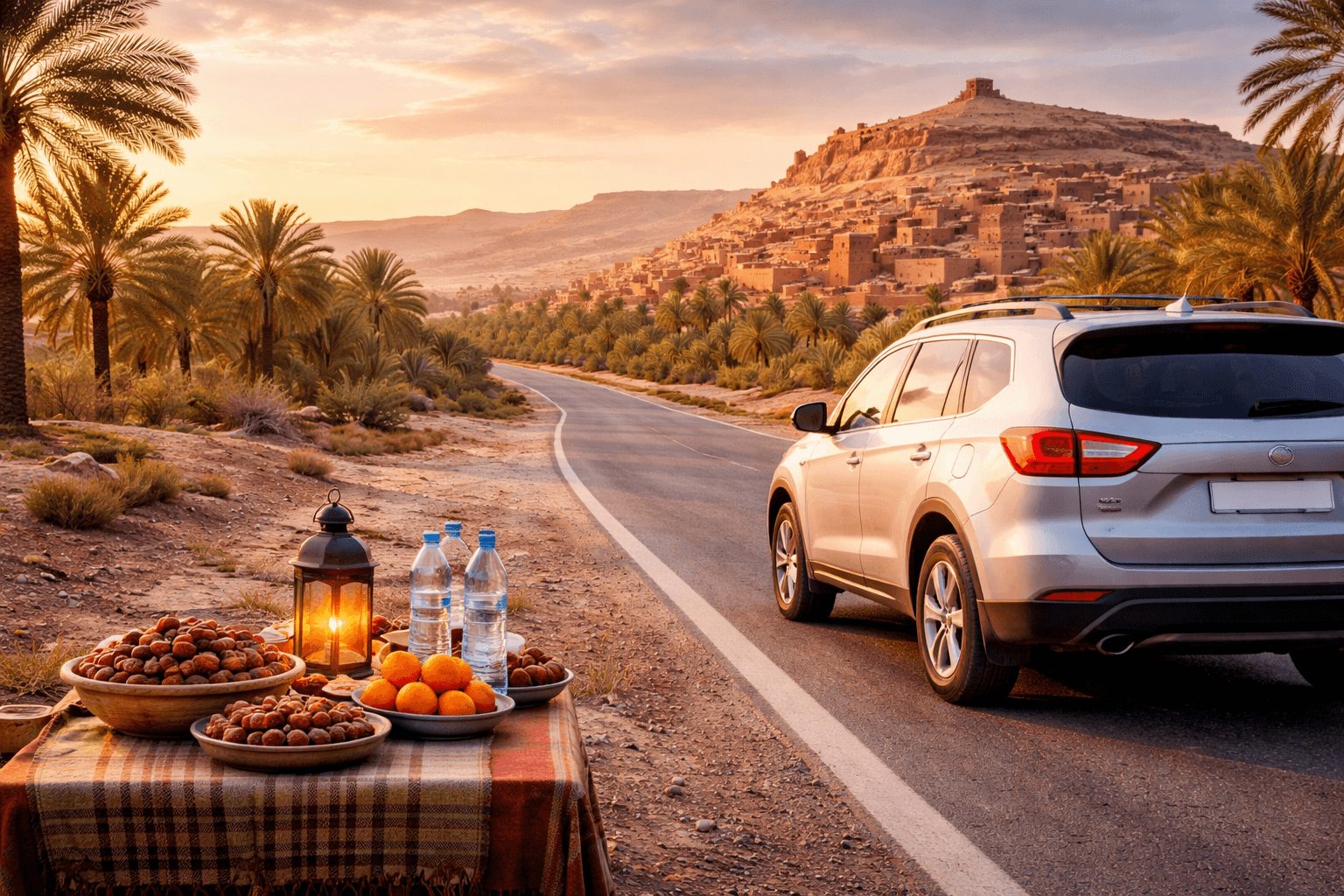
Renting a car in Morocco during Ramadan can be an excellent choice. Roads can feel calmer in some hours, many tourist areas still operate normally, and having your own vehicle makes it easier to plan your day around meal times and energy levels. But Ramadan also changes the “rhythm” of driving: traffic peaks shift, some small services run on reduced hours, and the last hour before iftar (sunset meal) can feel noticeably different on the road. If you’re not familiar with the month’s daily flow, this quick overview of Ramadan helps explain why schedules and street pace change.
This guide explains what travelers actually need: the best driving hours, how to plan food and fuel stops, respectful etiquette, and practical car-rental tips, so your trip stays smooth and culturally aware.
For booking and planning, start with MarHire, and if you’re comparing categories and city options, browse car rental.
Quick Answer
-
Best driving hours in Ramadan are often mid-morning to mid-afternoon and later evening (after iftar).
-
Expect a traffic shift: busier near sunset as people head home.
-
Food stops: tourist zones usually have options, but smaller towns may be quieter until evening.
-
Fuel stations stay open, but plan ahead, don’t wait until the tank is low near iftar time.
-
Etiquette: be respectful, avoid eating/drinking in front of fasting people in conservative areas, and be patient on the road.
Table of Contents
-
What changes during Ramadan for drivers
-
Best driving hours (and the busiest hour to avoid)
-
Food, water, and rest stops: how to plan smart
-
Fuel strategy: stations, timing, and “don’t risk it” rules
-
Etiquette and respect: simple do’s and don’ts
-
Car rental logistics: pickup hours, deposits, and support
-
City vs highway driving during Ramadan
-
Safety tips for tourists (without stress)
-
FAQs
-
Conclusion
1) What Changes During Ramadan for Drivers
Ramadan doesn’t change road rules, but it can change how roads feel:
-
People’s schedules shift (later nights, different work hours in many places).
-
Energy levels vary, especially late afternoon.
-
Traffic patterns concentrate around key moments, especially pre-iftar.
In bigger cities, you may notice:
-
quieter mornings,
-
steady midday flow,
-
then a sharper rush before sunset.
In smaller towns, you may notice:
-
some cafés and snack stops less active in daytime,
-
stronger evening activity after iftar.
None of this should scare you. It’s just planning. If you drive at smart times, Ramadan can be a calm period for road travel.
2) Best Driving Hours (and the Busiest Hour to Avoid)
If you want your trip to feel easy, plan your longest driving blocks around these patterns:
Best hours: mid-morning to mid-afternoon
This is often the smoothest time for tourists:
-
visibility is good,
-
services are running,
-
and you avoid late-afternoon fatigue and sunset rush.
Best hours: later evening (after iftar)
Evening driving can be comfortable in many areas:
-
cooler temperatures,
-
calmer pace after the rush,
-
and more food options open in cities.
The hour to avoid: just before iftar
The last hour before sunset can bring:
-
more hurried driving,
-
tighter gaps,
-
and more people trying to get home on time.
You don’t need to avoid it completely, but it’s the worst time to do unfamiliar city driving or long highway pushes. If you’re on the road near that time, drive extra defensively and keep your route simple.
3) Food, Water, and Rest Stops: How to Plan Smart
Ramadan is easy if you don’t rely on “I’ll find something whenever I’m hungry.”
Tourist reality: you can still find food
In many tourist-friendly areas, you’ll still find:
-
hotel restaurants,
-
some cafés,
-
and international-style options during the day.
But availability varies, and the vibe can be different, especially outside major tourist zones.
Smart approach for drivers
-
Keep water in the car (especially for passengers who aren’t fasting).
-
Pack simple snacks for long drives (use discreetly in conservative areas).
-
Plan one “reliable stop” rather than hoping roadside cafés are open.
Respect factor (simple and important)
If you’re in a conservative local area, it’s polite to avoid openly eating or drinking in front of people who may be fasting. In more tourist-heavy areas, it’s less sensitive, but reading the room is always the best move.
4) Fuel Strategy: Stations, Timing, and “Don’t Risk It” Rules
Fuel stations are generally open, but Ramadan timing can still catch tourists out.
Don’t wait until you’re almost empty
The worst scenario is realizing you need fuel right as traffic builds near sunset.
Easy rule: if you’re at half tank and planning a longer drive, top up earlier.
Best time to refuel
-
mid-morning or early afternoon is usually easiest,
-
or later evening if you prefer cooler temperatures.
If you’re driving between cities
Fill up before leaving a major city, especially if:
-
you’re unsure about your route,
-
you might detour,
-
or you’re arriving near iftar time.
A calm fuel plan removes a lot of stress.
5) Etiquette and Respect: Simple Do’s and Don’ts
Most Moroccans understand tourists aren’t fasting, and you’re not expected to “pretend.” But small respect gestures go a long way.
Do
-
Be patient in traffic, especially near iftar time.
-
Dress modestly in traditional areas (not only Ramadan, generally good travel etiquette).
-
Use polite greetings and calm tone at stops or checkpoints.
-
Tip service workers kindly, Ramadan is busy for many people.
Don’t
-
Eat or drink openly in conservative neighborhoods during the day.
-
Play loud music or act aggressively in traffic.
-
Argue at checkpoints or during minor misunderstandings—calm wins.
A simple “tourist-safe” etiquette rule
In tourist zones, normal behavior is fine. In more local areas, be discreet. It’s that simple.
6) Car Rental Logistics During Ramadan
Ramadan can affect logistics more than driving itself.
Pickup and return hours
Some agencies adjust working hours. Confirm:
-
your pickup time and location,
-
after-hours policies,
-
and what happens if your flight is delayed.
Support response times
Support is usually available, but staffing patterns can differ. Save:
-
the local support number,
-
and your booking reference/screenshots.
Deposits and insurance
Policies don’t change just because it’s Ramadan:
-
confirm deposit/hold method,
-
confirm insurance excess,
-
confirm what’s excluded (tires, glass, undercarriage are common).
If you want to compare categories and cities easily before booking, car rental is the clean starting point.
7) City vs Highway Driving During Ramadan
City driving
Cities can be calmer in the morning, but the pre-iftar rush is more noticeable. If you must drive in cities near sunset:
-
keep your route simple,
-
avoid last-minute lane changes,
-
and leave extra time.
Highway driving
Highway driving is usually straightforward, but:
-
plan rest stops earlier,
-
avoid pushing long distances right before iftar,
-
and don’t assume every roadside café will be active in daytime.
8) Safety Tips for Tourists (Without Stress)
These are “quiet habits” that keep you safe and confident.
-
Drive a little slower than you think you need to near towns and roundabouts.
-
Avoid distractions near sunset rush.
-
Keep your documents organized (license, passport copy, rental papers).
-
Park thoughtfully, choose well-lit, calmer areas at night.
-
If you feel tired, stop. Ramadan evenings can run later, and fatigue is the real risk.
If you’re planning your entire Morocco trip and want one place to organize bookings and timing, MarHire is a practical hub.
FAQs
Is it okay to drive in Morocco during Ramadan?
Yes. Driving is normal during Ramadan. Just plan around the pre-iftar rush and be respectful.
Are roads quieter during Ramadan?
Sometimes, especially in the morning. But traffic can get busier near sunset as people head home.
Can tourists eat and drink during Ramadan?
Yes, but it’s respectful to be discreet in conservative areas. Tourist zones are usually more flexible.
Are restaurants open during the day?
Many hotels and tourist-focused places operate normally. Smaller local spots may be quieter until evening.
Is it safe to drive at night during Ramadan?
It can be, and evenings can feel comfortable after iftar. Just watch fatigue and avoid rushing.
What should I confirm with my car rental booking?
Pickup/return hours, deposit/hold, insurance excess and exclusions, and support contact method.
Conclusion
Car rental in Morocco during Ramadan is absolutely doable, if you match your driving to the country’s daily rhythm. Drive your long routes mid-morning or early afternoon, avoid the last hour before iftar when possible, plan fuel and food stops earlier, and keep etiquette simple and respectful. Do that, and you’ll have a smooth, culturally aware trip with far less stress.