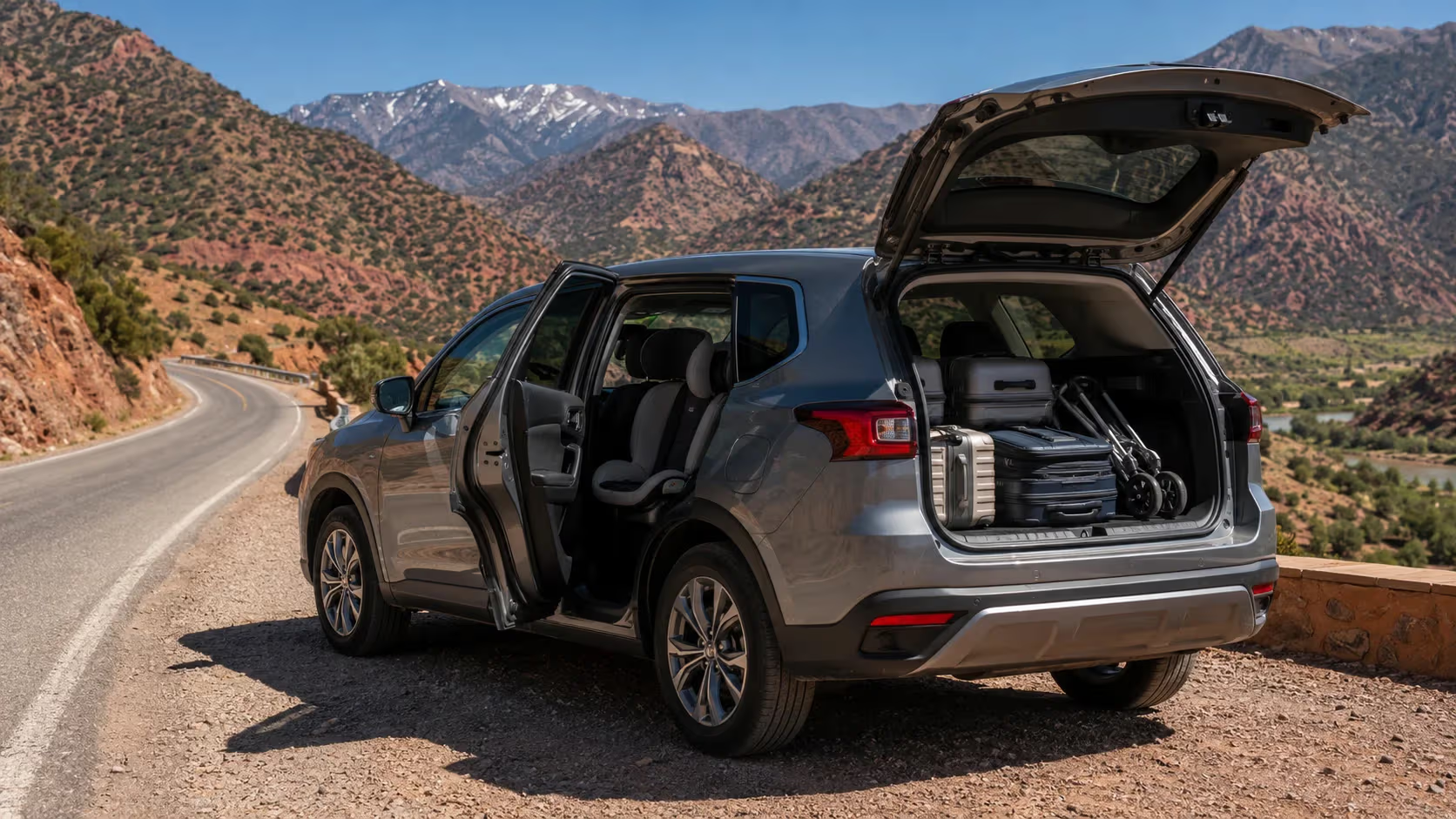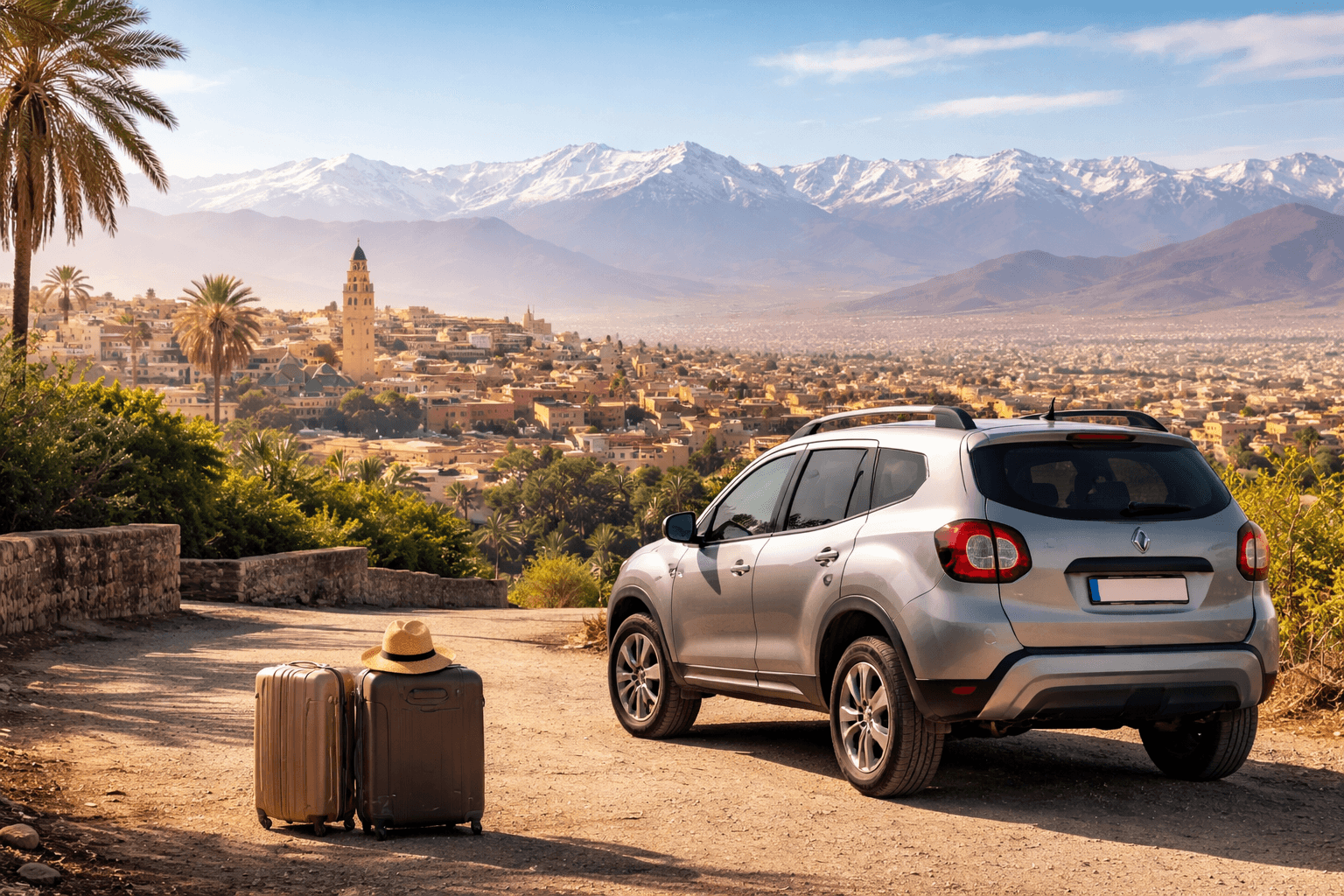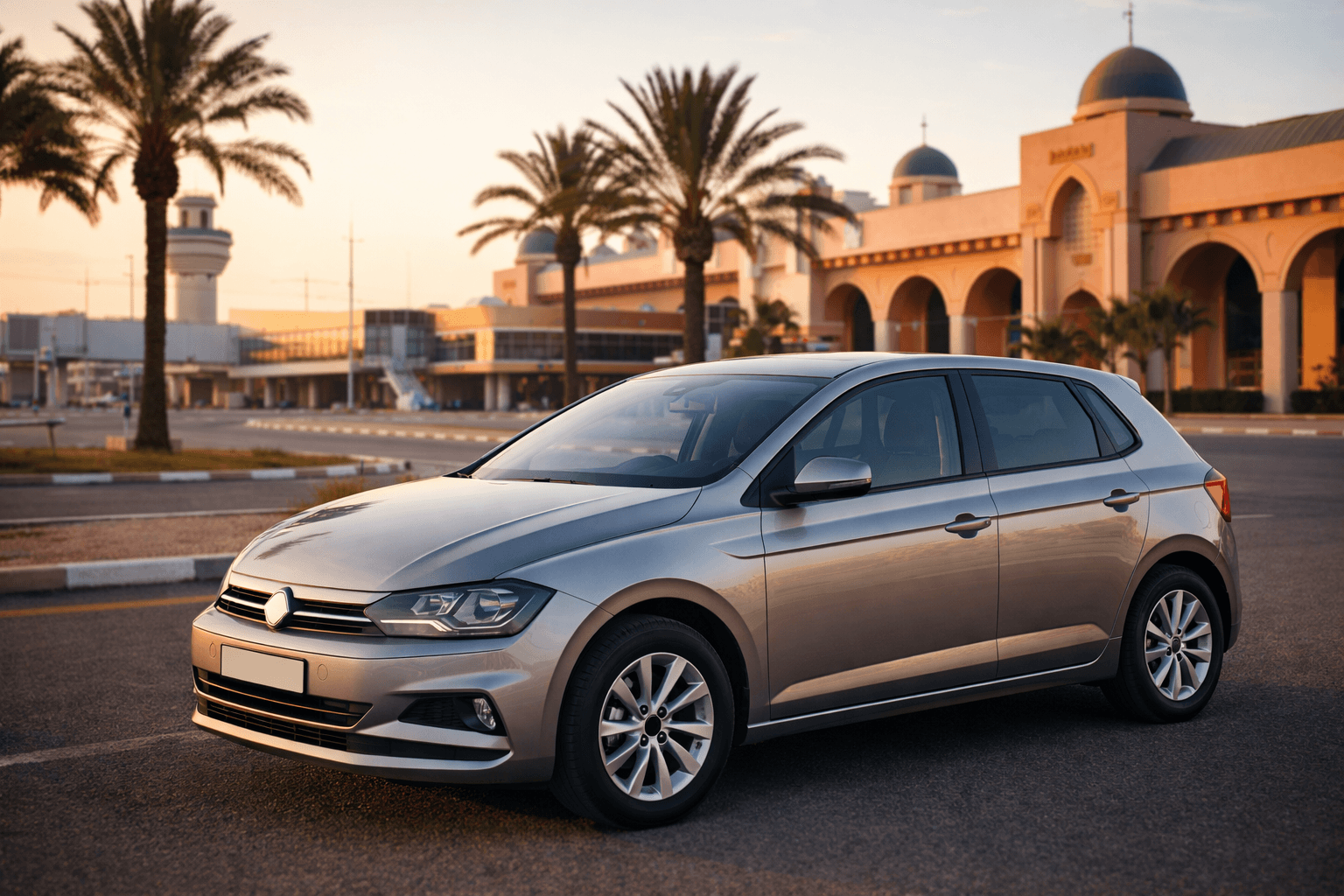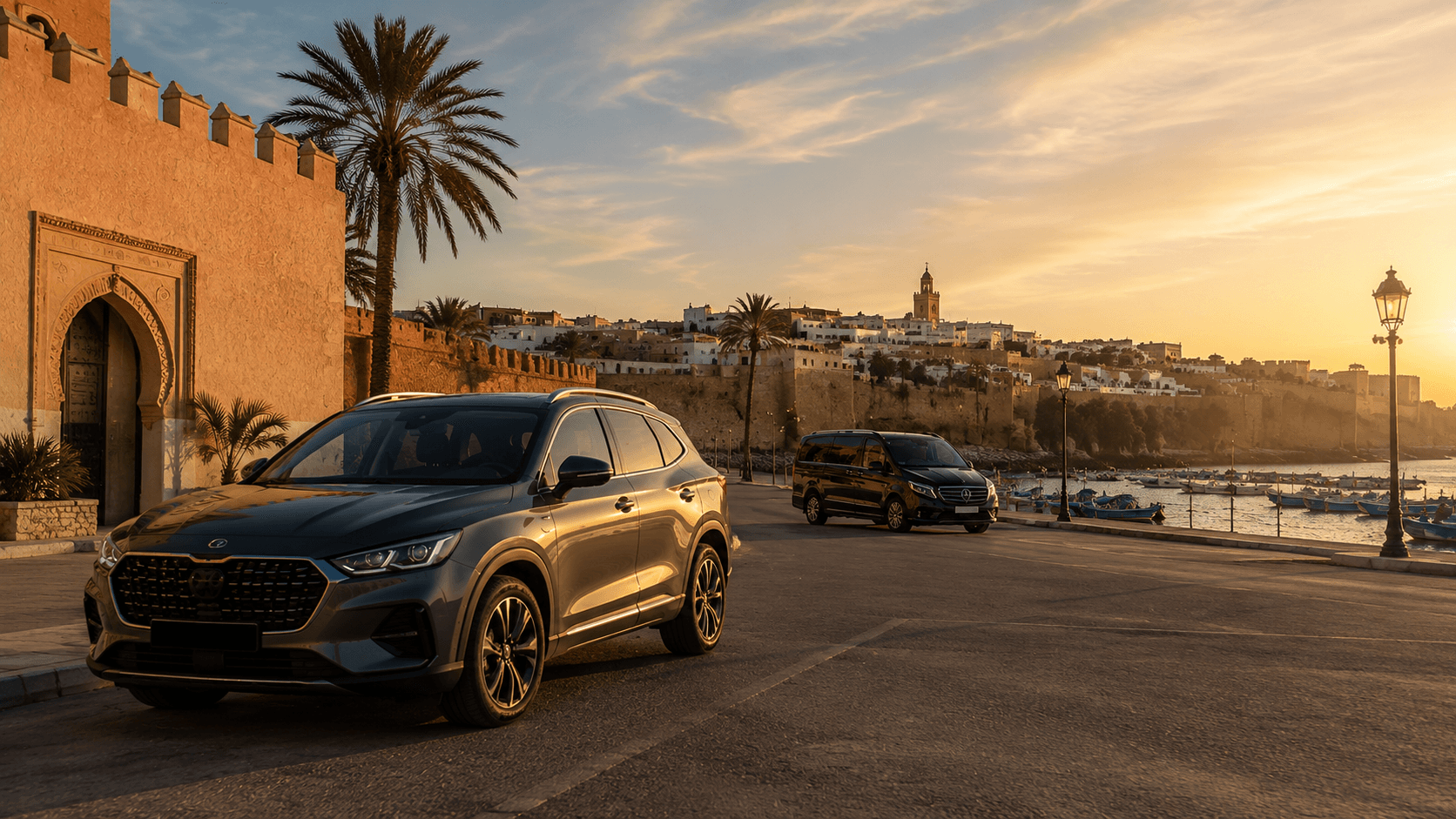









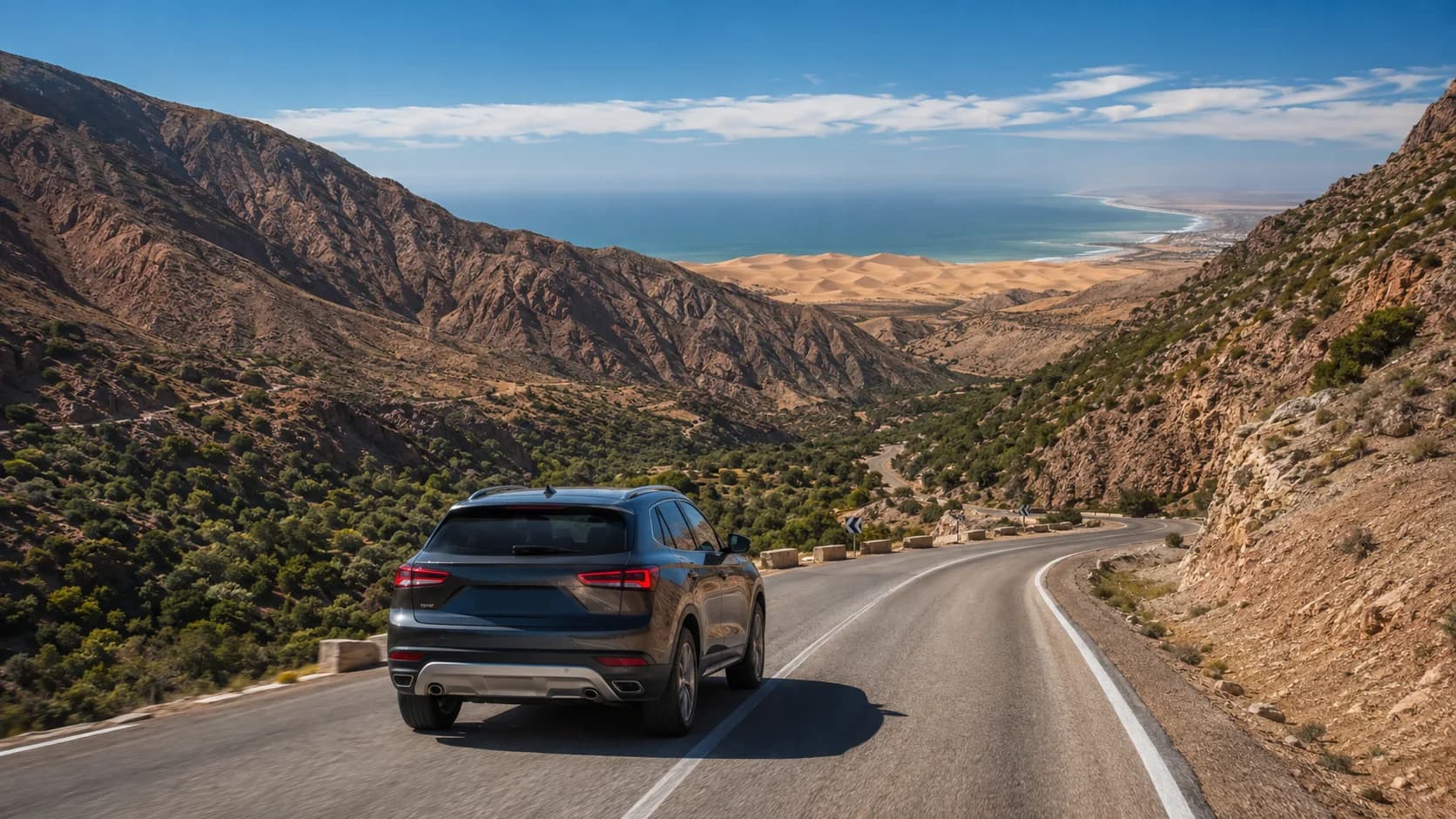
A 10-day Morocco road trip gives you enough time to connect several of the country's most distinctive landscapes without limiting the trip to one city. Starting in Marrakech, this itinerary crosses the High Atlas Mountains, continues through Ouarzazate and the valleys of southeastern Morocco to the Sahara at Merzouga, then turns west toward the Atlantic coast before finishing in Essaouira and returning to Marrakech.
It is an ambitious route, but it works well for travelers who enjoy driving and prefer changing scenery over spending several nights in each destination. The key is to avoid treating every stop as a sightseeing checklist. Some days are for exploring; others are primarily scenic driving days.
For travelers beginning the journey in Marrakech, arranging a suitable car rental in Marrakech before departure makes it easier to coordinate airport, hotel or city pickup and choose a vehicle suitable for the full itinerary.
Table of Contents
- Is 10 Days Enough for This Morocco Road Trip?
- 10-Day Morocco Road Trip at a Glance
- Why Marrakech is a practical starting point
- Day-by-day 10-day Morocco itinerary
- High Atlas crossing and mountain-road planning
- Ouarzazate, Dades and Todra route
- Driving to Merzouga
- Sahara vehicle requirements
- Crossing southern Morocco toward the Atlantic
- Agadir and Essaouira
- Best rental car for the route
- Fuel, tolls and parking
- Seasonal considerations
- Common itinerary mistakes
- Frequently asked questions
Is 10 Days Enough for This Morocco Road Trip?
Yes. Ten days is enough to drive from Marrakech across the High Atlas to Ouarzazate, continue through the Dades and Todra region to Merzouga, cross southern Morocco toward the Atlantic, visit Agadir and Essaouira, and return to Marrakech.
However, this is a road-trip itinerary rather than a slow-travel itinerary. Expect several driving days of four hours or more, plus one particularly long southern crossing.
A practical route is:
Marrakech → Aït Ben Haddou → Ouarzazate → Dades Valley → Todra Gorge → Merzouga → Zagora → Agadir → Essaouira → Marrakech
The journey combines mountain roads, desert landscapes, long national-road sections and Atlantic coastal driving.
10-Day Morocco Road Trip at a Glance
| Day | Route | Main Experience |
|---|---|---|
| 1 | Marrakech | Arrival and city exploration |
| 2 | Marrakech → Aït Ben Haddou → Ouarzazate | High Atlas Mountains |
| 3 | Ouarzazate → Dades Valley → Tinghir | Valleys and gorges |
| 4 | Tinghir → Merzouga | Sahara arrival |
| 5 | Merzouga | Erg Chebbi and desert day |
| 6 | Merzouga → Zagora | Southern Morocco road trip |
| 7 | Zagora → Agadir | Long drive toward Atlantic coast |
| 8 | Agadir → Essaouira | Atlantic coastal route |
| 9 | Essaouira | Medina, port and coast |
| 10 | Essaouira → Marrakech | Return to Marrakech |
The itinerary is best viewed as a large loop through southern Morocco, rather than a collection of isolated day trips.
Day 1: Arrive in Marrakech and Prepare for the Road Trip
Use the first day for Marrakech rather than immediately starting a long drive.
This allows time to recover from your flight, explore part of the city and prepare for the mountain route the following morning.
Depending on where you are staying, you can visit areas such as the Medina, Jemaa el-Fna, Gueliz or Hivernage without using the rental car extensively.
If you are arriving through Marrakech Menara Airport, collecting the vehicle there can be convenient. Travelers staying inside or near the Medina should remember that many riads are reached through narrow or pedestrian streets, so the rental vehicle may need to remain at an accessible parking area.
Before leaving Marrakech, check:
-
fuel level;
-
tire condition;
-
spare-wheel or puncture equipment;
-
rental documents;
-
insurance terms;
-
mileage policy;
-
phone charging;
-
offline navigation;
-
weather conditions in the High Atlas.
For travelers who prefer more luggage space and a higher driving position, an SUV rental in Marrakech is particularly practical for this itinerary.
Day 2: Marrakech to Ouarzazate Through the High Atlas Mountains
The real road trip begins on Day 2.
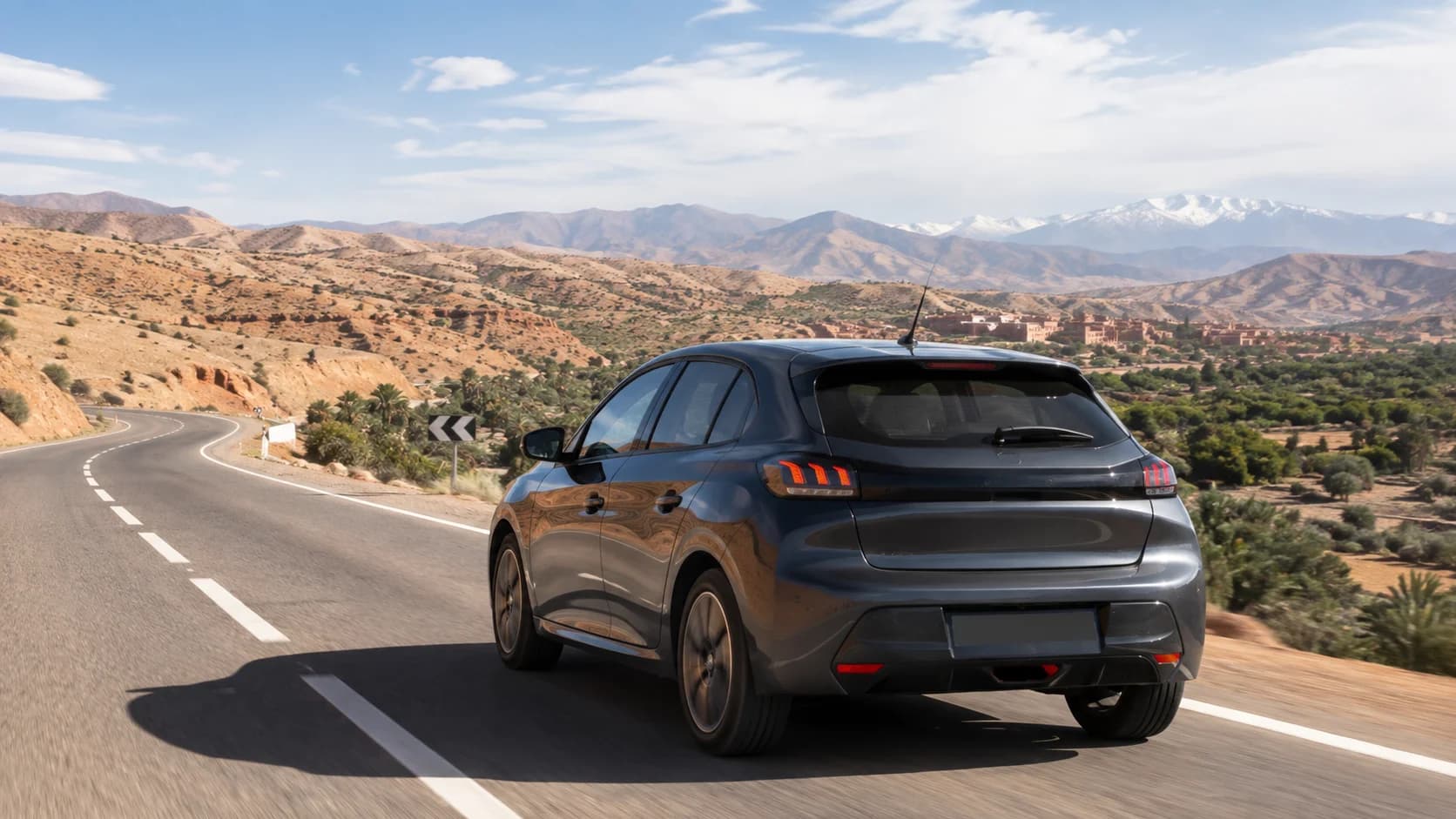
Leave Marrakech early and travel southeast toward Ouarzazate, crossing the High Atlas Mountains.
The Moroccan National Tourist Office describes the Atlas landscape around Marrakech as one of the region's defining natural features, with Toubkal National Park and the mountain valleys lying close to the city.
The drive is dramatically different from leaving Marrakech toward Casablanca or Agadir. Instead of motorway driving, expect elevation changes, bends, mountain settlements and slower average speeds.
The High Atlas Crossing
The road toward Ouarzazate crosses the High Atlas through the Tizi n'Tichka corridor.
Even when navigation apps show a manageable distance, mountain driving often takes longer than expected because:
-
average speeds are lower;
-
heavy vehicles may travel slowly;
-
roadworks can affect individual sections;
-
viewpoints encourage stops;
-
weather changes can reduce visibility.
Do not calculate the day purely from kilometers.
Stop at Aït Ben Haddou
Aït Ben Haddou is a logical major stop before Ouarzazate.
Rather than rushing through for a photograph, allow time to park, walk through the area and take a break before continuing.
Afterward, continue toward Ouarzazate and stay overnight there.
This produces a comfortable first long-distance day without trying to reach the desert immediately.
Day 3: Ouarzazate to Dades Valley and Todra Region
Day 3 follows one of the most visually varied sections of the itinerary.
From Ouarzazate, continue east through the valleys toward:
Skoura → Kelaat M'Gouna → Dades Valley → Tinghir → Todra
This part of Morocco transitions gradually from broad dry plateaus to oasis vegetation, rocky valleys and dramatic gorge scenery.
Should You Visit Both Dades and Todra?
Yes, but you do not need to spend hours in both.
Dades is better treated as part of the scenic route, while Todra Gorge can become the principal stop later in the day.
Travelers who want a slower trip can stay around Dades instead of Tinghir, but doing so slightly increases the next day's drive toward Merzouga.
For a 10-day itinerary covering both Sahara and Atlantic coast, staying around Tinghir or Todra keeps the route efficient.
Day 4: Tinghir to Merzouga and the Sahara
Day 4 takes you from the Todra region toward Merzouga.
The landscape becomes progressively more arid as you travel toward southeastern Morocco.
Merzouga sits beside Erg Chebbi and is one of Morocco's principal gateways to the Sahara experience. Morocco's National Tourist Office describes the area as a landscape of dunes, palm groves and desert tracks.
Do You Need a 4x4 to Drive to Merzouga?
Usually, no.
The main tourist route to Merzouga can be reached on paved roads, so reaching a hotel or an agreed desert-camp meeting point does not automatically require four-wheel drive.
You should not drive a normal rental vehicle onto deep sand or an unapproved desert piste simply because the destination is the Sahara.
If your camp is away from the paved road, arrange a meeting point and use the camp's appropriate transfer vehicle for the final desert section.
A standard sedan can complete the main paved itinerary, but an SUV provides more ground clearance, luggage space and comfort on long mixed-road journeys.
For a wider comparison of vehicle types, see the SUV vs Sedan vs 4x4 Morocco rental guide.
Day 5: Full Day in Merzouga
After several days of moving between destinations, Day 5 should have very little road-trip pressure.
Spend the day around Merzouga and Erg Chebbi.
Possible experiences include:
-
watching sunrise or sunset near the dunes;
-
visiting nearby settlements;
-
short desert excursions;
-
camel excursions;
-
sandboarding;
-
relaxing at the accommodation;
-
spending a night in a desert camp.
The official Moroccan tourism site specifically identifies Erg Chebbi and the Merzouga dunes as a major desert destination.
This rest day also prevents the itinerary from becoming ten consecutive days of driving.
Day 6: Merzouga to Zagora Across Southern Morocco
Day 6 turns the journey west.
Rather than driving back through Tinghir and retracing the same route, use the southern route toward Alnif and Zagora.
This creates a much stronger road-trip experience because the geography changes again.
Expect long open sections, small settlements and fewer major urban centers than around Marrakech or Agadir.
Why Stay in Zagora?
Zagora divides the difficult Sahara-to-coast transition into two more manageable stages.
Trying to travel from Merzouga all the way to Agadir in one ordinary sightseeing day would make the route unnecessarily tiring.
Instead:
Merzouga → Zagora
followed the next day by:
Zagora → Agadir
provides a better rhythm.
Fill the fuel tank when convenient rather than waiting until it is nearly empty on remote sections.
Day 7: Zagora to Agadir
This is one of the longest driving days of the entire itinerary.
Leave early.
The route moves west across southern Morocco before eventually joining the corridor toward Taroudant and Agadir.
This day should primarily be considered a transfer and landscape day, not a major sightseeing day.
Allow time for:
-
fuel;
-
lunch;
-
short rest stops;
-
photography;
-
slower traffic;
-
road conditions.
Arriving in Agadir marks a major geographic change.
After several days of mountains, valleys and desert terrain, you reach the Atlantic coast.
Day 8: Agadir to Essaouira Along the Atlantic
Day 8 is considerably easier.
Travel north from Agadir toward Essaouira.
The drive introduces Atlantic scenery, coastal hills, argan-growing country and smaller settlements.
There is no need to rush.
This is one of the sections where the car becomes part of the travel experience rather than simply transportation between attractions.
Arrive in Essaouira with enough time for an afternoon or sunset walk.
Day 9: Explore Essaouira Without a Long Drive
Leave the rental car parked and explore Essaouira mostly on foot.
The city's historic medina, ramparts, fishing port and Atlantic atmosphere make it particularly well suited to a slower final stage of the trip.
Morocco's National Tourist Office highlights Essaouira's fortified ramparts, fishing port, medina and strong Atlantic identity.
Useful areas to explore include:
-
the medina;
-
the ramparts;
-
the fishing port;
-
the beachfront;
-
cafés and seafood restaurants;
-
galleries and artisan shops.
After hundreds of kilometers behind the wheel, this car-free day is worth keeping.
Day 10: Essaouira to Marrakech
The final day completes the loop.
Drive east from Essaouira back toward Marrakech.
Compared with the mountain and desert sections earlier in the journey, this is a relatively straightforward final transfer.
If you have an evening flight, build a generous buffer into the schedule.
Returning a rental vehicle, refueling, reaching Marrakech Airport and completing airport formalities should not be planned around the theoretical navigation-app arrival time.
If possible, arriving in Marrakech a night before an early morning international departure is even more comfortable.
What Is the Best Car for This 10-Day Morocco Road Trip?
For most travelers, the best balance is a compact SUV or comfortable sedan.
Economy or Compact Car
Best for:
-
one or two travelers;
-
light luggage;
-
lower rental and fuel costs;
-
drivers comfortable with mountain roads.
A compact car can complete the paved version of this route.
Sedan
Best for:
-
couples;
-
three or four travelers with moderate luggage;
-
travelers prioritizing motorway and national-road comfort.
A sedan is perfectly viable if you are not planning unpaved detours.
SUV
Best for:
-
families;
-
multiple suitcases;
-
taller travelers;
-
mixed mountain and desert itineraries;
-
drivers wanting additional ground clearance.
For this particular 10-day itinerary, an SUV is the most versatile overall choice.
4x4
A genuine 4x4 becomes relevant only if your itinerary intentionally includes permitted unpaved tracks, remote mountain roads or other terrain requiring four-wheel drive.
Merely visiting Merzouga does not automatically mean you need one.
Do You Need an Automatic Car?
No, but an automatic can make the itinerary easier.
Mountain switchbacks, urban traffic and repeated starts and stops can make automatic transmission more comfortable for travelers unfamiliar with Moroccan roads.
Experienced manual drivers can complete the same route without difficulty provided they are comfortable with hill starts and slower mountain-road traffic.
How Much Driving Is Involved?
This itinerary covers a substantial portion of southern Morocco.
The important planning principle is to consider driving time, not just distance.
One hundred kilometers on a fast road is very different from one hundred kilometers through mountainous terrain or settlement-heavy national roads.
The longest days are likely to be:
-
Marrakech to Ouarzazate when sightseeing stops are included;
-
Merzouga to Zagora;
-
Zagora to Agadir.
Days 5 and 9 intentionally contain little driving to compensate.
Motorways, National Roads and Tolls
Not all roads on this itinerary are motorways.
The Marrakech–Sahara section relies heavily on national and regional roads, while Morocco's motorway network becomes more relevant on other routes around Marrakech, Casablanca and Agadir.
Autoroutes du Maroc maintains the official motorway network and publishes current toll information.
Before a long journey, check current road and weather information rather than assuming conditions will match an older travel blog.
Fuel Planning
Fuel is generally straightforward on the main tourist route, but the best road-trip habit is simple:
Do not wait for an almost empty tank in remote areas.
Refuel before long mountain or southern sections when you have a convenient opportunity.
Particularly useful refueling points include larger towns such as:
-
Marrakech;
-
Ouarzazate;
-
Tinghir;
-
Erfoud area;
-
Zagora;
-
Taroudant;
-
Agadir;
-
Essaouira.
Also check the rental company's fuel policy before departure.
Parking During the Trip
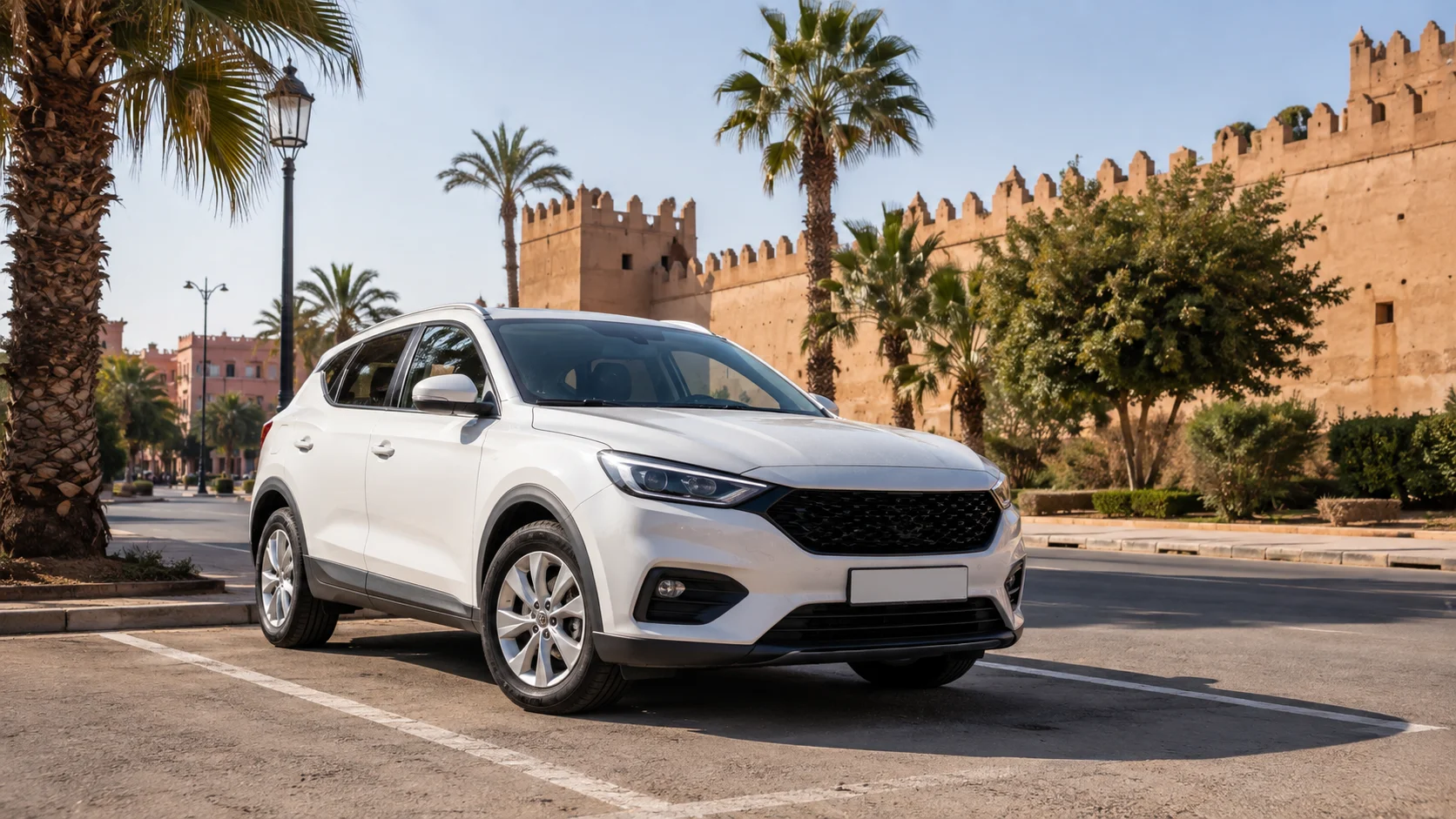
Parking conditions vary substantially.
Marrakech
Avoid attempting to drive directly into narrow medina streets. Use an accessible parking location or accommodation meeting point.
Ouarzazate
Parking is generally simpler than in Marrakech's historic center.
Merzouga
Hotels and desert accommodations normally provide or coordinate vehicle parking.
Agadir
Modern roads and hotel districts usually make vehicle access relatively straightforward.
Essaouira
The historic medina is best explored on foot. Park outside the pedestrian core and continue walking.
When Is the Best Time for This Morocco Road Trip?
Spring and autumn generally offer the best balance for a route combining mountains, desert and coast.
The challenge is that this itinerary crosses several climate zones.
Winter
The Sahara can be comfortable during the day, but mountain conditions can be colder and High Atlas weather requires additional attention.
Spring
Often one of the strongest periods for a mixed-region itinerary.
Summer
Expect very high temperatures in southern and desert areas. Avoid unnecessary midday outdoor activity and carry sufficient water.
Autumn
Another strong period, although local weather and mountain conditions should still be checked shortly before departure.
Do not assume conditions in Marrakech represent conditions in the High Atlas or Merzouga.
Should You Book a No-Deposit Rental for a 10-Day Trip?
A no-deposit option can be convenient for a long road trip because it avoids tying up additional funds as a security deposit.
However, "no deposit" should not be treated as the same thing as zero excess or unrestricted insurance.
Check:
-
security deposit;
-
insurance excess;
-
included protection;
-
mileage;
-
roadside assistance;
-
glass and tire coverage;
-
fuel policy;
-
permitted roads;
-
cross-city return terms.
Travelers comparing these options can review no-deposit car rental in Marrakech and the detailed Marrakech no-deposit rental guide before booking.
Common Mistakes to Avoid
Trying to Reach Merzouga From Marrakech in One Day
Technically covering large distances is not the same as creating a good road trip. Dividing the route between Ouarzazate, the valleys and Merzouga allows you to experience the geography rather than merely cross it.
Trusting Navigation Time Too Literally
Mountain roads, lunch stops, fuel, traffic and viewpoints all add time.
Driving Into the Desert Without Permission
A rental SUV is not automatically a desert off-road vehicle. Stay on approved roads unless your rental agreement permits otherwise and you have the appropriate vehicle and experience.
Scheduling Sightseeing After Every Long Drive
Some days should simply be driving days.
Underestimating Luggage
A five-seat vehicle does not necessarily carry five adults plus five large suitcases comfortably.
Driving Long Mountain Sections After Dark
Where possible, complete unfamiliar mountain and rural routes during daylight.
Is This Road Trip Better Than Marrakech to Merzouga and Back?
For travelers with ten days, usually yes.
Returning from Merzouga by exactly the same route means repeating substantial sections through Tinghir and Ouarzazate.
Continuing west through southern Morocco instead creates a loop linking four distinct landscapes:
Marrakech → High Atlas → Sahara → Atlantic Coast
It also adds Agadir and Essaouira without requiring a separate coastal trip.
The trade-off is more total driving.
Travelers primarily interested in Marrakech and the Sahara may prefer a shorter out-and-back itinerary. Travelers who enjoy the journey itself will generally get more variety from the full loop.
Frequently Asked Questions
Is 10 days enough for a Morocco road trip?
Yes. Ten days is enough for a Marrakech, High Atlas, Merzouga and Atlantic-coast loop if you are comfortable with several substantial driving days. It is not enough to explore every destination slowly, so prioritize the route's major experiences.
Can you drive from Marrakech to the Sahara?
Yes. Merzouga can be reached by road from Marrakech through the High Atlas, Ouarzazate and southeastern Morocco. Breaking the trip into several stages is much more enjoyable than attempting it in one continuous drive.
Do I need a 4x4 for Merzouga?
Not for the standard paved road to Merzouga. A 4x4 is appropriate when the itinerary specifically requires permitted desert tracks or off-road terrain. Desert camps away from paved access often arrange their own final transfer.
What is the best route from Marrakech to Merzouga?
A practical scenic route is Marrakech → High Atlas → Aït Ben Haddou → Ouarzazate → Dades Valley → Tinghir/Todra → Merzouga.
Can I combine the Sahara and Essaouira in 10 days?
Yes. The most efficient approach is to continue west from Merzouga through southern Morocco instead of returning all the way to Marrakech first, then reach Agadir and travel north to Essaouira.
Is a sedan enough for this Morocco road trip?
Yes, provided you remain on paved roads and luggage fits comfortably. An SUV is preferable for travelers wanting more luggage room, higher ground clearance and greater comfort over a long mixed-terrain itinerary.
Should I rent a car in Marrakech or use a private driver?
A rental car offers maximum flexibility for travelers comfortable driving independently. A private driver removes the responsibility for navigation, parking and long driving days. The better option depends on driving confidence and how independently you want to explore.
Can I return to Marrakech from Essaouira on the same day as my flight?
It is possible for a later flight, but it creates unnecessary timing risk if your departure is early or important. Leave a large buffer for traffic, refueling, rental return and airport procedures, or spend the previous night in Marrakech.
Final Road Trip Planning Checklist
Before leaving Marrakech:
-
confirm the rental mileage policy;
-
check insurance and excess;
-
inspect the vehicle;
-
photograph existing damage;
-
confirm the fuel policy;
-
download offline navigation;
-
carry charging cables;
-
check High Atlas weather;
-
plan the first fuel stops;
-
confirm desert accommodation access;
-
avoid scheduling every day too tightly.
Plan Your 10-Day Morocco Road Trip
A 10-day road trip from Marrakech through the Atlas Mountains, Sahara and Atlantic coast works best when the vehicle matches the route rather than simply the lowest daily rental price.
For a long itinerary involving mountain roads, luggage, desert destinations and multiple overnight stops, compare Marrakech car rental options before departure. Travelers wanting additional luggage space and road-trip comfort can also browse SUV rental in Marrakech.
Plan realistic driving days, leave room for unscheduled stops, and treat the changing geography between Marrakech, the High Atlas, Merzouga and Essaouira as part of the experience rather than simply the road between destinations.