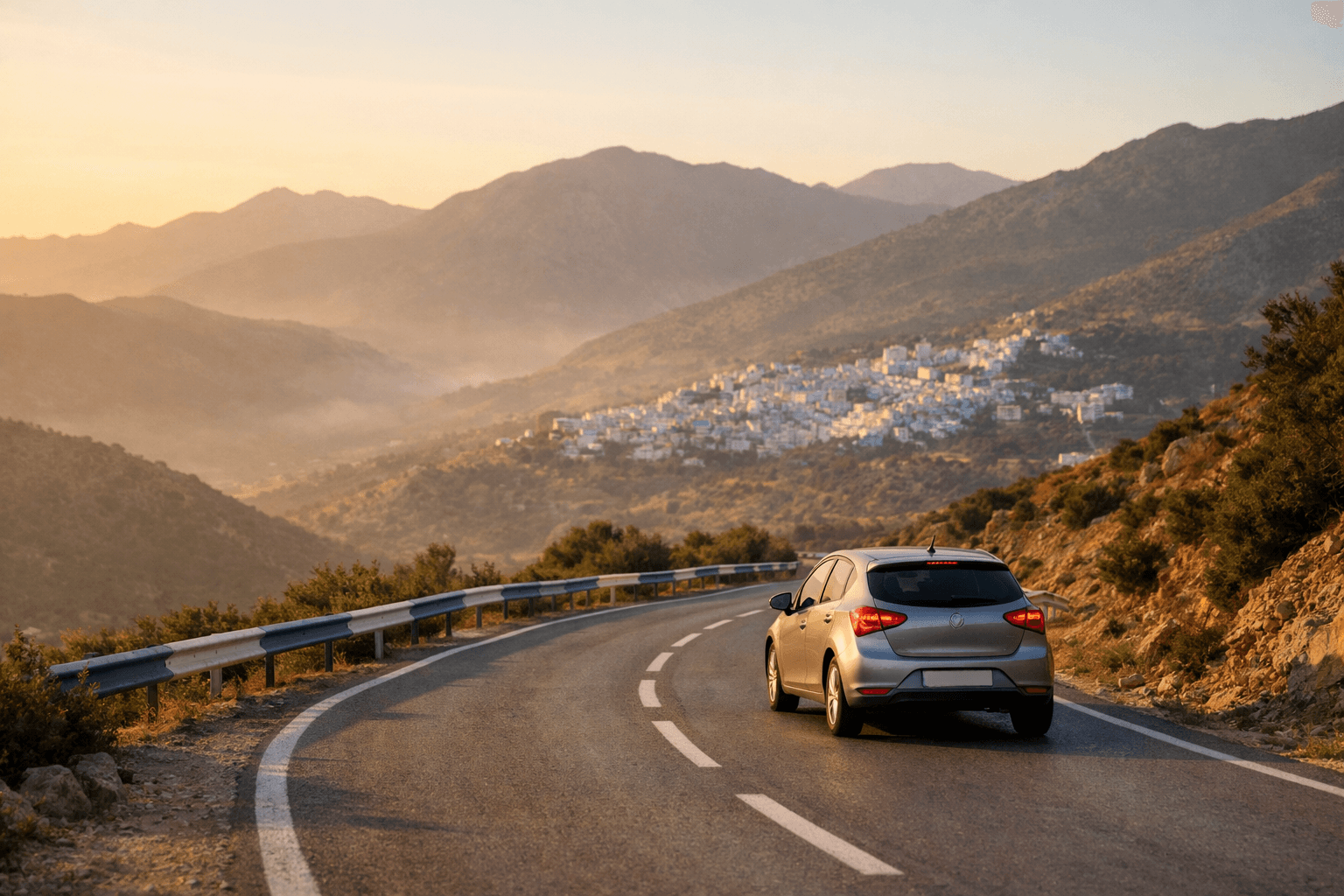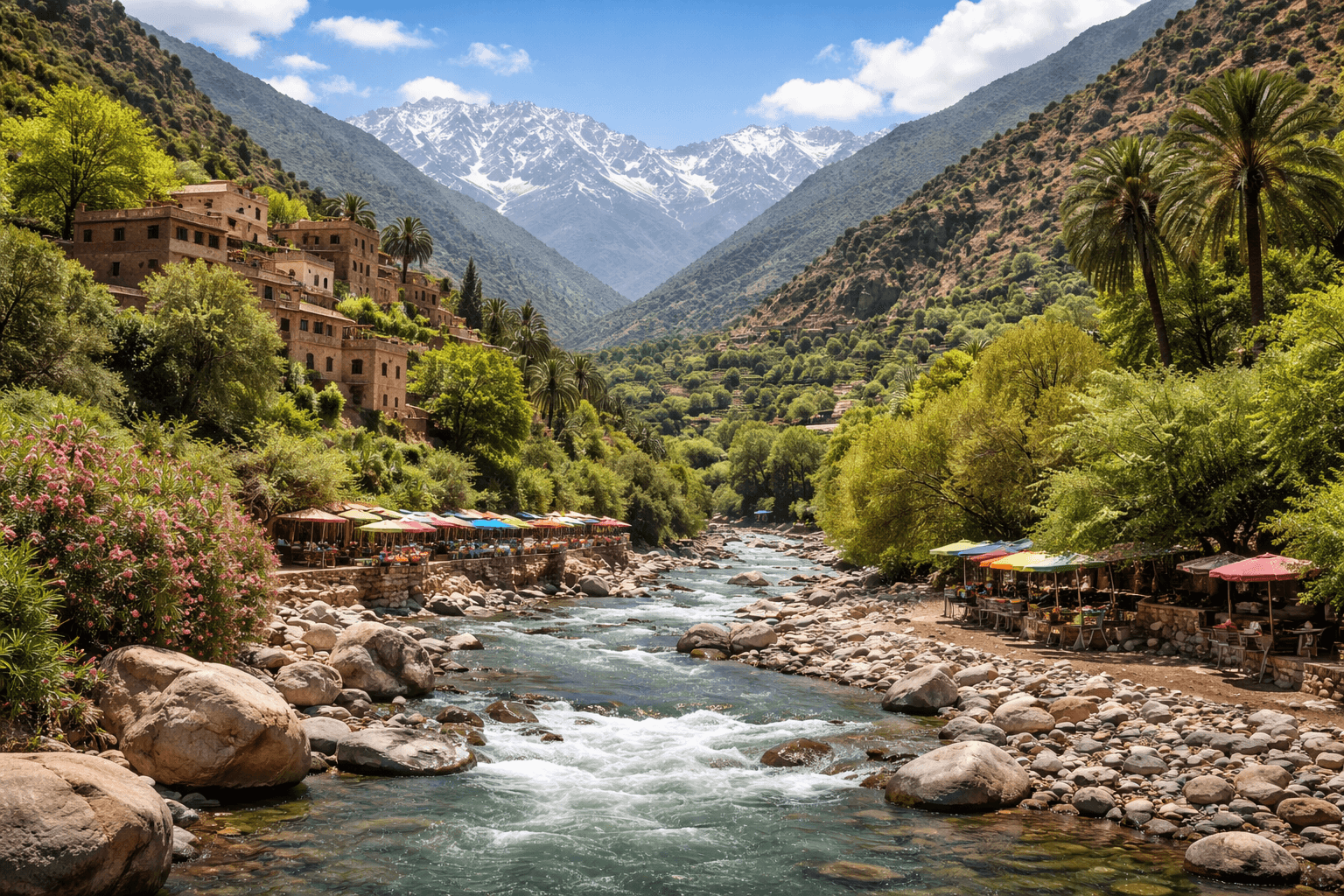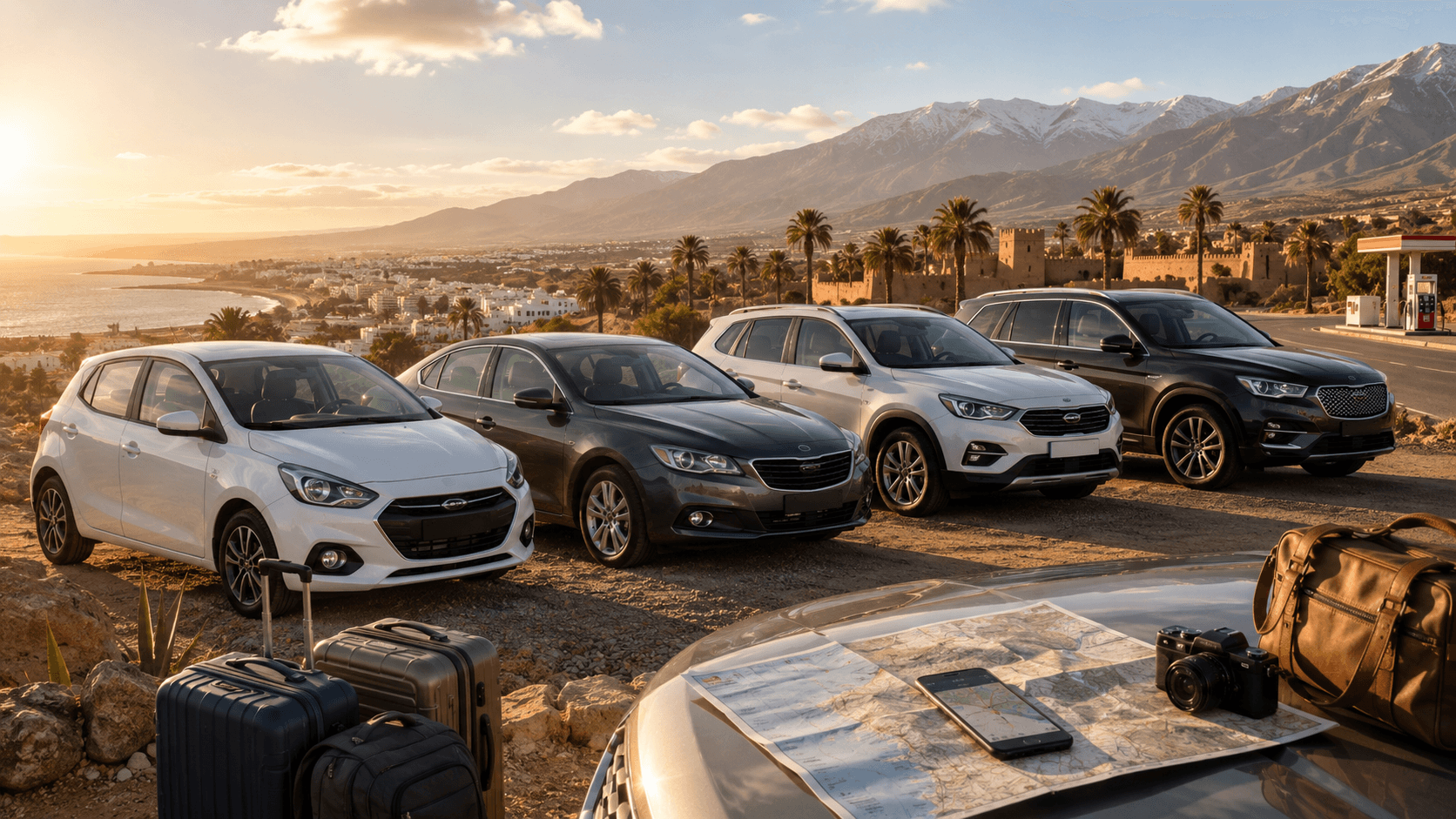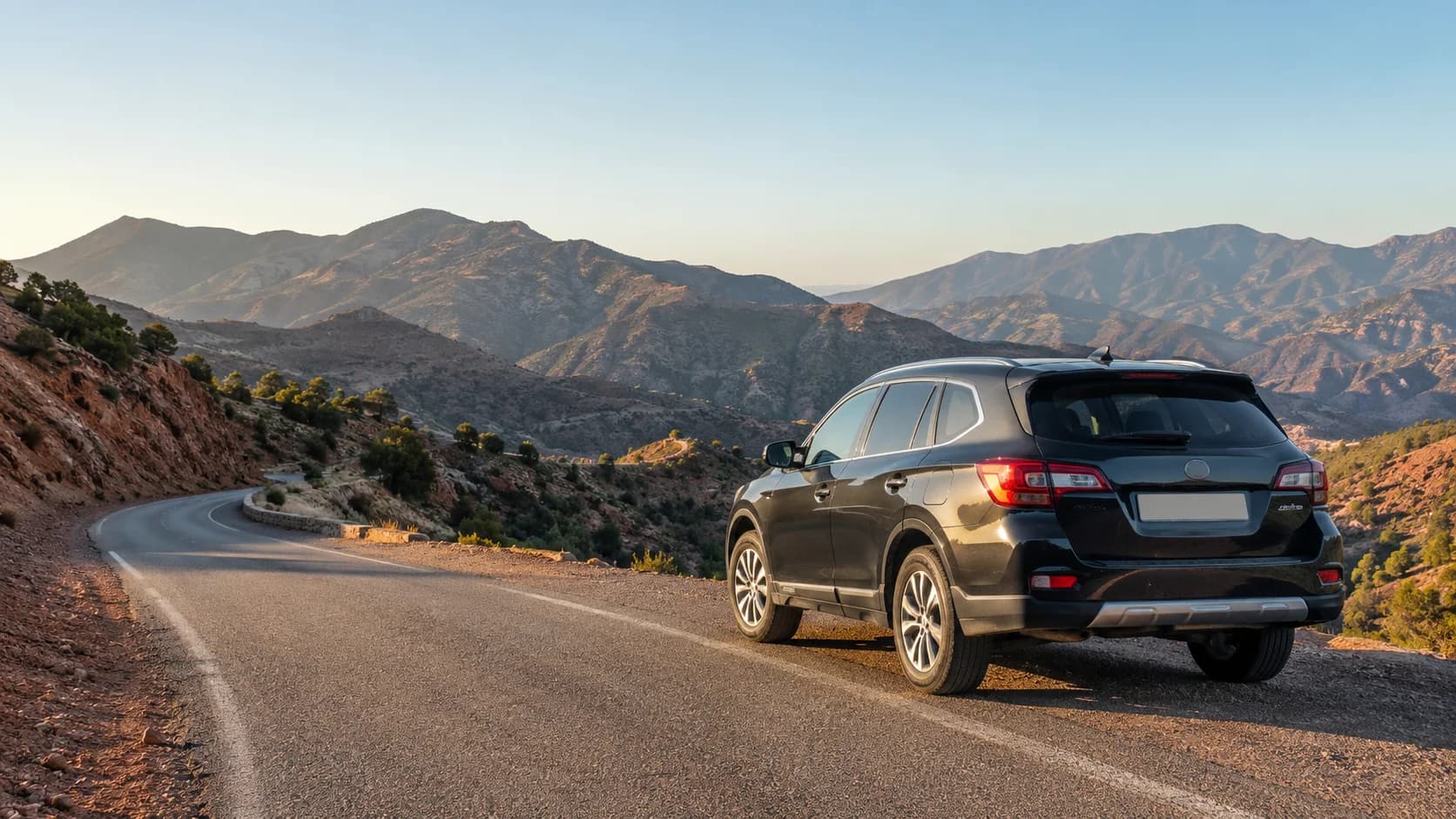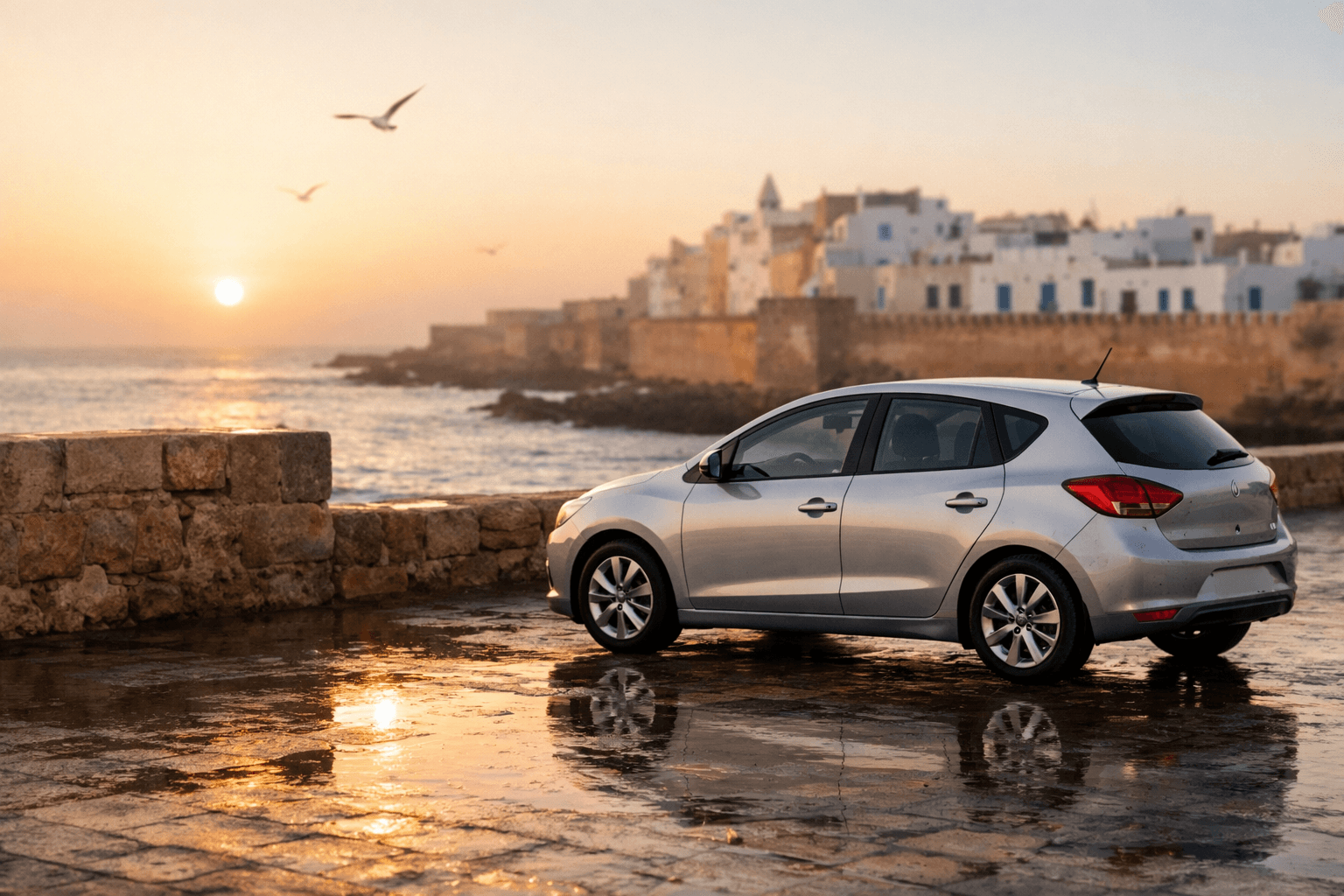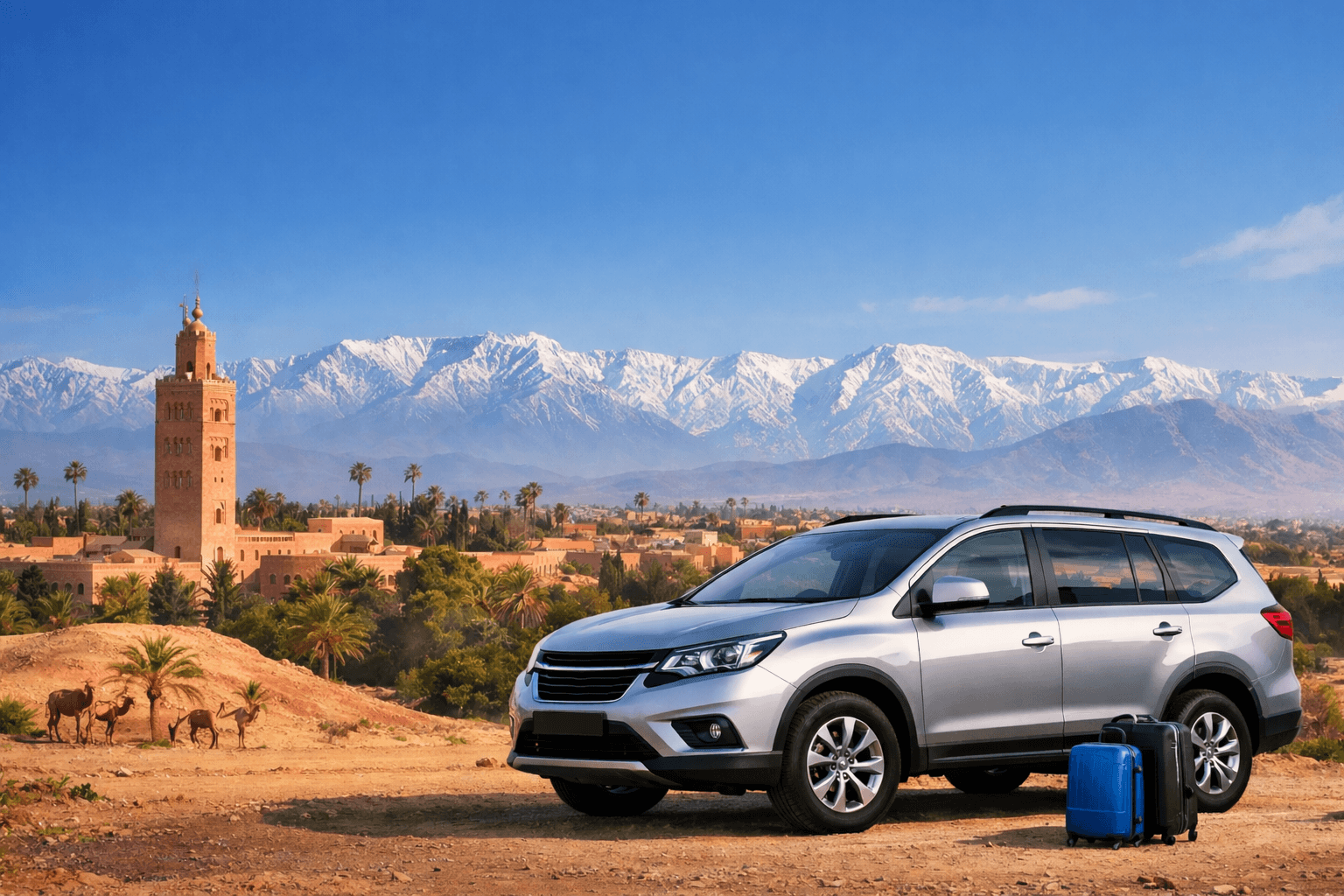








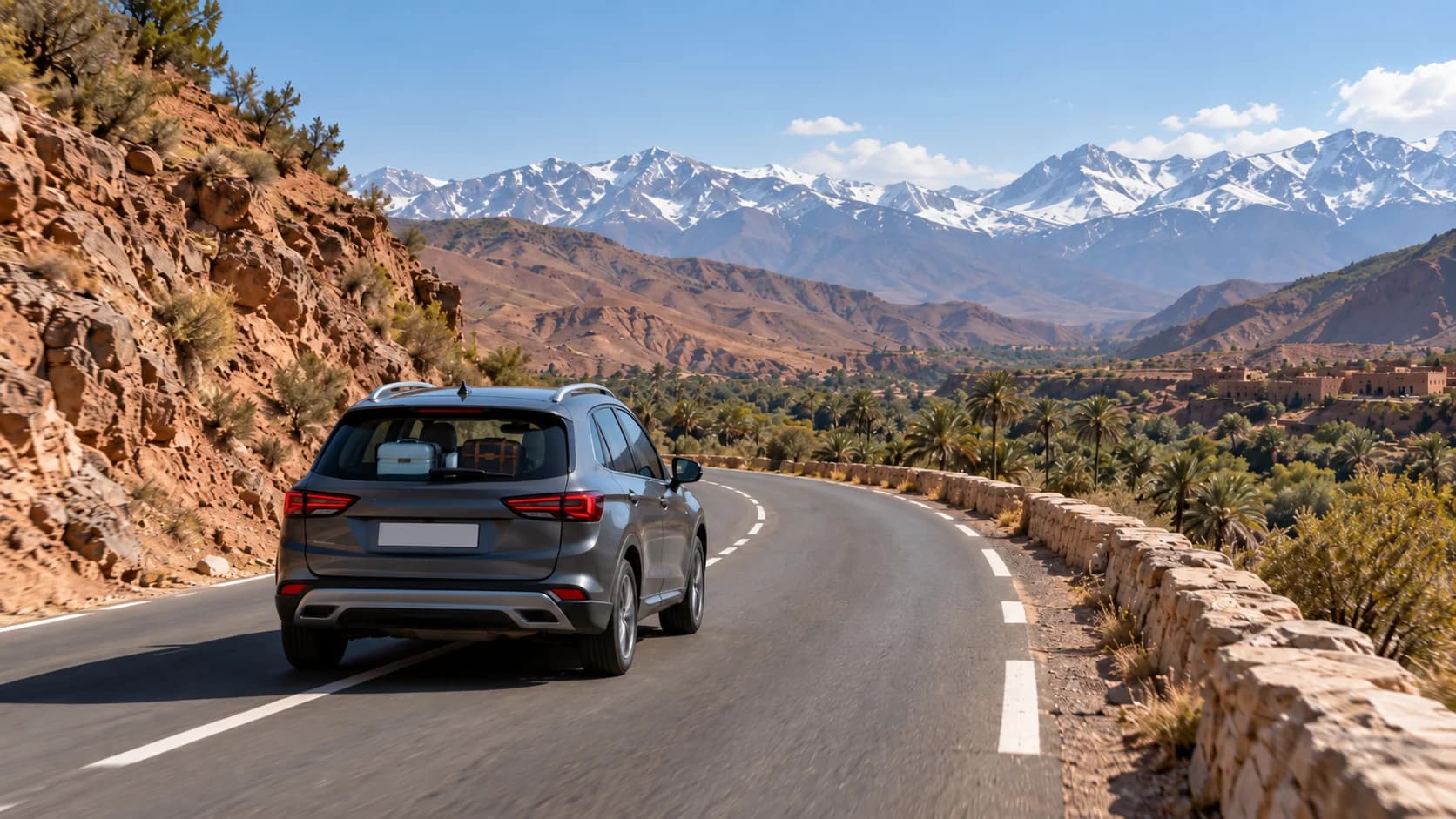
A 7-day Morocco road trip itinerary by car can take you from Marrakech across the High Atlas Mountains, through ancient kasbah country, into the Sahara Desert, then north through Fes and Chefchaouen before finishing on Morocco’s Atlantic side. It is an ambitious route, but it gives first-time visitors an exceptional mix of mountain roads, desert landscapes, historic medinas and northern Morocco.
This itinerary follows Marrakech → Aït Ben Haddou → Dades Valley → Merzouga → Fes → Chefchaouen → Casablanca. It is designed for travelers comfortable with several long driving days and works particularly well with a one-way car rental in Morocco.
What Is the Best 7-Day Morocco Road Trip?
For travelers who want to combine Morocco's cities, mountains and Sahara in one week, a strong route is Marrakech → Aït Ben Haddou/Ouarzazate → Dades Valley → Merzouga → Fes → Chefchaouen → Casablanca.
Plan for approximately 1,500 to 1,700 km of driving across the week, depending on hotel locations, sightseeing detours and your exact route. The hardest section is usually the long Merzouga-to-Fes drive, so start early and avoid adding too many stops that day.
This itinerary is best for travelers who enjoy driving and want a fast-moving overview of Morocco. If you prefer slow travel, use the same route over 9 to 12 days.
7-Day Morocco Road Trip at a Glance
| Day | Route | Approx. Driving | Main Experience |
|---|---|---|---|
| Day 1 | Marrakech → Aït Ben Haddou → Ouarzazate | 4–5 hrs plus stops | High Atlas and historic ksar |
| Day 2 | Ouarzazate → Dades Valley → Todra area | 3–5 hrs | Kasbahs, valleys and gorges |
| Day 3 | Todra/Dades → Merzouga | 4–5 hrs | Sahara arrival |
| Day 4 | Merzouga → Fes | 7–9 hrs | Ziz Valley and Middle Atlas |
| Day 5 | Fes | Minimal driving | Medina and cultural day |
| Day 6 | Fes → Chefchaouen | 3.5–4 hrs | Rif Mountains and blue medina |
| Day 7 | Chefchaouen → Casablanca | 5–6 hrs | Northern Morocco to Atlantic coast |
Best starting city: Marrakech
Best finishing city: Casablanca
Best trip style: One-way rental
Best vehicle for most couples: Compact car or sedan
Best vehicle for families: SUV or larger sedan
4x4 required for the itinerary? No, if you remain on normal paved roads
Most demanding day: Merzouga to Fes
The Moroccan National Tourist Office groups destinations along this itinerary among Morocco's major cultural and nature regions, including Marrakech, Ouarzazate-Zagora-Tinghir, Merzouga, Fes and Chefchaouen.
Is 7 Days Enough for a Morocco Road Trip?
Yes, seven days is enough for a Morocco road trip if you accept several substantial driving days and choose your route carefully.
The biggest mistake is trying to include every major destination.
A week is not enough to comfortably combine Marrakech, Essaouira, Agadir, Merzouga, Fes, Chefchaouen, Tangier, Rabat and Casablanca.
Instead, build one continuous route.
For travelers who want the greatest geographic variety, the Marrakech-to-Sahara-to-Fes route works particularly well because it avoids repeatedly returning over the same roads.
Travelers who want a slower holiday should consider skipping Chefchaouen or the Sahara rather than compressing even more destinations into seven days.
Day 1: Marrakech to Aït Ben Haddou and Ouarzazate
Route: Marrakech → High Atlas → Aït Ben Haddou → Ouarzazate
Driving: Allow roughly 4–5 hours before sightseeing time and stops
Overnight: Ouarzazate or Aït Ben Haddou
Your Morocco road trip begins by leaving Marrakech and crossing the High Atlas toward Ouarzazate.
The journey itself is part of the experience. Mountain roads, viewpoints and changing landscapes make this very different from an ordinary motorway drive.
A direct Marrakech-to-Aït Ben Haddou trip is roughly 170–180 km depending on your exact route and starting location. Current route planners put nonstop driving at around three hours, but a realistic sightseeing day should allow considerably more time for mountain traffic, breaks and photo stops.
Stop at Aït Ben Haddou
Aït Ben Haddou is one of the most important historic stops on this itinerary.
The fortified ksar has been on the UNESCO World Heritage List since 1987, making it more than simply a scenic roadside attraction.
Allow enough time to park outside the old settlement and explore on foot.
Afterward, continue toward Ouarzazate for the night, or stay around Aït Ben Haddou if you prefer a quieter first evening.
Road-trip tip
Do not treat the estimated navigation time as your arrival time. Mountain weather, road maintenance, slow vehicles and sightseeing stops can all extend the journey.
An early departure from Marrakech gives you far more flexibility.
Day 2: Ouarzazate to Dades Valley and Todra Gorge
Route: Ouarzazate → Skoura area → Valley of Roses → Dades → Todra
Driving: Approximately 3–5 hours depending on detours
Overnight: Dades Valley or Tinghir/Todra area
Day two moves east through one of Morocco's most visually distinctive road-trip regions.
Rather than racing toward Merzouga, use this day for valleys, kasbah landscapes and shorter exploratory stops.
What to see along the way
Useful stops can include:
-
Skoura and its palm-filled landscape
-
Kalaat M'Gouna and the Valley of Roses area
-
Dades Valley
-
viewpoints above the Dades roads
-
Tinghir
-
Todra Gorge
The official Moroccan tourism site identifies the wider Ouarzazate-Zagora-Tinghir region as one of Morocco's principal rural heritage and nature destinations.
Dades or Todra: where should you sleep?
Choose Dades if you want a scenic valley stay and have already spent plenty of time driving.
Choose Todra/Tinghir if you want to position yourself slightly farther east for the next day's drive toward Merzouga.
For a seven-day itinerary, positioning matters. An extra hour driven today may make the next day easier.
Day 3: Dades or Todra to Merzouga
Route: Tinghir/Todra → Erfoud area → Merzouga
Driving: Roughly 4–5 hours depending on your starting point
Overnight: Merzouga or desert camp
This is the day the landscape changes dramatically.
As you travel toward Morocco's southeast, greener valleys gradually give way to increasingly arid terrain before the dunes around Merzouga come into view.
Do you need a 4x4 to drive to Merzouga?
Not for the normal road into Merzouga.
A standard rental car can reach Merzouga and many conventional hotels using paved roads. A 4x4 becomes useful when an accommodation requires driving off paved roads or when you are specifically planning off-road travel.
Recent route guidance likewise notes that ordinary vehicles can reach Merzouga itself, while the final desert sections beyond normal roads require different transport.
If your desert camp is away from the road network, arrange the meeting point with the camp in advance rather than attempting to follow an unpaved track in a rental vehicle.
What to do after arriving
Depending on your arrival time, you may have time for:
-
dune viewpoints
-
camel excursion
-
desert camp transfer
-
sunset experience
-
short village exploration
Avoid filling the morning with too many stops. Arriving in Merzouga with daylight remaining makes logistics easier.
Day 4: Merzouga to Fes via the Middle Atlas
Route: Merzouga → Erfoud → Errachidia → Ziz Valley → Midelt → Middle Atlas → Fes
Driving: Approximately 7–9 hours before substantial sightseeing stops
Overnight: Fes
This is the most demanding driving day of the entire itinerary.
The road distance from Merzouga to Fes is roughly 455–470 km, with direct driving estimates around seven hours. Once fuel, food, mountain roads and sightseeing stops are included, it is sensible to treat this as a full travel day.
Where to stop
Potential breaks include:
Ziz Valley
One of the first major landscape changes after leaving the desert region.
Midelt
A practical point for lunch or a longer rest.
Middle Atlas
The route north introduces cooler mountain scenery before descending toward Fes.
How early should you leave Merzouga?
For this itinerary, aim for an early departure.
Leaving after a slow morning can mean arriving in Fes very late, especially once meal stops, traffic and mountain conditions are included.
This is also the day when you should avoid depending solely on the navigation app's fastest-time estimate.
Day 5: Full Day in Fes
Driving: Minimal
Overnight: Fes
After several days of driving, day five should remain mostly car-free.
Fes is one of Morocco's major cultural destinations, and its historic medina has been inscribed on UNESCO's World Heritage List since 1981.
Park at your hotel or another suitable parking area and explore the old city primarily on foot.
Why keep the car parked?
Historic medinas are exactly where having a rental car offers the least advantage.
The benefit of your car is moving between destinations. Inside a dense historic center, walking is usually much more practical.
Use the day for:
-
medina streets
-
historic architecture
-
traditional crafts
-
local food
-
viewpoints
-
museums or monuments according to your interests
A completely drive-free day also provides a valuable break before heading into northern Morocco.
Day 6: Fes to Chefchaouen
Route: Fes → Chefchaouen
Distance: About 190–200 km
Driving: Approximately 3.5–4 hours
Overnight: Chefchaouen
The road from Fes to Chefchaouen covers approximately 194 km, with direct driving estimates around 3.5 hours.
Leave Fes in the morning and plan to arrive around midday or early afternoon.
That gives you the rest of the day to explore Chefchaouen.
What makes Chefchaouen worth including?
Chefchaouen sits against the Rif Mountains and is known for the blue-painted streets of its medina.
The Moroccan National Tourist Office describes the city as a mountain destination with a historic medina, kasbah and access to surrounding walking routes.
Where should you park in Chefchaouen?
Do not expect to drive through the narrow historic medina.
Choose accommodation that clearly explains its parking arrangements, or use an established parking area outside the pedestrian core and continue on foot.
This is an important reason to check hotel access before arriving rather than simply following your navigation app to the hotel's front door.
Day 7: Chefchaouen to Casablanca
Route: Chefchaouen → western/northern road network → Rabat/Casablanca direction
Driving: Allow approximately 5–6 hours plus stops
Finish: Casablanca
Your final day takes you southwest toward Morocco's Atlantic corridor.
If your flight leaves Casablanca the same evening, leave substantial buffer time.
A smarter option is often to sleep in Casablanca and fly the following day, particularly if your flight is early or international.
Should you stop in Rabat?
You can, but only if your schedule permits it.
Rabat is itself a UNESCO-listed city and one of Morocco's major cultural destinations.
For a relaxed seven-day itinerary, however, I would prioritize reaching Casablanca comfortably rather than adding several hours of urban sightseeing.
What Is the Best Rental Car for a 7-Day Morocco Road Trip?
You do not automatically need an SUV for this itinerary.
The right car depends more on passengers, luggage, comfort requirements and the roads you actually intend to use.
| Travelers | Recommended Vehicle | Why |
|---|---|---|
| 1–2 people, light luggage | Compact / hatchback | Easy parking and lower fuel use |
| 2–3 people | Sedan | Good balance of comfort and luggage |
| Family with luggage | SUV | More cargo room and higher seating position |
| 5+ travelers | MPV / 7-seater | More practical passenger capacity |
| Travelers avoiding manual gears | Automatic | Easier for unfamiliar roads |
| Off-road plans | 4x4 | Only when route genuinely requires it |
You can compare car rental in Morocco, SUV rental in Morocco and other vehicle categories according to the number of passengers and luggage you are carrying.
For travelers prioritizing budget over vehicle size, a cheap car rental in Morocco can still be suitable when the itinerary remains on paved roads.
Is an Automatic Car Better for a Morocco Road Trip?
An automatic is not essential, but it can make the trip easier for drivers unfamiliar with manual transmission or mountain roads.
This matters particularly on:
-
steep sections
-
slow mountain traffic
-
city congestion
-
frequent stops
-
unfamiliar junctions
If you normally drive an automatic at home, a week-long road trip is generally not the ideal time to relearn manual driving.
Should You Book a One-Way Car Rental?
For this itinerary, yes, a one-way rental is usually much more efficient than returning to Marrakech.
Finishing in Casablanca prevents you from adding another long cross-country drive simply to return the car to its original city.
When booking, confirm:
-
permitted drop-off city
-
drop-off location
-
any one-way charge
-
airport versus city return
-
return operating hours
The ability to pick up in one Moroccan city and return in another is particularly valuable for itineraries combining southern and northern Morocco.
How Much Driving Is Too Much in Seven Days?
A useful rule is not simply to count kilometers.
A 200 km motorway trip is very different from 200 km through mountain roads, villages and sightseeing areas.
This itinerary includes:
-
mountain driving
-
rural highways
-
urban approaches
-
desert-region roads
-
motorway sections
The Merzouga to Fes day is the one most likely to feel long.
If that day concerns you, modify the itinerary by staying in Midelt and removing Chefchaouen from the week.
A good Morocco road trip is not about maximizing the number of cities. It is about balancing destinations with the realities of driving between them.
Fuel Stations on a Morocco Road Trip
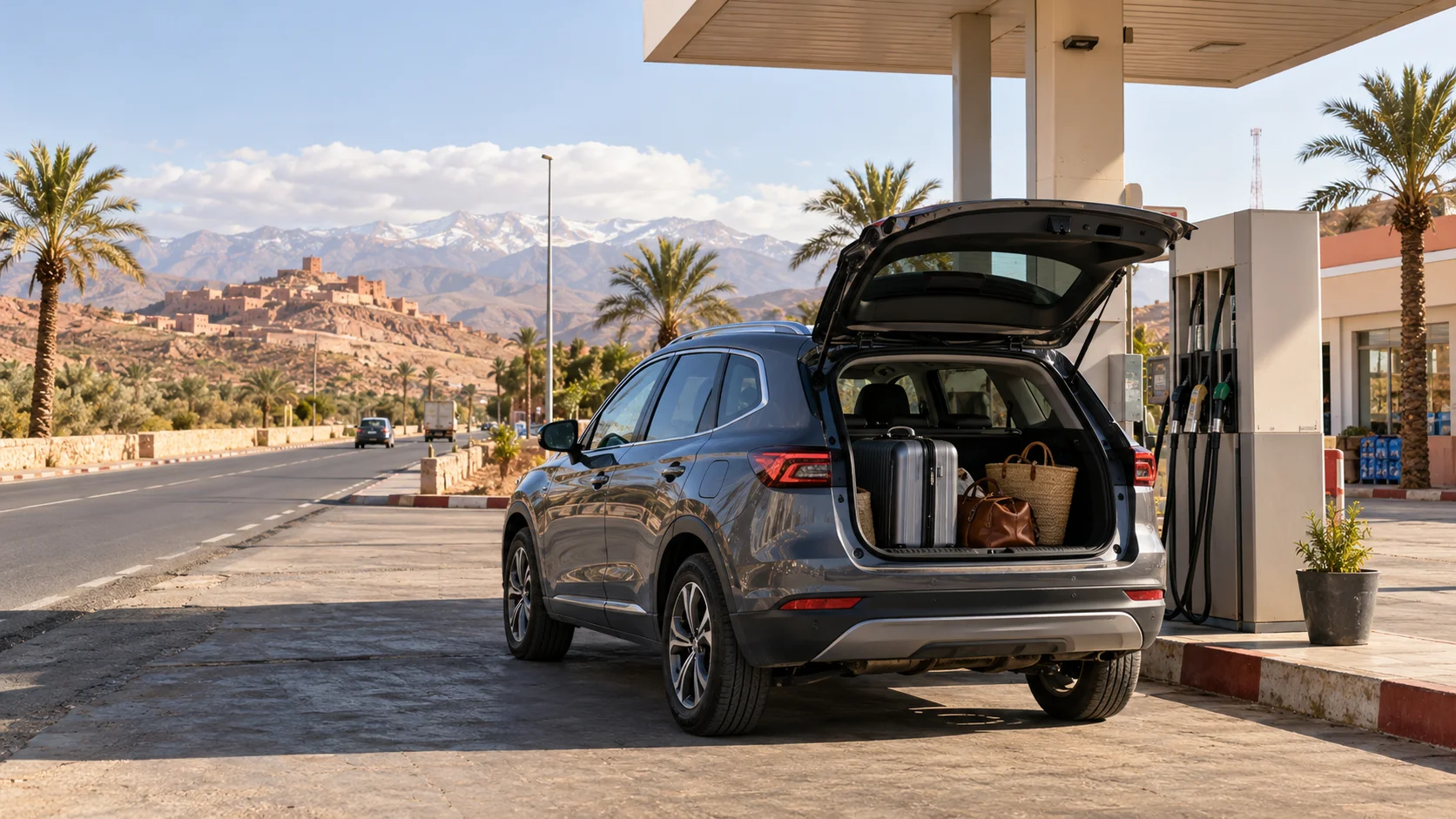
Fuel is available across the major road network, but do not make a habit of driving until the tank is nearly empty.
A practical approach is to refill when convenient before entering longer rural sections.
Especially consider filling up:
-
before a long mountain crossing
-
before leaving major towns
-
before long desert-region drives
-
the evening before an early departure
Keep in mind that detours and hotel locations can increase the distance shown in your original itinerary.
Are There Tolls on This Morocco Road Trip?
Some Moroccan motorways use tolls.
The exact amount depends on the motorway section and vehicle class.
For example, Morocco's motorway operator Autoroutes du Maroc (ADM) publishes official toll tariffs for routes across its network.
For current toll information before traveling, use the official ADM tariff information rather than relying on an old blog estimate.
This is particularly relevant when using faster motorway routes around Morocco's Atlantic and major-city corridors.
Where Should You Park?
Parking strategy changes from city to city.
Marrakech
If staying inside or near the medina, confirm parking arrangements with the accommodation.
Aït Ben Haddou
Park outside the historic ksar and continue on foot.
Merzouga
Hotels are generally easier to access by car, but desert camps may arrange transfers from a road-accessible meeting point.
Fes
Avoid trying to drive deep into the historic medina. Use hotel parking or an appropriate parking area outside the pedestrian center.
Chefchaouen
Leave the car outside the narrow medina and walk to your accommodation where necessary.
The most useful question to send every riad before arriving is:
“Where exactly should I park the car?”
That simple message can prevent a lot of unnecessary city driving.
Should You Drive After Dark in Morocco?
For a road trip like this, plan major intercity journeys during daylight whenever practical.
Daylight makes it easier to:
-
identify road changes
-
read unfamiliar signs
-
judge mountain roads
-
see pedestrians and cyclists
-
find accommodation entrances
-
handle rural sections
-
react to unexpected traffic conditions
This is particularly important on mountain and secondary roads.
Instead of trying to maximize sightseeing until sunset and then driving several hours, make arrival before dark part of the itinerary.
Important Road Trip Planning Tips
Download offline navigation
Mobile service is widely available, but offline maps provide useful backup in remote regions.
Do not overpack
Seven days in one vehicle means moving luggage repeatedly.
Smaller luggage can make compact rental cars much more practical.
Check weather before mountain sections
Conditions in the High Atlas and Middle Atlas can differ considerably from Marrakech or the Sahara.
Confirm accommodation access
A riad may be located in a pedestrian medina even when the booking platform appears to show road access.
Keep water in the vehicle
Especially on long southern and desert-region days.
Build time buffers
Driving time is not the same as total travel time.
Fuel, lunch, viewpoints, roadworks and navigation all add time.
Is a Private Driver Better Than Renting a Car?
It depends on how you prefer to travel.
Choose a rental car if you want:
-
independence
-
spontaneous stops
-
control over departure times
-
your own luggage space
-
flexibility between towns
Consider a private driver if you want:
-
no responsibility for navigation
-
less fatigue on long-distance days
-
someone else to manage the driving
-
a more relaxed intercity experience
Travelers who like the route but do not want to drive it themselves can compare a private car with driver in Morocco.
What Should You Pack for a 7-Day Morocco Road Trip?
Keep the packing list practical:
-
original driving licence
-
passport
-
rental documents
-
phone charger
-
car charging cable
-
offline maps
-
sunglasses
-
drinking water
-
light layers
-
warmer layer for mountains/desert evenings
-
comfortable walking shoes
-
small day bag
-
sunscreen
-
basic first-aid items
Temperatures can vary greatly between Marrakech, mountain elevations, desert areas and northern Morocco.
Alternative 7-Day Morocco Road Trip Routes
The Marrakech-Sahara-Fes-Chefchaouen route is excellent for variety, but it is not the only sensible option.
Option 1: Marrakech and Atlantic Coast
Marrakech → Essaouira → Agadir → Taghazout → Marrakech
Best for:
-
lighter driving
-
coast
-
beaches
-
families
-
travelers who dislike long road days
Option 2: Northern Morocco
Casablanca → Rabat → Tangier → Chefchaouen → Fes → Casablanca
Best for:
-
medinas
-
history
-
shorter distances
-
first-time drivers in Morocco
-
avoiding the Sahara crossing
Option 3: Southern Morocco and Sahara
Marrakech → Ouarzazate → Dades → Merzouga → Zagora region → Marrakech
Best for:
-
desert landscapes
-
photography
-
mountain roads
-
travelers less interested in northern cities
The best itinerary depends on what you are willing to leave out.
Is This the Best Morocco Road Trip for First-Time Visitors?
For a traveler who wants to experience Marrakech, the Atlas Mountains, kasbah landscapes, Sahara dunes, Fes and Chefchaouen, it is one of the strongest seven-day routes.
But it is intensive.
Choose it if you:
-
enjoy road trips
-
are comfortable driving several hours
-
want maximum geographic variety
-
prefer changing hotels frequently
-
want to see the Sahara
Choose a shorter regional loop if you prefer:
-
slow mornings
-
multiple nights in each city
-
limited driving
-
beach time
-
spontaneous rest days
There is no single perfect Morocco itinerary. The best route is the one that matches your travel pace.
Frequently Asked Questions
Can you see Morocco in 7 days by car?
Yes. Seven days is enough to experience several major regions of Morocco, but not the entire country. A focused route such as Marrakech, the High Atlas, Merzouga, Fes and Chefchaouen is more realistic than trying to include every major city.
How many kilometers should I expect to drive in seven days?
For the Marrakech-to-Sahara-to-Fes-to-Chefchaouen route, expect roughly 1,500 to 1,700 km overall depending on sightseeing detours, hotels and the final drop-off point.
Can I drive from Marrakech to Merzouga in one day?
It is technically possible, but it makes for a very long travel day. Breaking the journey around Ouarzazate, Dades or Tinghir gives you time to experience the High Atlas and southern valleys instead of simply driving through them.
Do I need a 4x4 for Merzouga?
Not to reach Merzouga itself on normal paved roads. A 4x4 is necessary only for genuine off-road sections or specific accommodation access. Confirm the meeting point with your desert camp before arrival.
What is the longest driving day on this itinerary?
Merzouga to Fes is the longest. The road distance is around 460 km and direct driving can exceed seven hours before substantial stops.
Is Fes to Chefchaouen an easy day trip by car?
Fes to Chefchaouen is around 194 km by road and roughly 3.5 hours each way under normal conditions. It can technically be done as a return day trip, but staying overnight creates a much more relaxed experience.
Should I start the road trip in Marrakech or Casablanca?
Marrakech works particularly well when the Sahara and High Atlas are priorities. Casablanca can be more convenient for northern circuits involving Rabat, Tangier, Chefchaouen and Fes.
Is it better to return the rental car to the same city?
Not necessarily. A one-way return can save many hours on a linear itinerary. Compare the additional drop-off cost with the fuel, tolls, accommodation and time required to drive back to your starting point.
Is seven days enough for Marrakech, Merzouga, Fes and Chefchaouen?
Yes, but it creates a fast itinerary with substantial driving. Travelers wanting two or more full days in each destination should allow at least nine to twelve days instead.
Can a small rental car handle this road trip?
Yes, if you remain on paved roads and have enough room for passengers and luggage. A larger sedan or SUV may provide greater comfort, but an SUV is not automatically required.
Plan Your 7-Day Morocco Road Trip by Car
A self-drive trip gives you something trains, buses and fixed tours cannot provide: the ability to control where you stop and how quickly you move between Morocco's mountains, desert landscapes and historic cities.
For this seven-day itinerary, prioritize a reliable vehicle, enough luggage space and a one-way drop-off arrangement that prevents unnecessary backtracking.
Compare car rental in Morocco, SUV rental in Morocco or a private car with driver according to your route, passengers and preferred style of travel.
Before departure, check current road and weather conditions, confirm parking with each accommodation, and leave enough flexibility for Morocco's best road-trip moments: the stops you did not plan.