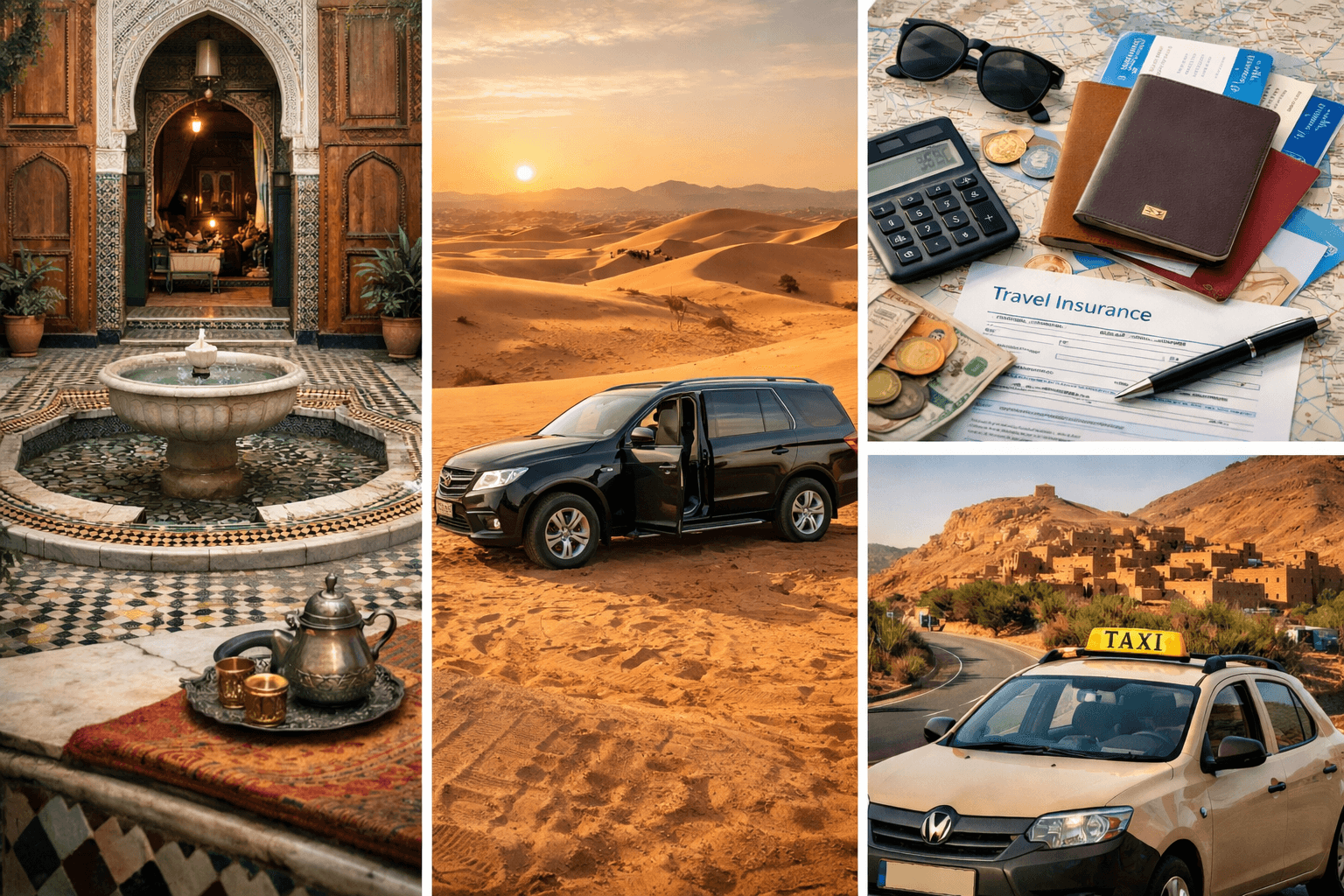







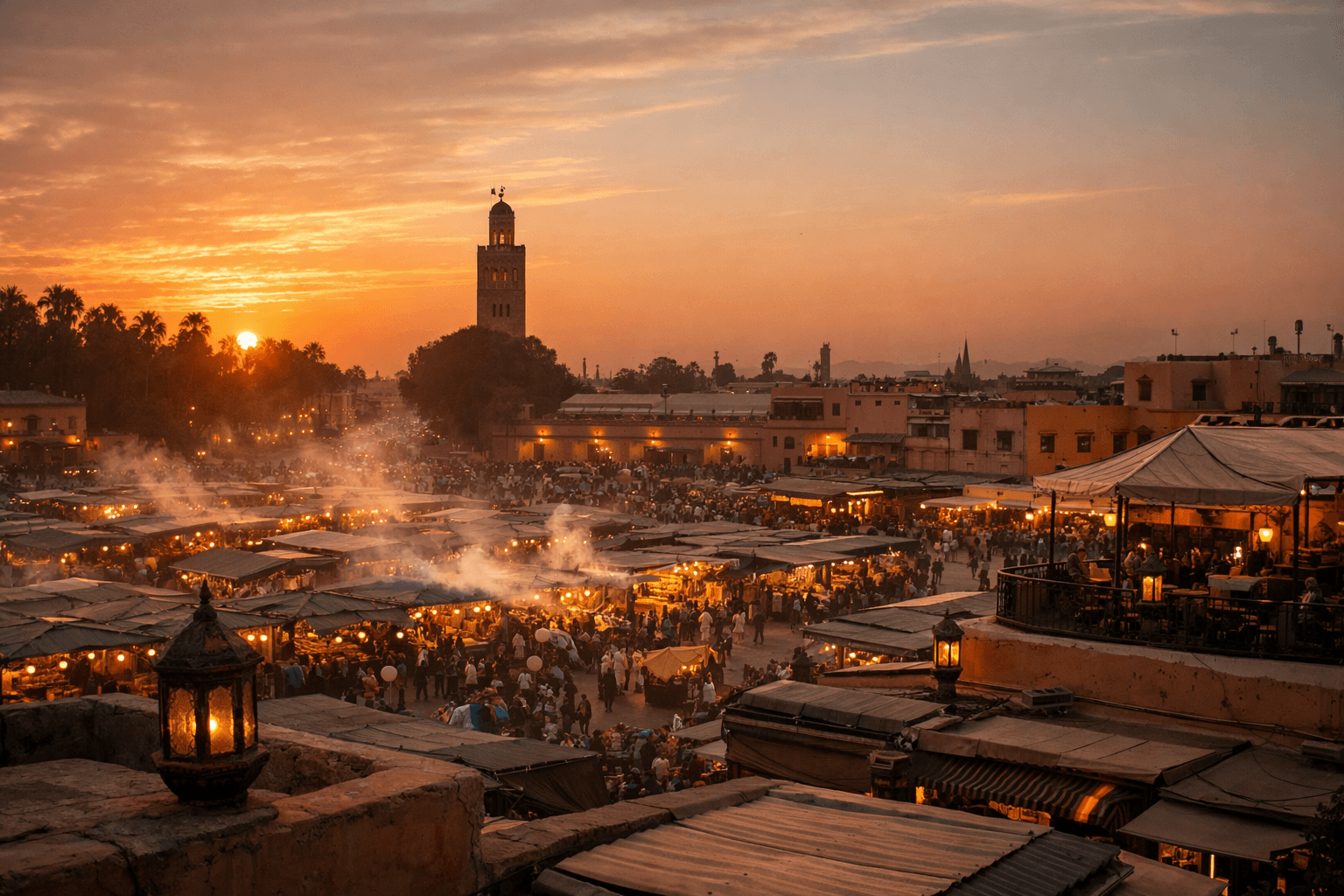
Marrakech is one of those cities that rewards both planning and spontaneity. You can spend the morning inside a 16th-century madrasa, the afternoon in a palm-lined garden, sunset near Koutoubia, and the evening in the energy of Jemaa el-Fna. The city is also a practical base for wider trips, with the Atlas Mountains, Ourika Valley, Agafay, and Palmeraie all within easy reach. The medina itself is part of a UNESCO World Heritage site, reflecting Marrakech’s long political, cultural, and architectural importance in Morocco.
This guide is built for travelers doing real trip research: when to go, what to prioritize, whether to rent a car, where to stay, how many days you need, and how to avoid the mistakes that make Marrakech feel stressful instead of memorable. It is especially useful if you want a balanced trip that mixes the medina, major landmarks, gardens, food, and a few day trips beyond the city walls.
Overview: Why visit Marrakech?
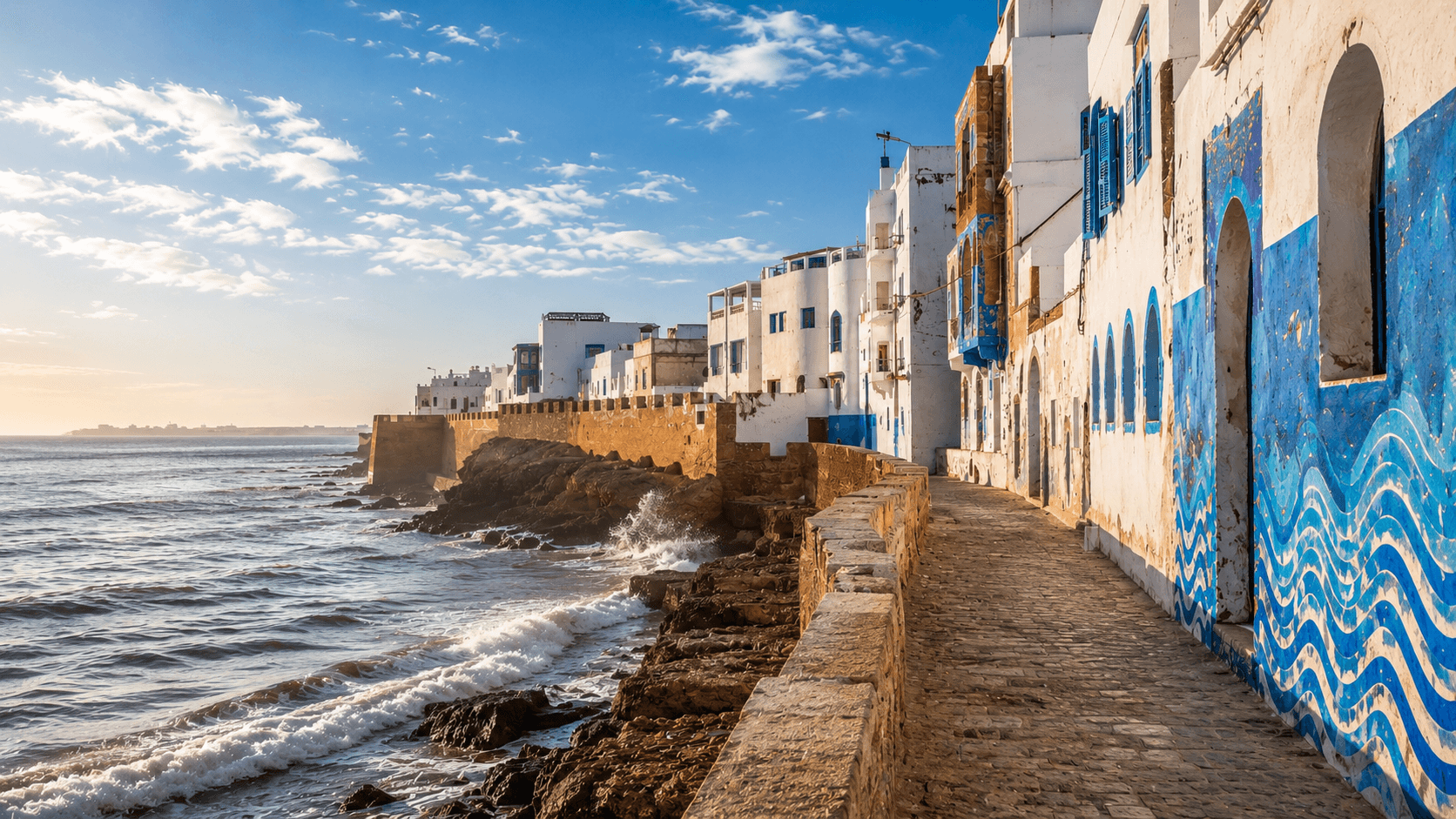
Marrakech stands out because it gives you several Morocco experiences in one destination. It is historic but lively, traditional but design-forward, and compact enough to explore while still offering quick escapes into nature. The city’s medina was founded in the Almoravid era in the 11th century, and many of its emblematic features, including monumental gates, gardens, and the Koutoubia area, reflect later dynastic layers that shaped the city’s identity.
For first-time visitors, the main appeal is contrast. Inside the medina, you get winding lanes, souks, riads, courtyards, craft workshops, and historic monuments. Outside it, you get wider boulevards, modern districts such as Gueliz and Hivernage, large hotels, stylish restaurants, and easier driving. A short ride out of town can put you in the Palmeraie or the rocky landscapes of Agafay, and official Marrakech tourism materials position the city as a gateway to both heritage and outdoor experiences.
Another reason Marrakech works so well is trip flexibility. A quick 3-day visit can cover the essentials. Five days gives you time for slower meals, a deeper medina day, and one or two excursions. A week lets you combine city sightseeing with Atlas scenery and resort-style downtime. That makes Marrakech a strong fit for couples, families, solo travelers, and small groups who want both culture and convenience.
And then there is the atmosphere. Jemaa el-Fna is not just a square; it is the city’s pulse. Koutoubia anchors the skyline. Majorelle offers a completely different mood, while Bahia Palace and the Saadian Tombs bring the city’s dynastic history into view. This variety is what makes a Marrakech travel guide so useful before you arrive: the city is rich, but the best trip depends on pacing it well.
For travelers who want independence beyond the medina, Car Rental Marrakech can make the trip much easier, especially for airport arrivals, golf stays, Palmeraie hotels, Agafay evenings, and day trips toward the Atlas. Travelers who prefer a smoother city experience without parking concerns usually lean toward Private Driver Marrakech, especially for first visits, business travel, or families. And if your trip is activity-heavy, browsing Things to Do Marrakech before arrival helps you avoid wasting a day deciding on the ground.
Best time to visit Marrakech
The best time to visit Marrakech for most travelers is spring and autumn. Morocco’s national tourism office highlights spring and fall as the strongest seasons for travel in the south, and Marrakech’s own tourism information notes that the city is known for very hot summers and generally pleasant weather across the year.
In practical terms, March to May and late September to November are the easiest months for walking the medina, touring gardens, and doing day trips without the fatigue that can come with peak summer heat. You still get long sightseeing days, but with more comfort for exploring on foot.
Summer is still very doable if your hotel has a pool, your schedule starts early, and you keep midday lighter. Winter can be excellent for sightseeing, especially if you like bright days and cooler evenings, but you should pack layers because mornings and nights can feel much colder than many visitors expect.
Ramadan can also be a rewarding time to visit, but visitors should expect some rhythm changes. Major attractions still operate, though some schedules can shift; for example, the official Jardin Majorelle site publishes separate Ramadan opening hours.
Top 10 attractions in Marrakech
1. Jemaa el-Fna
No Marrakech itinerary feels complete without time in Jemaa el-Fna. The square changes by the hour: calmer in the morning, busier in late afternoon, and most atmospheric after dark. It remains the symbolic center of the old city experience and one of the strongest reasons people visit Marrakech in the first place.
2. Koutoubia Mosque and gardens
Koutoubia’s minaret is the most recognizable landmark in Marrakech and one of the city’s key historic symbols. Even if non-Muslim visitors do not enter the mosque, the surrounding gardens and nearby viewpoints are worth building into your route, especially near sunset.
3. Marrakech Medina
The medina itself is the attraction, not just a route between sights. UNESCO describes Marrakesh as a major political, economic, and cultural center with strong influence across North Africa and Andalusia, and that deeper significance is still visible in the urban fabric, gates, and street life. A walk here should be treated as a main experience, not filler.
4. Jardin Majorelle
Majorelle is one of the most polished and popular visits in the city, combining landscape design, color, and museum access. The official site strongly advises reserving online in advance, and current posted hours show daily opening with last-entry rules that can matter if you arrive late. This is one of the few Marrakech attractions where advance timing genuinely helps.
5. Bahia Palace
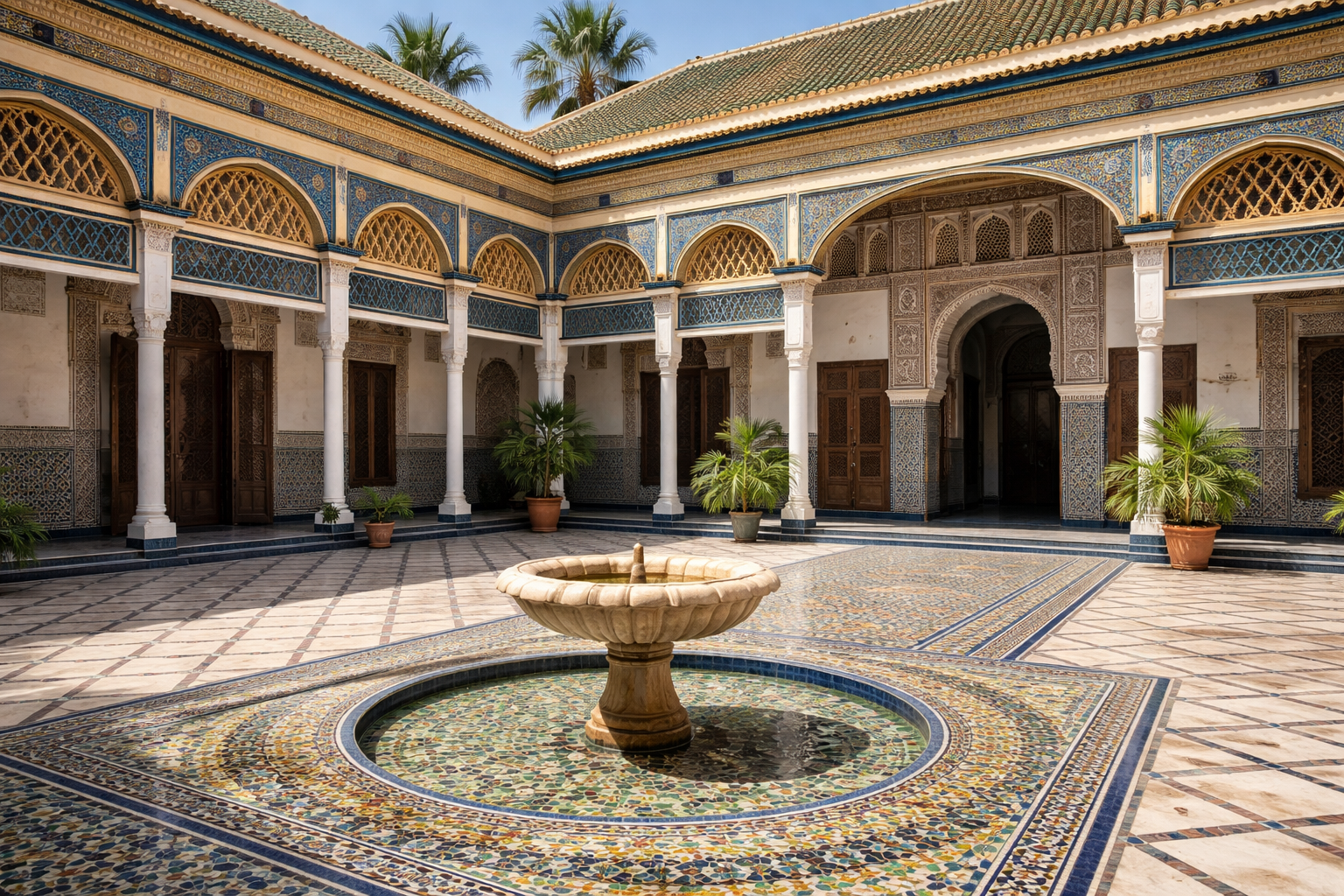
Bahia Palace is one of the classic Marrakech attractions for travelers interested in decorative Moroccan architecture, courtyards, and palace layouts rather than museum-style interpretation. It works best if you go early, before the densest visitor flow.
6. Ben Youssef Madrasa
The Ben Youssef Madrasa is one of the most rewarding heritage visits in Marrakech. Official tourism descriptions present it as one of the largest madrasas in the Maghreb and one of the city’s most remarkable historical monuments. It is ideal for travelers who want carved detail, geometry, and a stronger sense of intellectual history.
7. Saadian Tombs
The Saadian Tombs offer a compact but important look at Marrakech’s royal and dynastic past. Official tourism materials describe them as the royal necropolis of the Saadian family, with origins tied to burials in the 16th century. This is a strong stop for travelers combining Bahia, Kasbah, and El Badi in one themed half-day.
8. El Badi Palace
El Badi gives you a different type of monument experience. Rather than intimate carved interiors, it offers scale, ruins, open sky, and a strong sense of former grandeur. Official Marrakech tourism traces its construction to the late 16th and early 17th centuries and highlights the richness of its original materials.
9. Menara Gardens
Menara is one of the best places to slow the trip down. Official tourism materials describe it as one of the oldest gardens in the Muslim West, associated with Almohad development and irrigation history. It is especially good late in the day when you want space, water reflections, and a softer pace than the medina.
10. Palmeraie
Palmeraie is less about one monument and more about atmosphere: palms, villas, resorts, open roads, and activity-based outings. Official Marrakech tourism describes it as a large palm oasis just north of the medina and a natural escape from the old city’s intensity. It is a good fit for families, golf travelers, and visitors staying several days.
A smart way to structure these attractions is by zone. Put Jemaa el-Fna, Koutoubia, Bahia, Saadian Tombs, and El Badi together. Pair Ben Youssef with your souk day. Keep Majorelle for an early start, and leave Menara or Palmeraie for a lower-pressure afternoon. That sequencing saves energy and reduces backtracking.
For trip research, two especially useful resources are the official Jardin Majorelle website for current visiting rules and UNESCO’s page on the Medina of Marrakesh for the historical context behind the city you are exploring.
Recommended car types in Marrakech
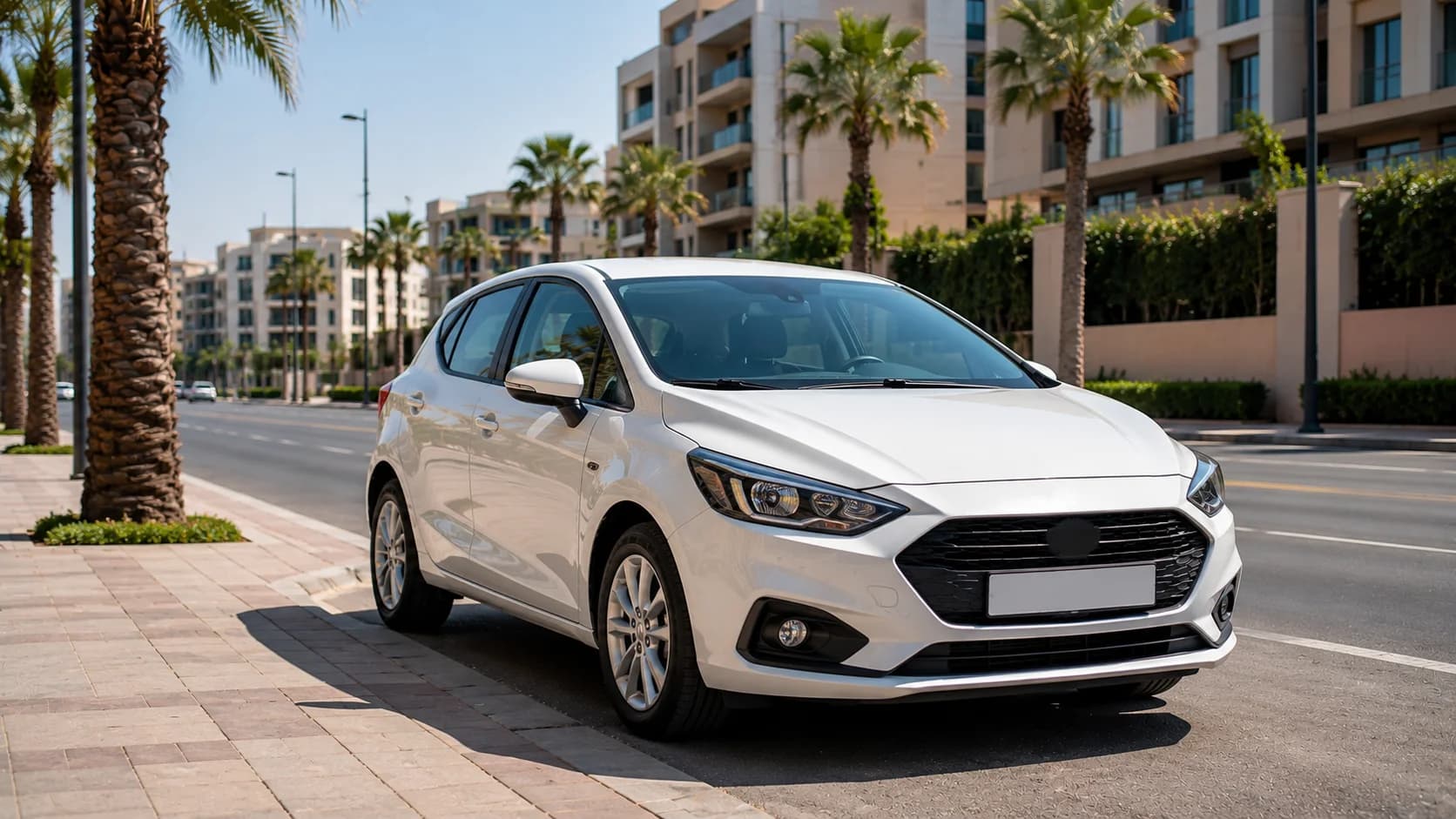
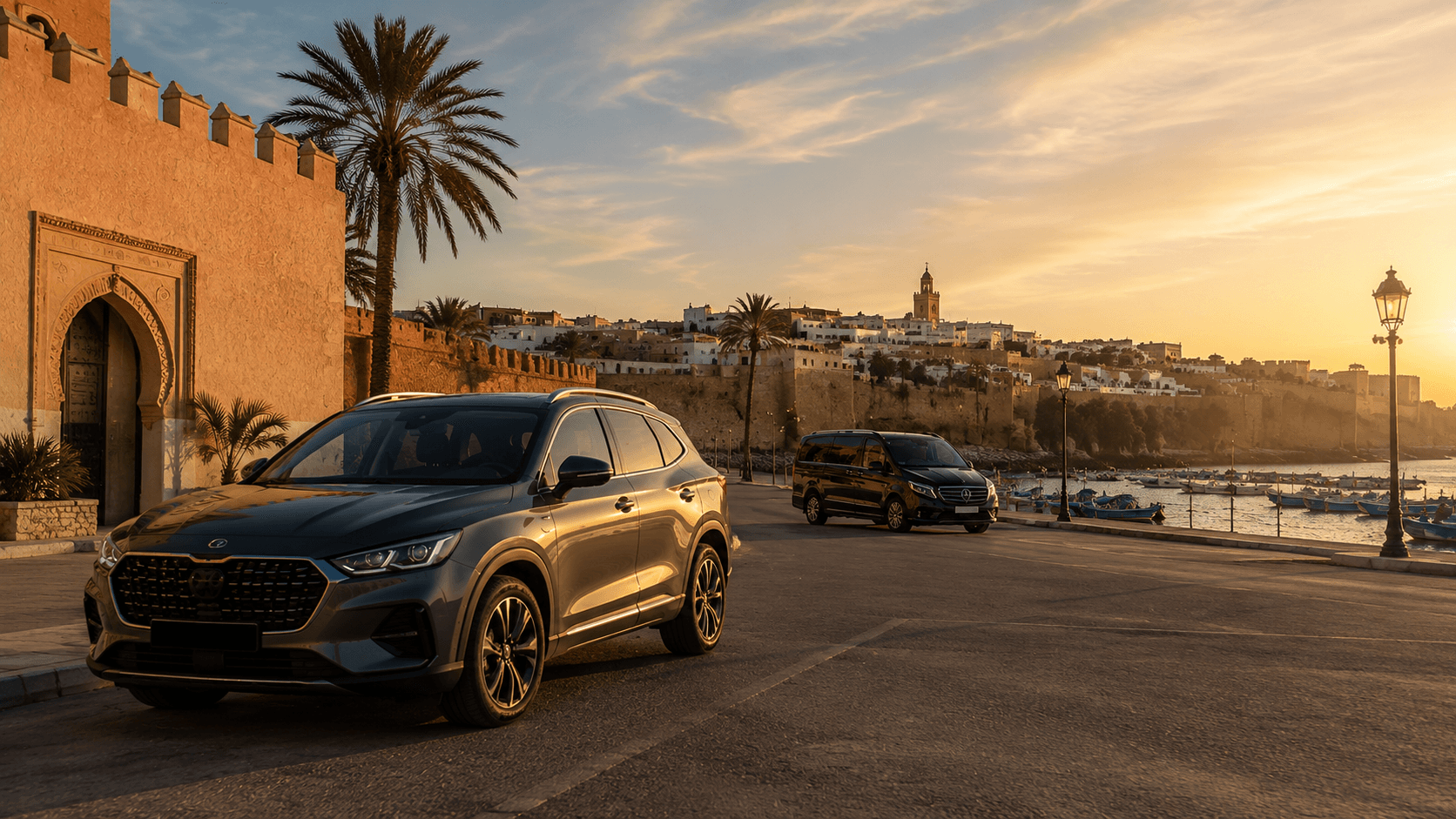
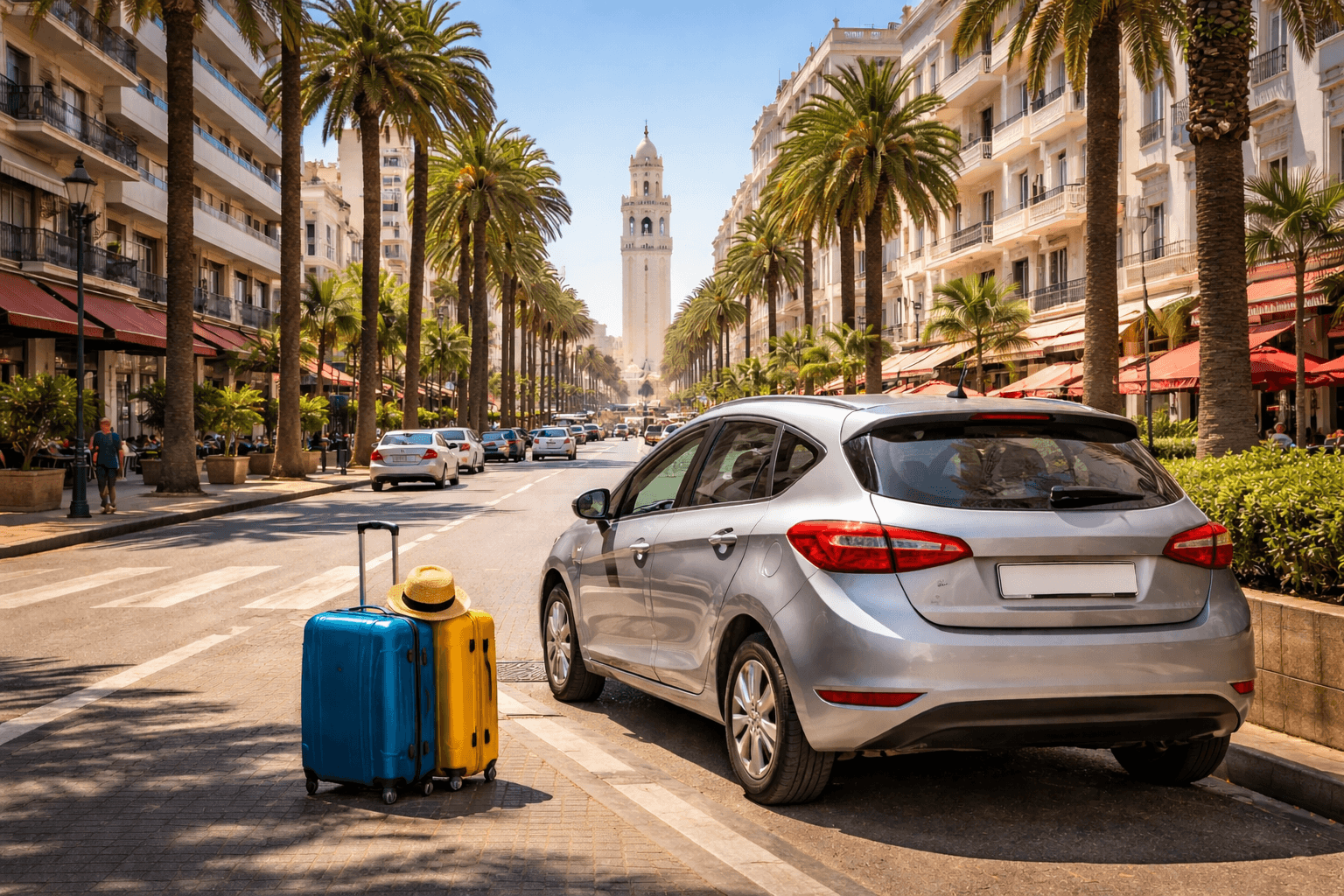
Choosing the right car rental Marrakech option depends less on style and more on where you are sleeping and how much driving you plan to do. If you are mostly staying inside the medina or in a riad with walking access only, a car is rarely useful for every hour of the day. In that case, a compact automatic is enough for airport transfers, outer-city meals, and a day trip. Smaller cars are easier for modern city districts, easier to park, and less stressful in tighter traffic.
If you are staying in Gueliz, Hivernage, Palmeraie, or outside the center, a car becomes more useful. A compact SUV gives slightly higher ride comfort, easier luggage handling, and better confidence if your plan includes Agafay, mountain roads, or family travel with child seats and bags.
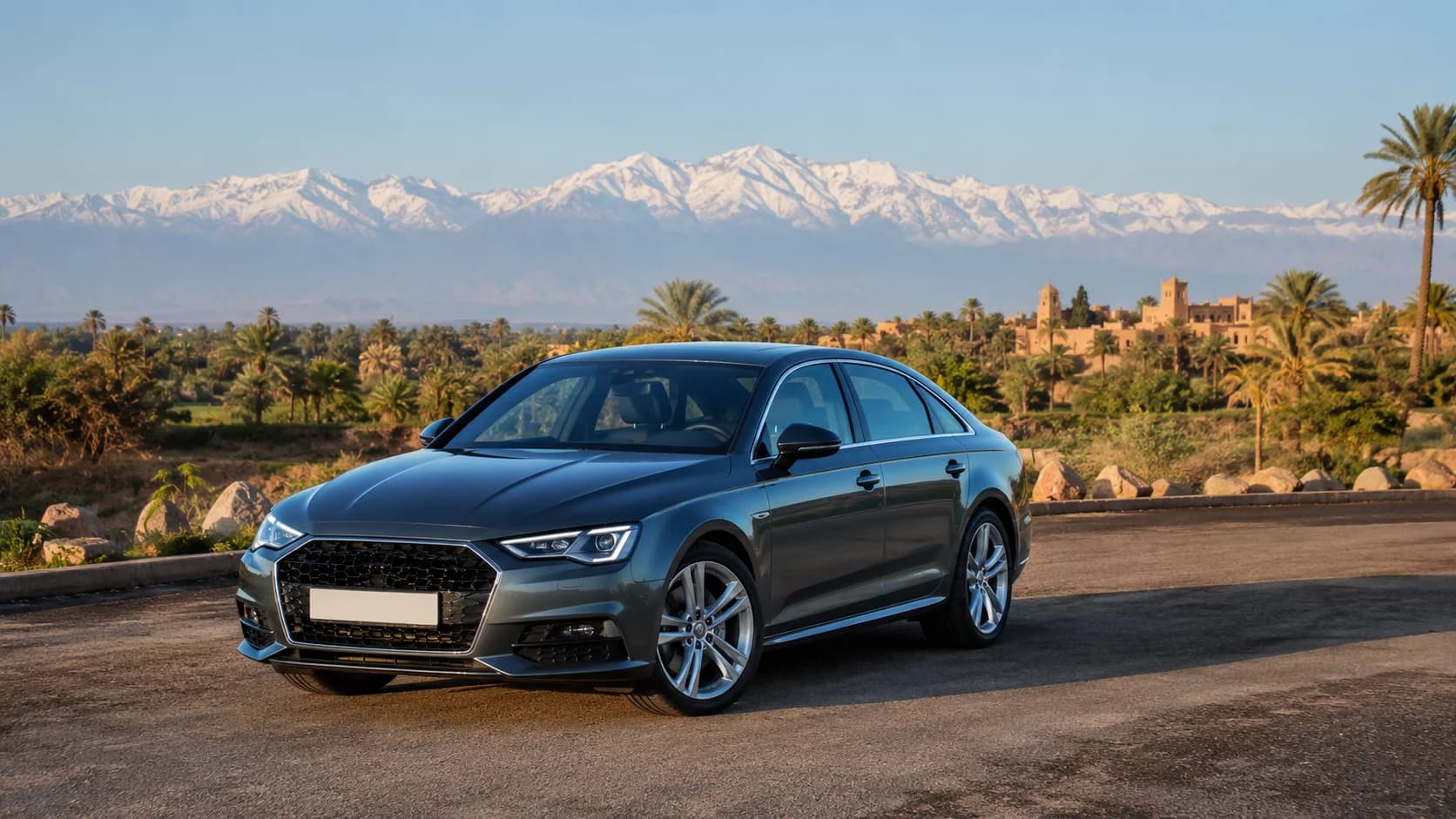
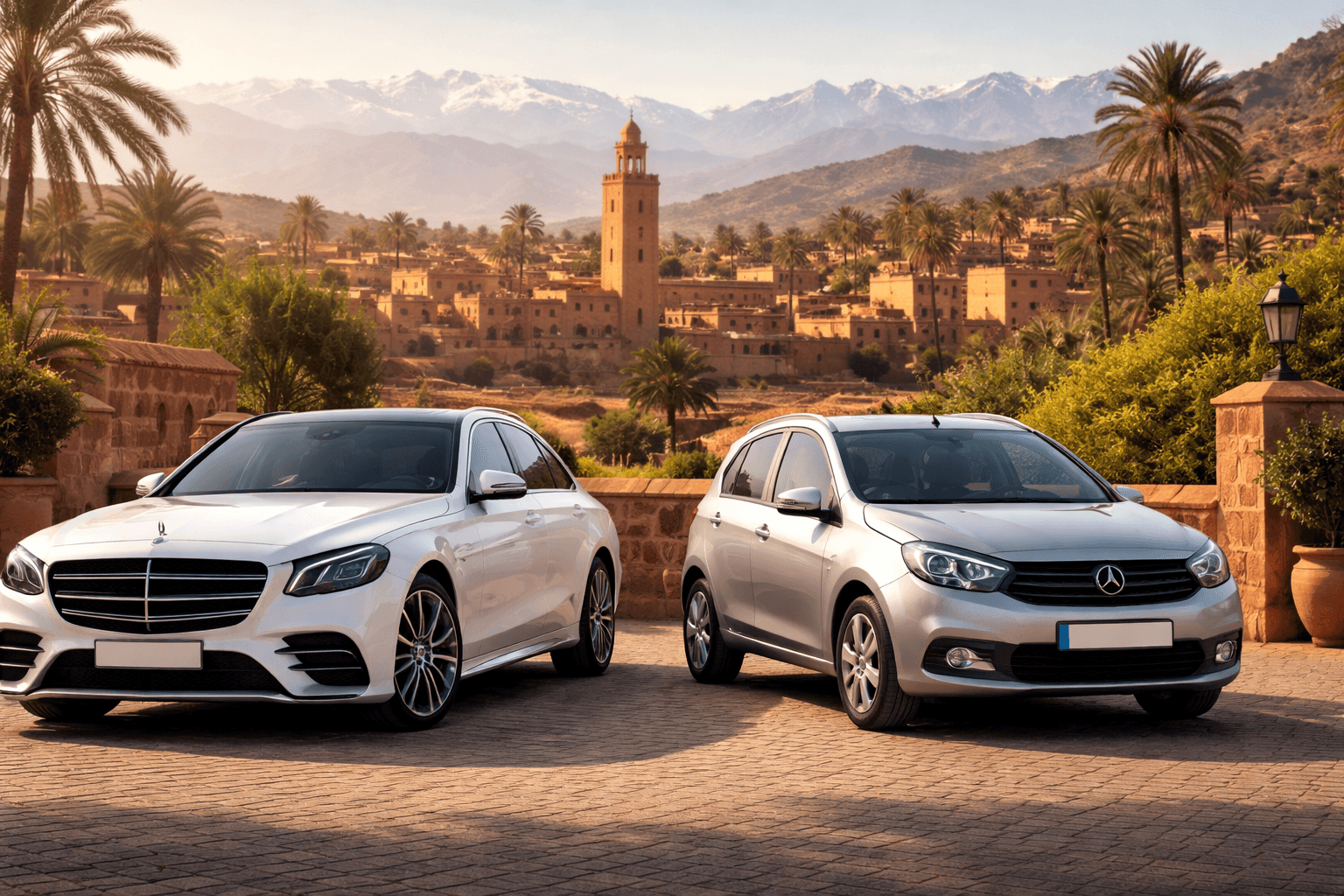
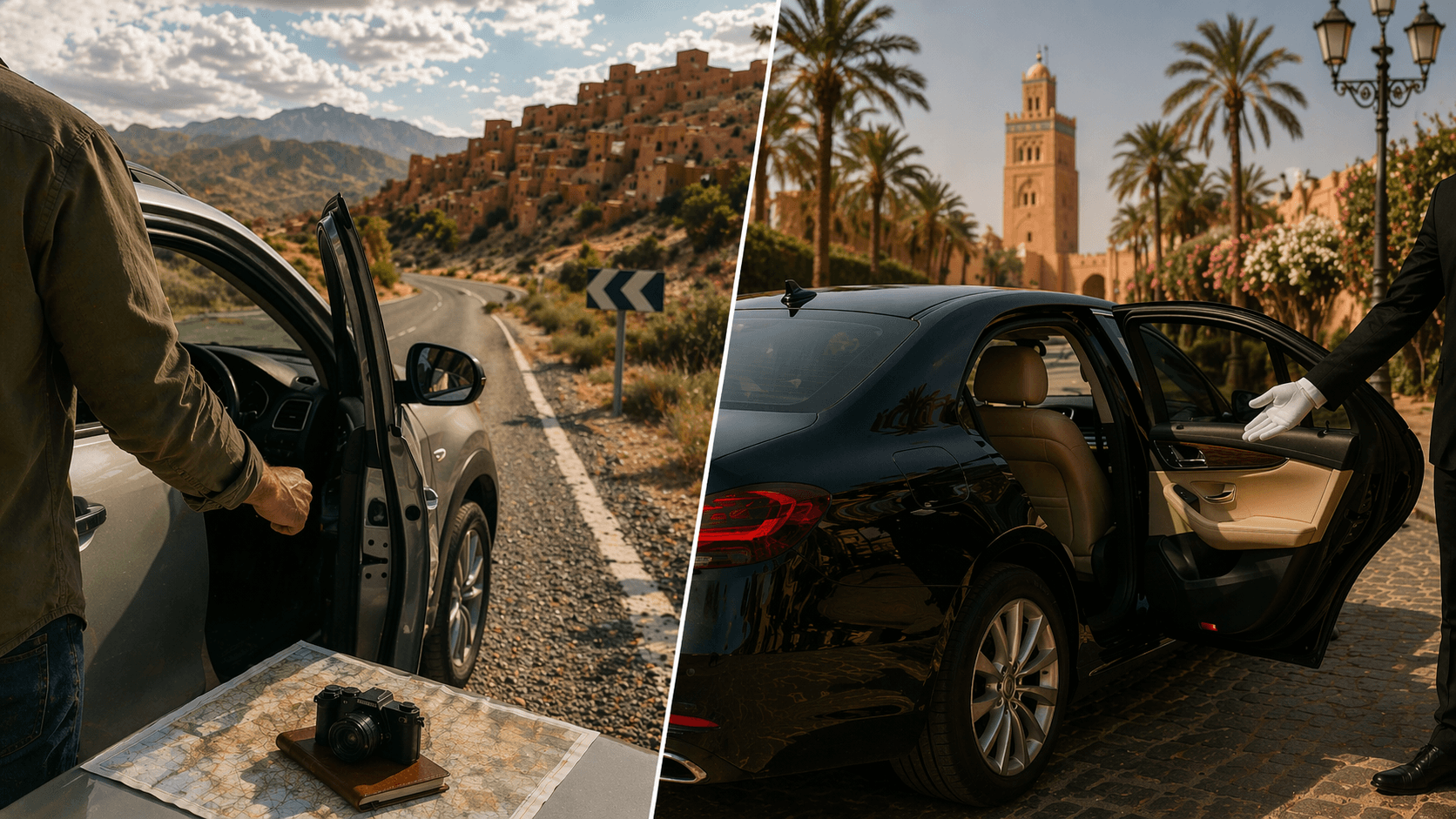
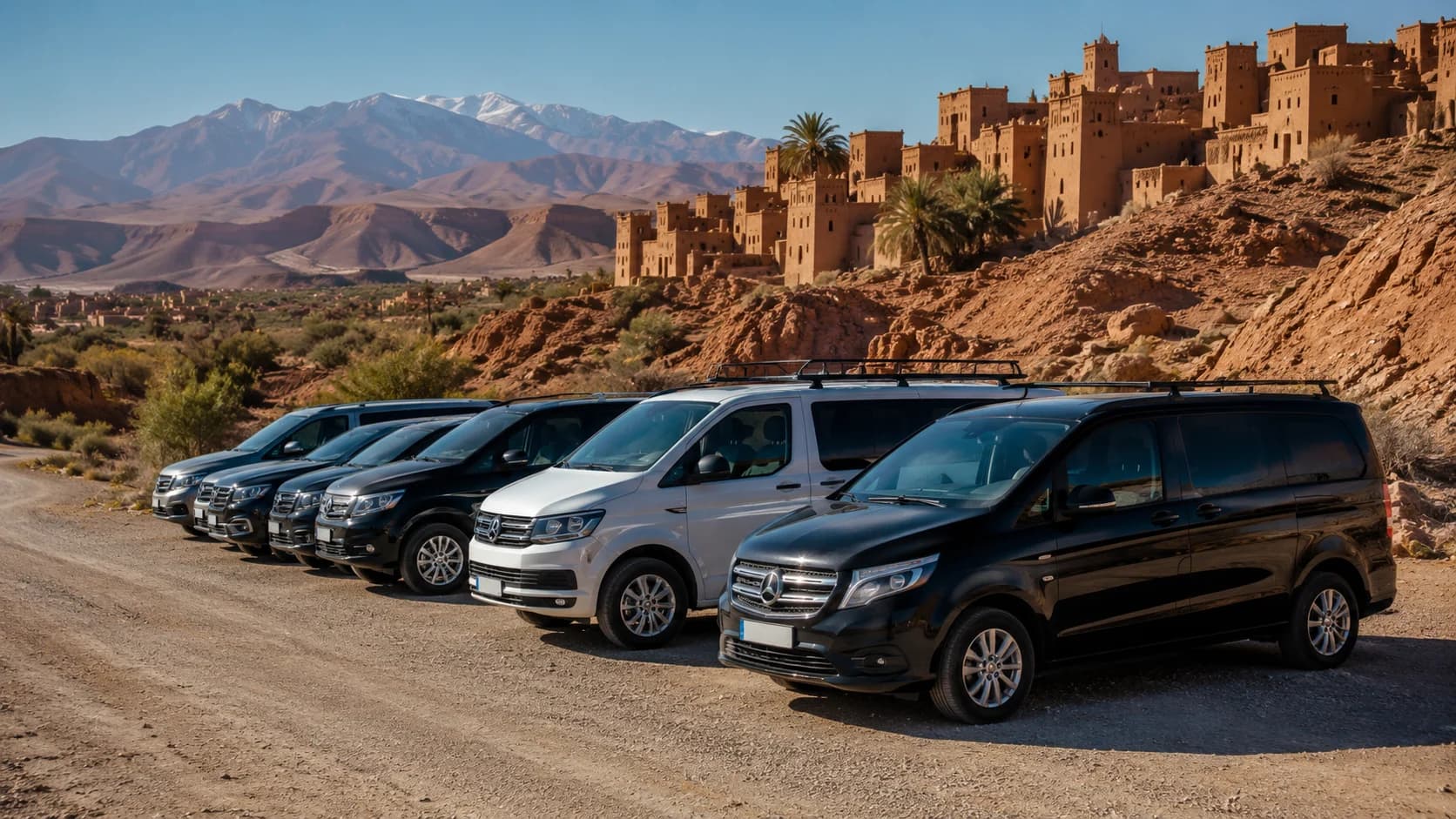
For couples on a city-first itinerary, economy cars usually make the most sense. For families, a crossover or SUV is more practical. For groups, a private driver or minivan is often better than splitting into two small cars. And for travelers who only need transport for excursions, a driver can be more efficient than keeping a car parked near the medina all day. That is why many visitors combine Car Rental Marrakech for independent days with Private Driver Marrakech for medina-heavy or evening plans.
Driving tips and safety in Marrakech
Driving in Marrakech is manageable, but it is rarely relaxing inside the busiest central areas. The main challenge is not long-distance road quality; it is urban rhythm. Scooters, taxis, pedestrians, horse-drawn carriages in some areas, sudden stopping, and narrow access around the old city all require more patience than speed.
The medina is not where you want to “figure it out” after a long flight. Use a proper parking plan, confirm your riad drop-off process in advance, and do not assume that your final accommodation address is directly reachable by car. Many first-time visitors are better off arriving, checking in, and then deciding whether to keep the car parked until the next day.
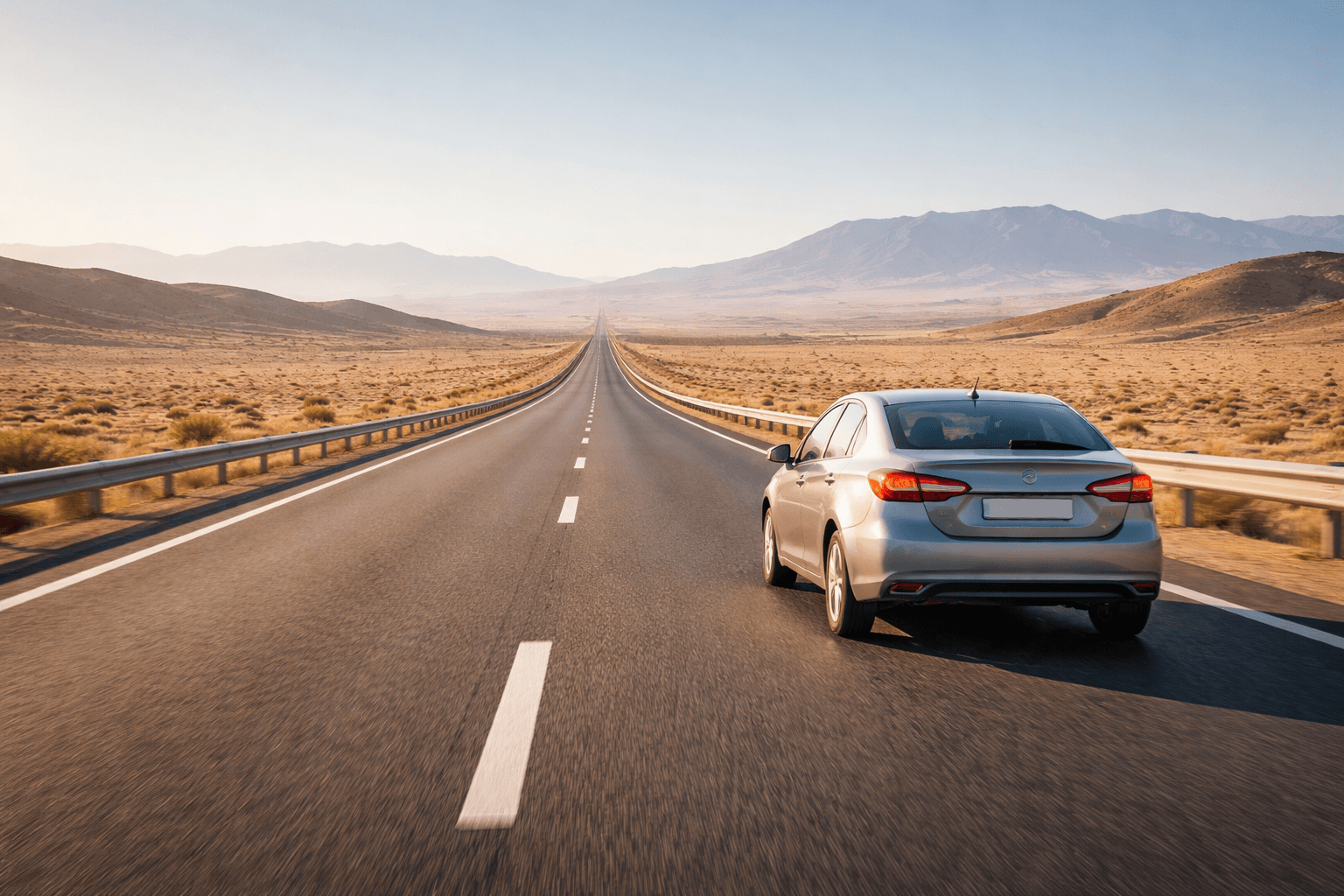
Day trips are where driving becomes more rewarding. Roads toward the Atlas side, Ourika, and Agafay make much more sense with your own vehicle, especially if you want to stop for views or run on your own schedule. Official Marrakech tourism also frames the city as a launch point for regional road trips and nearby nature escapes.
Basic safety advice is simple: avoid aggressive lane changes, do not rush through junctions, stay calm around roundabouts, and avoid unfamiliar medina-edge driving after dark on your first day. If your trip is mainly urban and you do not enjoy dense traffic, use Private Driver Marrakech instead. If you want independence for Atlas or Agafay routes, Car Rental Marrakech is the stronger choice.
3-day Marrakech itinerary
Day 1: Medina essentials
Start with Koutoubia and the area around Jemaa el-Fna before the square reaches peak intensity. Then move into the medina for souks, artisan lanes, and a slower lunch in a riad-style setting. In the afternoon, visit Bahia Palace and continue toward the Kasbah side for the Saadian Tombs. End the day back near Jemaa el-Fna for sunset and dinner. This gives you the emotional core of Marrakech on day one without trying to cover every monument.
Day 2: Heritage and gardens
Begin early at Ben Youssef Madrasa, then continue through nearby museum-and-souk streets. After lunch, head to Jardin Majorelle, ideally with a pre-booked time slot because the official site recommends advance reservation. If you still have energy, continue into Gueliz for a different, more modern side of the city.
Day 3: A relaxed outer-city day
Use your final day for Menara, Palmeraie, or a short excursion outside the center. This is where a rental car or driver starts to add real value. If you want activity options rather than museums, this is the day to review Things to Do Marrakech and build around your energy level.
5-day Marrakech itinerary
Day 1: Arrival and light old-city orientation
Keep the first day simple. Check in, rest, then do a sunset walk around Koutoubia and Jemaa el-Fna. Do not over-plan your arrival day, especially if you are landing in heat or coming from a long international route.
Day 2: The major heritage day
Focus on Bahia Palace, Saadian Tombs, El Badi Palace, and Kasbah-side wandering. This gives you a coherent historical day rather than scattered stops.
Day 3: Souks and scholarship
Make this your medina immersion day: Ben Youssef Madrasa, courtyards, shopping, craft streets, and a slower lunch. Keep the afternoon flexible for photography, tea, or rooftop views.
Day 4: Majorelle and modern Marrakech
Visit Jardin Majorelle early, then spend the rest of the day between Gueliz and Hivernage. This day works well for contemporary cafes, design stores, and a hotel-pool afternoon.
Day 5: Day trip or resort-style finish
Choose one of the classic nearby escapes. Ourika Valley is ideal if you want greenery, villages, and Atlas air. Agafay is better for a dramatic stony landscape close to the city. Palmeraie is easiest if you want something lighter without a longer drive. Official tourism materials describe Agafay as around 40 km from Marrakech and position Ourika as a classic regional route from the city.
Best restaurants in Marrakech
Marrakech has enough dining range that it helps to choose by mood rather than trying to chase one “best” list. If you want modern Moroccan food with a medina setting and views, Nomad is one of the better-known official tourism-listed options and is noted for local, seasonal ingredients plus rooftop terraces.
If you want a more atmospheric, classic medina dinner, Diaffa is known through official tourism listings for its setting in one of the old mansions of the medina. For a broader food identity, official Marrakech tourism emphasizes dishes such as tagine, couscous, pastilla, and tanjia Marrakchia as central to the city’s gastronomic character.
My practical advice is to do one rooftop lunch, one classic Moroccan dinner, and one easier modern meal in Gueliz or Hivernage. That mix usually suits a 3- to 5-day stay better than repeating the same style every night.
Best hotels in Marrakech
Where you stay matters almost as much as what you visit. For a first trip focused on the old city, a riad inside or near the medina gives the strongest Marrakech feel: courtyards, traditional architecture, and walking access. For travelers who want easier car access, modern facilities, and less navigation stress, Gueliz and Hivernage are often simpler.
Among official tourism-listed options, Jadali Hotel & Spa is positioned in Hivernage near the ramparts, while Savoy Le Grand Hotel is highlighted as being close to the city center and Jemaa el-Fna zone with large-scale facilities. For resort-style luxury, the Mandarin Oriental is presented as a large garden estate with private villas and pools.
A useful rule is this: stay in the medina if atmosphere is your top priority, stay in Hivernage or Gueliz if comfort and access matter more, and stay in Palmeraie if your trip is built around relaxation, family space, or golf-style pacing.
Best day trips from Marrakech
Ourika Valley
Ourika is one of the easiest classic escapes from Marrakech. Official tourism descriptions emphasize its lush landscapes, Berber villages, and fresh air, which makes it a good contrast to the density of the medina. It is a strong choice for travelers who want scenery without turning the day into a very long road trip.
Agafay Desert
Agafay is ideal for travelers who want a dramatic near-city landscape without going deep into the Sahara. Official tourism describes it as a rocky desert around 40 km from Marrakech and frames it as a standout spot for nature and adventure close to town.
Palmeraie
Palmeraie is more of a soft excursion than a full day trip, but it works well when you want open space, easy activity options, and less intensity than central Marrakech. Official tourism presents it as a major natural space at the gates of the city.
Menara and outer-city gardens
If you want a lighter final day, pair Menara with a long lunch and hotel downtime instead of committing to a full excursion. This works especially well on shorter stays or before a departure flight.
For all of these, a rental car gives more flexibility if you like stopping when you want, while a private driver is often better if you want a smoother, photo-first day without navigation.
FAQ
1. How many days do you need in Marrakech?
Three days is enough for the essentials. Five days is better if you want one or two day trips, slower meals, and more time in the medina without rushing every stop.
2. Is Marrakech worth visiting for first-time travelers to Morocco?
Yes. It combines heritage, food, shopping, gardens, and easy excursions in one destination, which makes it one of the easiest places to build a first Morocco itinerary.
3. What is the best time to visit Marrakech?
For most travelers, spring and autumn are the sweet spot because heat is more manageable and sightseeing is easier on foot.
4. Do you need a car in Marrakech?
Not always. If you are staying in the medina, you can manage without one. A car becomes much more useful for airport flexibility, Palmeraie stays, Agafay evenings, and Atlas-side day trips.
5. Is driving in Marrakech difficult?
It is more tiring than difficult. Traffic rhythm, scooters, pedestrians, and medina-edge complexity are the main challenges. Confident urban drivers usually cope well, but many visitors prefer a driver for city days.
6. What are the top Marrakech attractions?
The usual shortlist includes Jemaa el-Fna, Koutoubia, the medina, Jardin Majorelle, Bahia Palace, Ben Youssef Madrasa, Saadian Tombs, El Badi Palace, Menara, and Palmeraie.
7. Should you book Jardin Majorelle in advance?
Yes. The official site advises booking online in advance to secure your preferred date and time.
8. Is the Marrakech medina a UNESCO site?
Yes. The Medina of Marrakesh is listed by UNESCO as a World Heritage site.
9. Where is the best area to stay in Marrakech?
Choose the medina for atmosphere, Gueliz or Hivernage for easier access and modern comfort, and Palmeraie for resort-style space and slower pacing.
10. What is the best day trip from Marrakech?
Ourika is best for greenery and Atlas village atmosphere, while Agafay is best for a short, dramatic desert-style outing close to the city.
Book with MarHire CTA
A great Marrakech trip usually comes down to one thing: matching transport to the way you actually travel. If your plan includes airport pickup, day trips, family luggage, golf stays, Palmeraie hotels, or flexible timing outside the medina, Car Rental Marrakech gives you freedom. If you want a more relaxed arrival, easier medina logistics, or a smoother schedule for meetings, dinners, or sightseeing, Private Driver Marrakech is often the better fit. And if you want to build activities into the trip before you land, start with Things to Do Marrakech.