






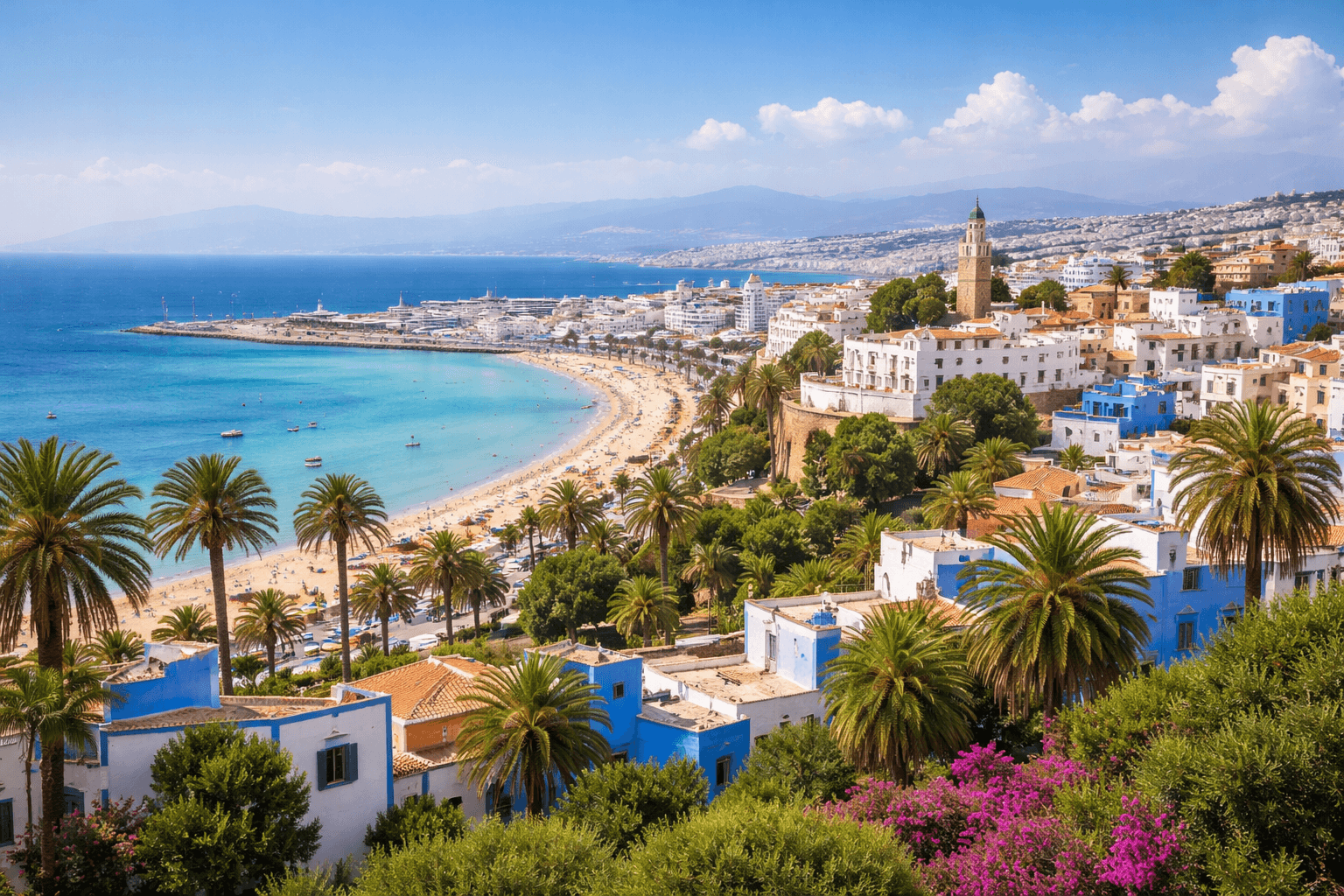
Tangier is one of the easiest Moroccan cities to understand and one of the hardest to summarize in a single line. It is a port city, a literary city, a medina city, and a sea-view city all at once. It sits on the Strait of Gibraltar, where Europe feels close enough to shape the mood of daily life without diluting the city’s Moroccan identity. That location is a big reason Tangier keeps appearing in trip research: it works for travelers arriving by air, road, or ferry, and it can be both a first stop in Morocco and a final stop before Spain. Official Moroccan tourism presents Tangier as a bridge between Europe and Africa, with medina lanes, beaches, Kasbah views, and coastal landscapes all forming part of the experience.
What makes this Tangier travel guide useful is that Tangier rewards a different style of trip from Marrakech or Fez. It is less about nonstop monument-hopping and more about atmosphere, views, layered neighborhoods, and smart pacing. You can spend the morning in the Tangier medina, the afternoon on the Corniche, and sunset near Cap Spartel or along the waterfront. You can also use the city as a practical launch point for northern Morocco, ferry travel, and shorter coastal drives. The Port of Tangier City describes Tangier Ville as a maritime crossroads in the city itself, while official tourism highlights the Kasbah, medina, beaches, and nearby cape landscapes as core experiences.
Overview: Why visit Tangier?
Tangier feels different from the start. The air is maritime, the light changes quickly, and the city moves between old and new without needing to force the contrast. The medina and Kasbah give you history, whitewashed streets, and elevated views over the Strait. Outside the old city, the Corniche and waterfront give you more space, sea-facing cafes, and easier movement. Official tourism calls Tangier a mythical destination and stresses its position between the Atlantic and the Mediterranean, with beaches, craft shopping, and sea-facing landscapes all close to one another.
It is also one of Morocco’s best cities for travelers who want flexibility. If you only have two or three days, Tangier is compact enough to cover the essentials without feeling rushed. If you have longer, it opens into day trips such as Asilah, Cap Spartel, and northern coastal stretches. If your trip includes Spain, Tangier is even more practical. The Tangier City Port confirms that the Tangier Ville–Tarifa crossing operates from the city-center port and takes under an hour, while Tangier Med remains the major port for other ferry connections including Algeciras.
Another reason to visit is variety. Tangier offers medina life without the same level of sensory overload some travelers feel in bigger inland cities. It also has strong cultural identity beyond sightseeing. Official tourism highlights the American Legation Museum, Kasbah alleys, Grand Socco, sea views, and the city’s coastal character. For many visitors, that combination makes Tangier Morocco’s most balanced northern city break: rich enough for culture, relaxed enough for a short stay, and practical enough for independent travel.
If your plan includes airport pickup, flexible day trips, beach-side stays, or a ferry connection with luggage, Car Rental Tangier can make the whole trip smoother. If you want to avoid parking, medina access questions, or port transfers on a tight schedule, Private Driver Tangier is often the easier option.
Best time to visit Tangier
Tangier is easier year-round than Morocco’s hotter southern cities, but the best time to visit is usually spring and early autumn. These months are ideal for medina walks, coastal viewpoints, and day trips because temperatures are more comfortable and the city’s sea-facing atmosphere is at its best. Official Moroccan tourism highlights Tangier’s beaches, outdoor activity, and coastal landscapes, which are most enjoyable when you can spend long periods outside without heat fatigue.
Summer works well if you want the waterfront, beach energy, and a livelier evening scene, especially around the bay and Corniche. Winter is still worthwhile because Tangier keeps its atmospheric appeal even when the weather is cooler, and the city remains a good short-break destination thanks to its museums, medina, and sea views. For travelers connecting to Spain, ferry demand and timing can vary by season, so it is smart to check crossings in advance if that is part of your itinerary.
Top 7 attractions in Tangier
1. Tangier Medina
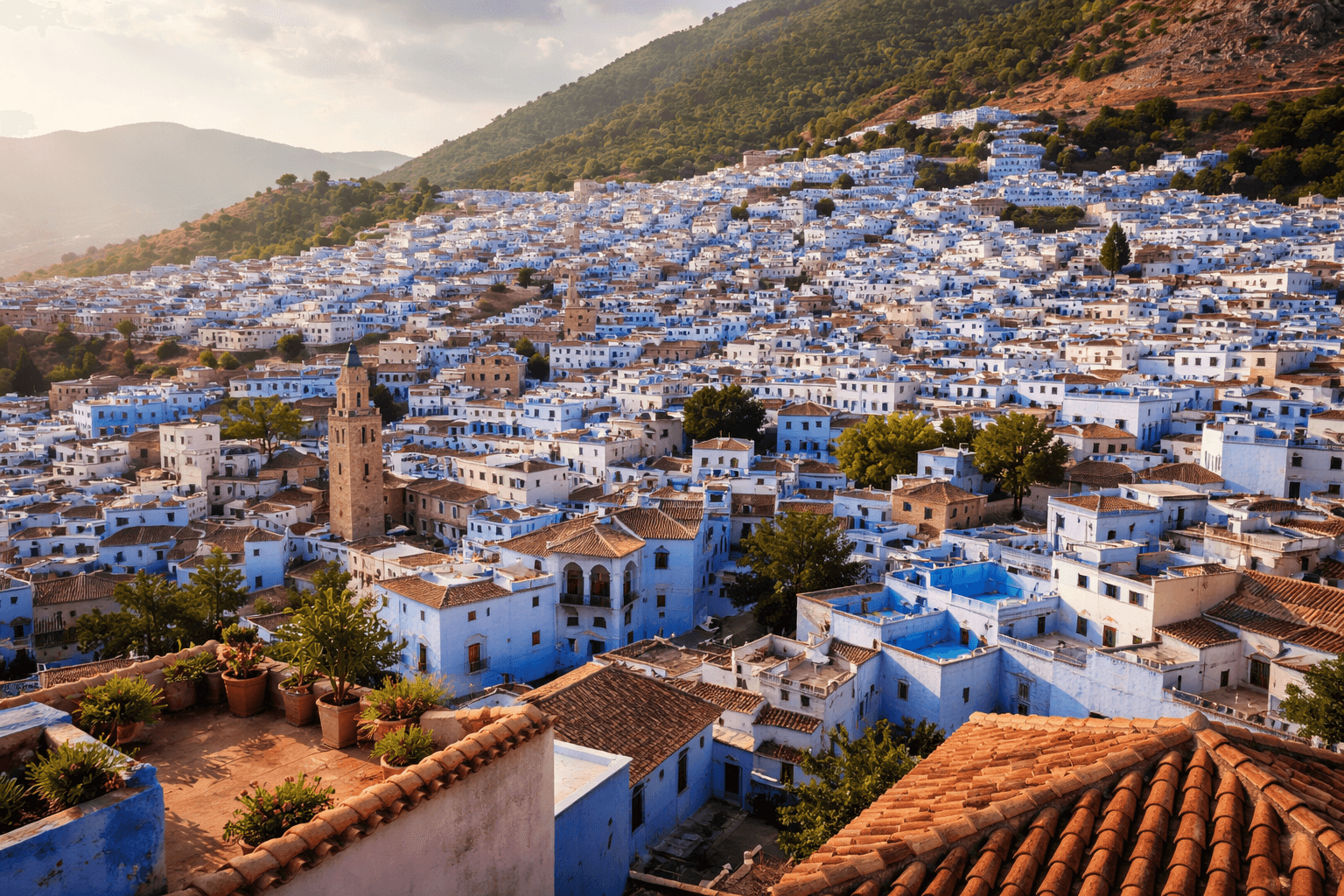
The Tangier medina is the city’s living core. It is not only a historic quarter but also the best place to feel Tangier’s layered identity: narrow lanes, artisan shops, gateways, and glimpses of the sea. Official Moroccan tourism describes Tangier as a white city with lime-coated houses and stresses the medina and Grand Socco as essential parts of the visit.
2. The Kasbah
The Kasbah is one of Tangier’s signature experiences because it combines fortifications, elevated views, and architectural atmosphere. Official tourism points to the high walls of the Kasbah and the fortress overlooking the medina as central landmarks. This is where Tangier becomes most photogenic, especially in the early morning or late afternoon.
3. American Legation Museum
The American Legation is one of Tangier’s most distinctive cultural stops. Its own official site notes that it was a gift from the Sultan of Morocco to the United States in 1821 and that it is the only U.S. National Historic Landmark located abroad. It is now a museum, library, and cultural center inside the medina, which makes it a strong choice for visitors who want history beyond surface-level sightseeing. The museum currently lists visitor hours from 10:00 to 17:00 on weekdays and shorter weekend hours.
4. Corniche and Tangier Bay
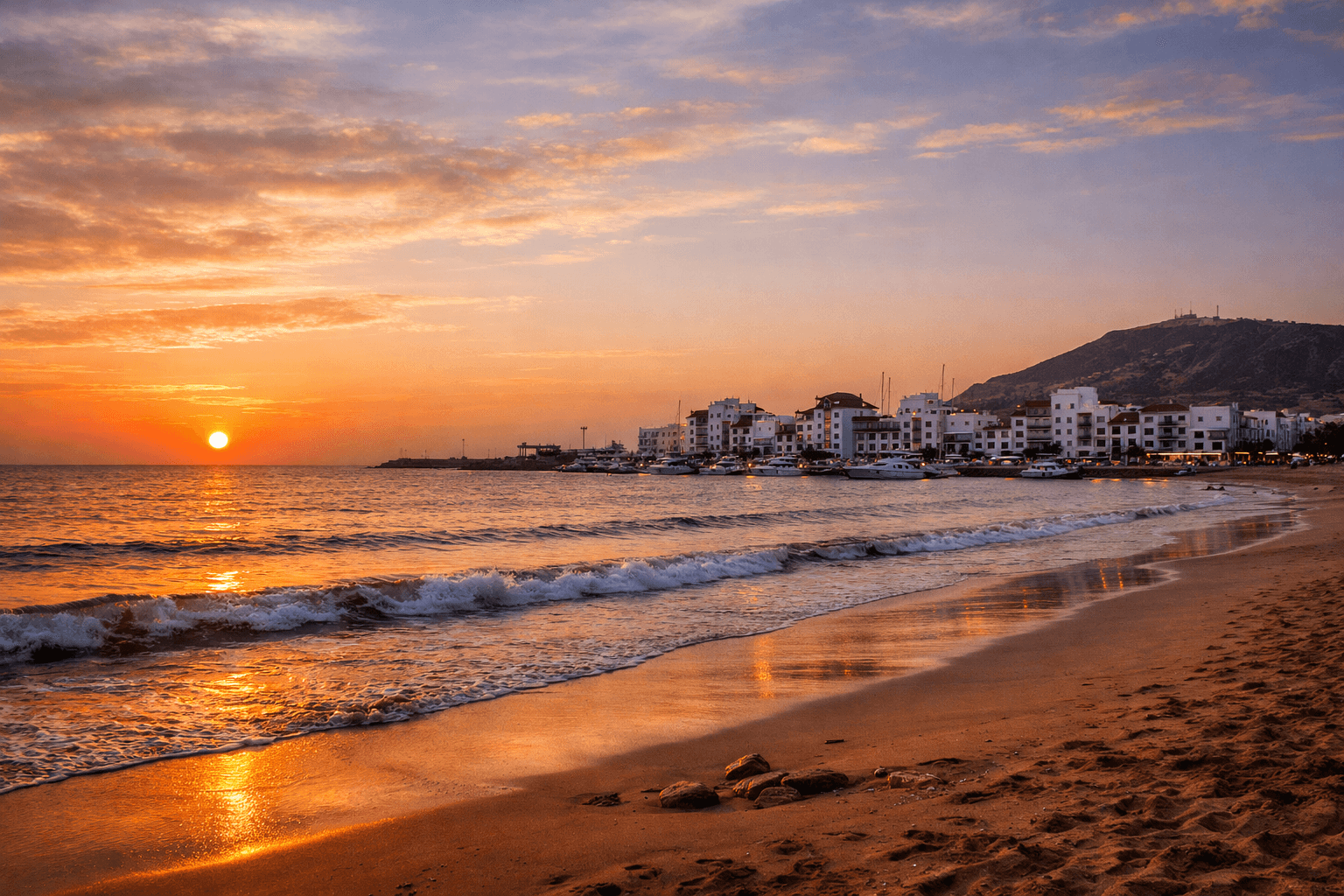
Tangier’s Corniche gives the city a different rhythm from the medina. Official tourism describes the main beach and landscaped coastline as central, lively, and lined with cafes and restaurants. It is the best place for a sunset walk, a slower lunch, or an evening break after the old city.
5. Caves of Hercules
The Caves of Hercules are one of the classic excursions around Tangier. Official tourism repeatedly includes them among the must-see places in and around the city, often paired with Cap Spartel. Their appeal is partly geological and partly symbolic, especially the sea opening shaped like the African continent.
6. Cap Spartel
Cap Spartel is where Tangier’s coastal geography becomes the main attraction. Official tourism describes it as the dramatic north-western tip where the Atlantic meets the Mediterranean, with beaches and viewpoints nearby. This is one of the best places to understand why Tangier feels so open and maritime compared with Morocco’s inland cities.
7. Kasbah Museum and waterfront viewpoints
For travelers who want one deeper cultural stop, the Kasbah Museum is a strong addition. Official Moroccan tourism describes the former Sultan’s palace as home to handicrafts and collections from across the country, while Tangier-focused tourism material keeps pointing back to the Kasbah area as the city’s historic soul. Pairing the museum with nearby panoramic viewpoints makes for one of the city’s best half-days.
A useful planning tip is to split Tangier into two moods rather than one long checklist. Do the medina, Kasbah, and American Legation on one day. Save the Corniche, Cap Spartel, and Hercules Caves for another. That pacing fits Tangier better than trying to compress the city into a rushed single-day loop.
Recommended car types in Tangier
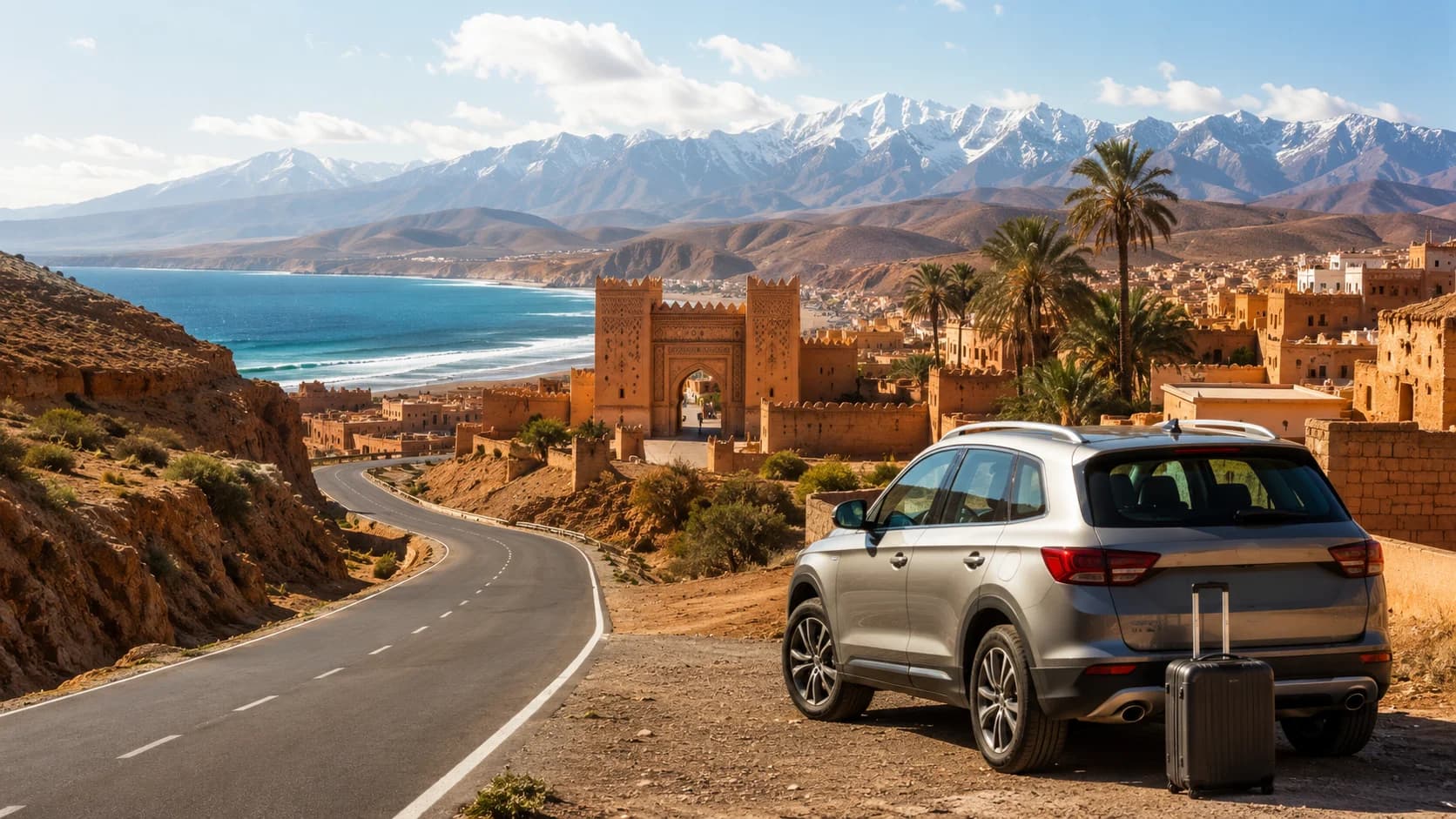
Your best car choice in Tangier depends on whether your trip is city-first or excursion-first. If you are mainly staying in the center, around the medina edge, the Corniche, or the city hotels, a compact automatic is usually the smartest option. It is easier to park, easier to handle on busy urban streets, and more practical for short airport or port transfers.
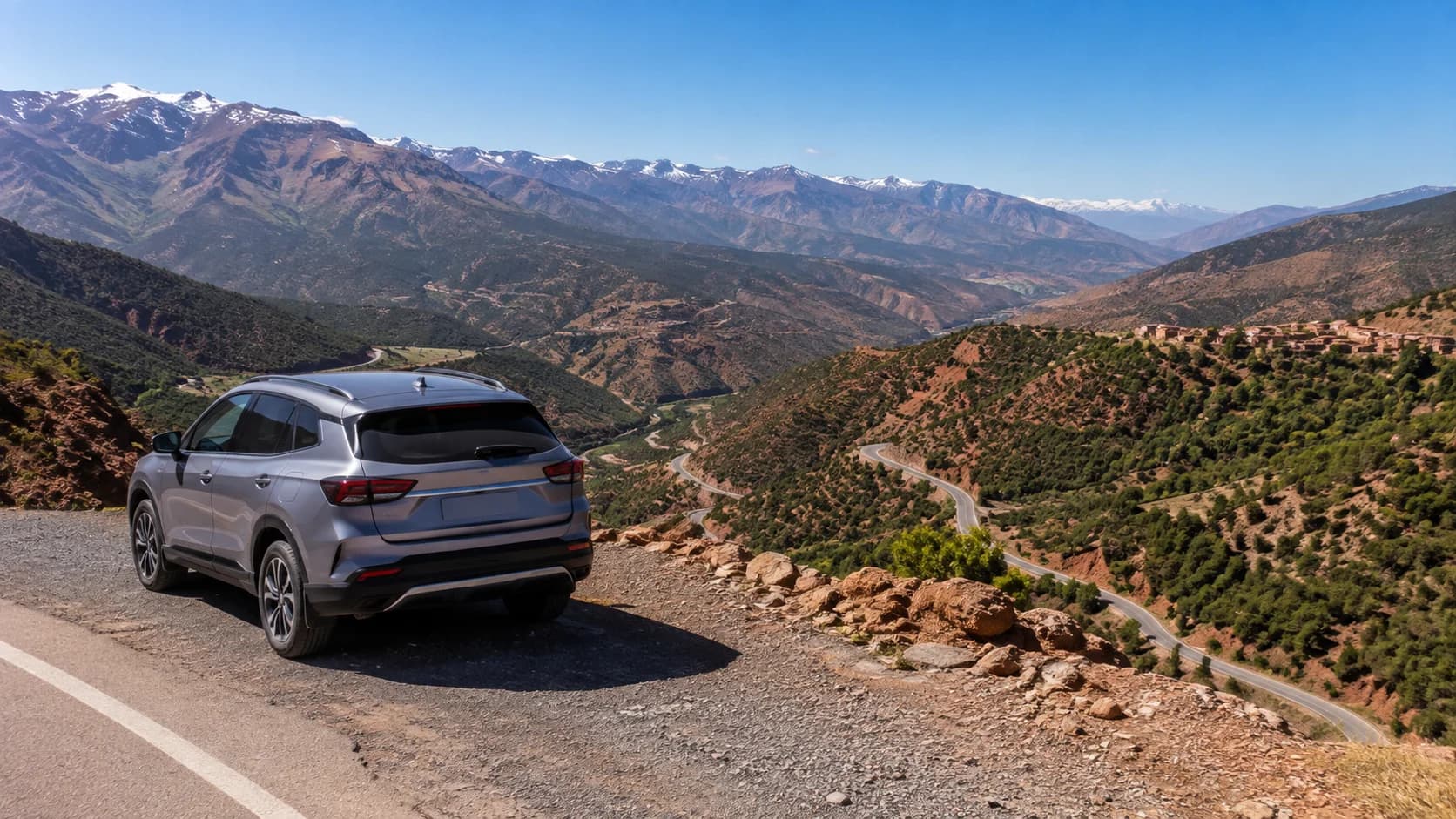
If your plan includes Cap Spartel, coastal routes, Asilah, or repeated trips between the airport, ferry port, and hotels, a compact SUV can make more sense. It gives you more luggage space and a bit more comfort on longer drives without becoming oversized for urban movement. Families or small groups often benefit from that extra space.
The key question is not luxury but logistics. A small car is enough for most couples. A crossover or SUV works better for families, ferries, or day-trip-heavy travel. And if your Tangier stay is mostly medina walks, dinners, and sightseeing with bags or children, Private Driver Tangier may be more practical than keeping a car parked. For travelers doing Spain connections or regional drives, Car Rental Tangier is usually the stronger fit.
Driving tips and safety in Tangier
Driving in Tangier is generally easier than in some denser Moroccan city centers, but there are a few things that matter. The first is transition. You may move quickly from wide boulevards to tighter old-city edges, from smooth waterfront roads to busier intersections, and from city traffic to port access roads. The second is timing. Ferry areas, airport access, and waterfront zones can all feel busier than expected at peak moments.
If you are staying inside the medina, do not assume your accommodation entrance is directly accessible by car. Plan your parking and bag handoff before arrival. If you are using the airport, ONDA confirms Tangier Ibn Battouta Airport has parking, taxis, and car-rental services on site, so it is a straightforward pickup point for independent travelers.
For Spain crossings, always double-check which port your ticket uses. Tangier Ville is in the city center and is especially convenient for the Tarifa route, while Tangier Med is farther from central Tangier and handles major passenger traffic and multiple international routes. That difference matters a lot for timing.
3-day Tangier itinerary
Day 1: Medina, Kasbah, and cultural Tangier
Start in the Tangier medina and let the city introduce itself on foot. Move through Grand Socco, then climb toward the Kasbah for views and slower exploration. Visit the American Legation Museum while you are still in medina mode, because it adds historical depth to the day rather than feeling like a detached stop. Finish with a relaxed dinner overlooking the city or sea. This first day is about atmosphere and identity more than distance.
Day 2: Corniche, waterfront, and modern Tangier
Use the second day to experience Tangier’s lighter side. Walk the Corniche, spend time around the bay, and keep the afternoon flexible for cafes, shopping, or hotel downtime. Official tourism describes the coastline as lively and lined with restaurants, which makes it one of the city’s easiest zones for an unstructured afternoon. If you enjoy photography, this is also the best day for bay views and evening light.
Day 3: Cap Spartel and Hercules Caves
Save your outer-city excursion for day three. Cap Spartel and the Caves of Hercules fit naturally together and show off Tangier’s coastal geography. This is the day when a rental car or driver becomes especially useful, because you can move at your own pace, stop for viewpoints, and avoid turning the outing into a taxi negotiation exercise. If you have extra time, extend the day toward quieter coastal stretches before returning to the city.
Best restaurants and hotels in Tangier
Tangier’s food scene works best when you choose by setting. In the medina, the best meals are often about atmosphere: terraces, historic rooms, and slower lunches. Along the waterfront and Corniche, seafood and sea-view dining make more sense. Official Moroccan tourism notes that Tangier’s landscaped coastline is lined with cafes and restaurants and that fish dishes are a particular strength in port cities like Tangier.
For hotels, your best area depends on your trip style. Stay near the medina or Kasbah if you want old-city character and walking access. Stay around the bay or city-center hotel zone if you want easier parking, direct road access, and a more modern feel. Official tourism also highlights that Tangier’s central beach sits close to many of the city’s top hotels, which is useful for travelers who want comfort plus a waterfront walk. A known modern option with official tourism visibility is Hilton Tangier City Center, while traditional stays inside or near the medina are usually better for travelers prioritizing character over easy car access.
Best day trips from Tangier
Cap Spartel and Hercules Caves
This is the classic short excursion because it is close, scenic, and easy to combine. It gives you open sea views and a break from the city without requiring a full-day commitment.
Asilah
Asilah is one of the most sensible day trips from Tangier for travelers who want a different coastal mood. While this guide focuses on Tangier itself, many visitors choose Asilah because it offers a calmer pace, smaller historic core, and strong seaside atmosphere. It pairs especially well with a rental car.
Spain connection
Not every Tangier “day trip” has to stay inside Morocco. For some travelers, Tangier is part of a Morocco-Spain combination, and the city-center Tangier Ville–Tarifa connection is what makes that possible. The Port of Tangier City confirms fast ferries from Tangier City to Tarifa with multiple daily departures, while Tangier Med remains the key port for broader ferry traffic.
Coastal drives and viewpoints
If you enjoy driving rather than fixed sightseeing, the best Tangier day use of a car may simply be a coastal loop with stops. Tangier’s appeal is not only in famous monuments but in the mix of sea, roads, viewpoints, and transitions between neighborhoods and landscapes. That is one reason independent travelers often prefer Car Rental Tangier for this city.
FAQ
1. Is Tangier worth visiting?
Yes. Tangier combines medina culture, sea views, museums, beaches, and ferry convenience in one city, which makes it one of Morocco’s most versatile short-break destinations.
2. How many days do you need in Tangier?
Three days is ideal for most travelers. It gives you time for the medina, Kasbah, Corniche, and one outer-city excursion without rushing.
3. What is the best time to visit Tangier?
Spring and early autumn are usually the best times because walking conditions are comfortable and the coastal setting is especially enjoyable.
4. Do you need a car in Tangier?
Not always. If you are mostly staying in the center, you may not need one every day. A car is more useful for Cap Spartel, Hercules Caves, Asilah, airport transfers, and ferry-heavy logistics.
5. Is Tangier easy to drive in?
It is manageable for most confident drivers, especially outside the medina edge. The main things to watch are port timing, parking planning, and busy city intersections.
6. What are the top things to do in Tangier?
The main list includes the Tangier medina, Kasbah, American Legation Museum, Corniche, Cap Spartel, Caves of Hercules, and waterfront viewpoints.
7. Can you go from Tangier to Spain easily?
Yes. Tangier has active ferry connections, including the city-center Tangier Ville–Tarifa route and the larger Tangier Med connections. Always verify which port your ticket uses.
8. Is the American Legation worth visiting?
Yes, especially if you want more than just scenic stops. It adds political, cultural, and diplomatic history to your Tangier itinerary and sits conveniently inside the medina.
9. Where should you stay in Tangier?
Stay near the medina for atmosphere, or near the bay and city-center hotels for easier road access, modern comfort, and sea-facing walks.
10. Is Tangier a good first stop in Morocco?
Yes. It is especially good for travelers arriving from Spain or those wanting a softer entry into Morocco through a city that balances heritage with easy logistics.
Book with MarHire CTA
Tangier is a city where transport choices shape the whole experience. If your stay includes the airport, the ferry port, coastal drives, Cap Spartel, or flexible day trips, Car Rental Tangier gives you real freedom. If you want easy arrivals, smoother hotel transfers, less parking stress, and a simpler city experience, Private Driver Tangier is often the better call. For many travelers, the best Tangier trip is not about moving faster. It is about moving with less friction.