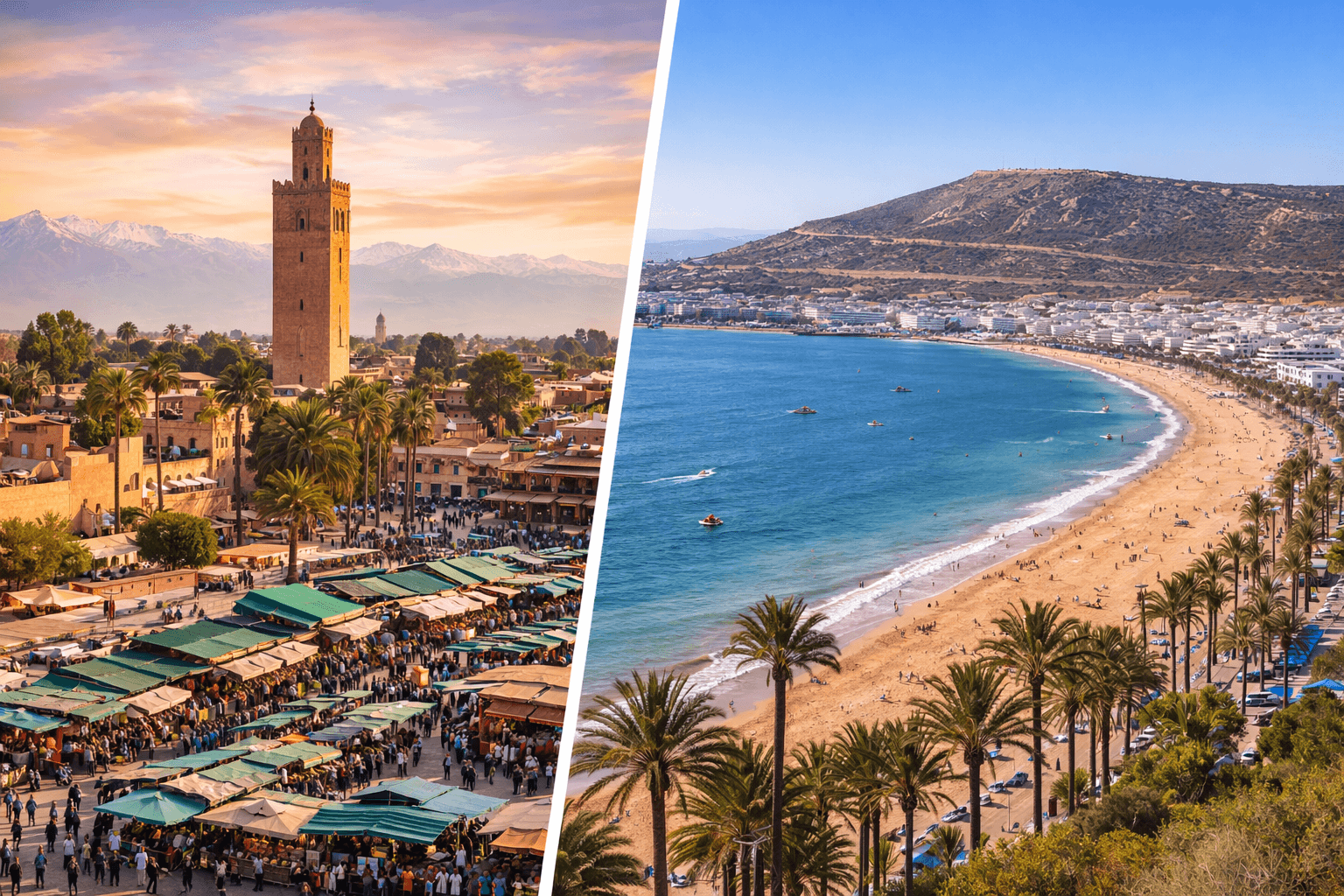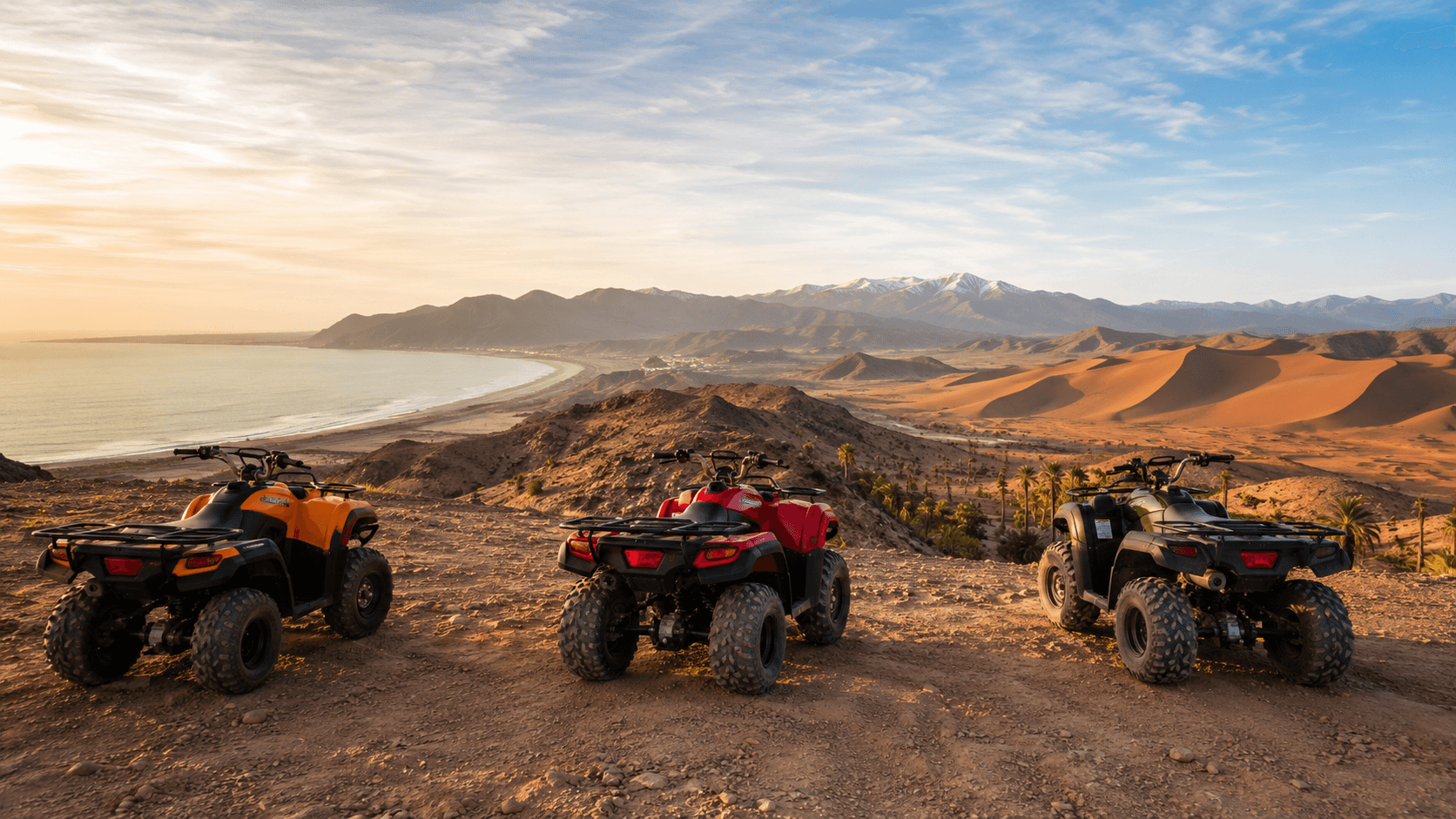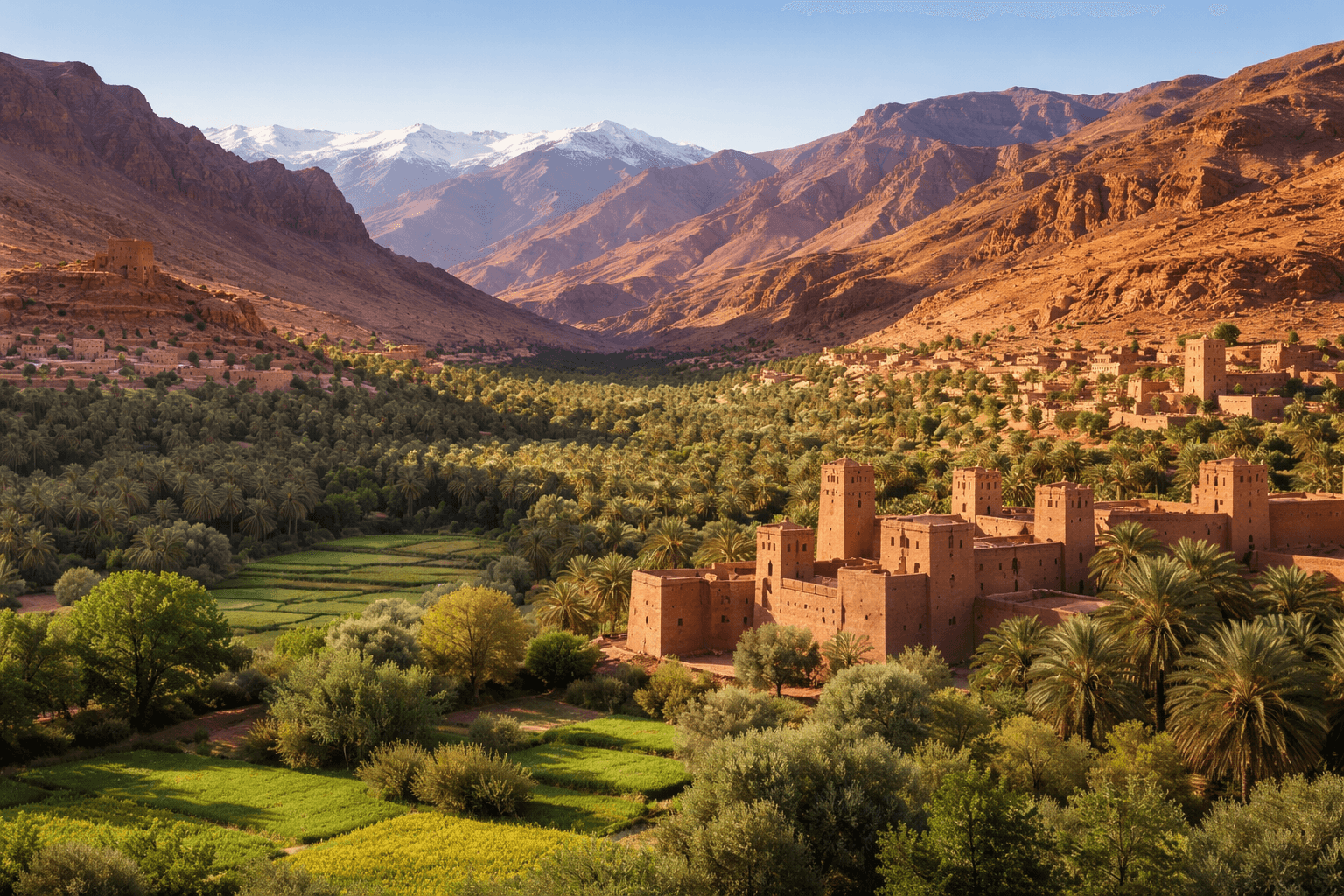








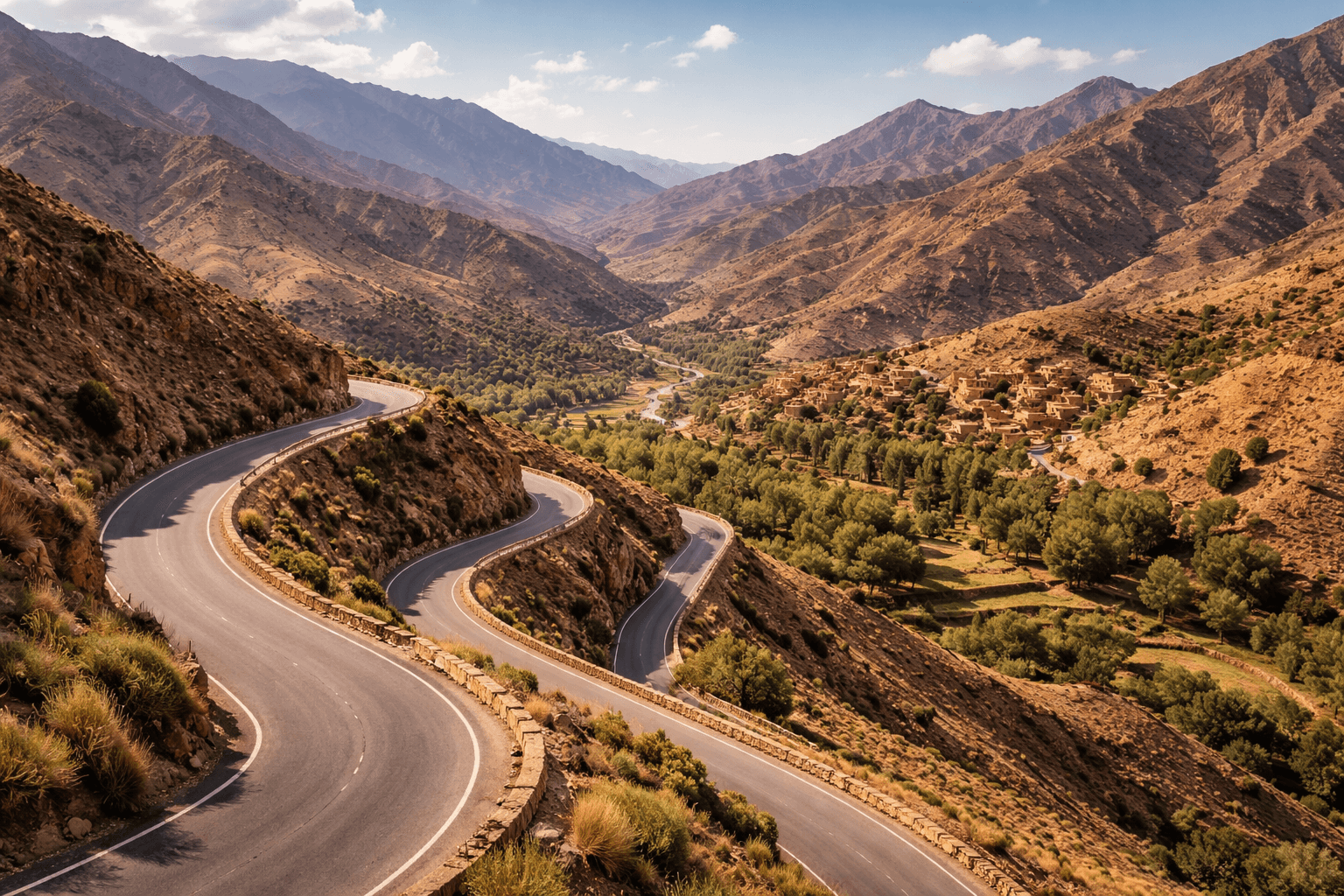
Morocco is one of the few destinations where a road trip genuinely gives you more than a city-to-city transfer. In a single self-drive journey, you can leave the Atlantic coast in the morning, cross fertile plains by midday, climb into cedar forests or Atlas passes in the afternoon, and end the day under desert skies or beside a medina wall. That range is what makes a Morocco road trip so rewarding: the landscapes change fast, the culture shifts subtly from region to region, and the distances are manageable enough to build a route around your interests rather than around flight schedules.
For many travelers, driving is the smartest way to experience the country well. Morocco’s motorway network links major gateways such as Casablanca, Rabat, Tangier, Fes, Marrakech, and Agadir, while secondary roads open access to mountain valleys, kasbah routes, surf towns, palm oases, and desert gateways. The official Moroccan motorway operator, Autoroutes du Maroc, manages the main autoroute network and publishes live traffic and toll information, while the official tourism board highlights spring and autumn as especially strong seasons for cross-country travel.
This guide is designed for travelers researching a Morocco self-drive holiday, planning a detailed road trip Morocco itinerary, or comparing a rental car against a guided alternative. You will find the best routes, realistic 7-day and 14-day itineraries, driving laws, safety guidance, budgeting advice, packing tips, and route-planning recommendations for first-time visitors and repeat travelers alike. If you want maximum freedom, you can browse Car Rental Morocco for nationwide pickup options, or compare city starts such as Car Rental Marrakech, Car Rental Agadir, Car Rental Fes, and Car Rental Casablanca. Travelers who prefer not to drive every leg themselves can also consider Private Driver Morocco.
Why Morocco Is Perfect for a Road Trip
A great road-trip country needs three things: variety, accessible distances, and enough infrastructure to make spontaneous travel feel easy. Morocco has all three. Within one trip, you can combine imperial cities, Atlantic beaches, mountain roads, desert edges, film-set landscapes, and villages that reward slow travel. It feels expansive, but it is still practical. Routes such as Casablanca to Marrakech, Tangier to Chefchaouen, Fes to Ifrane, or Marrakech to Agadir are straightforward enough for confident visitors, while more scenic circuits through the High Atlas or Anti-Atlas add the feeling of adventure many travelers want from a self-drive holiday. Morocco’s official tourism site also emphasizes the country’s strong year-round travel appeal, with spring and fall especially favorable for broader cross-country journeys.
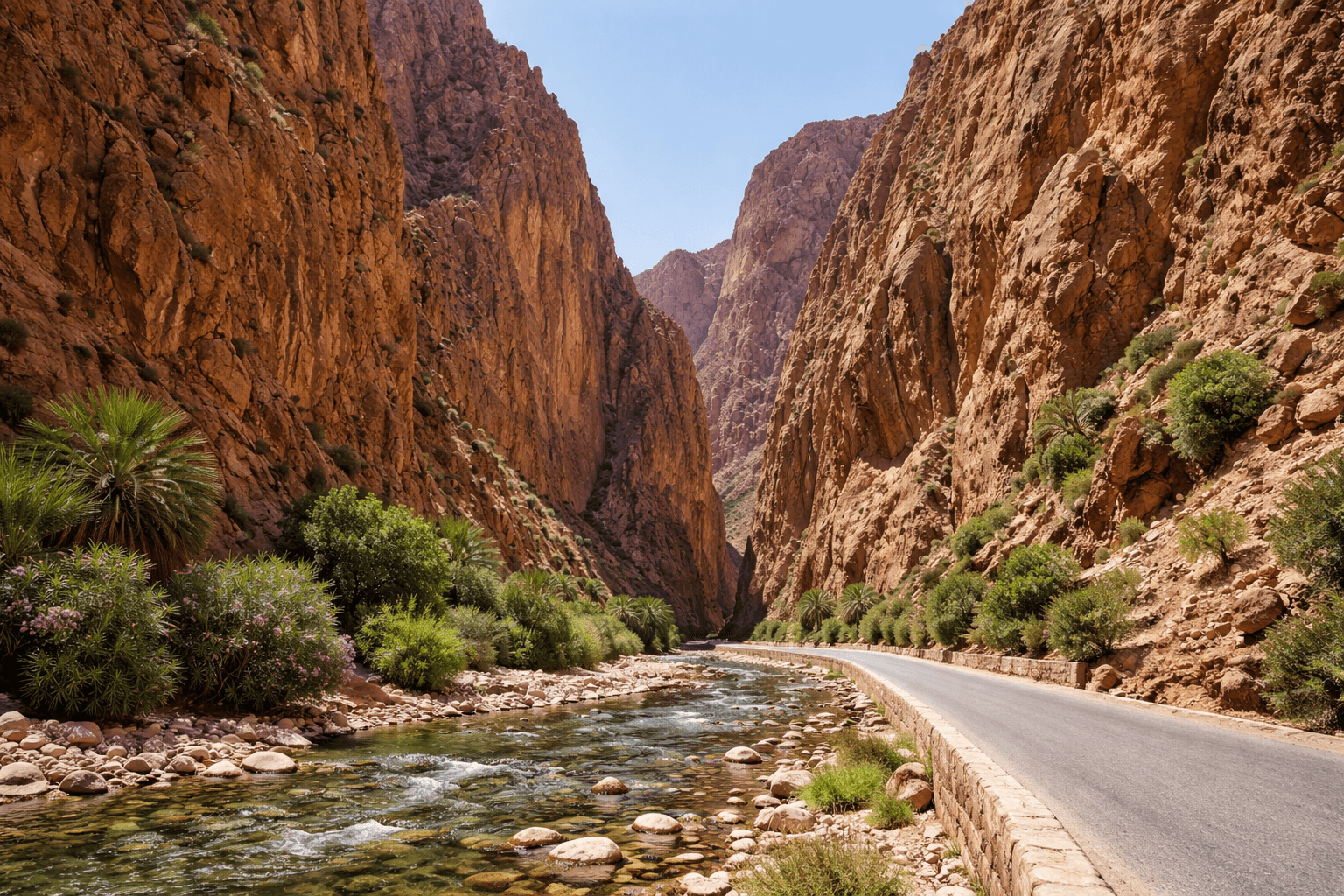
Another reason a Morocco road trip guide is so useful is that the country offers several distinct styles of self-drive travel. Some travelers want a comfortable city-and-scenery loop with well-surfaced roads and reliable hotel stops. Others want cinematic mountain roads, kasbah valleys, desert camps, surfing coastlines, or hidden beaches. Morocco works for both. The motorway spine supports efficient long transfers, while regional roads lead to destinations like the Dades Valley, Todra Gorge, Essaouira, Tafraoute, Merzouga access towns, and Chefchaouen. Official motorway information from ADM confirms the scale of the national autoroute network, including key corridors such as Rabat–Safi, Rabat–Oujda, Casablanca–Agadir, and Tangier-area routes.
Road tripping also solves one of the biggest challenges in Morocco: deciding how much you want to see without overcommitting to internal transfers. Trains are excellent on some major corridors, and buses cover much of the country, but a rental car gives you control over sunrise departures, scenic detours, beach stops, lunch breaks, photography pull-offs, and overnight decisions. It is especially helpful for couples, families, surfers, photographers, and travelers carrying luggage between multiple regions.
There is also a practical reason to choose self-drive: Morocco rewards layered itineraries. You do not need to choose only one experience. A single route can combine medinas, beaches, mountain roads, palm groves, and desert scenery without feeling forced. That flexibility is exactly why demand around the keyword Morocco road trip stays so high. With the right planning, self-drive travel here can feel both adventurous and efficient.
Best Time for a Morocco Road Trip
The best time for a Morocco road trip is usually spring and autumn. The official Moroccan National Tourism Office specifically highlights spring and fall as the best times to venture through much of the country, especially if your itinerary includes varied climates such as coast, mountains, and desert approaches. These shoulder seasons generally give you the best balance of road conditions, manageable temperatures, and comfortable sightseeing days.
Spring, especially March through May, is ideal for green valleys, clear mountain views, and pleasant daytime temperatures on many popular circuits. It is excellent for Marrakech to Ait Benhaddou, Fes to Ifrane, Agadir to Paradise Valley, and broader loops that include both city touring and long scenic drives. Autumn, especially September through November, is another top choice because summer heat begins to soften while roads remain dry and daylight is still generous.
Summer can still work, but route choice matters more. Coastal itineraries around Essaouira, Agadir, and the north are easier than deep inland desert-heavy loops. Winter is also possible and often beautiful, but travelers should plan for colder nights, potential snow or ice in higher Atlas areas, and shorter daylight windows. If your goal is a broad, multi-region self-drive holiday, spring and autumn remain the safest all-round answer.
Choosing the Right Car
The best rental car for a Morocco self-drive trip depends less on image and more on route design. If your trip focuses on major cities, Atlantic coast roads, and motorway connections, a compact hatchback or small sedan is usually enough. It is easier to park, more fuel-efficient, and perfectly suitable for routes such as Casablanca–Rabat–Fes, Marrakech–Essaouira, or Agadir–Taghazout–Mirleft. For many couples, this is the best value option.
If your itinerary includes mountain roads, longer intercity stretches, family luggage, or mixed-quality regional routes, a compact SUV or crossover is often the smartest choice. Extra ground clearance, easier visibility, and more luggage space make a difference on a long road trip Morocco itinerary, especially when your days include winding roads, hotel changes, or gear such as surfboards, child seats, or hiking bags. You do not always need a true 4x4, but you may appreciate a more comfortable driving position and stronger suspension.
A larger SUV becomes more useful if you are traveling with several adults, driving long distances for many consecutive days, or prioritizing comfort over budget. For desert-edge circuits that stay on normal roads, most travelers still do not need a hardcore off-road vehicle. The better question is not “Do I need a 4x4?” but “Will I spend hours on regional roads and want a more relaxed drive?” In many cases, the answer is yes.
Transmission choice matters too. Manual cars are commonly available and often cheaper, but automatic cars can reduce fatigue in city traffic, mountain climbs, and stop-start driving. If you are not fully comfortable with manuals on unfamiliar roads, choosing automatic is often worth the extra cost.
When comparing options, think about five things: luggage room, fuel economy, parking convenience, route type, and passenger comfort. Travelers landing in different gateways can match the car to the route from the start by browsing Car Rental Casablanca, Car Rental Marrakech, Car Rental Fes, or Car Rental Agadir. If you want the broadest starting flexibility across the country, Car Rental Morocco is the right place to compare.
One final tip: choose a car that fits where you will actually park. In medina-edge cities and dense urban neighborhoods, smaller is often better. On longer scenic loops, comfort wins. The ideal Morocco rental car is not the biggest one available. It is the one that suits your real itinerary.
Top 5 Morocco Road Trip Routes
1. Marrakech – Ait Benhaddou – Ouarzazate – Dades Valley – Merzouga
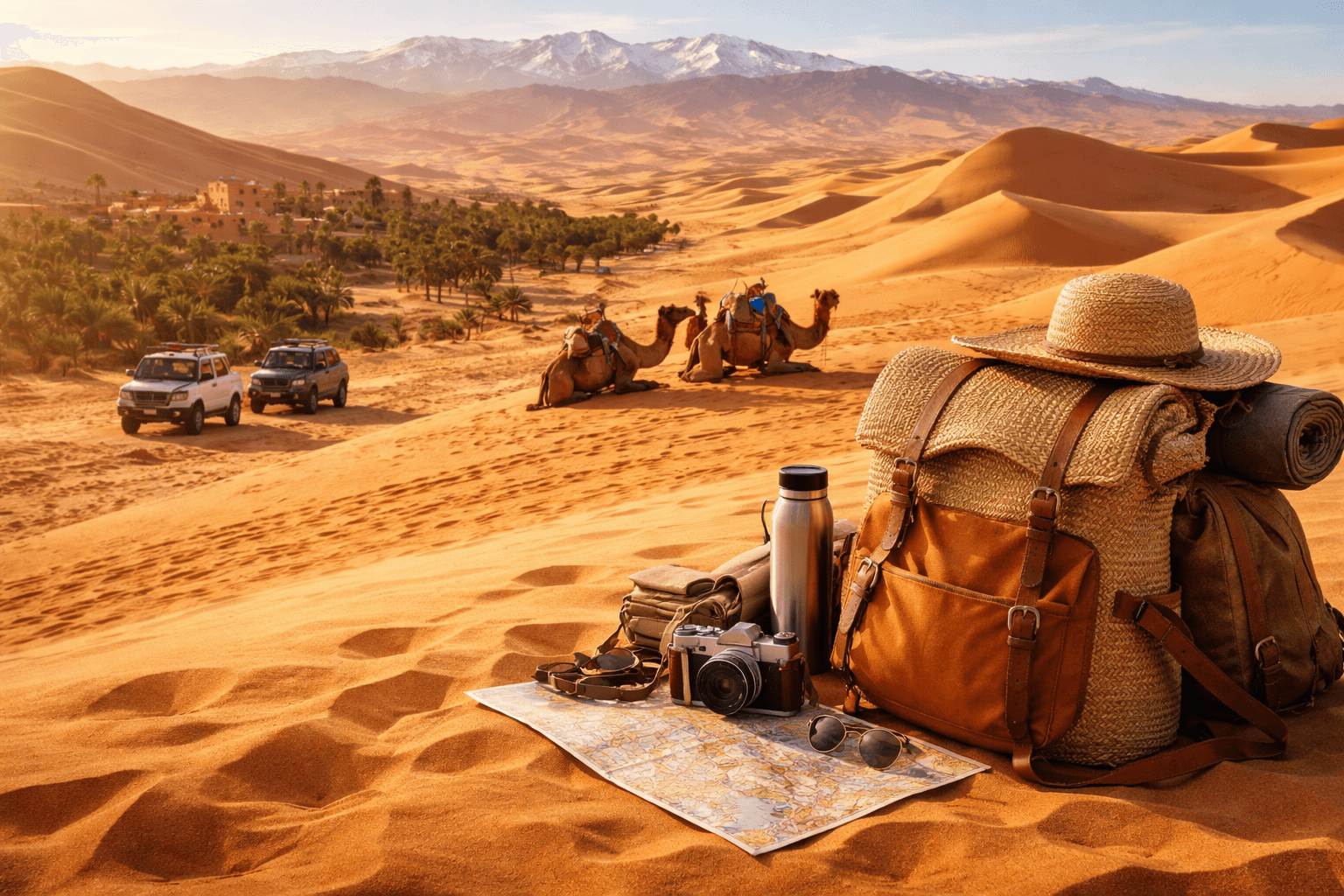
This is the classic dramatic route for travelers who want mountain passes, kasbah scenery, oases, and desert-edge adventure in one trip. It starts from Marrakech, crosses the High Atlas via the Tizi n’Tichka area, continues toward Ait Benhaddou and Ouarzazate, then heads through the Valley of Roses and Dades/Todra region before reaching Merzouga access points. It is one of the best routes in the country for visual impact. The roads are memorable, but the driving days can be longer than they first appear because mountain sections and scenic stops slow average speeds. Spring and autumn are especially strong for this route.
2. Casablanca – Rabat – Chefchaouen – Fes
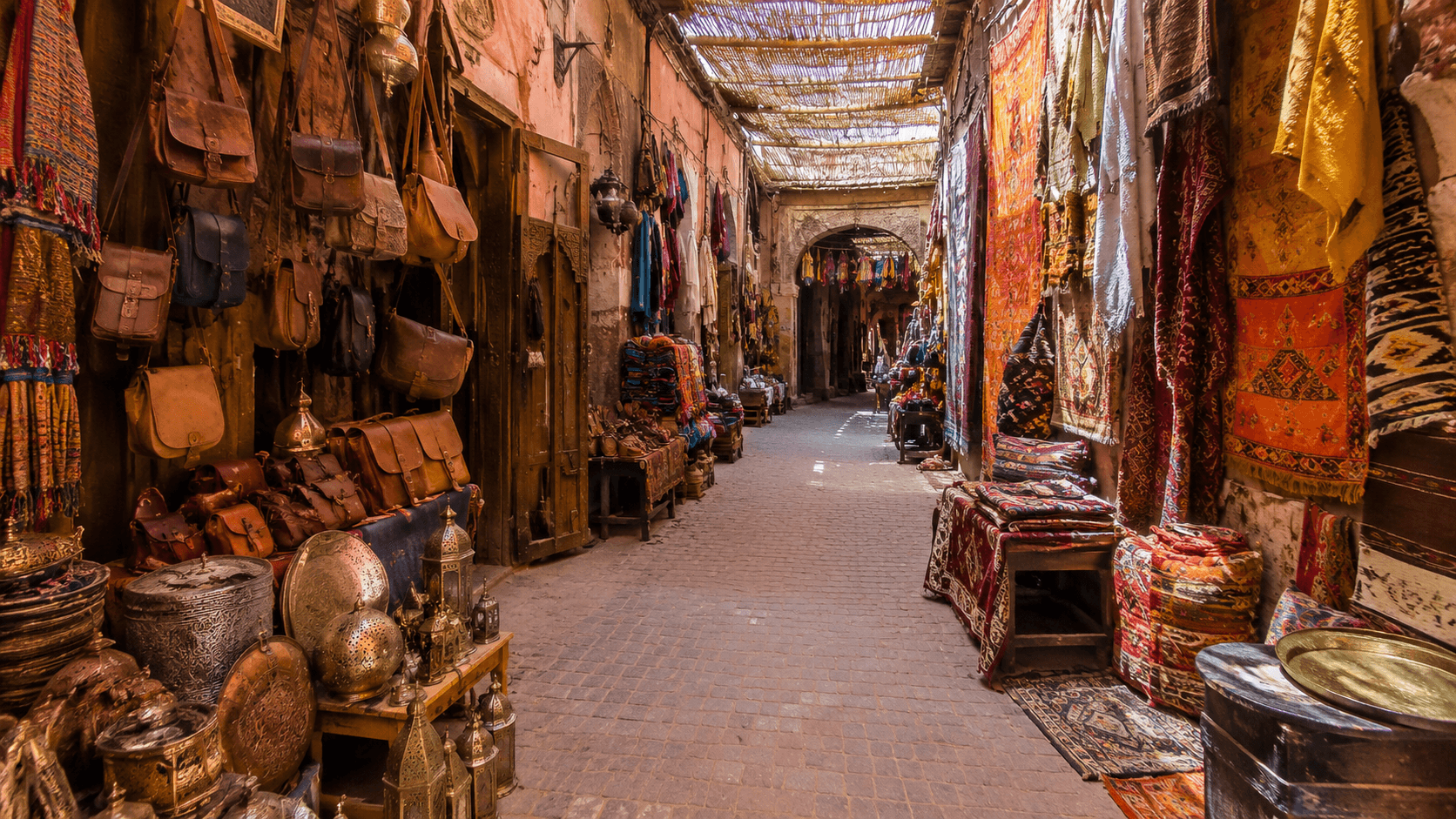
This northern-inland route is ideal for first-time visitors who want manageable driving and a rich cultural mix. Start with modern Casablanca, continue to elegant Rabat, then drive north toward the Rif gateway of Chefchaouen before heading southeast to Fes. This route balances city experiences with scenic drives and does not demand the same level of stamina as a desert circuit. It works especially well for travelers who want photogenic towns, medinas, and gentler road-trip pacing. Morocco’s motorway network supports the early legs efficiently, while regional roads handle the mountain-town segment.
3. Agadir – Taghazout – Essaouira – Casablanca
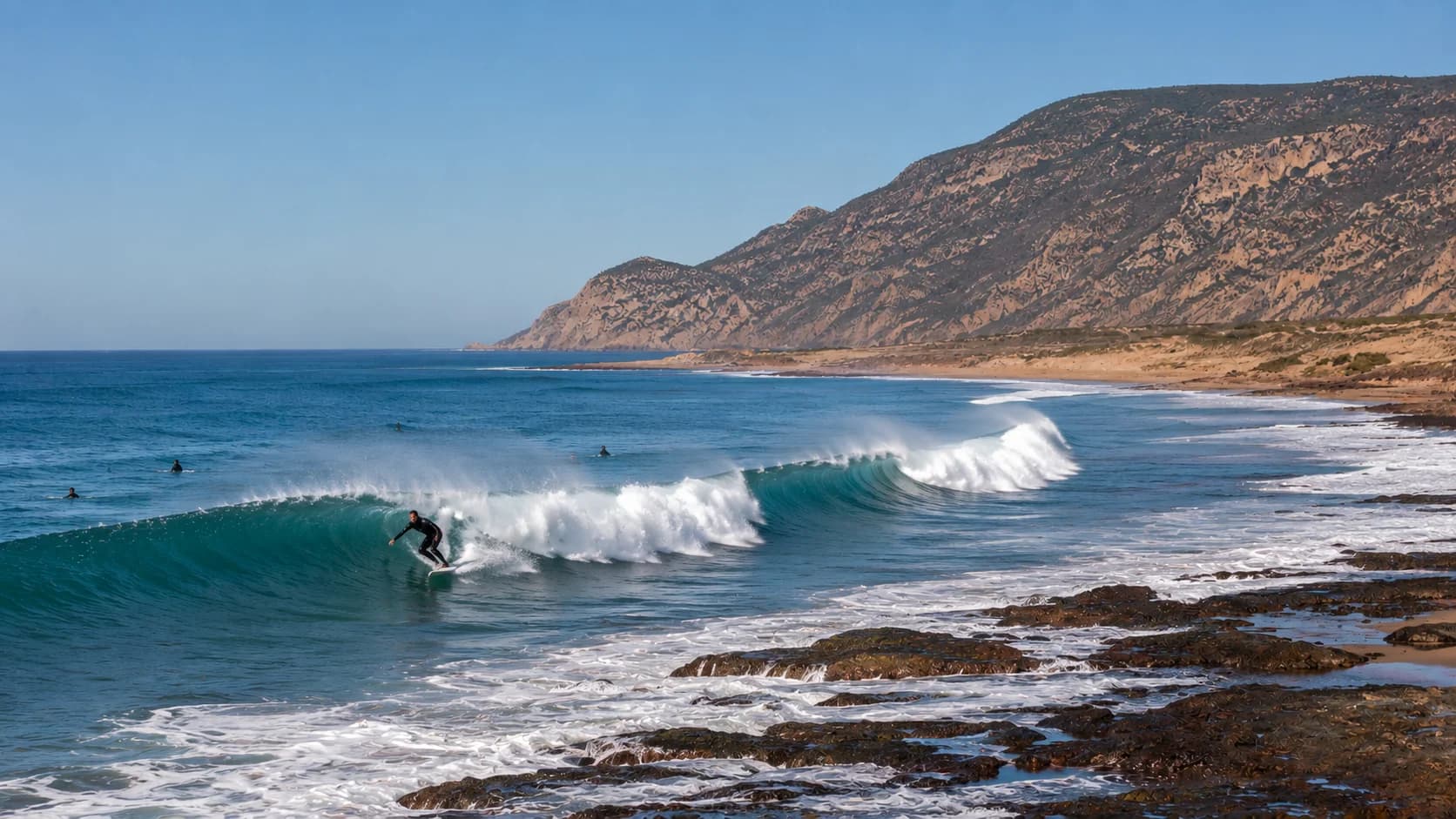
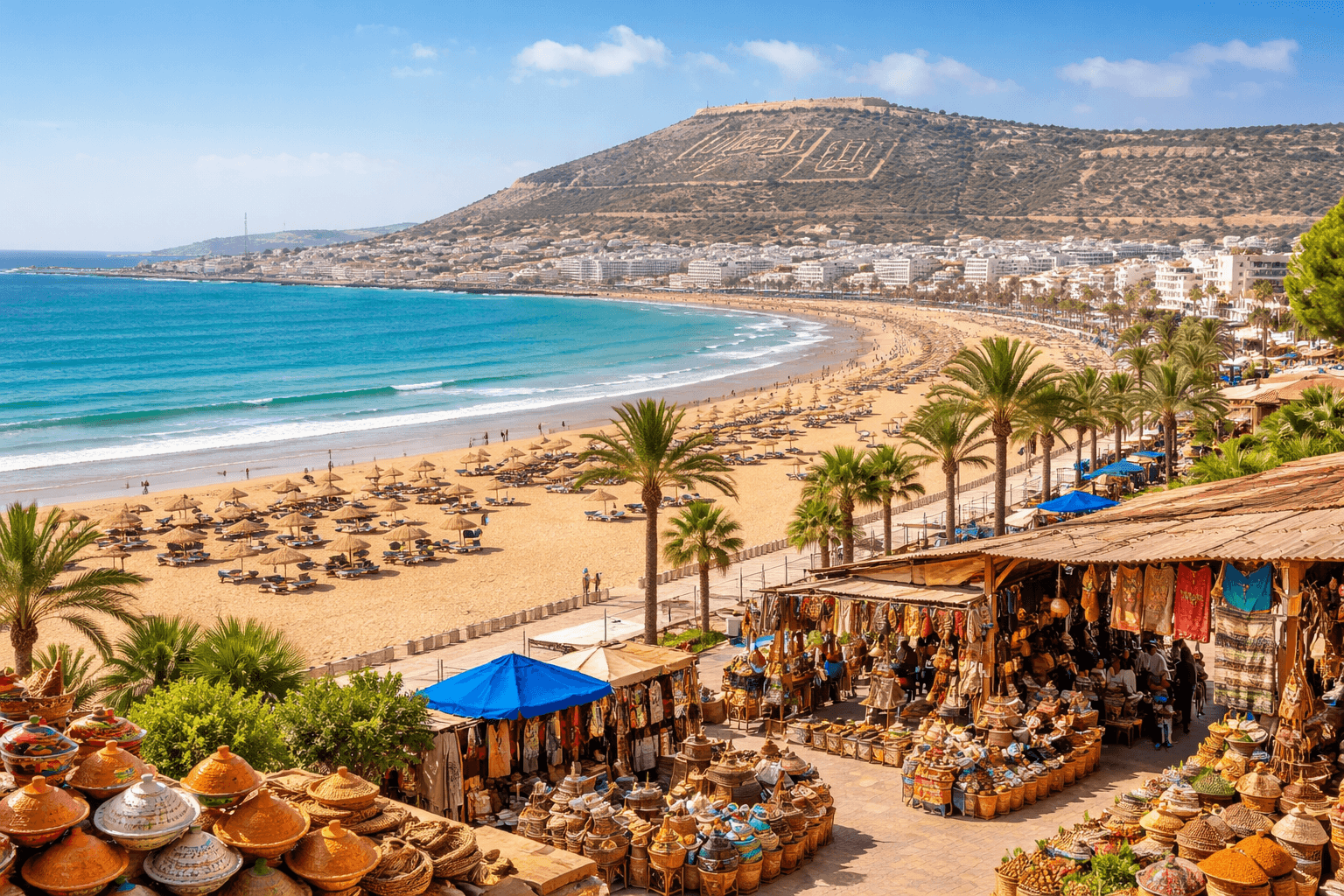
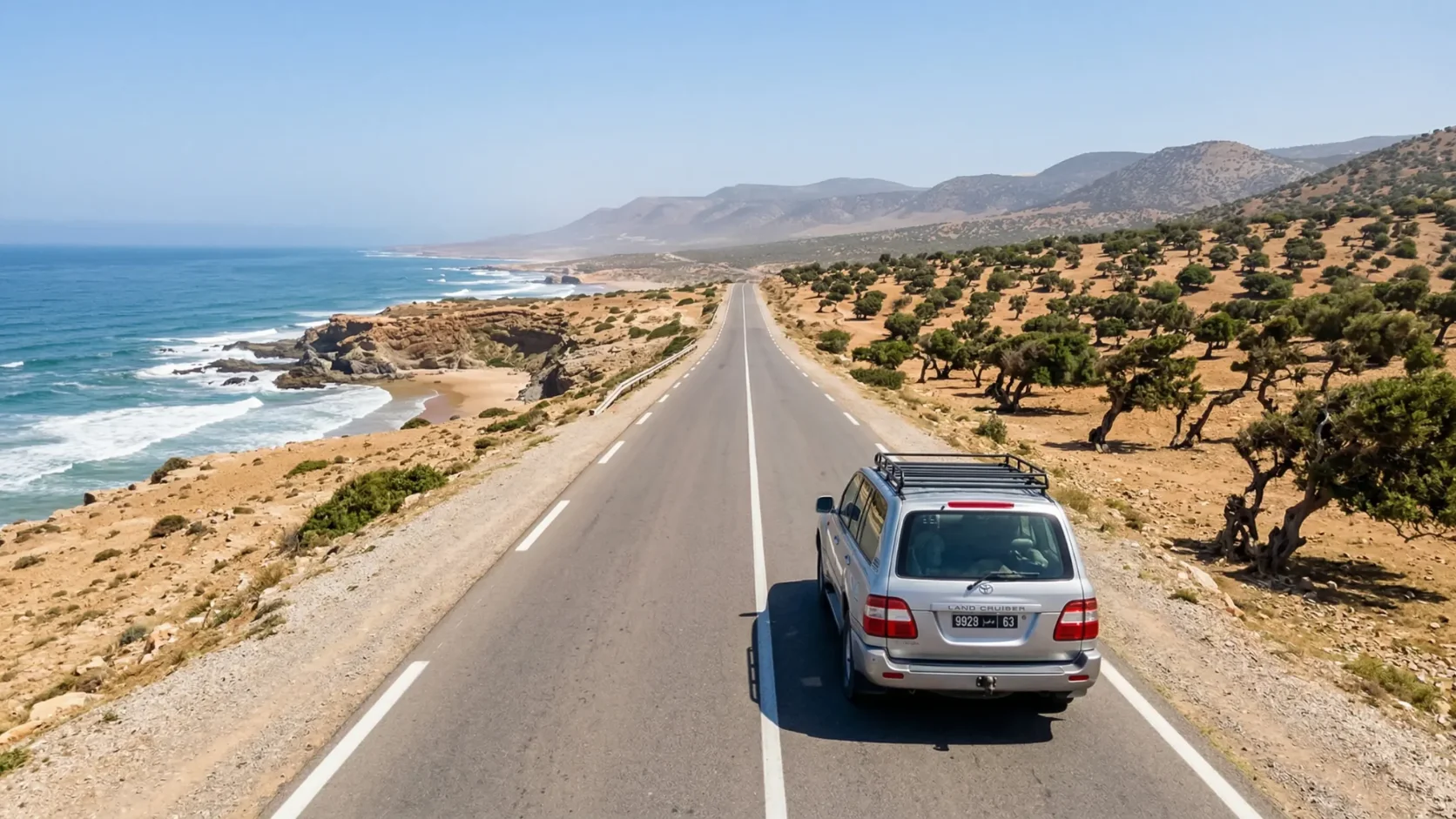
If your idea of a perfect Morocco road trip guide includes ocean views, surf culture, seafood stops, and relaxed driving, the Atlantic route is one of the most enjoyable in the country. Starting in Agadir gives you easy access to Taghazout and nearby beaches before you continue north to Essaouira and, if time allows, on toward Casablanca. The official tourism site describes Agadir-Taghazout as a year-round sun destination, which helps explain why this route works even outside peak shoulder seasons.
4. Fes – Ifrane – Azrou – Midelt – Erfoud
This is an underrated route for travelers who want a transition from imperial city life to cedar forests, mountain plateaus, and desert-bound landscapes. Leaving Fes, you pass through Ifrane and Azrou before continuing south through Midelt toward Erfoud and the wider Sahara gateway region. It feels less touristic at the start than the Marrakech desert corridor and offers a different side of the country. It is particularly good for repeat visitors or travelers who want to combine Fes with the desert without backtracking through Marrakech.
5. Marrakech – Essaouira – Agadir – Tafraoute
For a road trip with both coast and southern scenery, this route is a superb mix of easy beach-town driving and more characterful inland landscapes. You begin in Marrakech, enjoy the sea breeze of Essaouira, continue to Agadir, then head inland toward Tafraoute and the Anti-Atlas. It gives you medina energy, surf-town calm, modern resort comfort, and striking rocky landscapes in one itinerary. Starting with Car Rental Marrakech and returning through Car Rental Agadir can make this route especially practical.
Which route is best?
The best route depends on your priorities. For first-time visitors, Casablanca–Rabat–Chefchaouen–Fes is often the easiest introduction. For scenery, Marrakech–Merzouga wins. For coast lovers, Agadir–Essaouira is outstanding. For travelers who want a deep and cinematic self-drive holiday, combining Marrakech, the Atlas, kasbah country, and the desert is still the ultimate answer.
Complete 7-Day Morocco Road Trip Itinerary
This 7-day plan is designed for travelers who want a realistic first Morocco road trip without spending every day behind the wheel.
Day 1: Arrive in Marrakech
Pick up your car, settle in, and avoid a long same-day transfer if your flight lands late. Use the afternoon or evening to stay near the newer parts of the city or the medina edge rather than diving straight into a heavy driving day. Travelers beginning here can compare Car Rental Marrakech options before arrival.
Day 2: Marrakech to Ait Benhaddou / Ouarzazate
Leave early and cross the High Atlas. Expect a scenic but full driving day with stops at viewpoints and villages. Overnight in Ait Benhaddou or Ouarzazate.
Day 3: Ouarzazate to Dades Valley
Drive through Skoura and the Valley of Roses area toward Dades. This is one of the most photogenic days of the trip, and the road itself is part of the experience.
Day 4: Dades / Todra area to Merzouga
Continue east through desert-edge scenery toward Merzouga. Many travelers park and switch to a camp transfer for the final dune experience, depending on accommodation style.
Day 5: Merzouga to Ouarzazate or Nkob area
Begin the return west. A midway overnight breaks up the distance and keeps the trip enjoyable.
Day 6: Return toward Marrakech
Retrace the Atlas corridor. Arrive with enough daylight to return the car comfortably or keep it for one final city-adjacent overnight.
Day 7: Departure or day trip
Use the final day for departure, a lighter local drive, or a transfer-free rest day.
This itinerary works because it gives you the “big Morocco” feeling without trying to include too many cities. It is scenic, memorable, and achievable in a week if you accept that two of the days are long. Travelers who want more city variety can build a second version around Casablanca, Rabat, and Fes, but for pure road-trip appeal, the Marrakech–Atlas–desert loop remains the stronger 7-day choice.
Complete 14-Day Morocco Grand Tour Itinerary
A 14-day journey is where a road trip Morocco itinerary becomes truly immersive. You can cover the country’s highlights without turning every day into a transfer.
Day 1: Arrive in Casablanca
Pick up your car with Car Rental Casablanca and stay overnight.
Day 2: Casablanca to Rabat
Short drive, plenty of sightseeing time.
Day 3: Rabat to Chefchaouen
Drive north and settle into the blue city atmosphere.
Day 4: Chefchaouen
Keep this as a lighter day. Not every day should be a drive day.
Day 5: Chefchaouen to Fes
A scenic transfer into one of Morocco’s great cultural capitals. Travelers continuing inland can use Car Rental Fes as an alternative starting point if they want a shorter northern loop.
Day 6: Fes
Explore the medina and rest.
Day 7: Fes to Midelt / Erfoud corridor
Head south through Ifrane and the Middle Atlas.
Day 8: Erfoud to Merzouga
Shorter onward journey and desert experience.
Day 9: Merzouga to Dades Valley
A major scenery day with changing landscapes.
Day 10: Dades to Ouarzazate / Ait Benhaddou
Drive west through kasbah country.
Day 11: Ouarzazate to Marrakech
Cross the High Atlas and overnight in Marrakech.
Day 12: Marrakech
Full day in the city.
Day 13: Marrakech to Essaouira or Agadir
Choose depending on your departure plans and whether you want a final coast stop. Travelers favoring the ocean can continue with Car Rental Agadir for southern coastal extensions.
Day 14: Return to Casablanca or depart from your final city
A one-way rental can be especially helpful here, and Car Rental Morocco is the easiest starting point for comparing multi-city logistics.
This 14-day plan works because it alternates drive intensity. You get imperial cities, mountains, desert landscapes, and coast without sacrificing every evening to the road. It is also easier on families and couples because it builds in genuine sightseeing time rather than treating each destination as a photo stop.
Driving Laws and Regulations in Morocco
If you are researching driving in Morocco, the key point is this: the rules are straightforward, but enforcement can be strict. Morocco drives on the right. Seat belts are mandatory, and speed controls are taken seriously on both urban and intercity roads. Current guidance widely reflected across official and travel-safety sources puts standard limits around 60 km/h in built-up areas, 100 km/h on many open roads, and 120 km/h on autoroutes, though posted local signs always take priority. Official motorway and road-safety sources should be your reference once in-country.
Expect checkpoints. They are a normal part of road travel in Morocco and are not usually a problem if your documents are in order. Keep your passport, driving licence, rental contract, and insurance paperwork accessible. Mobile-phone use while driving should be treated as off-limits unless you have a proper hands-free setup. Drinking and driving is not something to treat casually; the safest approach is zero alcohol before driving.
On the autoroute network, tolls are distance-based and managed by Autoroutes du Maroc. Travelers can pay according to the route used, and ADM also provides class information and toll tables for current sections. For example, the published Class 1 tariff on the Casablanca–Rabat corridor is 25 MAD.
One of the best planning habits is checking the official ADM network and traffic resources before a long transfer. For trip inspiration and seasonal route ideas, the official Moroccan tourism portal at Visit Morocco is also useful for understanding regional conditions and travel timing.
Road Safety Tips
Road safety is the part of any Morocco road trip guide where realism matters most. Morocco is a rewarding self-drive destination, but several official travel advisories warn that road accidents remain a significant hazard, particularly when drivers are tired, rushing, or sharing the road with unpredictable traffic behavior. Dusk deserves extra caution, and some advisories specifically note increased risk during Ramadan evenings and in busy summer return periods.
Drive defensively, not aggressively. Avoid night driving on unfamiliar regional roads when possible. Leave extra space, reduce speed when entering towns and villages, and assume that pedestrians, scooters, animals, and sudden stops are all possible. In cities, expect tight parking and fast decision-making from other drivers. In mountains, do not let scenic confidence push you into optimistic timing. Slow, patient driving is always the better strategy.
Plan your long days carefully. Morocco looks compact on a map, but mountain roads and stop-heavy corridors make journeys longer than they first seem. A route that appears easy on paper can become exhausting if you add medina arrivals, fuel stops, photos, and lunch breaks. The safest road trip is not the one with the most kilometers. It is the one with realistic days.
Fuel, Tolls and Costs
Fuel and tolls are a meaningful but manageable part of any Morocco self-drive budget. On major routes, toll roads save time and reduce fatigue, especially on high-volume corridors between large cities. ADM’s official toll grid confirms that fees vary by section and vehicle class, with examples such as Casablanca–Rabat at 25 MAD for Class 1 and many other common links priced transparently through the official tariff table.
Fuel costs will depend on season, vehicle type, and route length, so it is better to budget by trip style than by one fixed number. A compact car on a 7-day city-plus-scenery loop will usually cost far less to run than a larger SUV on a two-week mountain-and-desert circuit. Travelers who choose smaller cars for coast or motorway-heavy routes often save meaningfully on both fuel and parking. This is one more reason to match the car closely to the route.
As a rough planning rule, your main self-drive costs are:
rental price, fuel, tolls, parking, and occasional one-way fees. If you want to keep the trip efficient, Car Rental Morocco helps you compare the part you can control most easily: the vehicle and pickup plan.
Packing List for a Morocco Road Trip
Packing for a Morocco road trip is easier when you prepare for changing climates rather than just one destination. Even on a short route, you may move between warm cities, windy coasts, cooler elevations, and very cold desert or mountain evenings. Layers matter more than bulky packing.
Bring lightweight day clothing, a warm evening layer, comfortable driving shoes, sunglasses, sunscreen, and a refillable water bottle. Add a phone mount, offline maps, charging cable, power bank, and a small flashlight for late arrivals or roadside organization. If your route includes mountains or winter travel, pack a warmer jacket than you think you need. If it includes beaches or surf towns, bring sandals and quick-dry basics.
Document storage also matters. Keep your passport, licence, booking confirmations, insurance details, and rental paperwork organized and easy to access at checkpoints. A small folder in the glovebox is a better system than loose screenshots and email searches.
For photographers, one of the great joys of a road trip in Morocco is the range of scenery, so keep a microfiber cloth handy for dust, a backup battery for long days, and enough storage for frequent roadside stops. Less glamorous but equally useful: tissues, snacks, hand sanitizer, and a little cash for smaller stops, parking help, or roadside purchases.
Emergency Contacts and Useful Resources
Save essential numbers before you start driving. Travel-advice sources consistently list 15 for ambulance/emergency medical response, 19 for police in urban areas, and 177 for the Royal Gendarmerie in many rural areas. Because published emergency guidance can vary by situation and region, it is sensible to confirm current local advice when you arrive and to keep your rental provider’s support number with your documents.
For motorway conditions, toll planning, and route support, the official Autoroutes du Maroc network resources are the most useful reference before long intercity drives.
Frequently Asked Questions
1. Is Morocco good for a road trip?
Yes. Morocco is one of the best road-trip destinations in North Africa because it combines major cities, beaches, mountains, and desert access within manageable driving distances.
2. Is it safe to drive in Morocco as a tourist?
It can be, as long as you drive defensively, avoid over-ambitious daily distances, and stay cautious at night. Official travel advisories do warn that road accidents are a real hazard, so careful planning matters.
3. Do I need a 4x4 for a Morocco road trip?
Usually not. For most classic routes, a compact car or crossover is enough. A higher-clearance vehicle is more about comfort and luggage than necessity.
4. What is the best starting city for a Morocco road trip?
It depends on the route. Marrakech is best for Atlas and desert loops, Casablanca is strong for broad national circuits, Fes suits inland and northern combinations, and Agadir is ideal for Atlantic coastal travel.
5. What is the best time for a Morocco road trip?
Spring and autumn are usually best because temperatures are more comfortable across multiple regions. The official tourism board highlights those seasons as especially favorable.
6. Are roads in Morocco good?
Many major roads and motorways are very good, especially on the autoroute network. Regional roads vary more, so driving times can be longer than maps suggest.
7. How much does a Morocco road trip cost?
It depends on season, route, and car type. Main costs are rental, fuel, tolls, parking, and accommodation. Choosing the right vehicle can significantly reduce the total.
8. Are toll roads common in Morocco?
They are common on the main motorway network linking several major cities. Tolls are distance-based, and official tariffs are published by ADM.
9. Can I drive from Marrakech to the desert myself?
Yes, many travelers do. It is one of the country’s most popular self-drive routes, but you should break it into stages rather than forcing the entire journey too quickly.
10. Is night driving in Morocco a good idea?
Not for most first-time visitors on unfamiliar regional roads. Daytime driving is usually the safer and less stressful choice.
11. Should I choose self-drive or a private driver?
Self-drive is best if you want freedom and flexibility. A private driver is better if you want to relax on long days, avoid city driving, or travel without navigation stress. Private Driver Morocco is a good alternative if you want the route without the wheel time.
12. Which Morocco road trip is best for first-time visitors?
A 7-day Marrakech–Atlas–desert loop is the most iconic, while a Casablanca–Rabat–Chefchaouen–Fes circuit is often the easiest first self-drive for travelers who prefer less demanding roads.
Book Your Morocco Road Trip with MarHire
The best Morocco road trip is the one that matches your pace, not somebody else’s template. Some travelers want a one-week scenic loop from Marrakech. Others want a two-week grand tour from Casablanca through the north, inland cities, mountains, and desert. Some want a compact automatic car for city-and-coast travel. Others need a family SUV for a longer adventure. MarHire makes that flexibility easier.
You can start by comparing Car Rental Morocco for nationwide options, or choose a city-based pickup with Car Rental Marrakech, Car Rental Agadir, Car Rental Fes, or Car Rental Casablanca. If you prefer to enjoy the route without driving every kilometer yourself, Private Driver Morocco is another practical option.
From Atlantic coast drives to Atlas crossings and desert-edge adventures, Morocco is built for unforgettable self-drive travel. Plan carefully, choose the right car, and let the road connect the country for you.