






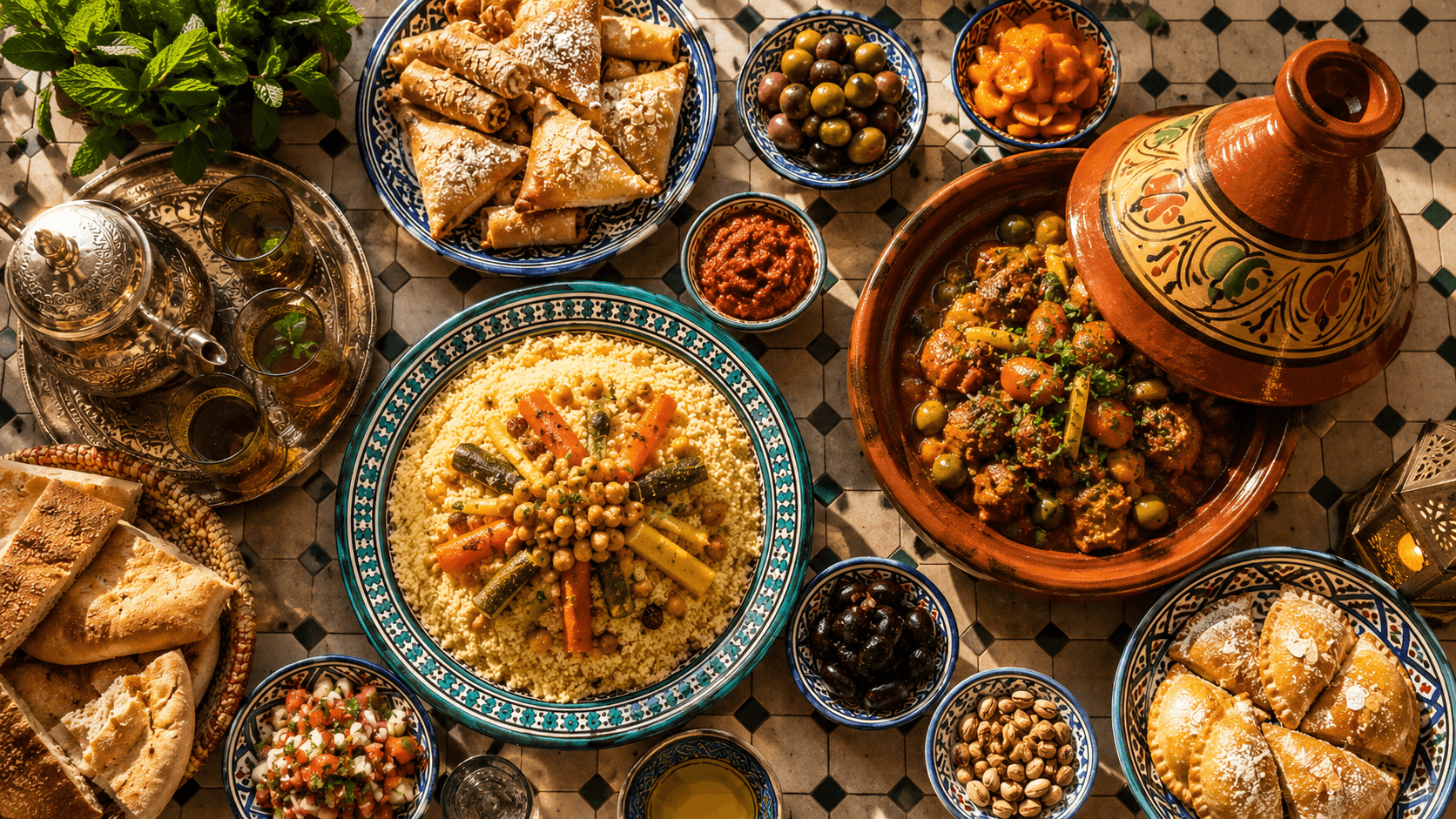
Moroccan food is one of the country’s biggest travel experiences. Long before many visitors remember hotel names or road routes, they remember the smell of tagines, fresh bread from local bakeries, mint tea poured from silver teapots, and late-night street food in busy medinas. Moroccan cuisine combines Amazigh, Arab, Andalusian, Mediterranean, African, and French influences into a food culture that is both traditional and deeply regional.
What makes Moroccan food special is not only the flavor but also the variety. A meal in Marrakech can feel completely different from a seafood lunch in Essaouira or a home-style dinner in Fes. Some dishes are slow-cooked for hours, others are sold fresh on the street, and many are connected to family traditions passed down for generations. UNESCO even recognizes aspects of Moroccan gastronomy and social dining traditions as part of the country’s cultural identity.
For travelers exploring multiple cities, food becomes one of the best ways to understand Morocco itself. From breakfast pancakes and market snacks to desert meals and refined palace cuisine, this guide covers 30 must-try Moroccan dishes, drinks, and specialties, plus where to find them across the country.
If you are planning a wider food-focused itinerary, our Morocco Road Trip Guide is one of the best ways to connect Morocco’s major culinary regions in one trip.
An Overview of Moroccan Cuisine
Moroccan cuisine is known for slow cooking, layered spices, fresh herbs, bread culture, and meals designed around sharing. Unlike some cuisines that focus heavily on heat or spice intensity, Moroccan food is usually more aromatic than spicy. Common ingredients include saffron, cumin, cinnamon, ginger, preserved lemon, olives, almonds, dates, honey, mint, and orange blossom water.
Meals often begin with salads or soups before moving into a larger shared dish such as tagine or couscous. Bread is central to daily eating and is used alongside many meals instead of utensils. Tea culture is also important, especially mint tea, which is served in homes, riads, restaurants, and shops throughout the country.
Regional identity matters too. Coastal cities lean toward seafood, mountain regions toward hearty tagines and nuts, and imperial cities toward refined dishes linked to royal and Andalusian culinary traditions.
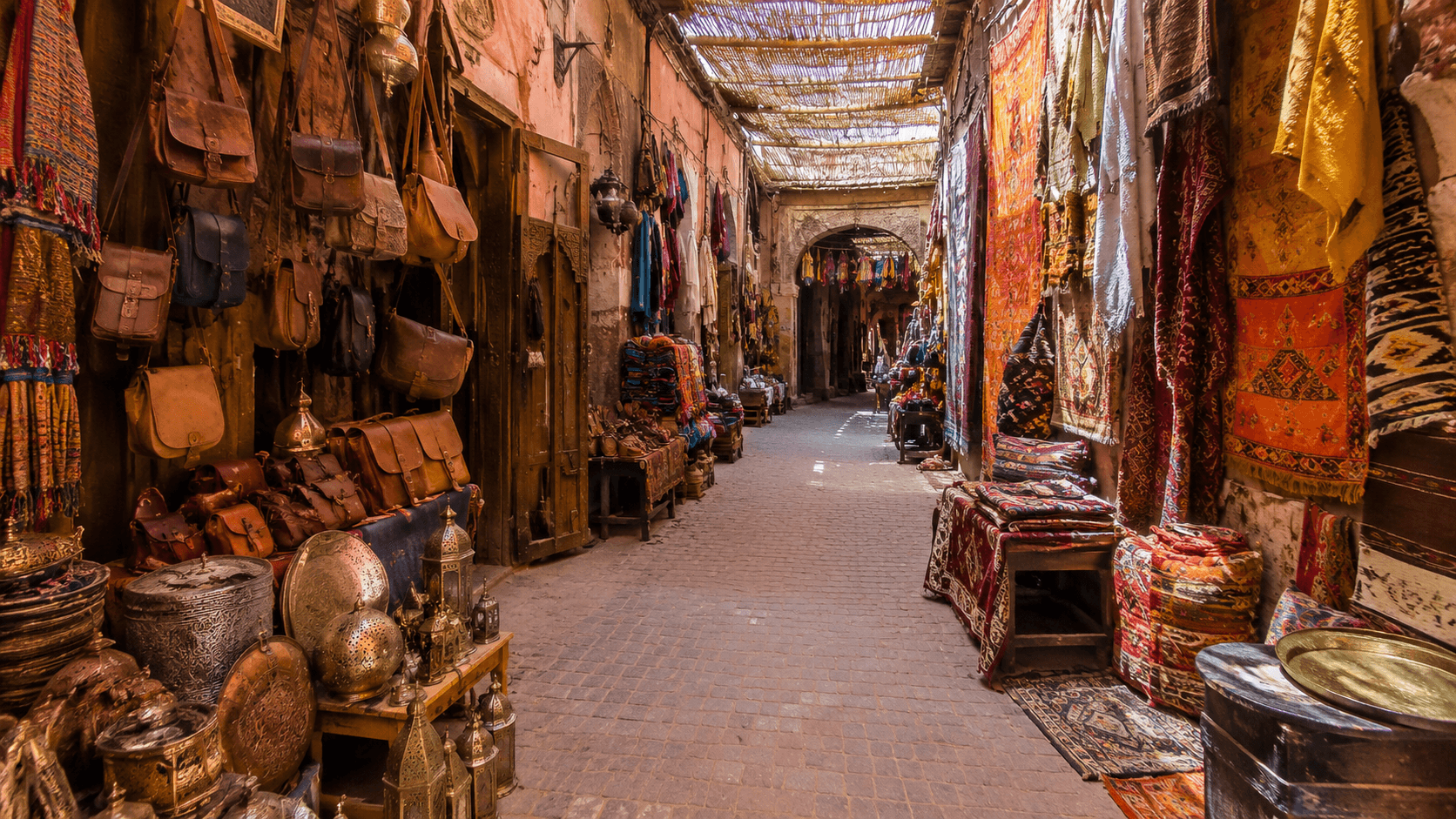
Travelers quickly notice that eating in Morocco can happen everywhere: rooftop restaurants, medina stalls, beach cafes, bakeries, roadside grills, riads, and traditional homes. That variety is part of what makes Moroccan cuisine so memorable.
If your route includes multiple food cities, the Marrakech Travel Guide and Fes Travel Guide help travelers understand where regional specialties really stand out.
Iconic Mains: Tagine, Couscous, Pastilla, Mechoui & Tangia
1. Chicken Tagine with Preserved Lemon & Olives
Probably Morocco’s most internationally recognized dish. Slow-cooked chicken is combined with olives, preserved lemon, onions, garlic, and spices in a clay cooking pot called a tagine.
Best found in:
- Marrakech riads
- Traditional restaurants in Fes
- Family-run local eateries
2. Lamb Tagine with Prunes
A sweet-and-savory classic featuring tender lamb, caramelized prunes, almonds, sesame, and cinnamon.
Best for:
- Traditional dinners
- Special occasions
- Imperial-city cuisine
3. Vegetable Tagine
Common across Morocco and ideal for vegetarian travelers. Usually includes carrots, potatoes, zucchini, tomatoes, onions, and spices.
4. Kefta Tagine
Spiced meatballs cooked in tomato sauce, often topped with eggs near the end of cooking.
5. Couscous
Traditionally served on Fridays. Steamed semolina is topped with vegetables, broth, and meat or chicken.
Regional variations:
- Seven-vegetable couscous
- Tfaya couscous with caramelized onions and raisins
- Seafood couscous near the coast
6. Pastilla
One of Morocco’s most famous celebration dishes. Thin pastry layers surround a savory filling traditionally made with pigeon or chicken, almonds, cinnamon, and sugar.
Most associated with:
- Fes
- Weddings
- Andalusian-style cuisine
7. Mechoui
Slow-roasted lamb cooked until extremely tender. Often served simply with cumin and bread.
8. Tangia
A Marrakech specialty cooked slowly in a clay pot. Traditionally linked to workers and communal ovens.
9. Rfissa
Chicken, lentils, fenugreek, and shredded msemen bread served together in a rich sauce.
10. Mrouzia
A sweet lamb dish associated with Fes cuisine, combining raisins, almonds, honey, and ras el hanout.
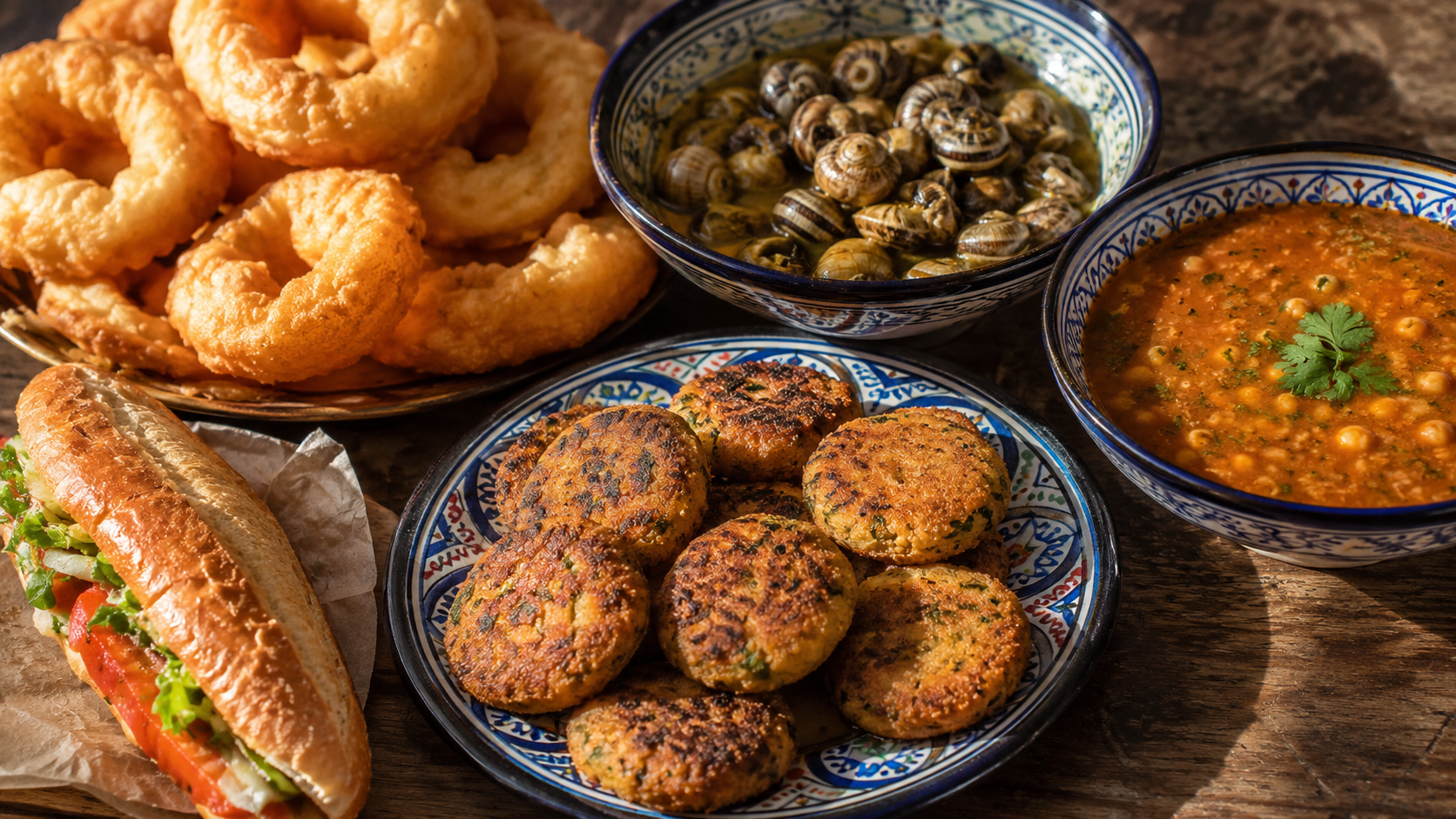
Street Food: Sfenj, Snail Soup, Harira, Maakouda & Bocadillo
Street food is one of the easiest ways to experience Moroccan daily life.
11. Sfenj
Moroccan doughnuts served fresh and hot, often eaten for breakfast or afternoon tea.
Best found:
- Morning street stalls
- Medina bakeries
12. Harira
Traditional soup made with tomatoes, lentils, chickpeas, herbs, and sometimes meat.
Especially popular:
- During Ramadan
- As a starter
13. Snail Soup (Babouche)
A famous medina street snack made with snails and fragrant broth.
Most famous in:
- Marrakech night markets
- Fes medina areas
14. Maakouda
Fried potato cakes often served in sandwiches.
15. Bocadillo
A Moroccan sandwich influenced by Spanish cuisine, often filled with tuna, olives, fries, salad, and sauces.
16. Grilled Sardines
Very common in coastal cities, especially Essaouira and Agadir.
17. Brochettes
Simple grilled meat skewers sold in markets and roadside restaurants.
18. Briouats
Small crispy pastry triangles filled with cheese, meat, or seafood.
19. Khobz with Fillings
Fresh Moroccan bread stuffed with meats, eggs, or vegetables.
20. Fried Fish Sandwiches
Popular in Atlantic coastal cities.
Breakfast: Msemen, Baghrir, Harcha & Amlou
Moroccan breakfasts are often bread-heavy, comforting, and tea-focused.
21. Msemen
Square layered pancakes cooked on a flat surface.
Served with:
- Honey
- Butter
- Cheese
- Jam
22. Baghrir
“Thousand-hole pancakes” with a sponge-like texture.
23. Harcha
Semolina bread or cakes with a slightly crumbly texture.
24. Amlou
A spread made from almonds, argan oil, and honey, especially associated with southern Morocco.
25. Khlii and Eggs
Preserved meat cooked with eggs, especially in traditional breakfasts.
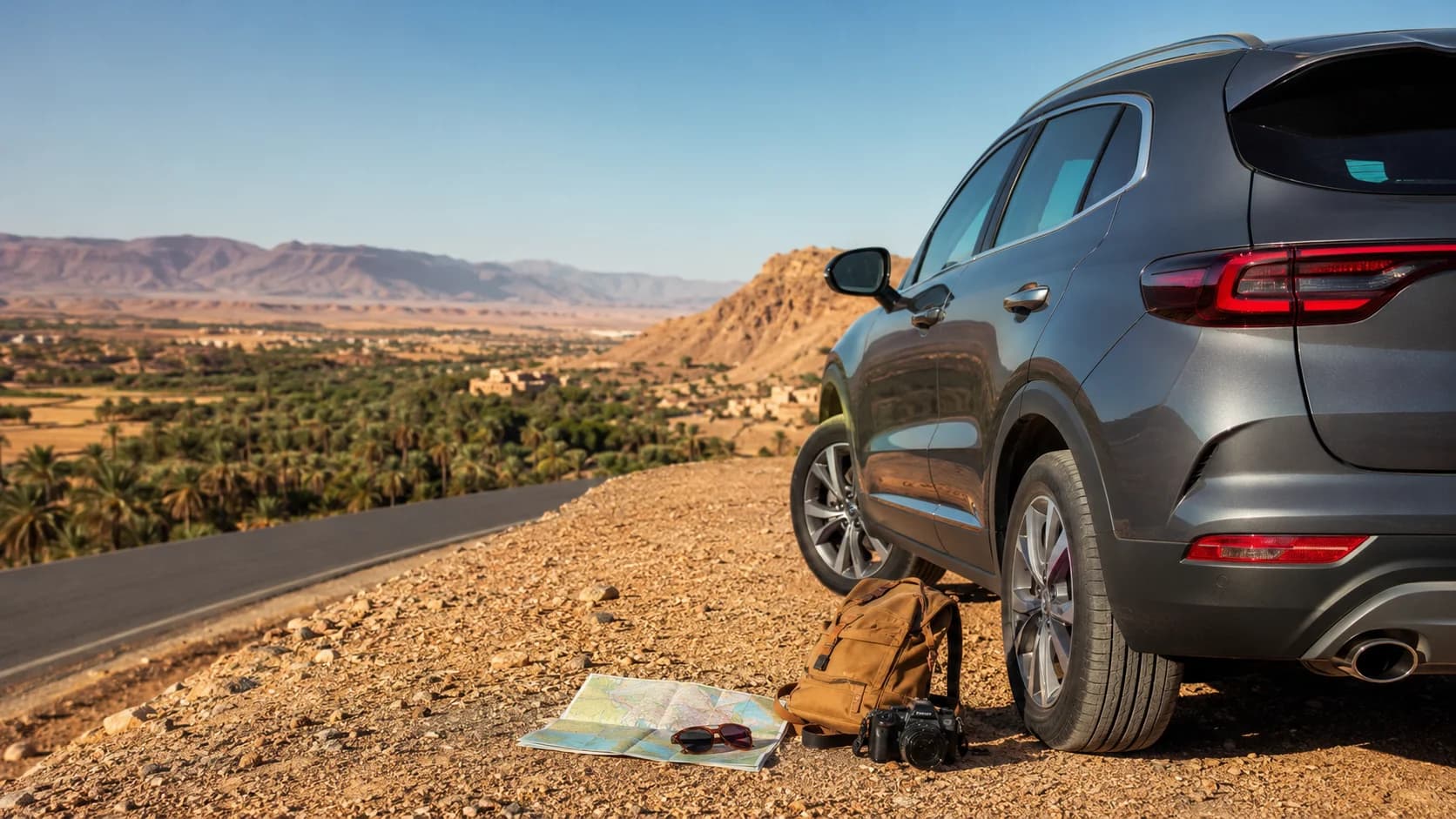
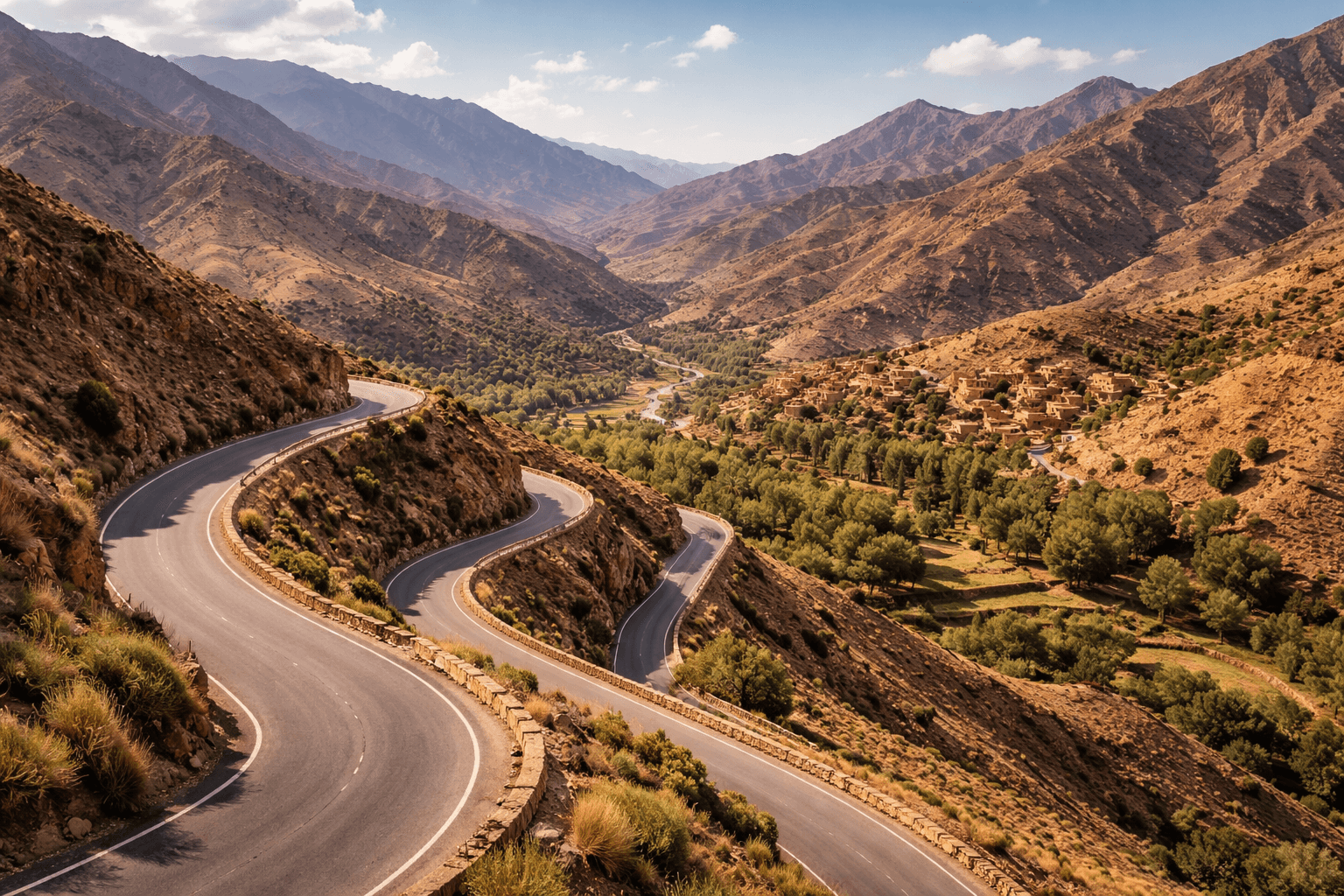
Breakfast culture is especially enjoyable during road trips between cities, where local cafes and bakeries vary from region to region. Travelers driving between destinations often discover some of the country’s best casual breakfasts outside major tourist zones.
Sweets & Pastries: Chebakia, Kaab el-Ghazal & Briouat
Moroccan desserts often combine nuts, honey, sesame, cinnamon, and delicate pastry techniques.
26. Chebakia
Sesame cookies folded into flower-like shapes and coated in honey.
27. Kaab el-Ghazal
“Gazelle horns” filled with almond paste and orange blossom flavor.
28. Sweet Briouats
Pastry triangles filled with almonds and honey.
29. Sellou
A rich toasted flour and nut mixture often associated with celebrations.
30. Ghriba
Traditional Moroccan cookies with many regional versions.
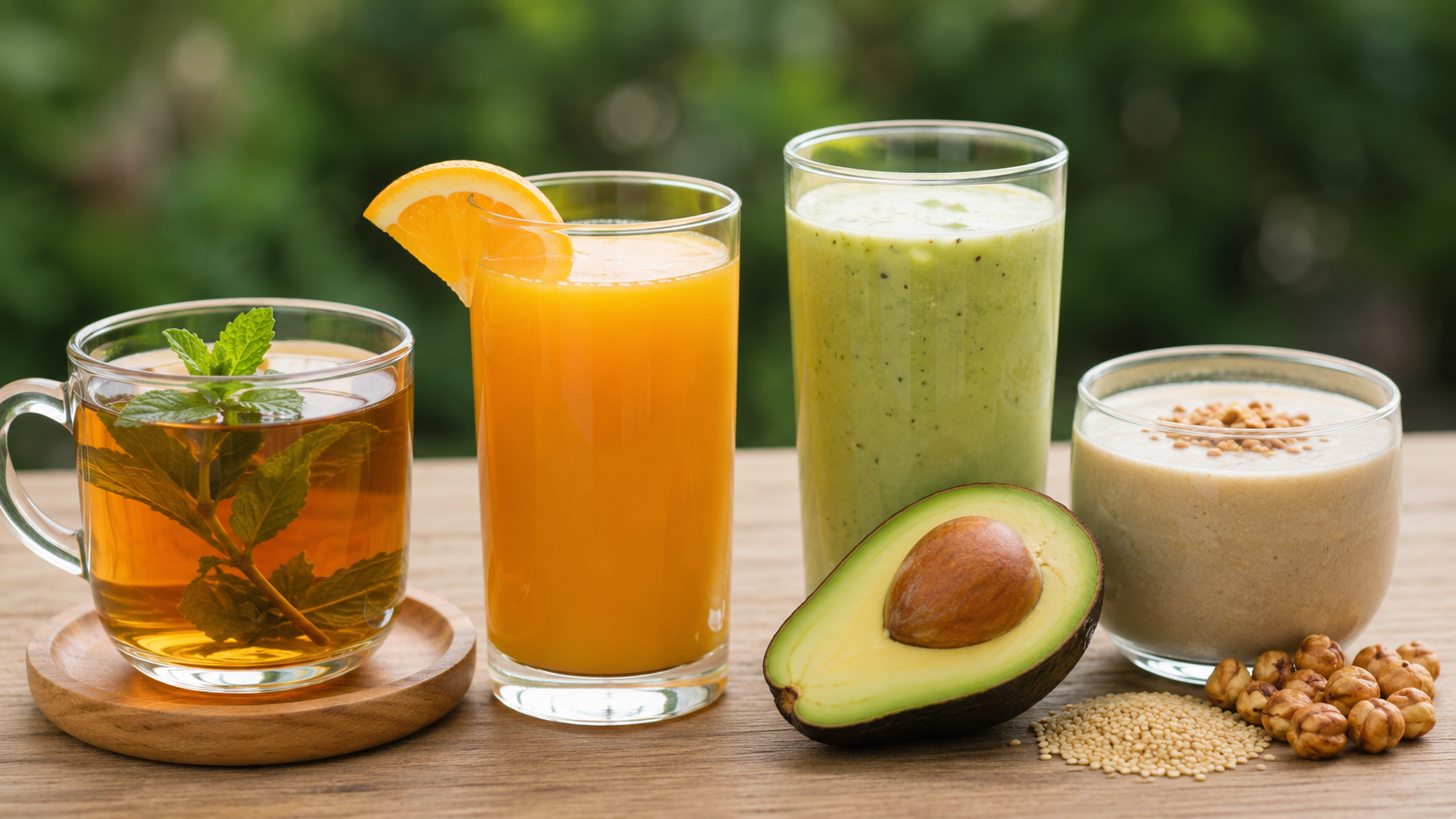
Drinks: Mint Tea, Orange Juice, Avocado Smoothie & Nus Nus
Mint Tea
The national drink of Morocco. Green tea combined with mint and sugar.
Fresh Orange Juice
Especially popular in Marrakech and major city squares.
Avocado Smoothie
A surprisingly common Moroccan cafe drink often blended with milk, nuts, or dates.
Nus Nus
A Moroccan coffee drink made with half espresso and half milk.
Lben
A fermented milk drink commonly paired with traditional meals.
Regional Specialties
Essaouira Seafood
Essaouira is famous for grilled fish, sardines, calamari, oysters, and seafood platters served near the port.
Fes Mrouzia & Refined Cuisine
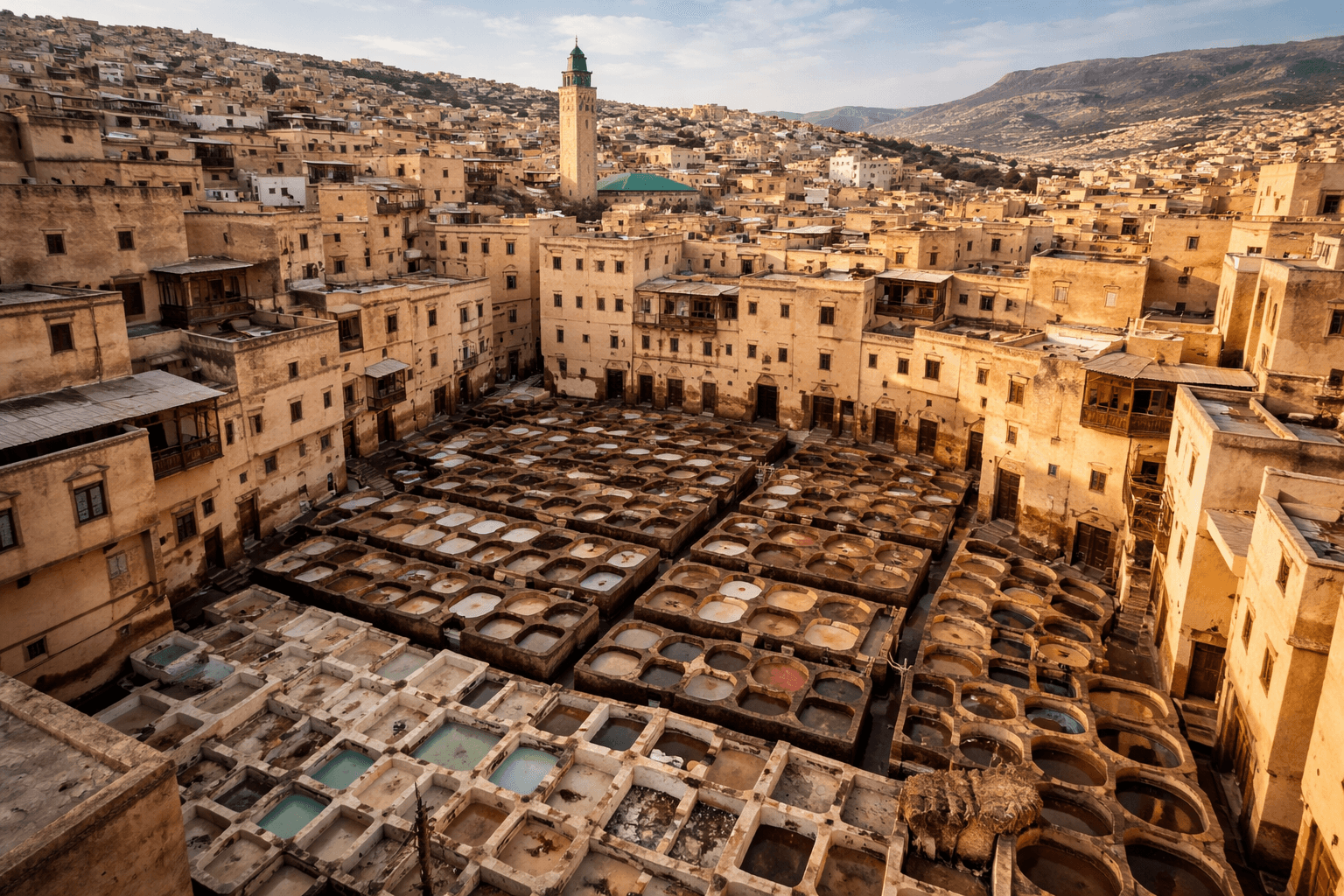
Fes is often considered Morocco’s culinary capital because of its historic Andalusian-influenced cooking traditions.
Tafraoute Tagines
Southern Amazigh cooking traditions often use argan oil, almonds, and earthy slow-cooked dishes.
Marrakech Tangia
Strongly linked to the city’s historic food identity.
Rif & Northern Cuisine
Northern Morocco often shows Spanish and Mediterranean influence through seafood and lighter dishes.
Best Restaurants by City
Marrakech
- Rooftop restaurants in the medina
- Traditional riad dining
- Jemaa el-Fna food atmosphere
Fes
- Historic palace-style restaurants
- Traditional family-run medina dining
Essaouira
- Port seafood grills
- Oceanfront cafes
Agadir
- Beachfront seafood restaurants
- Marina dining
Casablanca
- Modern Moroccan fusion dining
- Upscale coastal restaurants
Tangier
- Cafe culture
- Mediterranean seafood influence
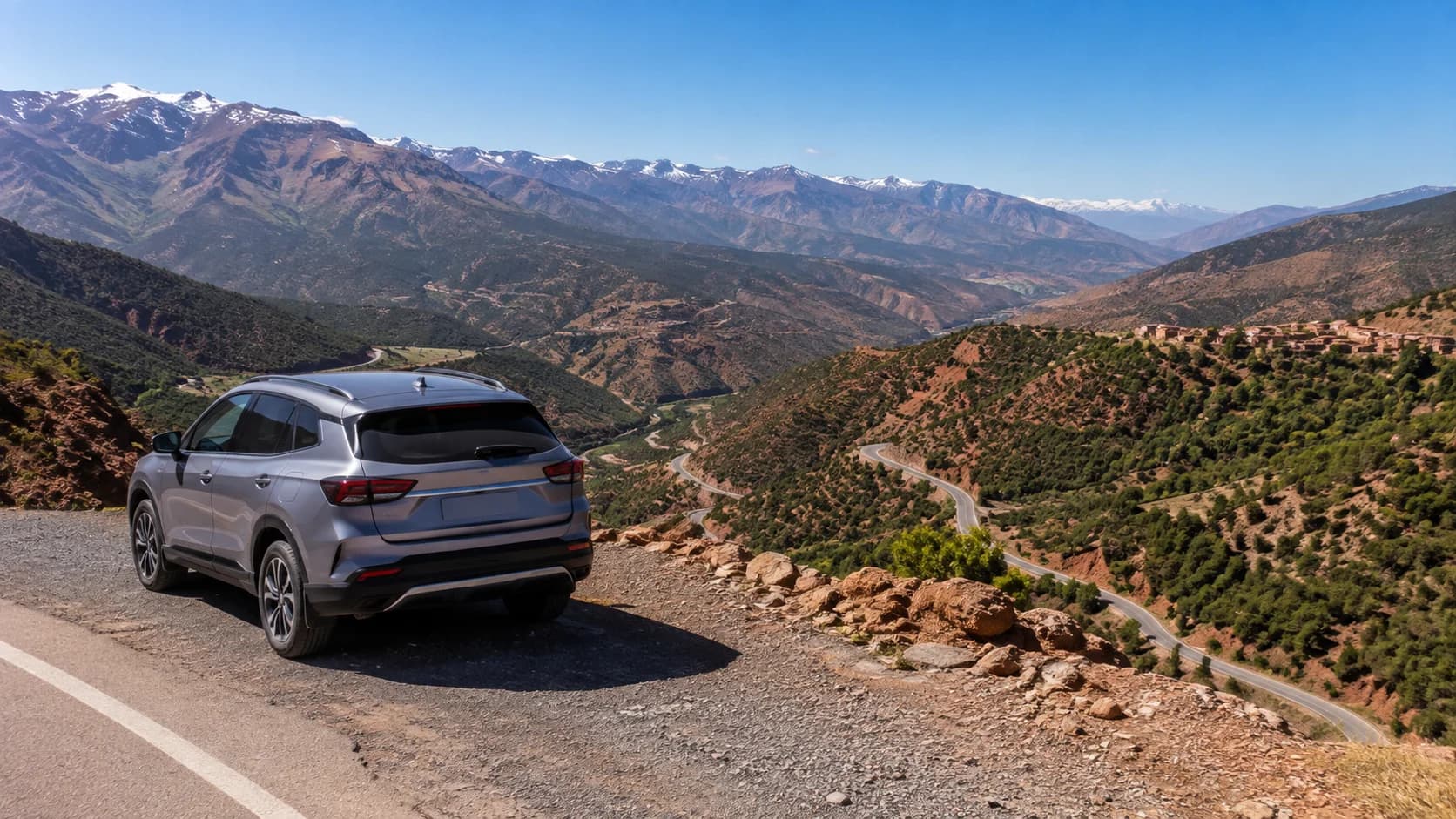
Food-focused road trips are increasingly popular because each city offers different specialties and culinary traditions. Travelers who want flexibility between medinas, coastal towns, mountain villages, and food stops often prefer using Car Rental Morocco rather than fixed schedules.
Vegetarian & Vegan Moroccan Food
Morocco can work surprisingly well for vegetarian travelers.
Common vegetarian options include:
- Vegetable tagines
- Lentil dishes
- Couscous
- Salads
- Bean soups
- Olive plates
- Bread-based breakfasts
Vegan travelers should still ask about butter, broth, and hidden meat ingredients, especially in traditional restaurants.
Fresh produce markets across Morocco also make fruit, nuts, juices, and vegetables easy to find.
Food Safety Tips for Tourists
Moroccan food is generally safe and enjoyable, but basic precautions help travelers avoid stomach issues.
Tips:
- Choose busy food stalls with high turnover
- Drink bottled or filtered water
- Be cautious with raw seafood in very hot weather
- Wash hands regularly in medinas
- Introduce rich street food gradually
- Keep small cash for markets and stalls
Street food can be excellent, but busy vendors are usually safer than empty ones.
FAQ
1. What is the most famous Moroccan food?
Tagine is probably the most internationally famous Moroccan dish.
2. What should I eat first in Morocco?
Many travelers start with chicken tagine, couscous, mint tea, and fresh bread.
3. Is Moroccan food spicy?
Usually aromatic rather than very spicy.
4. What is a Moroccan breakfast like?
Common breakfasts include msemen, baghrir, bread, olives, honey, tea, and eggs.
5. Is street food safe in Morocco?
Generally yes if you choose busy, popular stalls.
6. What is the national drink of Morocco?
Mint tea.
7. Is Moroccan food vegetarian-friendly?
Yes, especially vegetable tagines and couscous dishes.
8. What dessert should I try in Morocco?
Chebakia and kaab el-ghazal are excellent starting points.
9. Which city has the best food in Morocco?
Many travelers consider Fes the culinary capital, while Marrakech offers the widest restaurant variety.
10. What seafood should I try in Morocco?
Grilled sardines, calamari, shrimp, and Atlantic fish platters.
11. What is tangia?
A slow-cooked Marrakech meat specialty cooked in a clay pot.
12. Is Moroccan food expensive?
No, Morocco offers excellent value compared with many European destinations.
13. What is amlou?
A spread made from almonds, argan oil, and honey.
14. What is Moroccan street food like?
Affordable, flavorful, and very varied between regions.
15. Can I do a food road trip in Morocco?
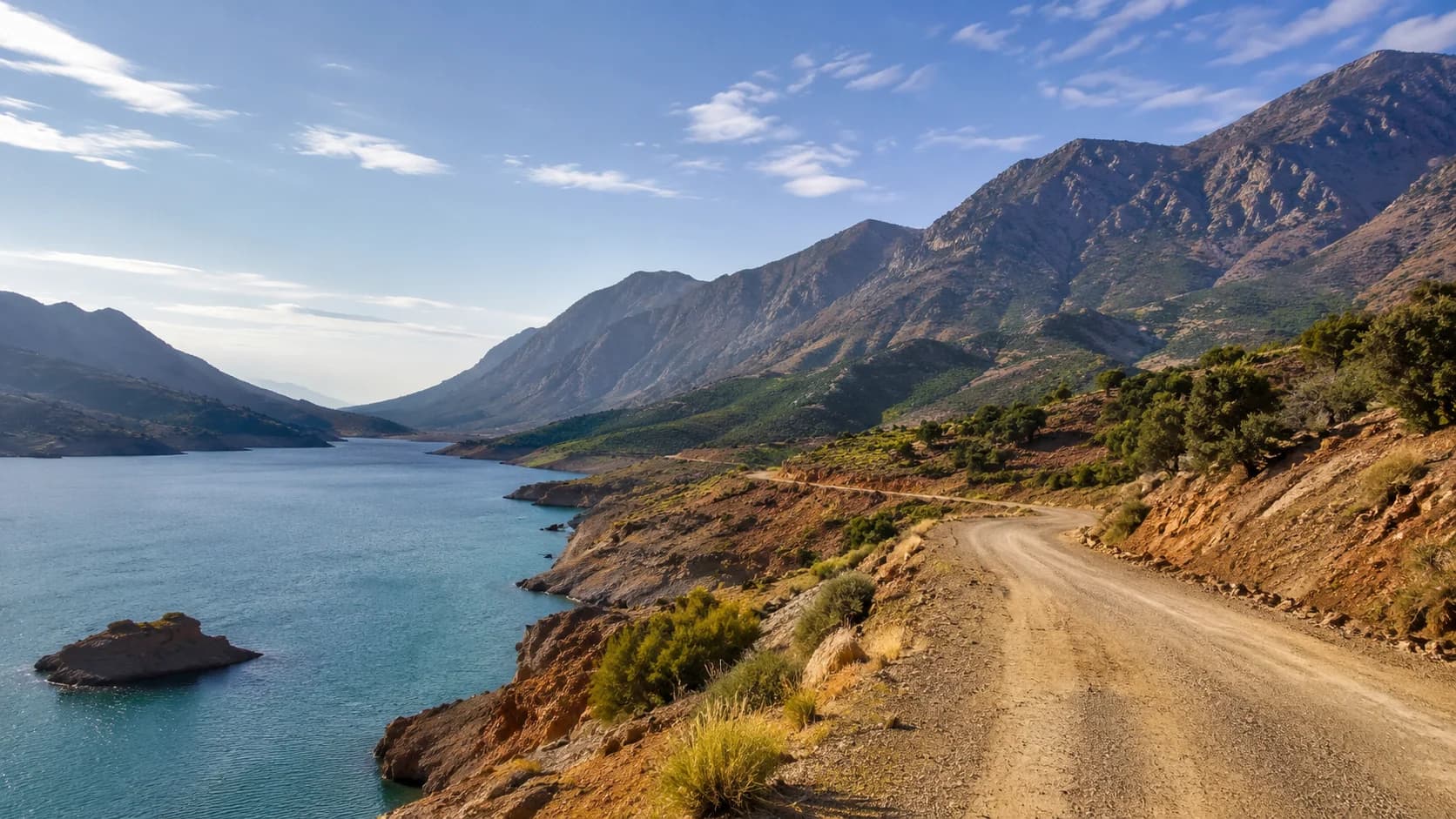
Yes. Morocco is one of the best countries in North Africa for regional culinary road trips.
Book with MarHire
Moroccan food is more than a meal, it is one of the best ways to experience the country itself. From seafood in Essaouira to tangia in Marrakech and refined dishes in Fes, every region offers something different.
For travelers exploring multiple cities, villages, beaches, and mountain routes, flexibility matters. With Car Rental Morocco, you can discover local bakeries, roadside grills, coastal seafood spots, and traditional family restaurants far beyond the standard tourist route.
Whether you are planning a food-focused road trip, a medina city break, or a full Morocco itinerary, MarHire helps you explore Morocco one meal at a time.