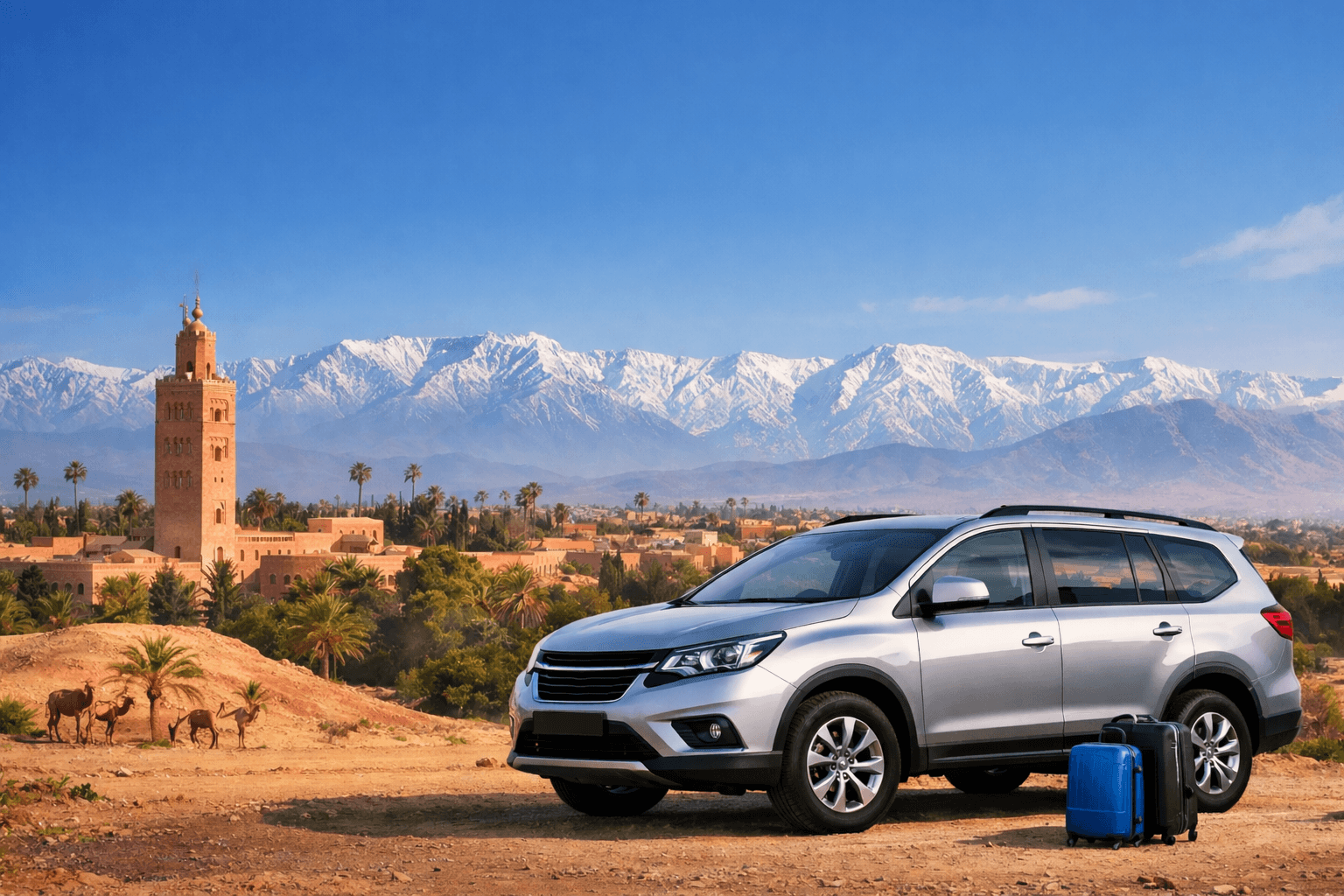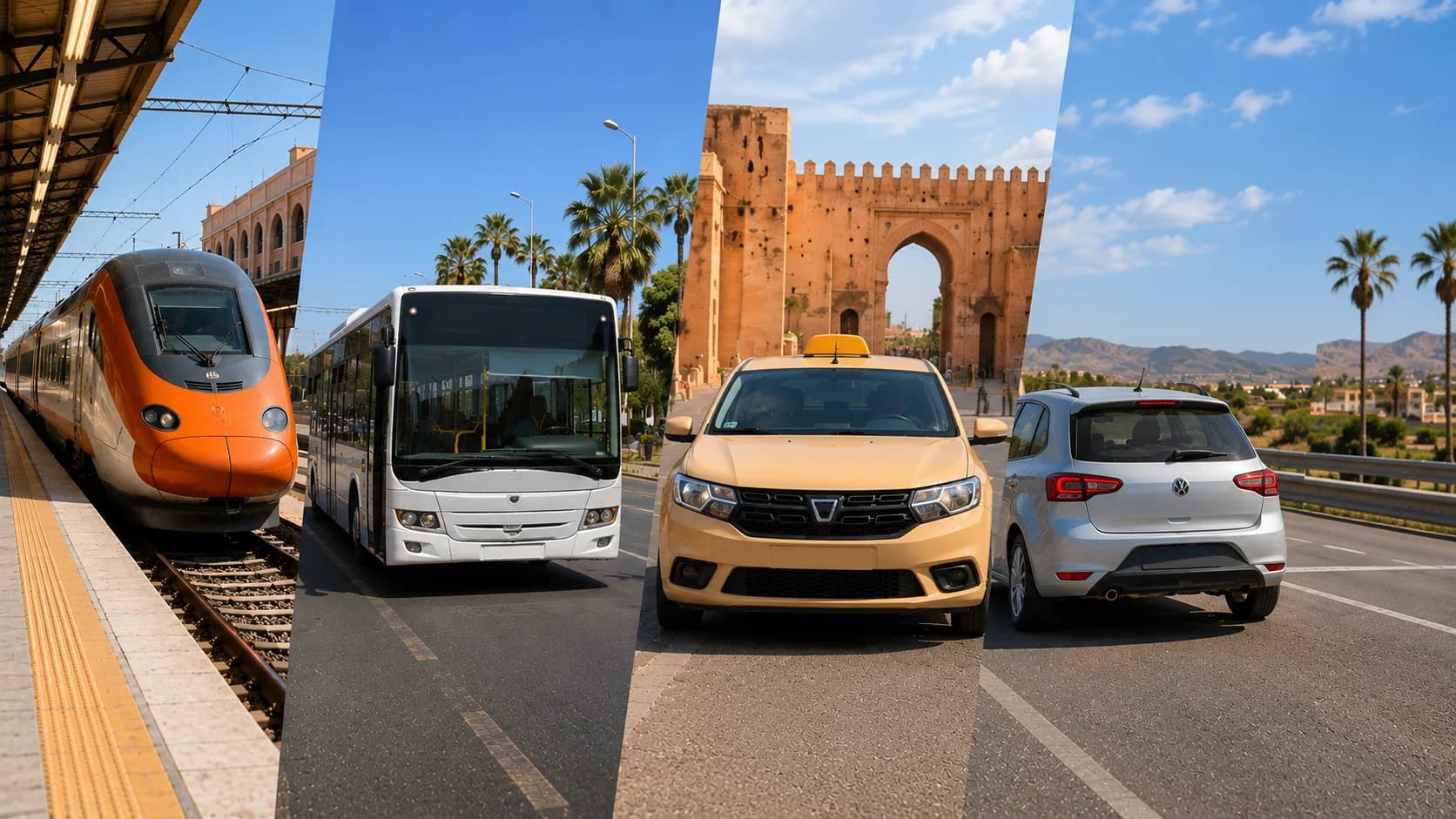








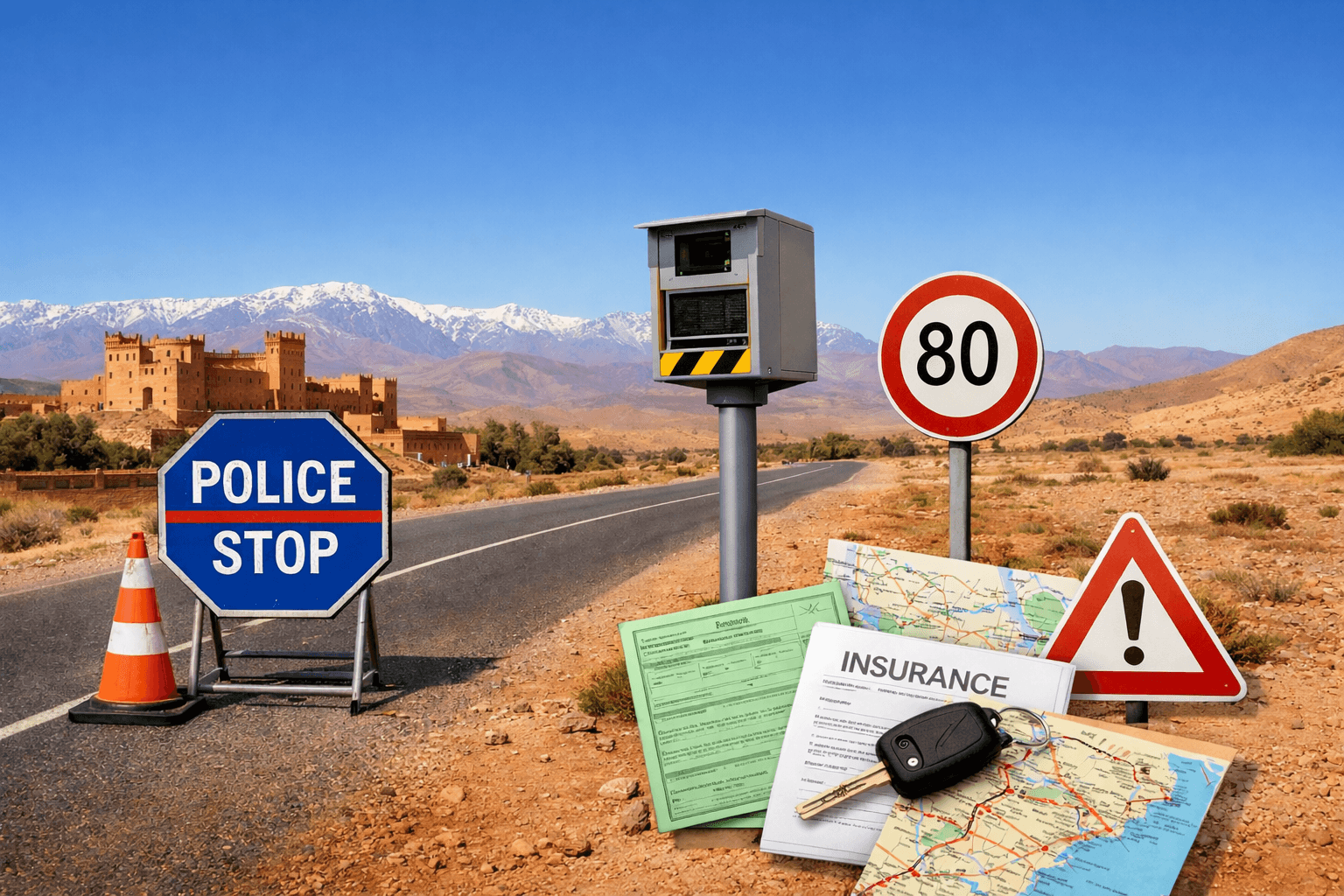
Driving in Morocco can be surprisingly comfortable once you understand the rules of the road and the “how it works in real life” side: what happens at police checkpoints, where speed cameras usually appear, and which documents you should always keep within reach.
Most tourist problems come from small, avoidable mistakes: not having a document ready, missing a speed limit change near a town entrance, or misunderstanding how fines are handled. This guide keeps it practical, no scare tactics, no legal drama, just what you need to drive calmly and confidently in 2026.
If you’re planning a self-drive trip and want to compare options quickly before booking, start with MarHire. And if you’re on a tight budget, you can still drive safely and legally, just choose the right category through cheap car rental and focus on good habits.
Quick Answer
-
Police stops are usually routine: slow down, be polite, show documents, and follow instructions.
-
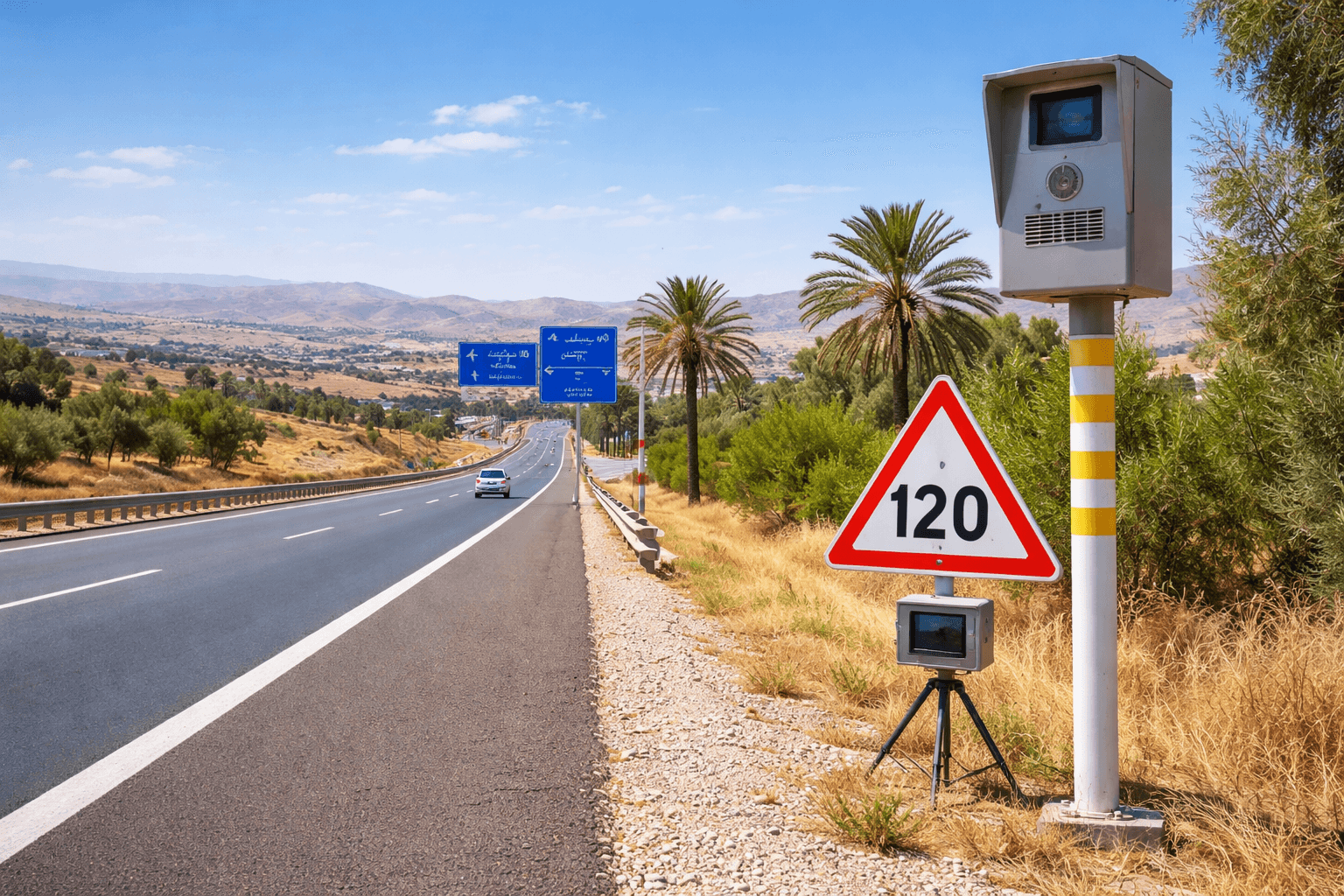
Speed cameras are common near town entrances, long straight roads, and major routes, watch for sudden limit drops.
-
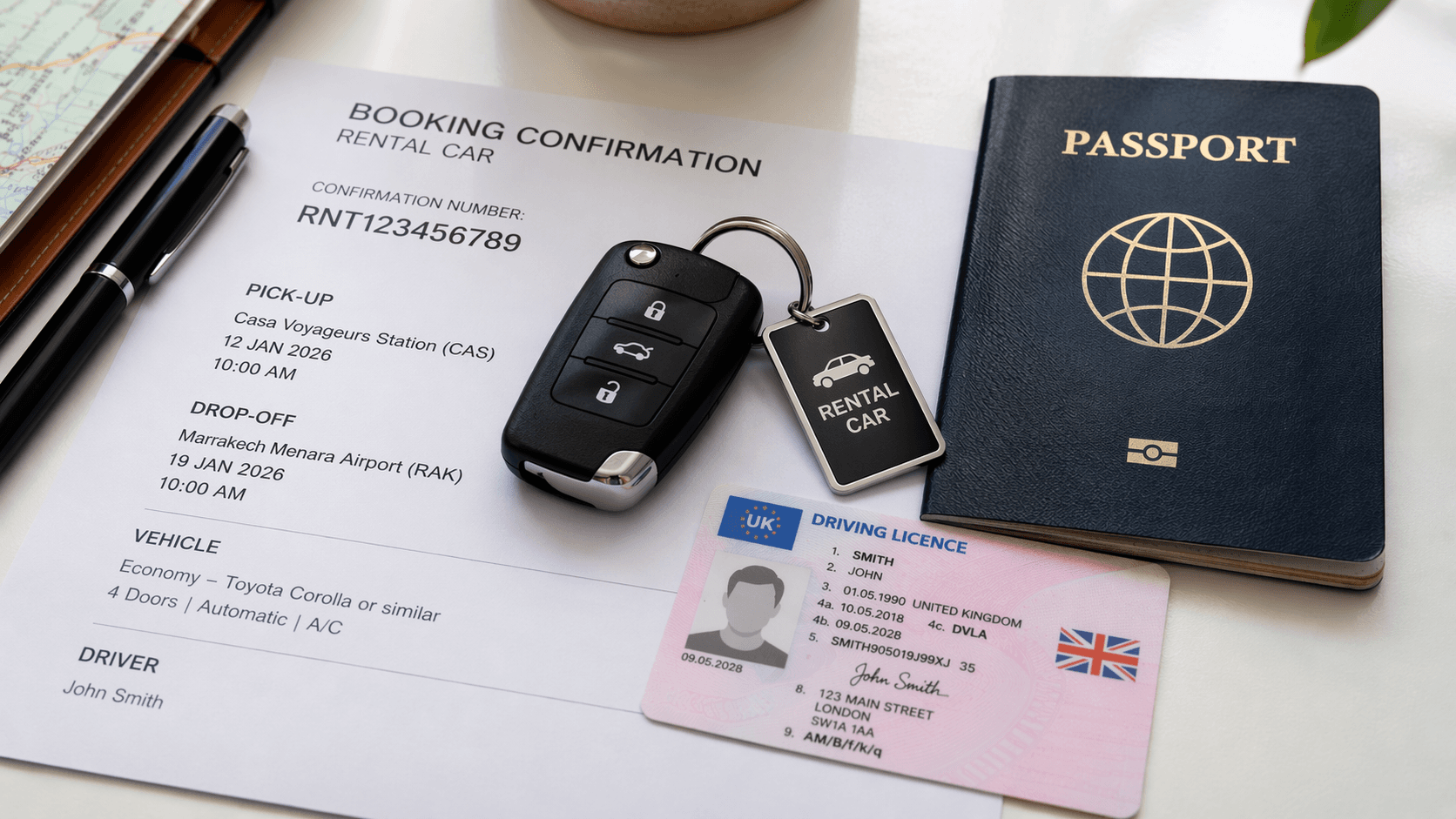
Always carry: passport/ID, driver’s license (and IDP if needed), rental contract, insurance proof, and the car’s registration papers (usually provided by the rental).
-
If you’re fined, ask for clarity and a receipt; avoid arguing on the roadside.
Table of Contents
-
What driving feels like for tourists in Morocco
-
Police stops and checkpoints: what to do (step-by-step)
-
Speed cameras: where they usually are and how to avoid fines
-
Must-carry documents checklist (tourist-proof)
-
Fines and payments: what’s normal
-
Common tourist mistakes (and easy fixes)
-
FAQs
-
Conclusion
1) What Driving Feels Like for Tourists in Morocco
Morocco’s main roads between cities are generally straightforward, and you’ll quickly adapt. The “challenge” is usually not road quality—it’s the rhythm:
-
frequent roundabouts in many cities,
-
scooters and quick lane changes in urban zones,
-
and speed limits that change quickly at town borders.
If you come from a country where limits rarely change, Morocco can catch you out with a simple pattern: a fast road becomes a town approach, and the limit drops suddenly. That’s where most tourist speed tickets happen.
The goal of this guide is to make you feel prepared, not paranoid. When you know what to expect, you drive smoother and safer.
2) Police Stops and Checkpoints: What to Do
Police checkpoints in Morocco are common and, for tourists, usually routine. They can appear:
-
at town entrances,
-
on busy regional routes,
-
near larger intersections,
-
or at temporary road-control points.
What a typical stop looks like
Most often, you’ll be waved to slow down, stop briefly, and show documents. The officer may ask where you’re coming from and where you’re going. It’s usually quick when you’re prepared.
Step-by-step: the calm way to handle it
-
Slow down early and signal if you’re moving to the side.
-
Stay calm and polite (simple, respectful tone works).
-
Keep hands visible and wait for instructions.
-
Provide documents quickly (have them together, not scattered).
-
Answer briefly: your route + destination is enough.
-
Don’t argue roadside. If you’re confused, ask for clarification politely.
What not to do
-
Don’t film officers up close (can escalate a simple stop).
-
Don’t “search your whole car” while the officer waits, prepare your documents in advance.
-
Don’t act rushed or frustrated. Calmness shortens the stop.
Practical tip: create a “document pack”
Keep a simple folder in the glovebox with:
-
rental contract papers,
-
insurance proof/coverage note (if provided),
-
and vehicle documents (often included by the rental company).
Then keep your ID and license accessible separately.
This reduces stress and makes you look organized, which usually makes the stop faster.
3) Speed Cameras: Where They Usually Are and How to Avoid Fines
Speed enforcement is a real thing in Morocco, and tourists get caught for one main reason: they miss the limit change.
Common places cameras appear
While locations vary, cameras often show up in patterns:
-
Town entrances/exits (limit drops as you enter)
-
Long straight roads where drivers speed up without noticing
-
Near roundabouts or major junctions
-
Approaches to larger cities
-
High-traffic national roads connecting major towns
The #1 habit that saves tourists money
Whenever you see:
-
the first buildings of a town,
-
roadside shops,
-
more pedestrians,
-
or more intersections,
assume the limit may drop and check your speed immediately.
Don’t rely on “flow of traffic”
Sometimes locals know where cameras are and slow down. Other times they don’t. Drive based on signs, not on what other cars are doing.
Useful driving rule for tourists
Treat every town approach like a “slow zone.” Even if the road still looks open, the limit can change quickly. This is the most common speed-ticket scenario for visitors.
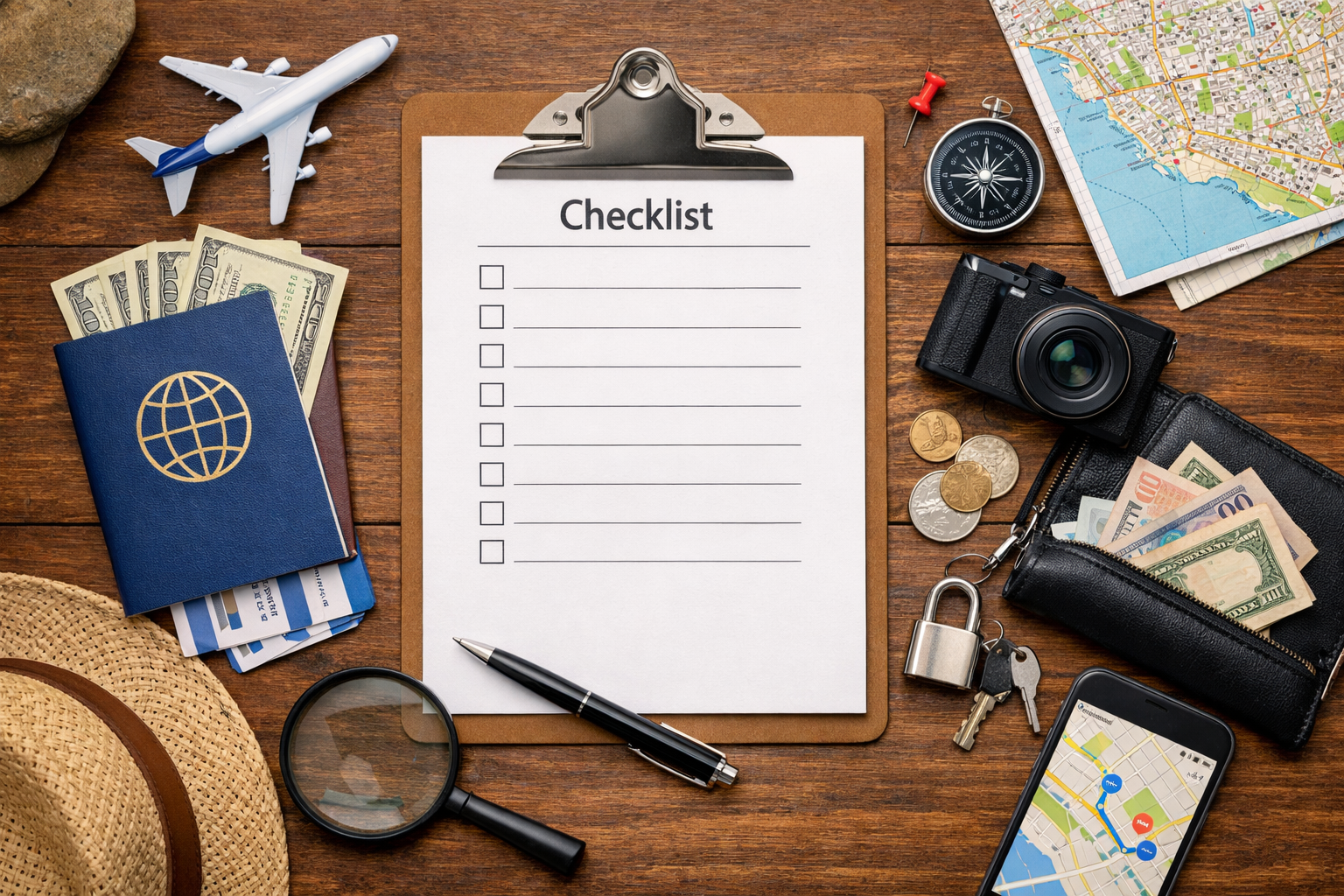
4) Must-Carry Documents Checklist (Tourist-Proof)
If you’re stopped, the smoother you are, the smoother the stop is. Carry these:
Always carry on you
-
Passport or national ID
-
Driver’s license
-
International Driving Permit (IDP) if your license isn’t in Latin characters or if your rental company requires it (requirements vary)
Keep in the car (glovebox folder)
-
Rental contract / rental agreement (with your name + car details)
-
Insurance proof / coverage document (if provided)
-
Vehicle registration papers (rental companies typically provide these)
-
Emergency contact number (rental support / roadside help)
Helpful extras (not always required, but smart)
-
A phone charger
-
A small reflective triangle/vest if included (many rentals carry safety items)
-
A pen for quick notes
Tourist-proof move: take photos of your documents on your phone as backup. Don’t rely only on photos, but they help if a paper gets misplaced.
5) Fines and Payments: What’s Normal
Fines can happen if you speed or break a rule, and handling is usually straightforward when you stay calm.
If you’re told you have a fine
-
Ask politely what the fine is for.
-
Ask how it can be paid and whether a receipt is provided.
-
Keep it respectful and factual.
Avoid making it complicated
The roadside is not the place for long debates. If you believe something is wrong, ask for clarity and follow the official process.
Important mindset for tourists
Most driving trouble in Morocco is avoidable by:
-
respecting speed limits,
-
slowing down at town entries,
-
and having documents ready.
That’s 90% of it.
6) Common Tourist Mistakes (and Easy Fixes)
Mistake 1: Not slowing at town entrances
Fix: treat every town sign/building cluster as a speed reset.
Mistake 2: Documents scattered across bags
Fix: keep a dedicated glovebox folder + keep your ID/license accessible.
Mistake 3: Driving like it’s “one rule everywhere”
Fix: adapt, urban driving requires more patience, rural roads require attention to speed signs.
Mistake 4: Overconfidence on empty roads
Fix: empty roads tempt speeding. That’s where enforcement often catches drivers.
Mistake 5: Renting “cheap” but ignoring basics
Fix: a budget car can be totally fine if you still drive smart and verify your paperwork. If you’re choosing a lower-cost option, use cheap car rental and prioritize clarity on documents and support contact.
FAQs
Are police stops common for tourists in Morocco?
They can happen, especially on major routes or at town entrances. Most stops are routine document checks.
What documents should I show at a checkpoint?
Typically your ID/passport, driver’s license, and the rental/vehicle papers. Keep them organized so you don’t waste time.
Where are speed cameras most common?
Often around town entrances/exits and on long straight roads. The biggest risk is missing limit drops.
How do I avoid getting fined for speed?
Watch limit changes, especially when approaching towns. Don’t follow the fastest driver, follow the signs.
Do I need an IDP to drive in Morocco?
It depends on your license language and your rental company’s policy. If your license isn’t in Latin characters, an IDP can prevent problems.
Is driving in Morocco safe for tourists?
Generally yes with normal caution: stay alert in cities, respect speed limits, and avoid aggressive driving.
Conclusion
Driving in Morocco as a tourist becomes easy when you know the routine: expect occasional police checks, slow down at town entrances, and keep your documents ready. Speed cameras are predictable when you understand the patterns, and most issues disappear when you drive calmly and follow signs.