






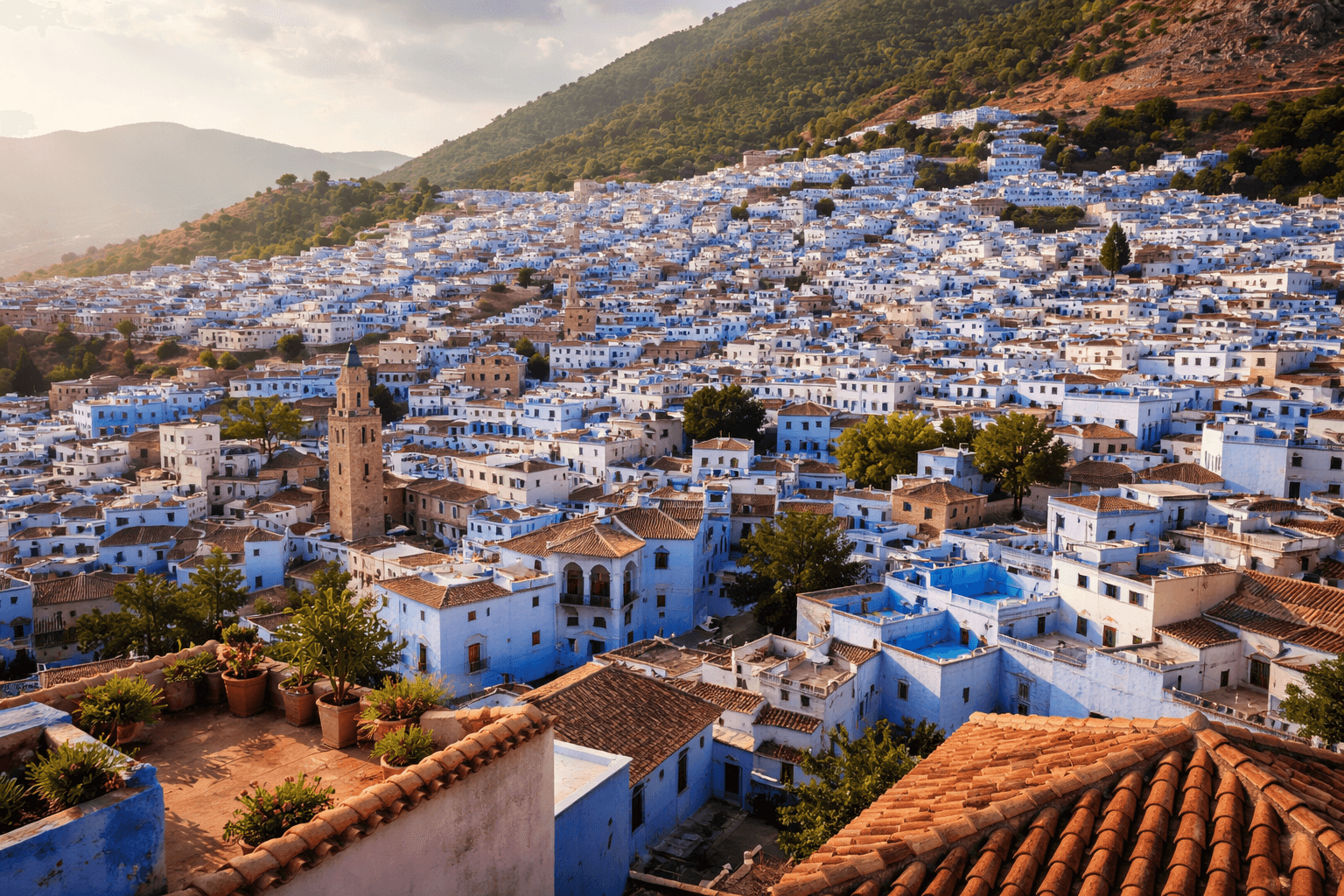
Chefchaouen is one of the most photogenic places in Morocco, but it is much more than a backdrop for blue-street photos. Set in the Rif Mountains, the town blends a blue-painted medina, Andalusian heritage, a relaxed walking culture, and easy access to nature around Akchour, Talassemtane, and nearby viewpoints. Morocco’s official tourism board highlights the medina, ethnographic museum, local crafts, and surrounding mountain landscapes as the city’s core draws, while UNESCO also notes Chefchaouen’s strong natural and cultural identity in the wider region.
Unlike Morocco’s larger imperial cities, Chefchaouen feels compact and slow-paced. You can spend hours simply wandering uphill lanes, pausing for mint tea, browsing woven goods and ceramics, then watching the light change across the blue walls. That smaller scale is exactly why the city works so well for first-time visitors, couples, photographers, and travelers building a northern Morocco route from Tangier, Tetouan, or Fes.
For travelers planning a wider road trip, pairing Chefchaouen with Car Rental Morocco is often the most flexible option, especially if you want to add Akchour, Tetouan, or Tangier at your own pace. If you would rather skip mountain roads and parking logistics, Private Driver Morocco is the easier choice for a comfortable transfer-based itinerary.
Table of Contents
1. Overview & Why Visit
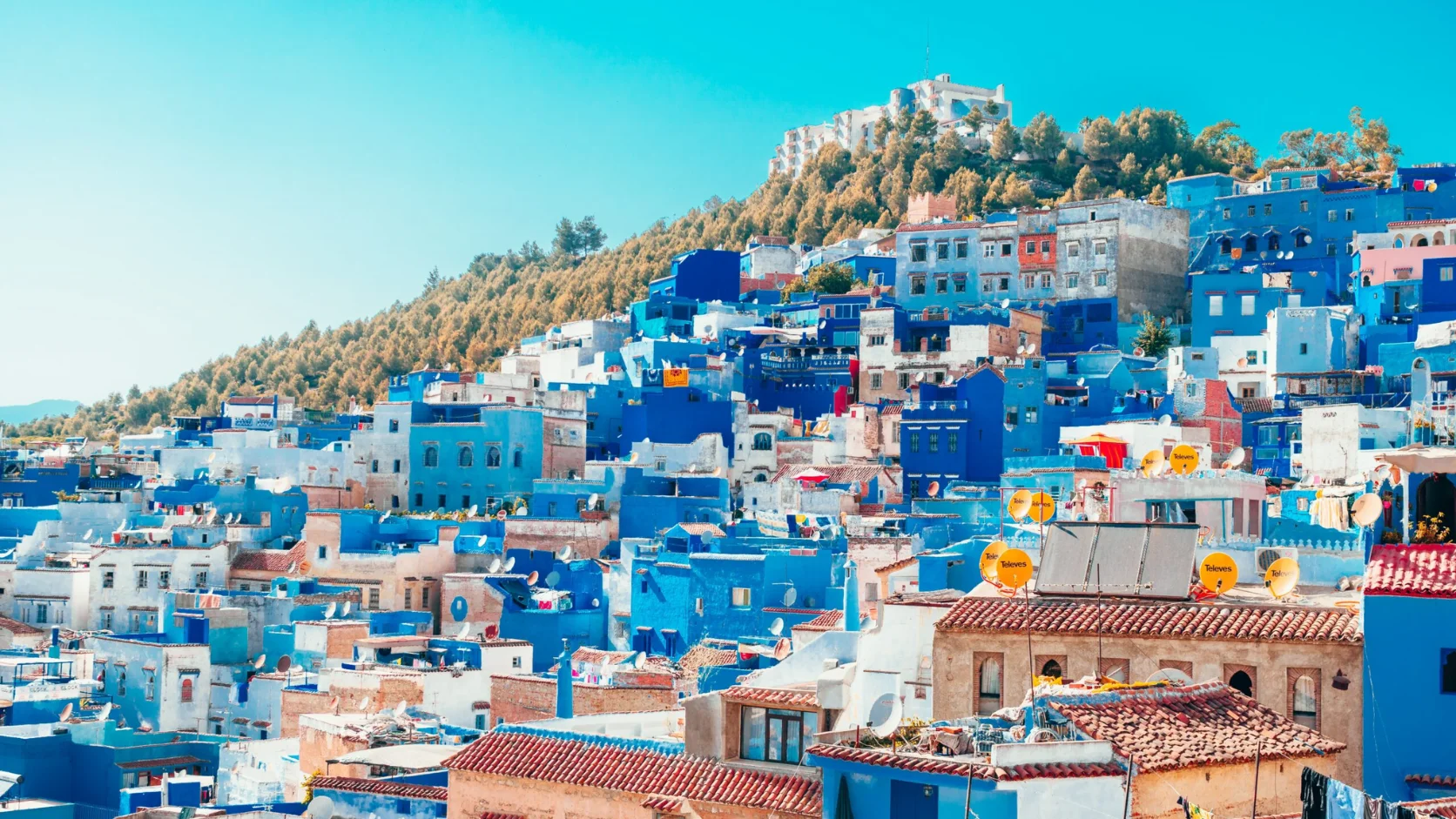
Chefchaouen, often nicknamed the Blue City or Blue Pearl of Morocco, stands out because the destination experience is visual, walkable, and atmospheric from the moment you arrive. The medina’s narrow lanes climb and curve along the hillside, with blue walls, staircases, doorways, and small plazas creating a townscape that feels very different from Marrakech, Fes, or Casablanca. Morocco’s official tourism portal describes the city as a place of heritage, crafts, museums, and mountain nature, while the regional tourism material emphasizes the medina’s Andalusian influence and strategic mountain setting.
The appeal is not only color. Chefchaouen works because it gives travelers several experiences in one stop. You have an intimate medina that is easy to explore on foot, a central square with cafés and the kasbah, a spring area at Ras El Maa, panoramic viewpoints above town, and quick access to hiking and waterfalls in the wider province. Official Moroccan tourism pages specifically call out Akchour, Tissouka, Azilane, and the forested mountain massif around Chefchaouen as major outdoor assets.
It is also a good destination for travelers who want a calmer rhythm. Many visitors come to Morocco expecting constant movement between monuments, souks, and long intercity drives. Chefchaouen is different. Here, the best hours are often unplanned: early-morning walks before day-trippers arrive, late-afternoon rooftop views, or a slow dinner in the medina. The town rewards time rather than speed.
Another reason to visit is that Chefchaouen fits many types of trips. It works as a one-night stop from Tangier, a two-night photography and food break, a romantic mountain town, or a base for northern Morocco excursions. The city is also easy to combine with official travel-planning resources from the Moroccan National Tourism Office, which highlights its crafts, museums, medina, and nature.
2. Best Time to Visit
The best overall months for a Chefchaouen trip are usually spring and autumn, especially April, May, September, and October. Climate sources show a Mediterranean-style pattern with warm, drier summers and cooler, wetter winters, while Weather Spark shows annual temperatures usually ranging from about 3°C to 30°C and climate-data sources describe winter as the rainier season.
Spring is excellent for soft light, green mountain scenery, and comfortable walking weather. Autumn is similarly pleasant, with milder daytime temperatures and good conditions for medina exploration and short hikes. Summer is still very doable because Chefchaouen is generally less intense than hotter inland cities, but midday climbing streets can still feel tiring. Winter is quieter and atmospheric, though nights can be chilly and rain is more likely.
For photographers, the best daily timing is often early morning or late afternoon, when the blue walls pick up softer light and the medina feels calmer. For travelers who dislike crowds, avoiding weekends and major holiday periods helps.
3. Top 7 Attractions in Chefchaouen
The Blue Medina
This is the heart of any Chefchaouen itinerary. The medina’s blue-painted alleys are the reason most travelers come, and the city’s official tourism pages specifically frame the medina as the signature heritage experience. The charm lies in wandering rather than rushing. Some alleys are famous for photos, but the better experience is exploring side lanes, small stairs, painted arches, and local doorways without trying to tick off every “Instagram spot.”
Outa el Hammam Square
Outa el Hammam is the main square and your natural orientation point. It is where cafés, restaurants, and historic architecture meet. It works well for a first lunch, an evening tea, or a pause between sights. You are close to the kasbah and the Grand Mosque area, so it is also the easiest place to reset if you lose your sense of direction in the lanes. Morocco’s tourism content and travel articles consistently identify this square as one of the city’s focal points.
The Kasbah and Ethnographic Museum
The kasbah near the main square is one of Chefchaouen’s most important historic landmarks. Official tourism material lists the ethnographic museum among the city essentials, and the kasbah is widely noted as a fortified complex with a garden and museum spaces that help visitors understand the region’s history and crafts. It is one of the best places to add context after wandering the medina.
Ras El Maa
Ras El Maa sits just outside the medina and is one of the easiest stops to add to a walking route. Travel material from Visit Morocco and other destination references mention it as a spring or waterfall area just beyond the old town. It is especially nice after climbing the medina because the setting feels fresher and more open than the interior lanes.
Spanish Mosque Viewpoint
The Spanish Mosque viewpoint is one of the classic sunset spots above town. It gives you a wide view over the blue city against the surrounding mountains, which is why it remains popular for short hikes and late-day photos. Historical references note the Spanish Mosque as a hilltop landmark east of town and a now-disused mosque used mainly as a lookout.
Akchour and the God’s Bridge Area
If you have a car or driver, Akchour is one of the best nature add-ons from Chefchaouen. Morocco’s tourism board highlights Akchour among the region’s major outdoor sites, and official nature pages mention the natural arch known as God’s Bridge as well as waterfalls and forest landscapes in the broader massif. It is ideal for visitors who want more than medina time.
Mountain Viewpoints and the Rif Landscape
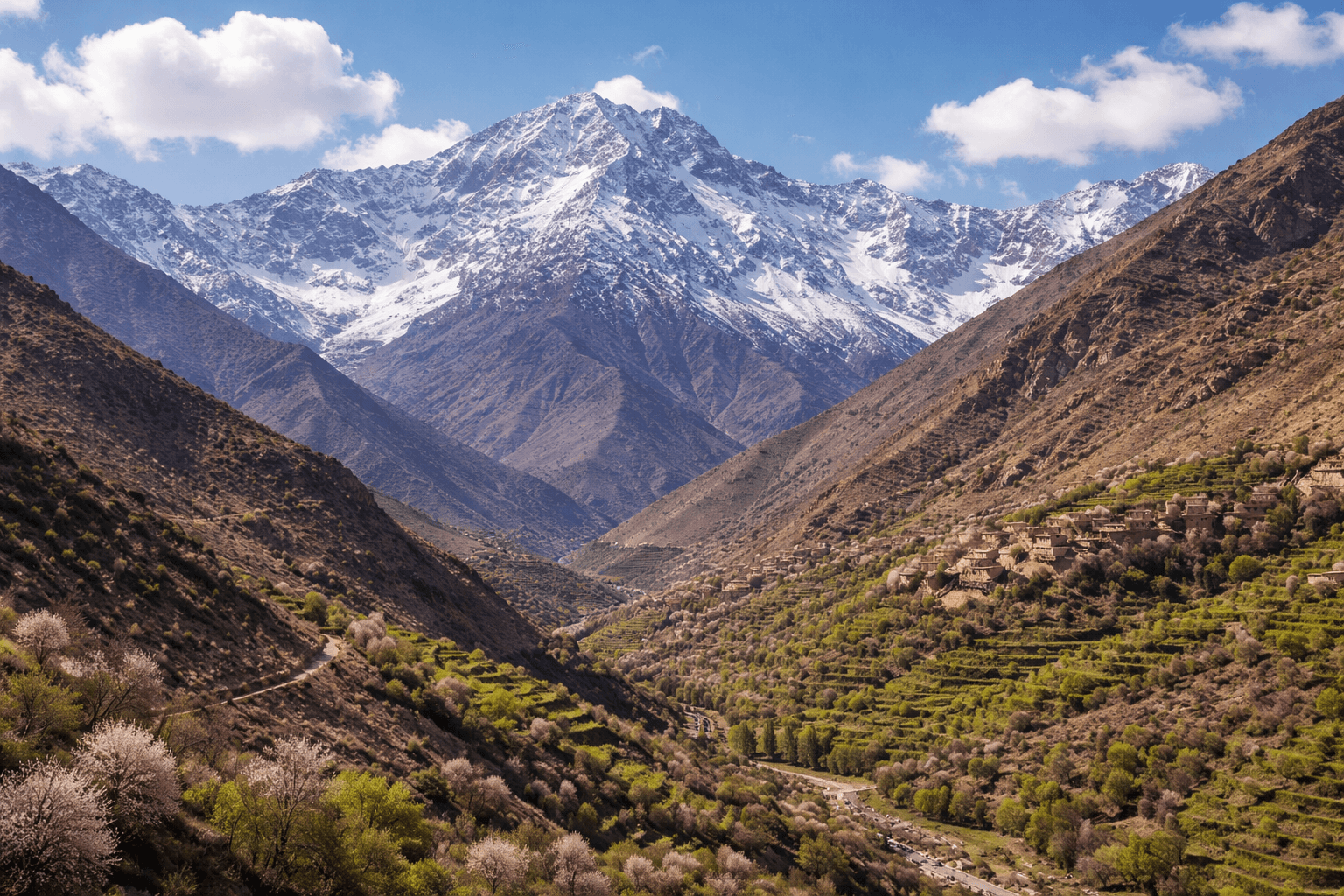
One of Chefchaouen’s biggest strengths is its setting. Official tourism material repeatedly emphasizes the Rif Mountains, protected natural zones, and hiking-friendly terrain around the city. Even if you do not commit to a full hike, rooftop terraces and upper medina viewpoints make the mountain setting part of the experience. This is why Chefchaouen feels immersive rather than decorative.
4. How to Get There & Car Rental
Chefchaouen does not have a major airport, so most travelers arrive overland from Tangier, Tetouan, or Fes. Current route data shows approximate drive times of about 1 hour 48 minutes from Tangier, about 1 hour 7 minutes from Tetouan, and about 3 hours 28 minutes from Fes, with bus journeys generally taking longer.
That makes rental cars especially practical if you want freedom to stop at viewpoints, shift your schedule, or build a route through northern Morocco. A self-drive trip works best for travelers arriving in Tangier and continuing to Chefchaouen before moving on to Tetouan, Asilah, or Fes. For couples, families, and small groups, it is also easier than coordinating multiple bus departures.
If you do not want to handle mountain roads, a private transfer is often the most relaxed solution. This is especially helpful if you are landing in Tangier and going straight to the blue city with luggage. The route is scenic, but it is still a mountain approach, so comfort matters.
5. Driving Tips & Safety
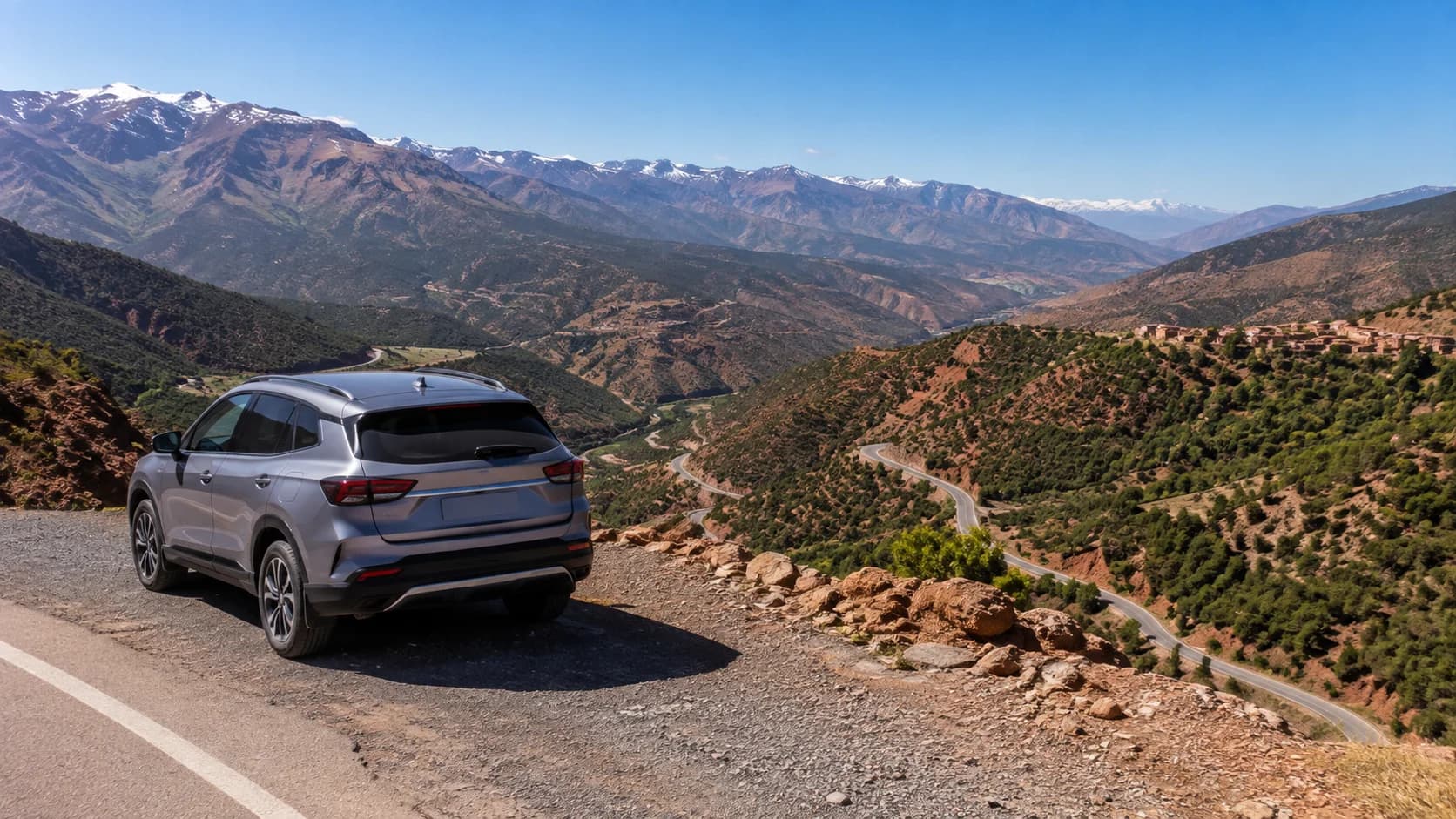
Driving to Chefchaouen is not difficult for most confident drivers, but it does require more attention than flatter intercity routes. The approach roads are mountainous, with curves, elevation changes, and sections where local traffic pace can vary. That is why daytime arrival is a better idea than reaching the city after dark, especially on a first visit. General route references also describe the mountain access as something to approach with extra caution.
Inside the medina, you will be walking, not driving. The smart move is to confirm parking before arrival and travel light enough to manage a short uphill walk if your riad is deep in the old town. Many medina stays are charming precisely because cars cannot reach the door.
A few practical habits make a big difference: use engine braking rather than riding the brakes downhill, keep fuel above the minimum before entering mountain areas, and avoid rushing corners. In busy pedestrian areas near medina edges, slow down even more than you think necessary. Chefchaouen rewards an unhurried style of travel.
For travelers who want the flexibility of stops without the road stress, booking a driver is often worth it.
6. 2-Day Chefchaouen Itinerary
Day 1: Settle into the Medina
Arrive by late morning or early afternoon and check into a riad near the medina. Start with a relaxed walk through the blue lanes rather than going straight to the busiest photo corners. Let yourself drift toward Outa el Hammam, have lunch, and then visit the kasbah and ethnographic museum to ground the trip in local history.
Afterward, continue on foot to Ras El Maa. This is a good transition from the compact alleys to a more open edge-of-town feel. Near sunset, walk up to the Spanish Mosque viewpoint for one of the best panoramic views over Chefchaouen and the surrounding mountains. Finish the evening with dinner in or near the main square, then enjoy a rooftop tea if your riad has a terrace.
Day 2: Nature, Markets, and Slow Exploration
On your second day, choose between a town-focused morning or a short excursion. If you want more nature, head toward Akchour early for cooler temperatures and easier timing. If you prefer staying in town, use the morning for photography, shopping for woven goods or ceramics, and exploring quieter upper-medina streets before midday. Morocco’s tourism pages specifically note Chefchaouen’s traditional crafts and regional outdoor options, so either version of the day works well.
Spend your afternoon at a terrace café or restaurant with mountain views. Chefchaouen is a city where not every hour needs a formal plan. A slower second day usually feels better than trying to cram in too many side trips.
If you are continuing your route, late afternoon is a good departure window for nearby destinations. If you are leaving for Fes, an earlier morning departure is more comfortable because the drive is longer.
7. Best Restaurants & Hotels
Chefchaouen has enough choice to match different budgets and trip styles, but the best strategy is to choose by location and atmosphere rather than chasing a single “best” property. The medina is ideal for travelers who want charm and walkability, while hillside or edge-of-medina stays can offer easier parking and wider views.
Among accommodation options that currently stand out across major booking platforms are Hotel Alkhalifa, Dar Jasmine, Maison d’hôtes Afassi, Dar Antonio, Casa Hassan, and Hotel Parador. Booking listings show several of these properties among the stronger-rated or popular stays, while Hotel Parador is specifically noted for being within the medina and close to both the kasbah and Ras El Maa.
For a romantic stay, boutique riads and view-focused properties tend to work best. For road-trippers, ease of parking matters just as much as room design. If you are arriving by car, check access carefully before booking a medina stay.
For food, current traveler-review platforms repeatedly surface names such as Beldi Bab Ssour, Cafe Restaurant Sofia, Bilmos, El Cielo, Cafe Clock Chefchaouen, and Restaurant Tissemlal of Casa Hassan among the better-known places in town. Restaurant Bab Ssour also has its own current web presence in Chefchaouen.
The best dining plan is simple: one medina lunch, one rooftop or terrace dinner, and one flexible café stop for tea or breakfast. Chefchaouen is more about setting and rhythm than formal fine dining, so a restaurant with a calm terrace and good location often beats a place chosen only by rankings.
8. Day Trips from Chefchaouen
The classic day trip is Akchour, thanks to its waterfalls, hiking routes, and broader Talassemtane landscape. Official Moroccan tourism material repeatedly points to Akchour as one of the region’s headline nature experiences, and it is the best option if you want forest scenery and fresh air after medina time.
A second option is a Rif mountain scenic drive with viewpoints and smaller villages. This works especially well with a rental car because you can stop as the light changes and avoid fixed tour timing.
For travelers continuing their route rather than taking a same-day excursion, Tetouan is an easy onward move because the drive is just over an hour, while Tangier is also realistic for the same travel day. Fes is farther, so it is better treated as a transfer day than a half-day trip. Current route data supports this pacing, with Tetouan around 1 hour 7 minutes away by car, Tangier around 1 hour 48 minutes, and Fes around 3 hours 28 minutes.
If your priority is comfort and mountain scenery rather than driving concentration, this is where a private driver can make the day feel much easier.
9. FAQ
1) Is Chefchaouen worth visiting in 2026?
Yes. Chefchaouen remains one of Morocco’s most distinctive destinations because it combines a blue medina, walkable atmosphere, mountain scenery, and easy access to nearby nature. Official tourism sources still position it as a major cultural and outdoor destination.
2) How many days do you need in Chefchaouen?
Two days is the sweet spot for most travelers. One day is enough for the medina and viewpoints, but two days gives you time for Ras El Maa, the kasbah, rooftop dining, and either Akchour or a slower second morning.
3) What are the best things to do in Chefchaouen?
The essentials are wandering the blue medina, relaxing in Outa el Hammam, visiting the kasbah and ethnographic museum, stopping at Ras El Maa, watching sunset from the Spanish Mosque viewpoint, and adding Akchour if you have extra time.
4) How do you get to Chefchaouen from Tangier?
By road. Current route data shows the drive from Tangier takes about 1 hour 48 minutes, while buses take longer at roughly 2 and a half hours.
5) Is it easy to drive to Chefchaouen?
It is manageable for most drivers, but the approach is mountainous and more comfortable in daylight. Drive calmly, plan parking ahead, and remember that the medina itself is for walking, not driving.
6) Can you visit Chefchaouen without a car?
Yes. Bus connections exist from major northern cities, and private transfers are also practical. A car simply gives you more flexibility for Akchour, viewpoints, and multi-stop northern Morocco itineraries.
7) When is the best time to visit Chefchaouen?
Spring and autumn are usually the best balance of weather, light, and comfort. Climate sources show warm, drier summers and cooler, wetter winters, with shoulder seasons offering more pleasant walking conditions.
8) Is Chefchaouen good for couples?
Yes. The city’s scale, rooftop terraces, blue lanes, mountain views, and riad-style stays make it one of Morocco’s better short romantic breaks.
9) Are one night and a day enough for Chefchaouen?
Yes, but only for a highlights visit. You can cover the medina, Outa el Hammam, Ras El Maa, and the sunset viewpoint. Two nights is better if you want a more relaxed pace.
10) What should you wear in Chefchaouen?
Comfortable walking shoes matter most because the medina includes slopes, stairs, and uneven surfaces. Layering helps in spring, autumn, and winter because mountain evenings can feel cooler than daytime sightseeing.
10. Book with MarHire CTA
Chefchaouen is at its best when your transport matches the kind of trip you want. If you are building a flexible northern Morocco route with photo stops, mountain viewpoints, and side trips, book your transport with MarHire and choose the setup that fits you best. A rental car gives you freedom to move at your own pace, while a private driver keeps the journey easy and comfortable on mountain roads.
Whether you are coming from Tangier, Tetouan, or Fes, MarHire helps you turn Chefchaouen from a quick stop into a well-planned part of your Morocco itinerary.