








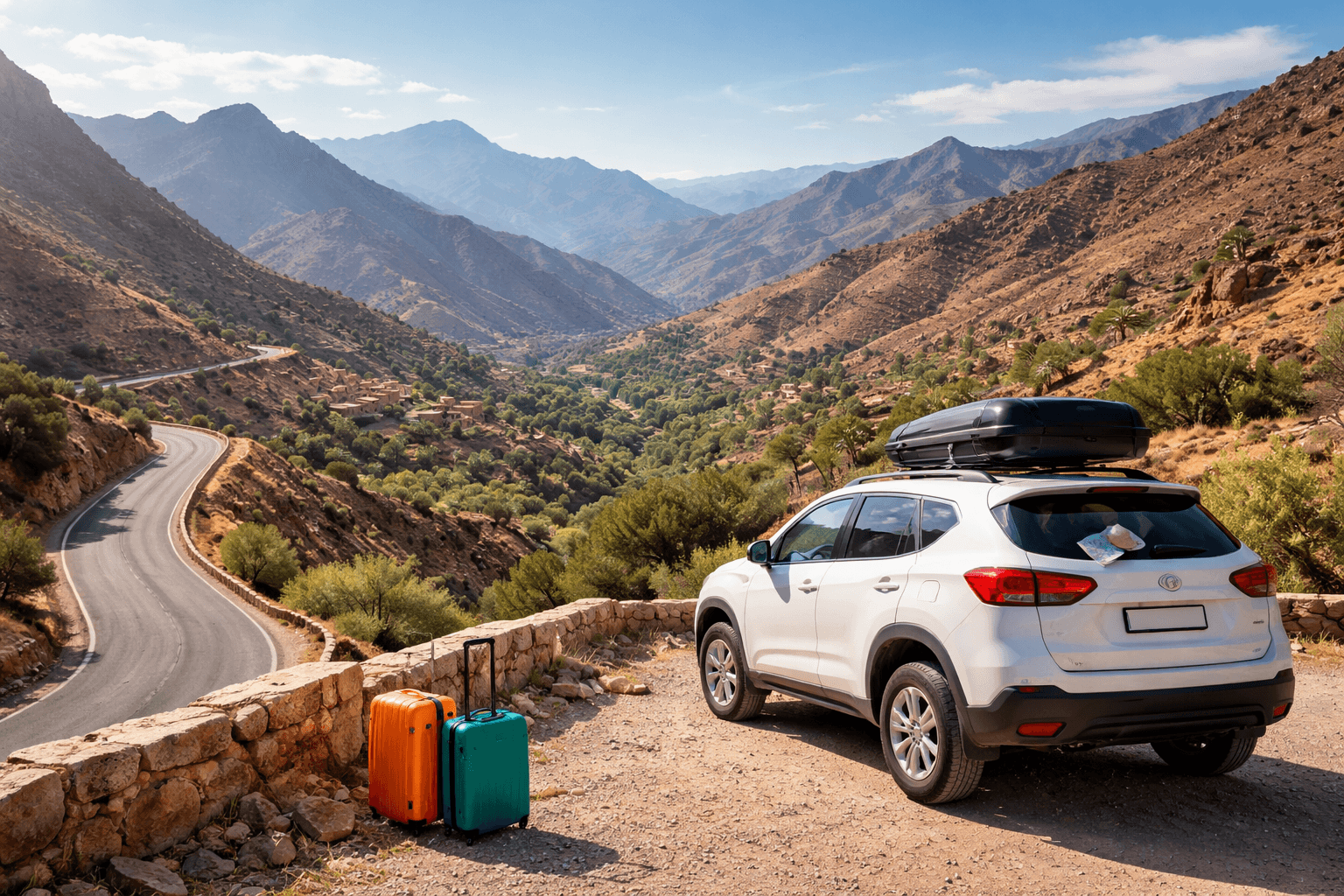
The Atlas Mountains are one of Morocco’s best self-drive regions: dramatic views, villages on hillsides, roadside cafés with mountain air, and routes that feel like real exploration, not just “getting from A to B.” But mountain driving adds three challenges that many travelers underestimate: road types, fast-changing weather, and choosing the wrong car category for their route and luggage.
This guide explains what the roads are really like across common Atlas routes, how weather can change your day (even when Marrakech is warm), and what to book so your trip feels comfortable and safe, without overpaying for features you won’t use.
If you want to compare options first, start with MarHire, and then choose your category through car rental based on your exact plan.
Quick Answer Box (AEO)
-
Most popular Atlas routes are paved and doable in a normal car.
-
Choose an SUV mainly for comfort, visibility, and rough access roads, not because you “need 4x4.”
-
Weather can change quickly: colder mornings, wind, rain, and occasional snow at higher elevation.
-
Best booking move: confirm tires condition, insurance excess, and whether rough tracks/off-road are allowed.
-
If you’re unsure, pick comfort + clearance over the smallest city car.
Table of Contents
-
Atlas driving reality: what tourists get wrong
-
Road types in the Atlas (paved, patchy, and rough access roads)
-
Weather: what changes with altitude
-
What to book: city car vs SUV vs 7-seater
-
4x4 vs 2WD: when it actually matters
-
Safety and comfort checks before you go
-
Packing checklist for Atlas self-drive
-
Common mistakes (and how to avoid them)
-
FAQs
-
Conclusion
1) Atlas Driving Reality: What Tourists Get Wrong
Many travelers imagine the Atlas as either:
-
“perfect smooth highways,” or
-
“dangerous off-road mountain tracks.”
The truth is in the middle. The main routes to major villages and viewpoints are usually paved and manageable. The difficulty comes from the details:
-
narrow sections near villages,
-
occasional potholes or broken edges,
-
steep ramps,
-
slower vehicles,
-
and weather changes that affect visibility and grip.
The Atlas isn’t scary, but it rewards preparation.
2) Road Types in the Atlas Mountains
Road conditions depend on where you go and how deep you venture. Think of Atlas roads in three layers.
A) Main paved routes (most day trips)
These are the routes most tourists use from Marrakech: paved roads, generally fine for any normal car. You’ll still see:
-
curves,
-
elevation changes,
-
slower traffic,
but the surface is usually okay.
What it feels like: easy driving, just stay patient and don’t rush corners.
B) Patchy paved roads (common on scenic detours)
On some scenic sections, you may find:
-
uneven pavement,
-
patched repairs,
-
potholes,
-
broken shoulders.
What this means for you: go slower, avoid night driving, and don’t hug the edge.
C) Rough access roads (short stretches to viewpoints, guesthouses, trailheads)
This is where tourists get surprised. The last 5–15 minutes can include:
-
gravel,
-
steep ramps,
-
rough surfaces,
-
sharp rocks near shoulders.
This is where extra ground clearance helps. You don’t always need 4x4, but you do need to drive carefully and avoid “shortcuts” that aren’t real roads.
3) Weather: What Changes With Altitude
Weather is the most underestimated part of an Atlas trip. Marrakech can be warm while the mountains feel cold and windy.
What commonly changes
-
Temperature drops in the morning and at higher elevation
-
Wind can be stronger than expected
-
Rain can appear suddenly, changing road grip
-
Fog/low cloud can reduce visibility on curves
-
In colder months, snow/ice can be possible on higher passes
A simple, reliable way to check mountain forecasts before you leave is to use a widely known weather source like MeteoBlue’s Marrakech forecast as a baseline, then compare with your destination area.
(You’re not using it for Marrakech weather only, you’re using it to see the pattern, then you check the mountain destination forecast too.)
Best weather habits for Atlas driving
-
Leave earlier so you’re not driving mountain curves at night.
-
If the sky looks unstable, plan fewer stops and avoid deep detours.
-
Treat rain as a “slow down” signal immediately, roads can get slick fast.
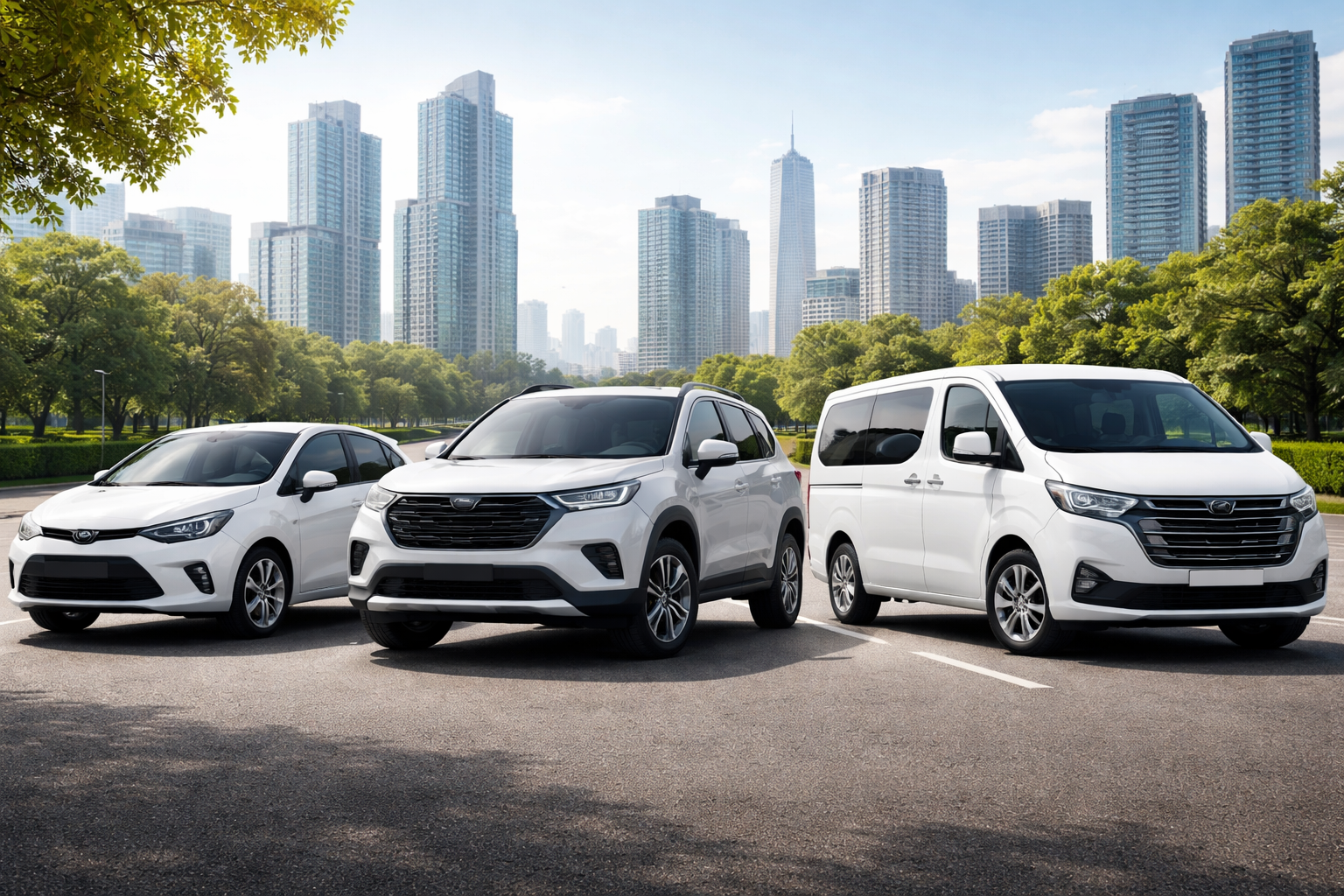
4) What to Book: City Car vs SUV vs 7-Seater
The best vehicle depends on two things:
-
your route type (main paved vs rough access),
-
your passengers/luggage.
City car: when it’s enough
A city car can be fine if:
-
you stick to main paved routes,
-
you’re 1–2 people with light luggage,
-
you’re confident driving on curves.
Downside: less comfort on long drives, less clearance on rough access roads.
SUV: the best all-around choice for the Atlas
An SUV is often the best “no-regrets” pick because you get:
-
more comfort on long days,
-
better visibility on curves,
-
more confidence on patchy surfaces,
-
more clearance for rough access roads.
Many travelers choose an SUV not because they need off-road capability, but because it reduces fatigue and stress.
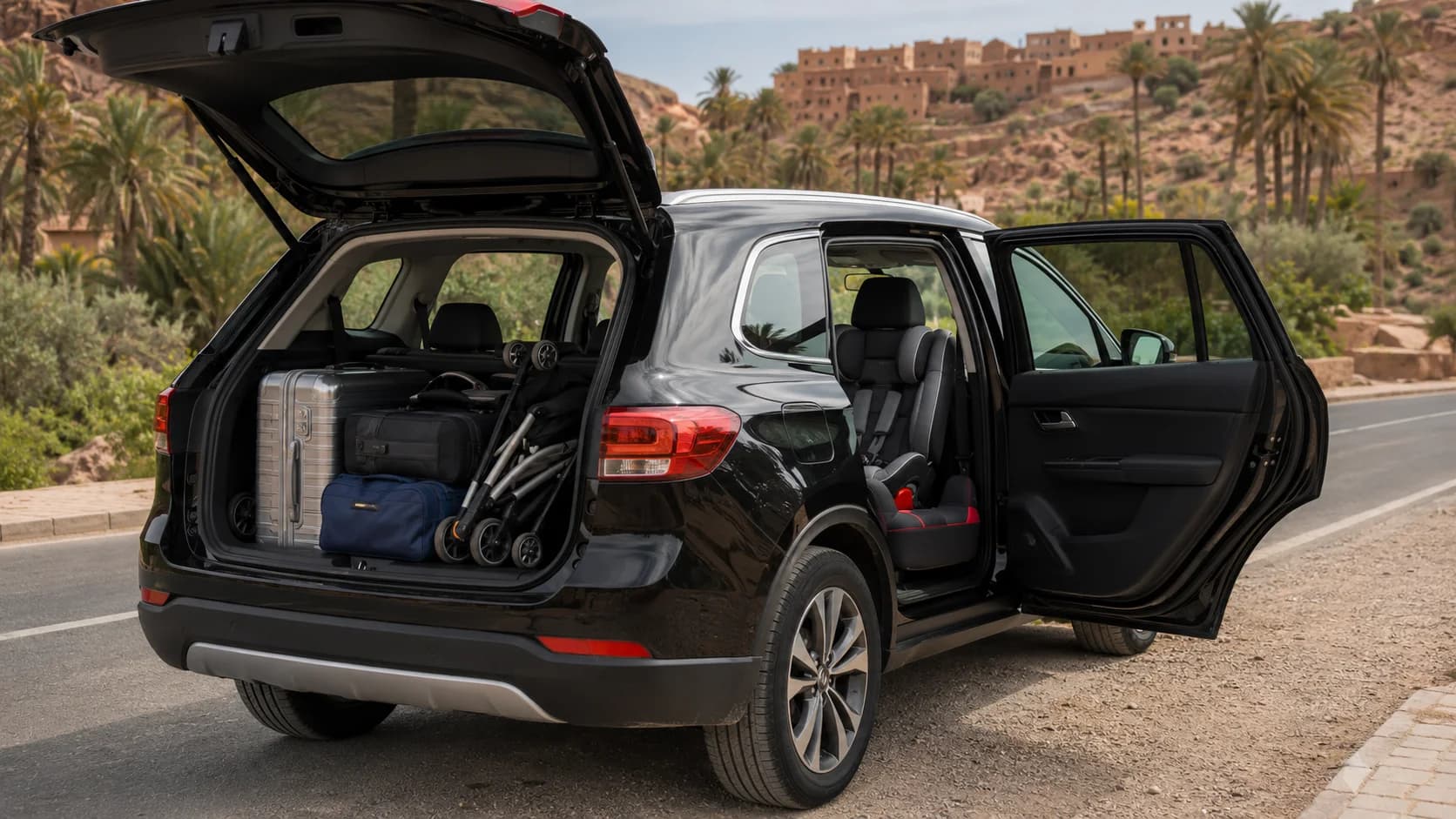
7-seater: best for families and groups
A 7-seater works if:
-
you’re 5–7 people,
-
you want everyone in one vehicle,
-
you’re carrying family gear.
Reality check: if the third row is up, trunk space shrinks. Plan luggage carefully.
5) 4x4 vs 2WD: When It Actually Matters
This is one of the most expensive misunderstandings. In Morocco, many “SUV rentals” are 2WD.
You usually do NOT need 4x4 if:
-
you stay on normal paved routes,
-
you’re doing classic day-trip roads,
-
you’re not heading into remote tracks.
4x4 can matter if:
-
you plan remote rural tracks where road condition is unpredictable,
-
you’re traveling in winter to higher elevations where snow/ice can appear,
-
your accommodation requires a rough approach road.
Even then, your rental contract may forbid certain roads. So don’t book 4x4 and assume “everything is allowed.” Confirm road-use rules first.
6) Safety and Comfort Checks Before You Go
These checks matter more than car brand.
Before pickup (ask or verify)
-
Tire condition (not bald, not mismatched)
-
Spare tire/tool kit presence (if provided)
-
Working headlights, wipers, and brakes
-
Fuel policy (full-to-full is easiest)
-
Insurance excess amount and exclusions (tires/undercarriage often excluded)
At pickup (photo routine)
-
Walkaround photos + quick video
-
Close-ups of rims/tires (mountain roads punish weak tires)
-
Fuel gauge and odometer photo
On the road (simple driving rules)
-
Slow before curves, not in the middle of them
-
Leave more distance behind slow vehicles
-
Don’t drive deep mountain roads at night if you can avoid it
-
Avoid “shortcuts” suggested by random map routes if the surface looks wrong
7) Packing Checklist for Atlas Self-Drive
The Atlas is not the coast. Pack for comfort and changes.
Bring:
-
light jacket/hoodie (even if Marrakech is warm)
-
water + snacks
-
power bank + charging cable
-
sunglasses (glare is strong in mountains)
-
small cash (for roadside stops)
-
offline maps downloaded
If traveling in colder months:
-
warmer layer,
-
rain protection,
-
and a plan to turn back if the road condition changes.
8) Common Mistakes (and How to Avoid Them)
Mistake 1: Booking the smallest car for a long mountain day
Fix: prioritize comfort and clearance if you’ll do detours or rough access roads.
Mistake 2: Leaving too late
Fix: start early and plan your return before evening fatigue.
Mistake 3: Over-trusting “fastest route” shortcuts
Fix: stick to known paved routes unless you’re sure the road is good.
Mistake 4: Ignoring tires and brakes
Fix: check them at pickup, mountain driving depends on them.
Mistake 5: Confusing SUV with 4x4
Fix: ask directly if it’s 4x4 and whether your planned roads are allowed.
FAQs
Do I need an SUV for the Atlas Mountains?
Not always. For main paved routes, a normal car can work. An SUV is better for comfort and rough access roads.
Is Atlas driving difficult?
It’s manageable, but you’ll drive curves, elevation changes, and occasional patchy surfaces. Drive calmly and avoid night driving.
Can weather change quickly?
Yes. Altitude brings colder air, wind, rain, fog, and possible snow in colder months. Check forecasts before leaving.
Should I rent a 4x4?
Only if you truly plan remote tracks or winter higher elevations, and confirm road-use rules in your contract.
What’s the biggest safety check before an Atlas trip?
Tires and brakes. They matter more than engine power.
Is a 7-seater good for the Atlas?
Yes for families/groups, but manage luggage space, third row up reduces trunk capacity.
Conclusion
Renting a car for the Atlas Mountains is one of the best ways to experience Morocco, if you match your vehicle to the road type and respect how fast weather can change. Most travelers don’t need a true 4x4, but many benefit from an SUV for comfort, visibility, and clearance on rough access roads.