






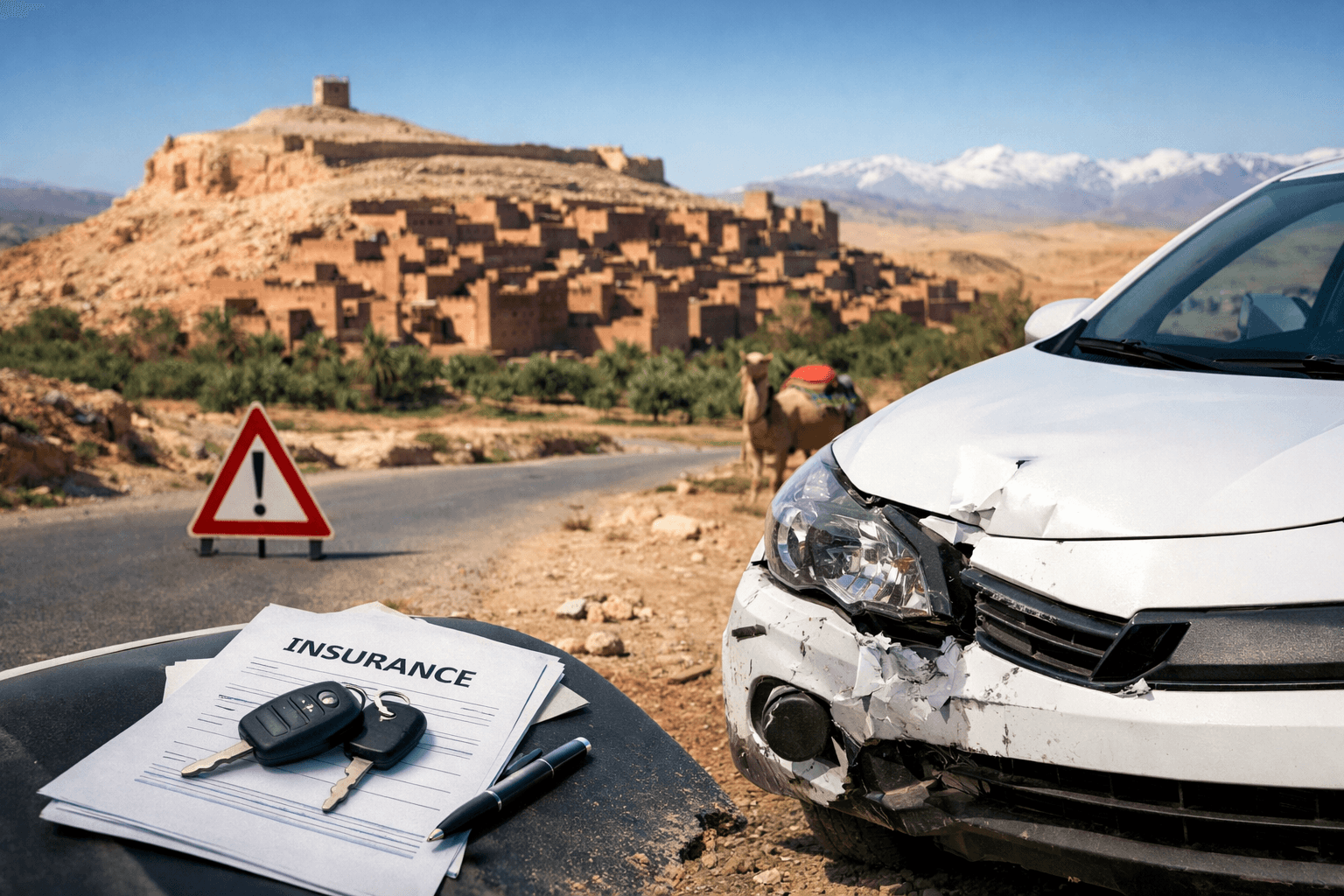
If you’ve ever rented a car in Morocco, you’ve probably seen a confusing menu of “protections” at checkout: CDW, SCDW, sometimes “full insurance,” sometimes “zero excess.” Many travelers click the cheapest option, assume they’re covered, and only learn the difference when something small happens, like a bumper scrape, a mirror clip, or a rim mark.
The main problem isn’t Morocco. It’s the wording. CDW and SCDW are not the same, and the gap between them is where most tourist misunderstandings live: what counts as damage, what’s excluded, how excess works, why deposits still exist, and what steps you must follow for coverage to apply.
This guide explains CDW vs SCDW clearly, in real-life terms, so you can book the right protection level and avoid “surprise liability” later. If you’re comparing options and want to see how policies are presented across categories, start with MarHire and browse car rental offers side by side.
Quick Answer Box
-
CDW (Collision Damage Waiver) usually reduces what you pay for damage, but you still have an excess (deductible).
-
SCDW (Super CDW) typically reduces the excess further, sometimes close to zero, but exclusions can still apply.
-
The most common “not covered” items are tires, rims, glass, undercarriage, interior, and lost keys (varies by provider).
-
Even with SCDW, you may still have a deposit/hold for fines, fuel, or excluded damage types.
-
Best practice: confirm excess amount, exclusions list, and incident steps in writing.
Table of Contents
-
What CDW and SCDW actually mean
-
What’s usually covered with CDW
-
What SCDW adds (and what it still doesn’t)
-
The biggest misunderstandings tourists have
-
Exclusions that still cost money in Morocco
-
Deposits and holds: why they exist even with SCDW
-
Claims and incident rules: the hidden “coverage switch”
-
A 10-question checklist before you pay
-
FAQs
-
Conclusion
1) What CDW and SCDW Actually Mean
CDW stands for Collision Damage Waiver. It’s called a “waiver” because it’s usually framed as the rental company waiving part of its right to charge you for damage, but not necessarily all of it.
SCDW usually stands for Super Collision Damage Waiver. It generally means a stronger version of CDW, typically with a lower excess, sometimes marketed as “reduced liability” or “near zero excess.”
A neutral explanation of what CDW is (as a rental concept) is here.
Important: CDW and SCDW are not universal products. What they include depends on the rental company’s contract. That’s why the exact excess number and exclusions list matter more than the label.
2) What’s Usually Covered With CDW
In Morocco, CDW commonly means: if the car is damaged, you pay up to a maximum amount (the excess), and the rest is handled under the rental’s insurance structure, assuming you follow the contract rules.
Typical CDW coverage (general pattern)
-
Body damage from collisions (with excess)
-
Damage from minor incidents (with excess)
-
Sometimes theft-related coverage is separate (or has a different excess)
What CDW does NOT usually mean
-
“You pay nothing”
-
“Everything is covered”
-
“No deposit is needed”
CDW is often the baseline protection that reduces your risk, but it still leaves you exposed to the excess amount and often to key exclusions.

3) What SCDW Adds (and What It Still Doesn’t)
SCDW typically reduces your excess, sometimes significantly. That’s the main benefit: smaller financial exposure if damage happens.
Why travelers like SCDW
-
Lower stress when parking in tight spaces
-
Better for first-time Morocco drivers
-
Better for city-heavy itineraries (Marrakech/Casablanca style driving)
-
Helpful if you’re worried about minor scratches or bumps
What SCDW still doesn’t guarantee
Even with SCDW, many contracts still exclude:
-
Tires and rims
-
Glass/windshield
-
Undercarriage
-
Interior damage
-
Lost keys
-
Damage from prohibited use (off-road, beach sand, reckless driving)
So SCDW is not “invincibility.” It’s usually “lower maximum bill,” with rules.
4) The Biggest Misunderstandings Tourists Have
These misunderstandings show up again and again:
Misunderstanding #1: “Full insurance” = zero risk
“Full insurance” is marketing language in many places. The contract is what defines your liability. Focus on:
-
excess amount
-
exclusions
-
claim process
Misunderstanding #2: CDW = no deposit
Deposit/hold policies are often separate from coverage. A company can still require a hold for:
-
traffic fines
-
fuel differences
-
cleaning fees
-
excluded damage categories
Misunderstanding #3: SCDW = everything covered
SCDW often reduces excess for body damage, but exclusions can still hit you where it hurts (rims, tires, glass).
Misunderstanding #4: “I can decide at pickup with no downside”
In peak periods, your options at pickup can be limited. If you’re sure you want lower excess, it’s often better to confirm in advance.
5) Exclusions That Still Cost Money in Morocco
If you want to avoid surprise charges, these are the categories to ask about clearly:
Tires and rims
Rim scuffs happen easily in city parking. Many policies treat rims as excluded or limited.
Glass and windshield
Chips can happen on highways. Some packages include glass, some don’t.
Undercarriage
Steep ramps, rough shoulders, or unexpected bumps can cause undercarriage damage that’s often excluded, especially if the contract bans rough-road use.
Interior damage
Stains, burns, tears, or heavy sand inside the car are commonly not covered.
Keys
Lost keys can be expensive due to programming and replacement policies.
Key point: these exclusions can apply regardless of CDW/SCDW, unless you purchase a package that explicitly includes them.
6) Deposits and Holds: Why They Exist Even With SCDW
Many tourists buy SCDW expecting “no hold.” Then they see a card pre-authorization anyway.
That hold can still exist because the company needs a guarantee for:
-
fines and toll violations
-
missing fuel
-
late return
-
cleaning costs
-
excluded damage types
So the correct question isn’t “Do you have SCDW?” It’s:
-
“What is the deposit/hold amount, and what is it used for?”
A clear company will answer in one sentence.
7) Claims and Incident Rules: The Hidden “Coverage Switch”
Even with great coverage, your protection can fail if you don’t follow the required steps after an incident.
Common requirements include:
-
notifying the rental provider immediately
-
taking photos of damage and surroundings
-
completing an incident form
-
sometimes obtaining official documentation depending on the situation
The exact rules vary. But the principle is the same: coverage usually depends on proper reporting.
Practical habit: before you drive away, save the support number and ask:
-
“What do you need from me if anything happens?”
8) A 10-Question Checklist Before You Pay
Copy/paste these questions and you’ll instantly understand what you’re buying:
-
What is the excess with CDW (in MAD)?
-
What is the excess with SCDW (in MAD)?
-
Does the excess differ for theft?
-
Are tires covered?
-
Are rims covered?
-
Is windshield/glass covered?
-
Is undercarriage covered?
-
Are keys covered if lost/damaged?
-
Is there a deposit/hold? How much and when released?
-
What exact steps are required after an incident for coverage to apply?
If the answers are clear, you can book confidently. If they’re vague, don’t assume the label protects you.
FAQs
Is CDW mandatory in Morocco?
Many rentals include some form of basic coverage, but what’s included varies. Treat CDW as a defined package and confirm excess.
Is SCDW worth it?
Often yes for city-heavy trips, nervous drivers, or anyone who wants lower financial risk. It’s most valuable when it meaningfully reduces excess.
Can I still be charged with “zero excess”?
Yes if exclusions apply (tires, rims, glass, undercarriage, interior, keys) or if incident reporting rules aren’t followed.
Does SCDW remove the deposit?
Not always. Deposits/holds can still apply for fines, fuel, excluded items, or admin policies.
What’s the best way to avoid disputes?
Document the car at pickup and return (photos/video), keep paperwork organized, and get key terms in writing.
Conclusion
CDW and SCDW are not just “two insurance buttons.” They’re two different risk levels. CDW usually reduces your liability but leaves a meaningful excess. SCDW usually reduces that excess further—but exclusions and reporting rules still matter.
If you want to rent with confidence in Morocco, focus on the numbers and the rules: excess amount, exclusions, deposit/hold policy, and incident steps. Get those clear, and you’ll drive with real peace of mind—not just comforting labels.